abrasive powder applicator?

Joined
Dec 3, 1999
Messages
9,437
Hey Fellas :)


So with all these attempts at creating and bringing out hamon over the last several years, I have accumulated quite a few abrasive powders. Things like pumice, rottenstone, optical abrasives, etc. (of course the usual suspects like Flitz and SemiChrome).

One of the things I've never felt like I had a good handle on.... is how to apply these abrasives. I've tried cotton batting, flannel, felt, felt pads, make-up pads, craft paper, notebook paper... many times it's just rubbed back and forth with my thumb. (I screwed the pooch the other day because I had a rusty sliver embedded in my thumb that I didn't know about, but it sure showed up in the form of a deep scratch on the blade!!!
mad.gif
)

So how do you guys do it?

Thanks guys!!!
cool.gif
smile.gif
 
I thought you'd use the puff from your compact, or maybe that soft brush you have to put rouge on...:barf:


I usually just end up using a section of paper towel saturated with whatever oil I'm using as a suspension for the abrasive.

What's your favorite loose compound?
 
My favorite? I like to crush the rouge from my compact in a mortar and pestle of course!!! :p :D

Seriously Matt, I'm really not sure. I have never etched/polished two blades the same way... so I have no set standard. I'd love to, as I hate the ambiguity of a non-structured approach to it... but it seems like every blade needs something different.

I have some powders that came from Mager scientific that I seem to use on every blade. I have 600, 1000, and 0.3 micron.

I bought pumice and rottenstone from Woodcraft, but only a short time ago... so I am trying to figure out how to figure them into the grand scheme of things.
 
I bought pumice and rottenstone from Woodcraft, but only a short time ago... so I am trying to figure out how to figure them into the grand scheme of things.

Tried 'em... can't seem to see where they figure in, as their effect is negligible, at best.
 
The round cotton/flannel gun cleaning patches work well.
As should be done with any polishing item, store them in a sealed zip-lok bag. The various powders and compounds can be stored in squeeze bottles. They make them from small ones for hot sauce to the standard catsup size. Check your dollar store. Again, when not actually applying the powder, keep the cap on. As your finger taught you, it only takes a microscopic piece of hard substance to bring out your best curse words when doing shiagi togi.

Now, advise from one who has stored many items, liquids, and powders.......
PUT A LABEL ON THE ITEM, not tomorrow, not later, but when you bag/bottle the item. It is very hard to remember what the stuff is a few months/years down the line when you look at a jar and say,..."Gee, is this Linde A, or tin oxide, plaster of Paris, or my old stash of cocaine???" Same rules apply to solvents and other items. Label them.

On a related note, I have put Scotch in a decanter that I was positive I would easily recognize by flavor and smell, only to discover months later that I wasn't exactly sure which brand I was drinking. It still was wonderful old scotch, just nameless wonderful old scotch.
 
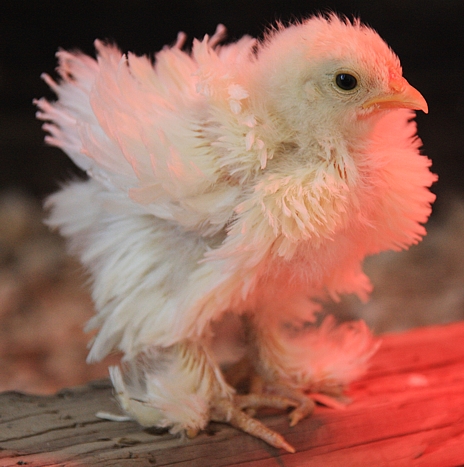
Use a baby chicken. They super soft with the right amount of firmness. :thumbup:

062a.jpg


Sorry, I couldn't resist. This pic came up as I was searching through different shoe shine applicators. :D
 
I've accumulated a small bucket of stuff for working on Hamon too :rolleyes: :o

Just like you, I've tried a million & one ways of applying it .......

I use the cotton make-up pads almost exclusively now for rubbing the oxides off post etch.
And I seem to get the best "look" using flitz liquid, not the paste.

For rubbing below the bright white pearlite line, after the flitzing.....

Like you, I simply use my finger to rub loose A/O Gesswein abrasive powder mixed with some red lubricant I picked up from MoldShopTools.
The "red stuff" was designed to mix with diamond paste but it works quite well with the A/O "dust"

Thats how I do it Brother Wheeler ;) :D


:cool:
 
Nick, I've tried a lot of powders and really like some of the "tumbling charges", silicon carbide etc., (price is right too)... I've also tried all kinds of backings and like the white synthetic cleaning pads best. You know the ones in the grocery store and hardware store, like Scotch Brite but without the abrasiveness. Not sure what to call them, (synthetic steel wool?), but they are the white “no scratch" pads. If you use those types of pads with a little oil or water, they really hold a lot of abrasive powder, give a great finish, and really make quench lines jump. For a slightly more mat finish you can use the medium grit grey finishing pads with powders.
 
I use my thumb most of the time to work abrasives, that way I can actually feel the stuff working. Paper towel or TP will also do.

RE Scotch:

Bladsmith, I wouldn't recomend decanters for holding Scotch or anything else in for long periods of time. Decanters are great for use on the go like during the evening with company. Otherwise leave it in the bottle in a dark place. The problem with decanters are that they just don't seal as well as the original bottle.:thumbup:
 
I thought for a second you might have meant applying them to a firm cotton wheel. The first blacksmith I met showed me some special polishing wheels he had, all different grits. He told me the last time I was at his place for a hammer in get together the process and materials used. He would heat up some pitch or hide glue in a pan about 1/4" deep, then roll the wheel through it then immediately roll it through his different media. The wheels were HARD cotton. He would build up a few layers this way, he had all different grits too from 80 to 1500, and a special arbor that went slow, maybe 500 RPM or less. He would get some beautiful polishes that way too, very cool. I spoke with Peter Johnsson, who is probably one of the world's topmost swordsmiths working in the European tradition (doesn't relate to hamons though), and he was telling me about the wheels they used in way back cutler's shops in Europe, wooden wheels with walrus hide glued or tacked to them that they would add abrasive to in a similar way with pitch and the different grits in powder form.

Working with my new boss, he showed me the polishing machine he has, again a hard cotton wheel, used abrasive suspended in thick gummy silicon that would apply to the wheel like a buffing compound. let it dry overnight or for an hour or two (lasts longer if you let it dry) and it makes a great surface. Cookie dough sized tubes only run about 6$ too, 80 grit to 400 or 600 I think can be had from Mcmaster.
 
My decanters are cut crystal containers with ground to fit glass stoppers. I have kept some great scotches in them and never had a problem. I do keep them out of bright light.
 
The problem lies in those ground to fit glass stoppers, many don't have an air tight fit, I found that out the hard way.
 
I agree that some are better than others. You are right that if the cork is good, the original bottle is always a good idea.

Often people mix the stoppers from two bottles and that up making two bottles with bad seals.

The decanters I have are the top of the line, and each stopper will only fit its respective bottle.
On a similar note, I have reagent bottles that have not lost a drop of their volatile contents in many years. I also store full strength acids in similar bottles.

Anyway, enough OT chit -chat.
 
You are right about the stoppers. I am sure that mine are all mixed up from over the years, which is why they stand empty most of the time unless I have company over.

Sorry for having high jacked the thread everyone, but scotch talk sometimes does that, now back to the main subject folks.

One drawback I have using my thumb for working abrasives is that I can only do it for short periods of time, or the skin on my thumb pad does wear down, and has led to cracked skin, particularly in winter when skin can get dry.
 
Back
Top