Aging vs. Tempering A2

Joined
Dec 25, 2004
Messages
1,363
I've been doing my homework reading all steel geek things I could find from internet. I decided to buy common steels, will make some big camp knives from O1 and A2 I hope. I found some places to buy the stock. I found some SS for my kitchen knives...

My question is: While I was reading about A2 some tech sheets mention not just tempering but also aging: Quote from : Uddeholm Rigor (A2) Tech Sheet.


SUB-ZERO TREATMENT AND AGING
Pieces requiring maximum dimensional stability
should be sub-zero and/or artificially aged as
volume changes may arise in the course of time.
This applies, for example, to measuring tools like
gauges and certain structural components.
Sub-zero treatment
Immediately after quenching, the piece should be
sub-zero refrigerated to between –40 and –80°C
(between –40 and –110°F) followed by tempering
or aging. Sub-zero refrigeration for 2–3 hours will
give a hardness increase of 1–3 HRC. Avoid intricate
shapes as there is a risk of cracking.
Aging
Tempering after quenching is replaced by aging
at 110–140°C (230–285°F). Holding time 25–
100 hours.

Do you know why the aging is performed and any one does it for blades?
Thanks...
 
Not anything to worry about .Actually tempering of steel ,aging ,are both precipitation hardening .That is you are forming a precipitate which is carbide .Uddeholm is probably refering to the formation of eta carbide during cryo. Steelforge probably not going into geek stuff of eta carbide.
In any case cryo will get a couple of points harder, Always temper after cryo .
Bark River Knife & Tool makes many knives of A-2.It's an excellent knife steel best for normal use about 60 HRc.
 
Not anything to worry about .Actually tempering of steel ,aging ,are both precipitation hardening .That is you are forming a precipitate which is carbide .Uddeholm is probably refering to the formation of eta carbide during cryo. Steelforge probably not going into geek stuff of eta carbide.
In any case cryo will get a couple of points harder, Always temper after cryo .
Bark River Knife & Tool makes many knives of A-2.It's an excellent knife steel best for normal use about 60 HRc.

I read also after cryo there is some reduction of toughness for A2, ... I guess the article I posted above mentions that... I guess you gain some HRc points for example from 60 to 61 or 62 but loose toughness, but if you temper it at lower temp for 62 HRc and do not cryo your overall toughness is lesser than cryoed 62 HRc blade. Did I get it ???
 
Cryo reduces retained austenite .RA is relatively tough so on reducing RA you also reduce toughness.
 
There is a refreshing tone of honesty in referring to the carbide related effects of cryo as "artificial aging". I think I can live with that:thumbup:.
 
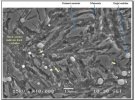
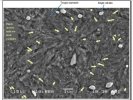
Hey Kev,
Have you ever done any photo microscopy with varying samples of cryoed and uncryoed martensitic steels? I'd love to see the results!
 

Attachments

  • A2 - without cyro.JPG
    A2 - without cyro.JPG
    62.9 KB · Views: 34
  • A2 - with cyro.JPG
    A2 - with cyro.JPG
    66.5 KB · Views: 34
i have never quenched A-2 in oil! dang, I learn something new every day!:D A-2 is so money! Just get a protocol that works and It will amaze you.. Everything the same every time after that! Nothing fancy! my opinion on my #1 steel!
 
Last edited:
i have never quenched A-2 in oil! dang, I learn something new every day!:D A-2 is so money! Just get a protocol that works and It will amaze you.. Everything the same every time after that! Nothing fancy! my opinion on my #1 steel!

Most of the air hardening steels (may be all of them) can be also oil quenched if the piece is not a complex shape (as our blades, they are very simple shapes compared to the shapes in machine parts etc.). What is the benefit of quenching A2 in Oil I dont know but for thin blades Al plate quench speed is some what same as oil quench speed. I've quenched some D2 blades in a slow oil just for the test, there were no noticeable problems. But plate quench is better to eliminate the warping problems.

Here is a quote from http://www.bucorp.com/files/aisi_a2.pdf

QUENCHING MEDIA
• Martempering bath or fluidized bed at 360–
430°F (180–220°C) or 840–1020°F (450–550°C)
then cool in air
• Circulating air or atmosphere
• Vacuum furnace with overpressure of gas at
cooling
• Oil (only for small and uncomplicated tools).
Regards
Emre
 
oh, thats why! my thinnest blade ever was .230!!!:D warping a non issue! for me! thanks for the info! might come in handy one day! Jeremy
 
oh, thats why! my thinnest blade ever was .230!!!:D warping a non issue! for me! thanks for the info! might come in handy one day! Jeremy

Himm, that explains everything then :) My thickest was 0.16" :o. I'm always afraid of bending, warping... Hey size does matter after all :D
Emre
 
Back
Top