Angle question

The primary bevel is the primary bevel. Secondary is the edge and micro is the apex.

Here's an example of primary bevel not the same on each side, the logo side you will notice the shoulder line is lower (check the distance from the thumb stud) and the M390 side the shoulder line is higher and closer to the thumb stud. I measured the angle, the logo side is 9 degrees
And the M390 side is 7 degrees. So at factory 18 per side edge (secondary) bevel is slightly wider on the M390 side.


This scenario can happen even if the shoulder line is the same height.


Sent from my iPhone using Tapatalk
 
Last edited:
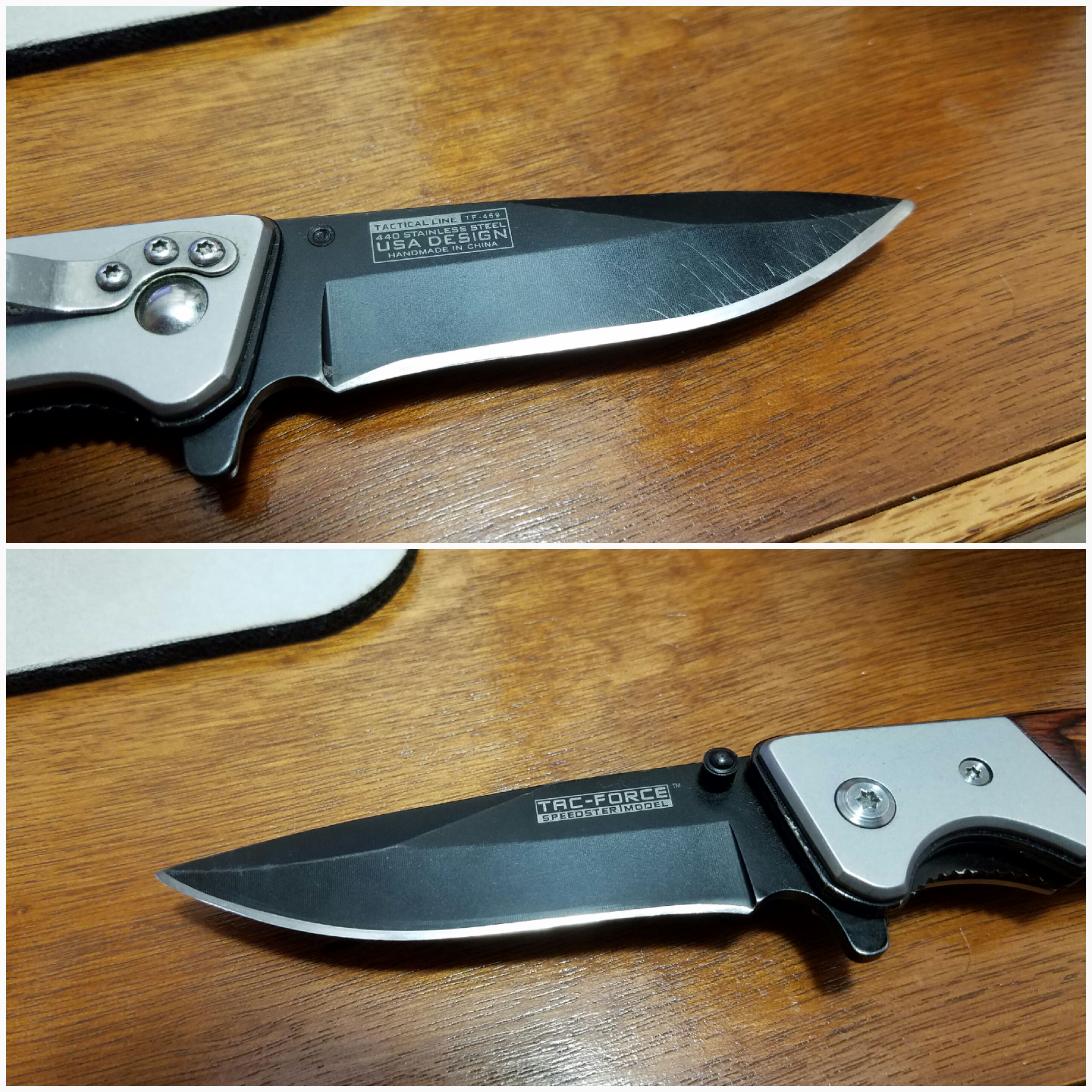
Ok, so I shouldn't just find the angle of one side, get the burr, then flip it and assume that since the angle of the KME hasn't changed that I can just go crazy on the other side because the primary angle may be off too which will lead to a higher bevel on that side? That could explain why this happened on a crappy beater knife I was practicing on, pretty sure I just got one side to a burr and then flipped it and just went nuts until the other side got a burr, resulting in a much higher bevel:

W2TfE9S.jpg


Sorry for all the questions, sharpening 100% correctly has always been something that eluded me for some reason. I can get my knives to easily shave and slice through telephone book paper but little things like this (which isn't really that little) always snag me. Just when I think I have the hang of it something like this happens and makes me wonder why. These were my rough notes I made after once again trying to figure it out and watching a couple youtube videos:

tape blade
use marker to find factory edge, go up or down one degree at a time until whole bevel is ground; use angle cube to get degree after marker is gone
get burr on one side first with back and forth motions, then the other side, then go from side to side using up strokes to get rid of burr before next stone
with each turn, use marker again to make sure bevel is being ground; also with use stone change
when white stone is used, use angle cube to get rough idea of angle needed, then marker
 
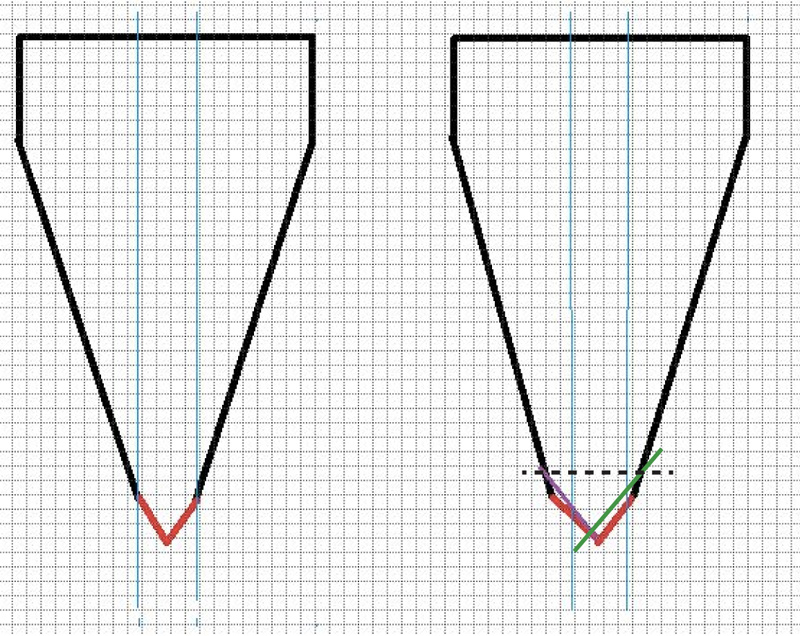
That's precisely it, here is a cross section diagram I just drew. The one in the left is the ideal grind where primary bevel is perfectly matched and the gives you perfect secondary bevel. In a perfect world I suppose it does happen.

The one on the right had side the purple line is what happens when you stayed the same angle and the primary bevel is off. The only way to make the bevel the same on each side you need to compensate with a more obtuse angle


Sent from my iPhone using Tapatalk
 
As you sharpen the narrower side little more than the other, the bevel width would become similar over time at the same edge angle, as indicated with the green line.


Bevel.JPG

Modified from the image of wiredbeans.


Miso
 
Yes the solves the issue as well but now your apex is off center and it becomes right handed grind. There is such a thing as left handed and right handed grind.


Sent from my iPhone using Tapatalk
 
I think I can get my stuff perfect and then I see this lol My OCD begins to kick in but luckily I don't have an angle cube, yet so not much I can do now.
 
Since I use Edge Pro Apex, I would rather like to have the same sharpening angle for both sides than the centered edge. Also the aesthetic of even bevels would satisfy my OCD, as I cannot perceive the centering of the edge.


Miso
 
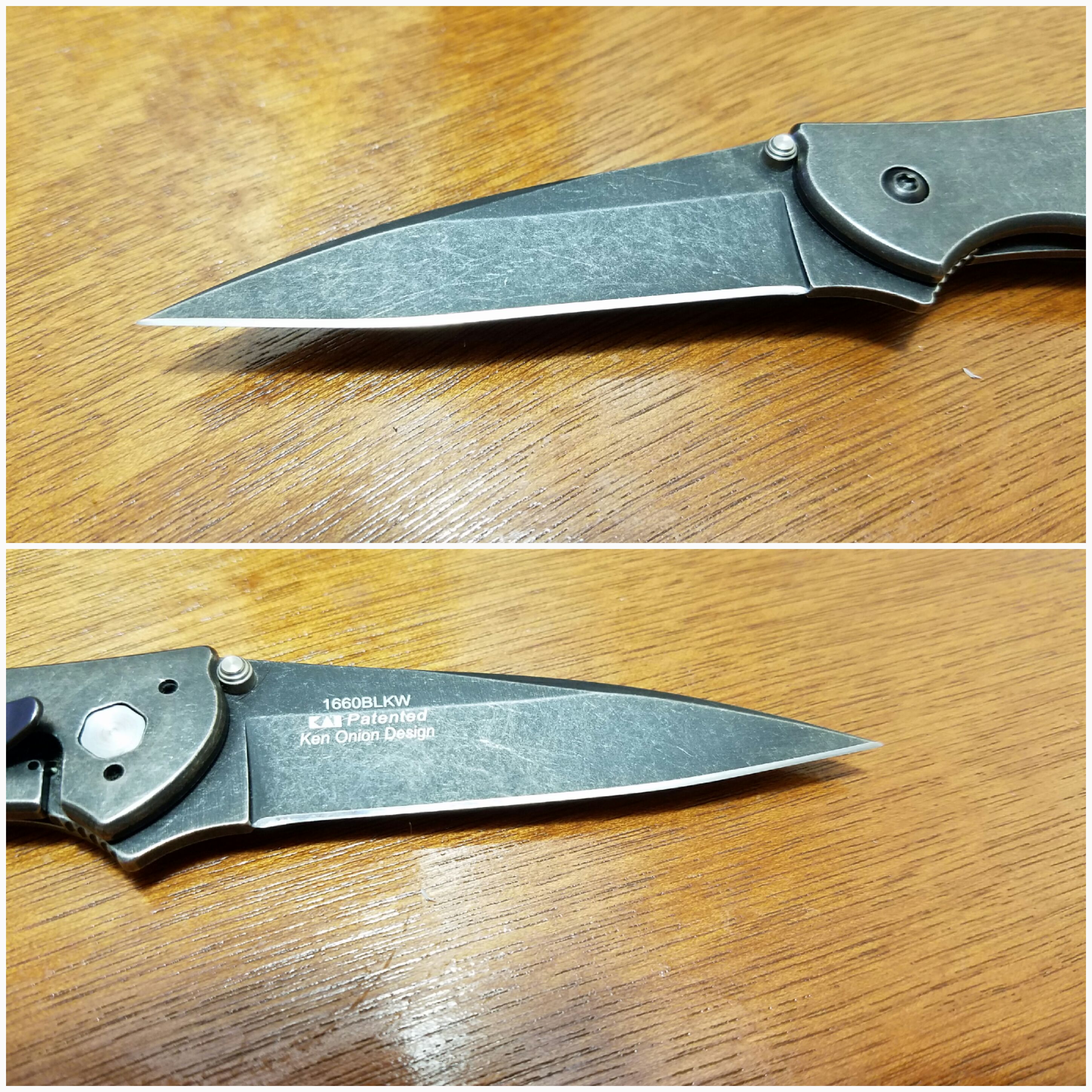
Well as usual, I got my Leek sharp, but it's not pretty and the side appears to have a different bevel slightly. I adjusted the second side so the sharpie wore off and my anglecube was telling me it was around 17.5 degrees on that side compared to about 21 on the other. When I flipped the knife back to the original side and tried the sharpie trick the marker wore off at that angle too, so I just left it alone. If I'm supposed to tweak the angle every single time I flip it to account for the manufacturer's flaws I'm not doing that, so I guess I have to live with a slightly off bevel if that's the case.

0dSTALr.jpg


I mean it cuts Ss out of telephone paper so it's decently sharp, but I just don't think I'll ever master this fully. At least I got both sides equally sharp and throughout the entire length of the blade, that was my old issue. I never felt for the burr along the entire edge so carefully before but now I'm getting the hang of it. Once I switch to my fine stone it's almost impossible to feel anything though so I may be able to do better there too.
 
That looks very good, any one would tell that's a good looking edge! Especially the tip! The trick is like you said: have the consistent apex from heel to toe and straight.

I do this before I sharpen anything: open the blade fully, put the spine side on the table, the handle will most likely match. The apex is now facing up. Use the angle cube to find out the angle on the primary so I know how to proceed with my intended inclusive angle. If I'm aiming for 30 inclusive and the primary is off by 2 degrees then I would do 14 and 16 instead of doing 15 on one side and 17 on the other to compensate the bevel width.


Sent from my iPhone using Tapatalk
 
I don't claim to have mastered this, but here's my take:

Blade and bevel geometry are complicated. As you can see from the diagrams, asymmetry from the factory (blade off center) can cause unusual blade geometries. Trying to full understand these and how to correct them, using a fixed angle device, seems very difficult to me.

Instead, I'm striving for a visually even bevel width. Even bevel width along the entire edge and even bevel width on both sides of the blade. This is as good as can be expected I think. I may require you to make minor adjustments in your angle throughout the length of the blade. Because some blade geometries produce wide tips if you hold an absolutely constant angle from heel to tip.

What if you end up with an edge with two different angles, that are 3 or 4 or 5 degrees different from side to side? I don't think you're ever going to notice it in cutting. You'll be far more likely to notice different bevel widths, but only with your eyes. Cutting performance is going to be nearly unaffected. Unless you're using a Japanese kitchen knife and looking for a "steering" effect as you cut. Even then, most asymmetric Japanese blades have a HUGE amount of different, like 70/30 .

In short, figure out what's important to you and shoot for that. For me, it's even bevel widths. ...and a screaming sharp blade of course!

Brian.
 
Back
Top