annodizer tips? how do you get what want every time?

Joined
Apr 4, 2001
Messages
1,803
I have one of these: http://www.circuitspecialists.com/prod.itml/icOid/7859

It's a DC power supply that isn't all bad for annodizing - I think.
I just had my first go at annodizing Ti last night. The results were underwhelming.

I could get a color once but not the same color twice. It turned into dunk it, pull it out and look and repeat - hoping you didn't 'go past' your color.

This little power supply max's at 1 amp over 30 volts - which isn't bad cause I can tell you 1/2amp at 50volts gets your attention! Problem is if I dip a piece into the solution, the amps max out at 1amp and the volts won't go much higher than 20v unless I 'tease' it by pulling the thing in/out or barely having the 'annode' item (another piece of Ti

I'm looking for any tips, help, suggestions, etc on annodizing Ti.

Is there a better commercial product for this?

I went to bigger pail of solution and that seemed to help me get the volts up but that still get me what I needed.

I ground off the surface oxidation and that made a big improvement.

What do you use for the annode?

Does how you hook up positive/negative leads matter?

How much TSP is enough?
Anyone have volts/color chart?
Any other tips?
 
Hook up the black wire alligator clip to the scrap piece of titanium in your glass or plastic container using something like dishwashing powder and don't use a metal container for your water. I use an old large pickle jar with a lid so I can keep it closed up when not in use.

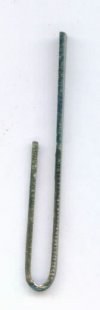
I made a small hook of titanium scrap to loop around my pocket clips or ti sides and liners that I make to clamp the red alligator clip to. Then you hold and dip using that hook because you'll corrode your alligator clip if you submerge that in the dip tank holding what you want to color. If the ti you are coloring has any metal in it like even a small detent ball it will sometimes corrode if left in there too long so its best to remove any metal like stainless screws and detents or do that before anodizing. You can cover them up with good results using a special tape, duct tape, or nail polish but it has to be removed of course afterwards.

Now as to best results. Personally you get fine results from bead blasting the parts first. I do that almost eveytime but if you want bright colors you are better off with a satin finish and etching cleaning it off with some windex and then dipping.

The colors start at about the 9 volt range. You get a light khaki at 9 v darker khaki at 12, darker brown like color at 15v and at 18 a purple. A purple/blue at 23 blue jean blue at 25.5 and real blue at 28v.

35 to 40 brings a nice teal for me, and 50 a nice olive green. 60v a gold and 70v a violet/mauve color which is sometimes harder to get. With age the solution seems to weaken and you'll notice you have to use more voltage to get the same colors and thats when I usually dump and redo my solution making fresh. The colors and voltage seem to be related to what you use in the water too so if you switch solutions sometimes you have to relearn a small bit to get the colors you are used to again.

I've noticed if you satin finish say a pocket clip and bead blast another identical titanium clip and use the same setting for voltage, lets say you have a brass Buck 110 and someone wants a clip for it and you want to match it up to the brass. Well, for me I've noticed and managed to pull off many times that for the gold color if I want to match the brass I can't bead blast the finish. It looks gold bead blasted but like brass if you satin finish and etch it. Hope that helps. You can experiment with the other colors and notice subtle changes from shade difference to a color diff depending on how you finish the product before dipping to anodize.

STR
 
Oh and there is a little button on my unit far right that says I think, "CC/CV" that you are supposed to push in to activate when anodizing. This apparently does something to control the voltage but I can't explain it. It anodized anyways when I didn't remember to use it but most of the time I push in that button so the light comes on and then anodize.

EDIT: Here is one of the ti hooks like I was referring to Tracey.

As most of you folks know I make a lot of low rider clips. Over 400 last year alone so sometimes I end up after folding one over having to trim it off to fit or shape it around a lanyard hole or something like that so its not blocking it on a production folder someone sends me to add a clip to. I tend to keep everything and had some of these laying around and found they were quite handy to have for anodizing. This one needs trimmed some to bring the loop short side down more to make it more versatile but this is what I'm talking about. These help a whole lot in my experience and allow you to dip down low and submerge what you are coloring without damaging your alligator clip.

STR
 

Attachments

  • Ti anodizing hook.jpg
    Ti anodizing hook.jpg
    6.4 KB · Views: 38
Last edited:
Hello Tracy,

Cannot remember were I downloaded this but it has some good tips that others have reported good success as well. I've followed these instructions but used a home made power source, with good success.

Eric
 

Attachments

Hi Tracy - I think you need to get higher voltage, most of the colors that I want start above 20. You can make a voltage chart and reference it to get in the ball park, but the size of the ti affects how it will anodize. If you set your power supply for 15V you might only get 10 with some parts and 13 with others. You have to start lower than the color you want and move up.

You want a fairly large cathode - I think you'll find that a stainless rod works better, just don't touch your work to it. I'll check with Alan today to find out the details of the setup we use at his shop, everything I know I learned from him.
 
Hey Eric......you stole my web page!!...................just kidding. I'm glad it's helpful.

Tracy,
The power supply is not as important as the materials used for anodizing. The doc listed in the previous message is from my site.
http://www.medawebs.com/knives/tutorials/anodizing.htm

I can duplicate the same color each time I anodize. I created a test strip with all the colors marked on it along with the voltages used to obtain each color. It is very repeatable.

If you want to discuss any details, give me a call.
 
Hi Tracy - the cathode we're using is titanium rod, about 1/4" thick and 7" or so submerged, stainless will also work. The power supply was purchased from Reactive Metals and runs up to about 100V, supposedly they now also sell a cheaper one.
 
I would guess that your low-voltage problems are caused because your cathode is not large enough.
Your titanium workpiece is the Anode and it is hooked up to the positive lead. The Cathode is the piece of metal that stays in the solution and is hooked up to the negative lead. I currently use a 1 1/2" X 1/4" X 12" piece of stainless for my cathode. Some people say titanium works better as a cathode but stainless is working fine for me.

If you haven't seen this website yet, it's a good resource for anodizing
http://www.reactivemetals.com/
They have a product called Muti-Etch. It's tricky to use but it etches all of the titanium dioxide off of the surface before anodizing and it can give you better results. The oxide layer starts forming on freshly exposed titanium the instant it is exposed to air. Freshly exposed(etched/blasted/sanded) titanium can be stored in distilled water to slow or prevent the oxide layer from forming.

This is a link to a picture that shows the whole spectrum.
http://www.mailleartisans.org/gallery/pics/245ticolorscale.jpg

You have to tightly control all of the variables to get repeatable results. You should take notes about everything you do, try to improve your methods and then try to exactly repeat everything. Make a color-chart to refer to.

EDIT TO ADD: I was a little slow to post and some of this stuff was covered in the mean time :)
 
I have a mini anodizer from Reactive metals, although they don't carry the model anymore. It is 120V and 3 Amps.

As long as I don't touch the dial I can get the same color all day long.
I also wear rubber gloves since I use a TSP solution and it is caustic and to help ground myself.
 
Hey Eric......you stole my web page!!...................just kidding. I'm glad it's helpful.

Hello Bill,

I found this information (obviously from your web site) a while ago. Pasted into a word docuemnt for safe keeping but did not record where I got it. I'm glad to know if was from your site... Thanks for the info as it has proved to be very valuable. :thumbup:

Thanks agian Bill!

Eric
 
Back
Top