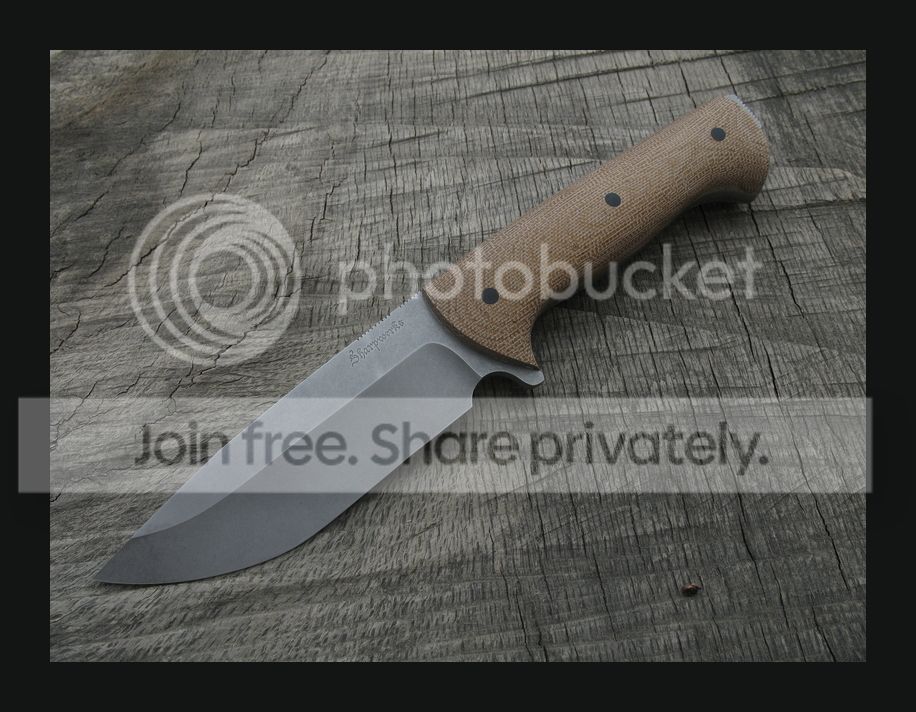
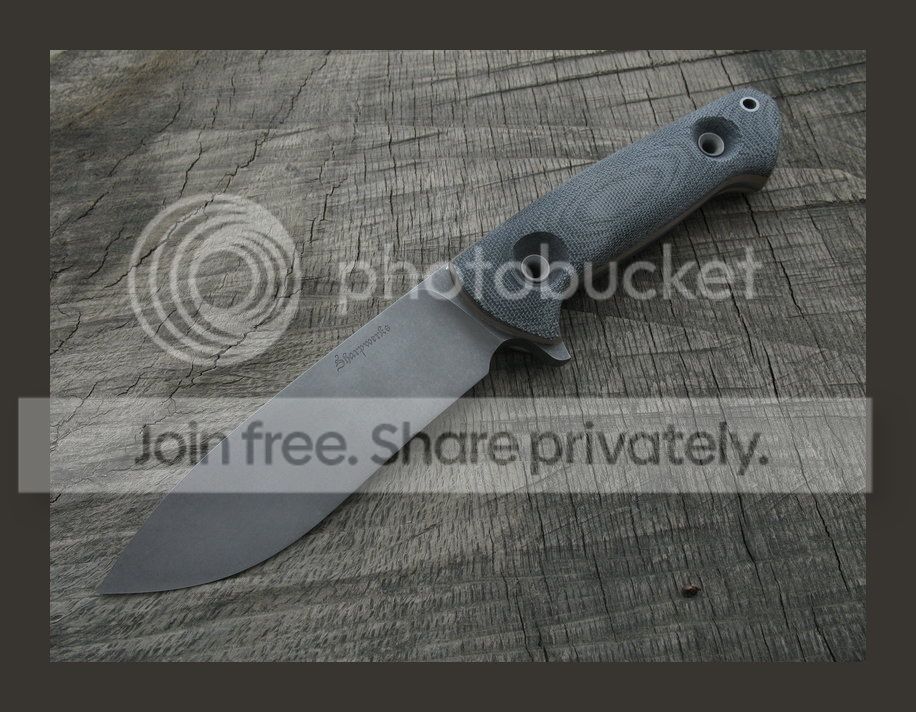
Another stonewashing and assembly ?

Joined
Aug 12, 2006
Messages
1,302
I know it's been asked many times and there is tons of info all over the web on this but I'm still not 100% this is right and maybe you guys can talk me out of it.

I have a military knife I am finishing up and I'm not sure the finish suits it. Right now it has a clean 600 grit satin finish but I think it would be better suited for an acid stonewash. I have tried the poor mans stonewashing before by shaking small stones with wd40 and got lousy results. I am still poor but maybe slightly more sophisticated and so I think I can good results on the cheap by shaking but with a better media.

Here is my intent. Assemble the knife with flared tubes (no epoxy), finish handles, drill out tubes, ferric chloride acid bath the steel, stonewash, assemble with epoxy and flare tubes again. I am guessing the drying epoxy will be a nightmare with this approach. Is this the best way to ensure the handle edges have the same finish as the rest of the knife?

Now to the media. A little overwhelmed with the varying opinions so what would you throw in the can if you were me? 1/2" triangles or pyramids? What specific material/color? I have seen ceramics in different colors and grits and I confuse easily. Any direct guidance to a source to purchase a small quantity would be greatly appreciated.

I do plan on the purchase of a vibratory tumbler but that's down the road.

Thanks guys!
 
Don't flare the tubes hoping to drill them out. That is a royal pain because the flared tube spins with the drill bit. Use bolts and nuts to hills the handle on if you want to stonewash the spine. Otherwise just finish it like normal and polish the spine or take it to 400.
 
I disagree with this approach. You will never get the shaped handle slabs perfectly aligned and flush with your second install.

My personal approach:
1. Take the blade to 400 or better
2. Blast
3. Makers mark
4. tumble
5. Tape the Blade
6. Epoxy, pin, shape the handle. You mist take the spine and the inside of the handle to a clean 400 or better.
7. Tumble the whole knife
8. Sheath, sharpen, ship

Below are the part#s and sizes for media from McMaster. Brian Fellhoelter recommended a mix of 50/50 (works great).

1 4918A55 1 Pack Ceramic Media, Coarse, V-cylinder, 1/2" X 1/2", 25 Lb Package
2 4918A78 1 Pack Ceramic Media, Coarse, Triangular 22 Deg, 5/16"x7/8", 25 Lb Pack

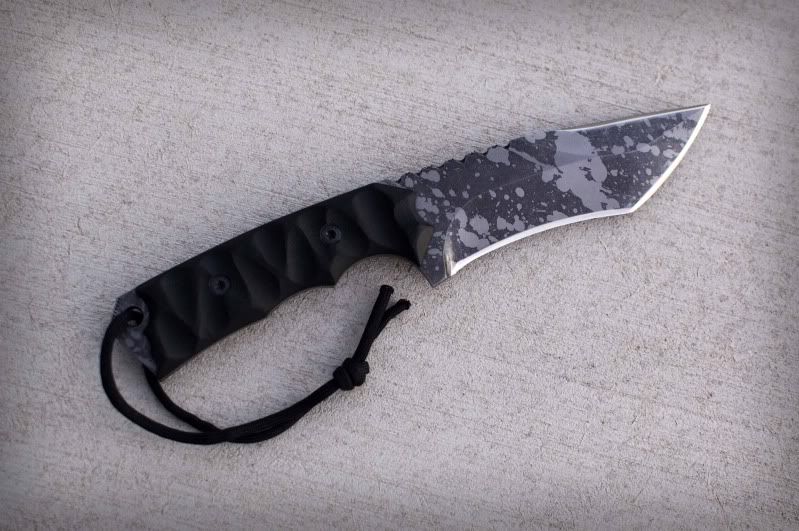
Knives below finished in this manner:
rsz_img_2144_zps2d798496.jpg

rsz_img_2141_zpsd70f5d9f.jpg
 
Last edited:
This just reminded me that I have a jewelry tumbler. As I remember, it was about a gallon or two. Would that be suitable for stonewashing a blade?
 
I have had decent luck with aligning the first and second assemblies by reaming the pin holes to .002" over the pin size. David's advice is perfect if you are using a bead blast treatment before tumbling, maybe not so much if you are doing an etch treatment, which is what I do. There is still the possibility for alignment issues with my method and you have to check it and re-align if necessary before the epoxy hardens. A bench vise with hardwood jaws usually does the trick to pinch everything back into alignment.
 
Thanks guys for the responses. I hadn't thought about the tubes spinning and a dab of superglue may just do the trick. I am in no way discounting the advice against this method but with an acid bath before the stonewash I still just can't see an alternative.

The nut and bolt method would work if I were to just finish all the handle edges first then the handle flats after final assembly but I'm not sure I trust myself to get it right the first time by doing them seperately.

Justin- I was really hoping you would chime in because I think your finishes set the benchmark and are my inspiration.
 
I posted this MT&E:

it seems like the easiest thing to keep the steel edge finish around the handle consistent with the rest of the knife would be to acid wash (FeCL) after final assembly (stonewashing too). There is advice against it but has anyone tried it? I did some experimenting and the ferric chloride had zero effect on black G-10. Also, zero effect on west systems epoxy except for possible discoloring but I haven't tried washing it off yet. Doesn't bother me anyway. I also read that epoxy lined containers are safe for storage of ferric chloride. So what gives?
 
I posted this MT&E:

it seems like the easiest thing to keep the steel edge finish around the handle consistent with the rest of the knife would be to acid wash (FeCL) after final assembly (stonewashing too). There is advice against it but has anyone tried it? I did some experimenting and the ferric chloride had zero effect on black G-10. Also, zero effect on west systems epoxy except for possible discoloring but I haven't tried washing it off yet. Doesn't bother me anyway. I also read that epoxy lined containers are safe for storage of ferric chloride. So what gives?

I have seen too many assemblies where there are pores or gaps in the epoxy under the scales to feel comfortable immersing an assembled knife in an acid bath. This is one of those instances where the advice given by others, and my own reservations, were enough that I wrote it off and found a method that dosen't leave me wondering about every stonewashed knife I send to a customer. If I were making them for my own use I would be more inclined to experiment, but I won't take chances like that with actual product.
 
Okay, sound advice. Tell me it can't be done and I might go ahead and try it. Tell me why it shouldn't be done and I'll find another way.

I'm in the process of finishing up the handle now and then I'll drill out the tubes and see what kind of finish I can get on the knife and reassemble. I do see fitting problems down the road but still see no other way to get an acid/stonewash.

David's technique sound good and obviously gets great results but doesn't the blasted finish come off the spine and inside the handle? I do t have a blaster anyway and doesn't sound appropriate after an FeCL etch.

Thanks!
 
Not to hijack the thread, but on a similar line of thought, how to deal with something like Gunkote or powder coating and epoxy with the handle assembly?
 
This is why I switched to using torx screws and threaded barrels to attach handles. It makes it easy to install and fit the handles and then remove and finish the blade however you choose. I also was thinking that I might have return business with people sending knives back to me for different handles or it gives the customer the ability to install their own handles if they are up to it. I have a harbor freight 20 lb tumbler that works great for knives up to about 10 inches.

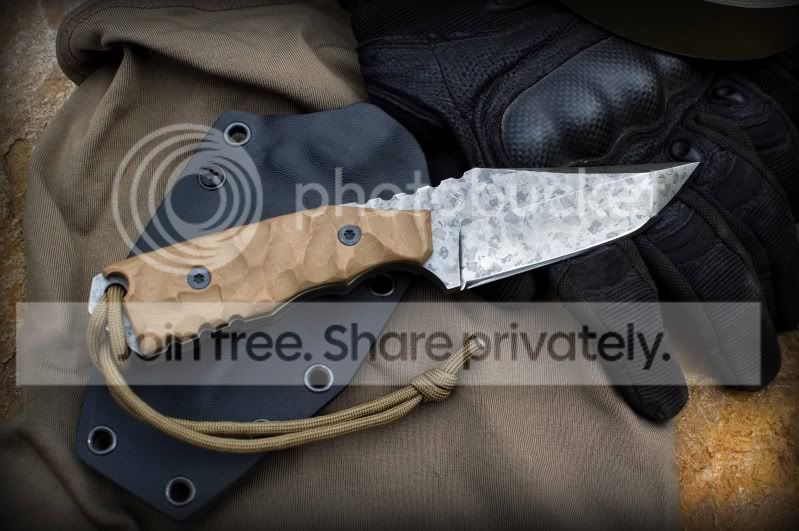
Here are a few that I did an acid wash on and then tumbled with the media described above.

Ambush1.jpg


DR1.jpg
 
Back
Top