
Anvil saga continues - bad news, good news, bad news. Will this work OK?

Joined
Nov 11, 2011
Messages
1,398
This from the local metal recycler:
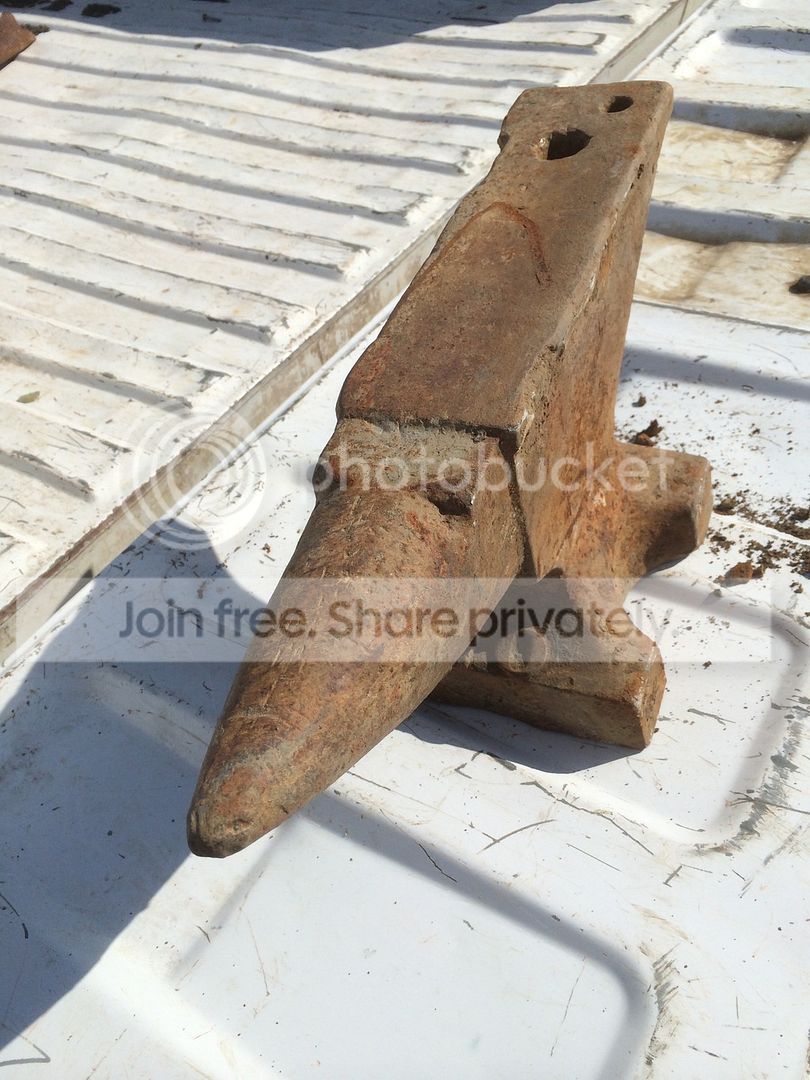


After I cleaned it up, most of you suggested I use it as is and I did. But it was way more concave than I realized and I bent the first blade I tried to name stamp on top of it. (Bad news). So I took it to the machine shop in town and he trued it up making the top flat and gave me a good right angle onmost of one side. (Good news). Here it is now:
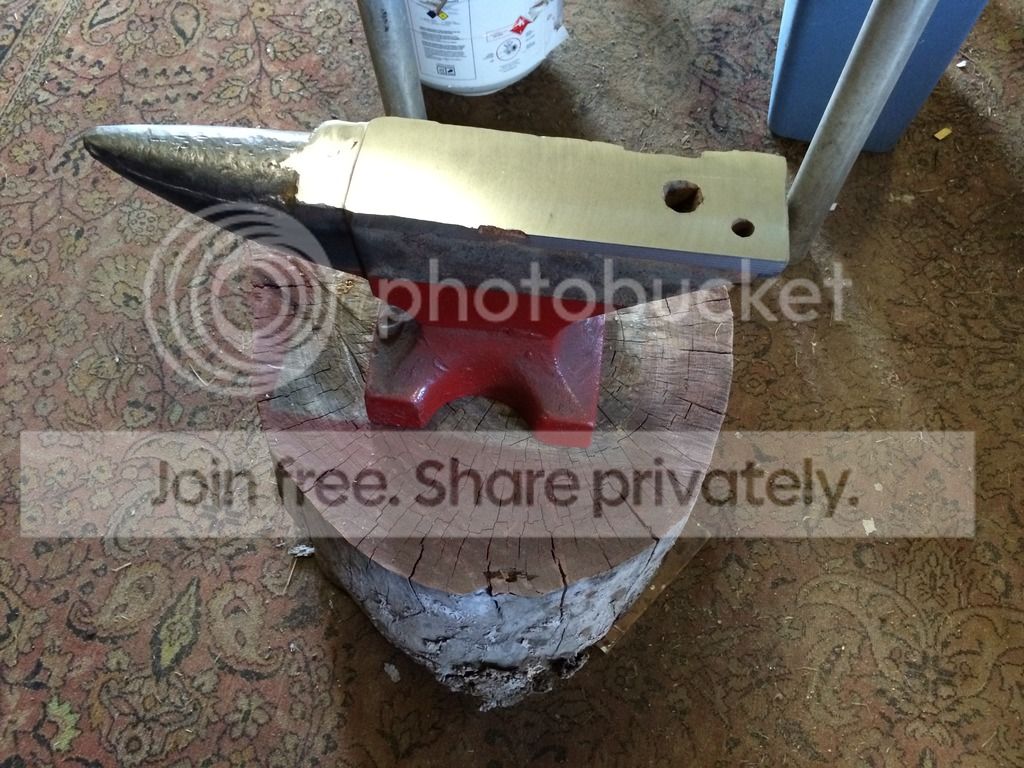


The final bit of bad news is that the machinist told me it was actually cast iron - I thought the base was cast and the top good steel but I am certainly not prepared to dispute his judgement. So I now have $100 in my $20 anvil and it's cast, not steel. Will it work OK though for occasional straightening and or bending of a blade or tang and as a base for name stamping? So far I have not tried to forge a blade (not that I wouldn't try some day).

Thanks

Steve
 
Last edited:
probably almost as good as finding a piece of gold hey?

does it have any markings on it?
 
Looks like there's a serious enough piece of steel on the top that you could get it reasonably flattened down with a lot of elbow grease. Someone looks to have taken a cold chisel to something on the horn as well. There appears to be a large enough flat spot just next to the horn to start banging on knives, though.

Nice grab, regardless!
 
I just went down this road a little while ago. Mine was a little dinged up but not that bad. The resounding advice I got here was to use a wire wheel brush on a angle grinder. If you grind a bunch of metal off the face you might grind through your good hard steel. Someone could have already done the same before you and there might not be much left.

If I was you I'd start with a wire wheel and knock all the rust off of the top. See what you have to work with. You can drag an metal ruler down the face length/width wise to see where the dips are. It's hard to tell where the dips are from the pic angle.

You can always take off more metal. It's a PITA to put it back on. I'd say, just clean it off with the wire brush and use it. If you get to the point where the eneven surface is negatively effecting your work, then do something about it.

I just mounted my anvil yesterday on a stand I made out of 4x4s. I "bedded" it in silcon and it took a TON of the ring out. I will say, if you're gonna make your own stand use 6x6s if possible. Hell, use a tree stump if possible.

Here's the thread I did.
http://www.bladeforums.com/forums/showthread.php/1263862-This-old-anvil
 
E
I just went down this road a little while ago. Mine was a little dinged up but not that bad. The resounding advice I got here was to use a wire wheel brush on a angle grinder. If you grind a bunch of metal off the face you might grind through your good hard steel. Someone could have already done the same before you and there might not be much left.

If I was you I'd start with a wire wheel and knock all the rust off of the top. See what you have to work with. You can drag an metal ruler down the face length/width wise to see where the dips are. It's hard to tell where the dips are from the pic angle.

You can always take off more metal. It's a PITA to put it back on. I'd say, just clean it off with the wire brush and use it. If you get to the point where the eneven surface is negatively effecting your work, then do something about it.

I just mounted my anvil yesterday on a stand I made out of 4x4s. I "bedded" it in silcon and it took a TON of the ring out. I will say, if you're gonna make your own stand use 6x6s if possible. Hell, use a tree stump if possible.

Here's the thread I did.
http://www.bladeforums.com/forums/showthread.php/1263862-This-old-anvil

Thanks! I just cleaned it up and will use it as is, And it is sitting on a cut off elm stump inside. Does that count as a "stump"?
. Good advice.
 
Last edited:
E

Thanks! I just cleaned it up and will use it as is, And it is sitting on a cut off elm stump inside. Does that count as a "stump"?
. Good advice.

Yep. If you're sure you want to keep it on their you could bed it in silicone. I just did that to mine and it's unbelievable how much quieter it is. If you do do that then you'll want to let the silicon set up nearly all the way before putting the anvil on top of it.
 
I oops - that did not work. It's more concave than I realized and bent a blade while names tamping it. So I'm forced to ignore most of the good advice here and the anvil is at a machine shop getting the top flattened. Hope there is enough steel and BTW this will cost more than I paid for the anvil to start with.
 
You can test an anvil in a second by just tapping the face with a hammer. If it bounces, the anvil has a hardened face. if not, well, it's still good for a lot of things.
There are lots of anvils with cast body and hardened face, they work great but don't ring...which is actually a good thing.
 
The bounce test will tell you if it has a hardened steel face. It won't tell you if there is enough steel left to forge on.

After getting it back, check to see if it has at least 1/4" of steel top left. If so, use it gently, and it should work. If less than that, use it for simple straightening tasks, but not for forging.
 
Back
Top