- Joined
- May 2, 2013
- Messages
- 1,711
Disclaimer: This not a how-to, or anything of the sort. I just simply wound up with something that I think is pretty cool and works pretty well. Actually it works fantastically well... So I thought I would share.
So, I had an anvil. Nothing special, but still, it was an official anvil. But, it was on loan from my Grandfather-in-law who decided recently that he needed it back. For what, I have no idea. He doesn't have a forge, and isn't a smithy that I am aware of... But, so goes the flow.
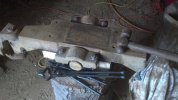
Prior to the anvil I had been using a section of RR track. Mind you it isn't the best thing for an anvil but it was free, heavy, steel, and easy to come by in my neck of the woods. I have several sections of track, one is about 8" long and serves as a great little portable 'hunk-o-steel' to peen rivets on and the like. Another section is probably 6' long, and while it is heavy, it is awkward and probably not the best for my needs. So I settled on a piece that was about 2' long, and already had a couple of holes cut in the middle with a torch. The holes could be used to strap it down (though I didn't) or for some as yet undiscovered purpose.
RR track is neat stuff. The very top is flat, but only barely. The sides roll off in a tightening radius, and almost all track is work down and smooth as glass, especially if it was used at some point. But, the flat isn't flat enough for my taste. So, I decided to fire up the welder and add a flat plate of AR500 from a grader blade to the top of the rail as a face. I left part of the AR500 hanging over so that I could shape it into a modified horn in the future. I also attached a RR nut to the top as I have a lot of RR bolts and nuts lying around. I can form these bolts into various things, such as the smooth dome attached here, which can be used like an armorer's post anvil. Care has to be taken with the welding here as overheating the steel while getting a good solid fill under the plate and good weld between the two is a concern. I had to make several short between the junction of the RR track and the plate, working my way out from under the plate so to speak without overheating the plate. Blah blah blah; here is the end result...
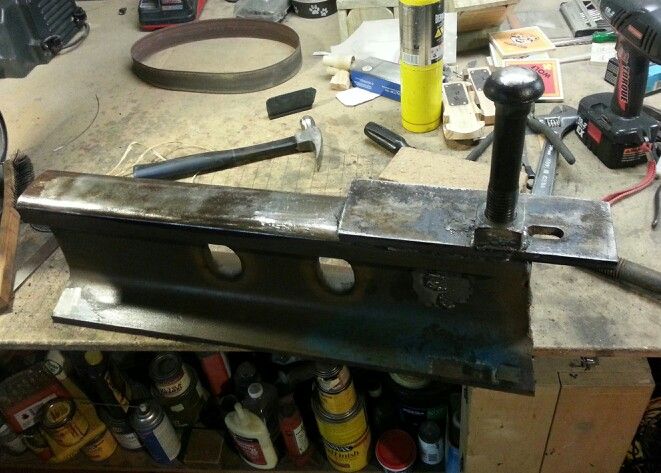
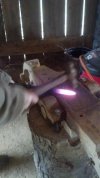
It has proven to be a close equal to the real anvil I had become accustomed to. Surprisingly good ring, and nice rebound honestly. The problem was the mount though. I had been using a set of 6x6 posts cut about 2.5' high as the stand for the anvil. However the rail is significantly shorter, and a bit longer than the anvil. Therefore it wanted to bounce and move around... So I decided I needed something better. But buying more lumber and going through all that crap again didn't seem like a fun option. Finding a big stump was though, so I threw the Stihl in the truck and headed up to the farm... I found an old locust tree that was in need of felling, so I dropped it and pinched about 3.5' of the stump. My great uncle was the beneficiary of the wood from the cut fest that followed... Three trips like this... Not including the brush dump...
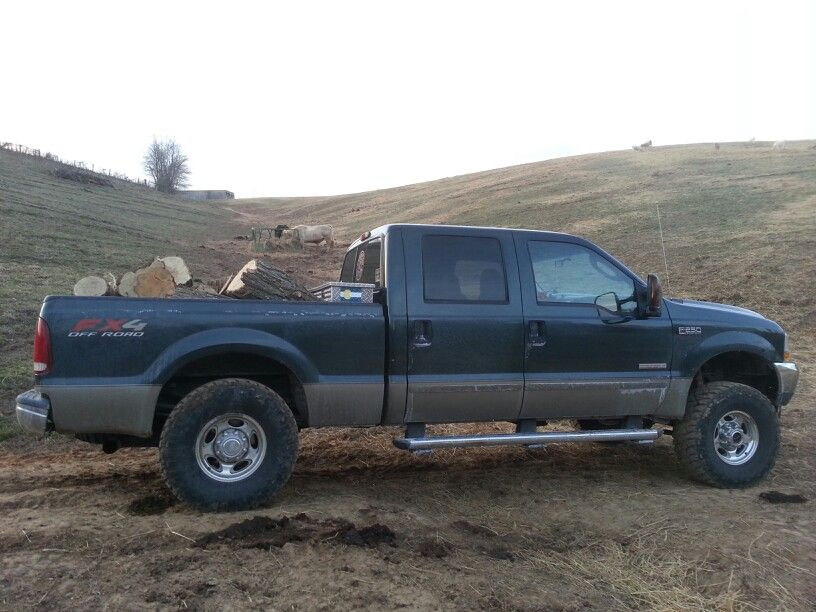
At first I estimated the stump to weigh about 250#... Surely it couldn't be more than that...
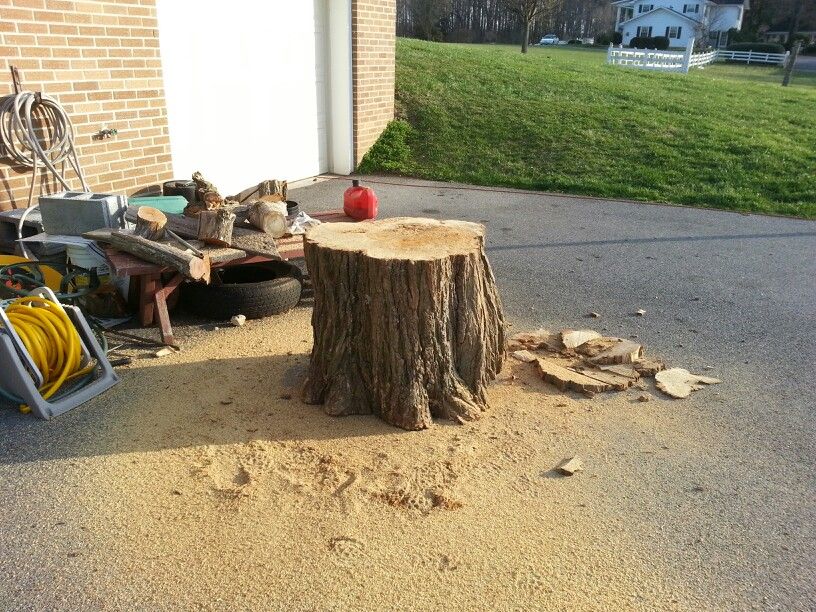
Well, after my nearly tragic attempt to slowly roll the stump down the hill you see in the background of the above pic, I decided the weight was probably more like 500#... So, off to get the tractor... Seeing as how I was doing this solo, you would think I'd have had the tractor out to begin with. It does, after all, have a bucket...
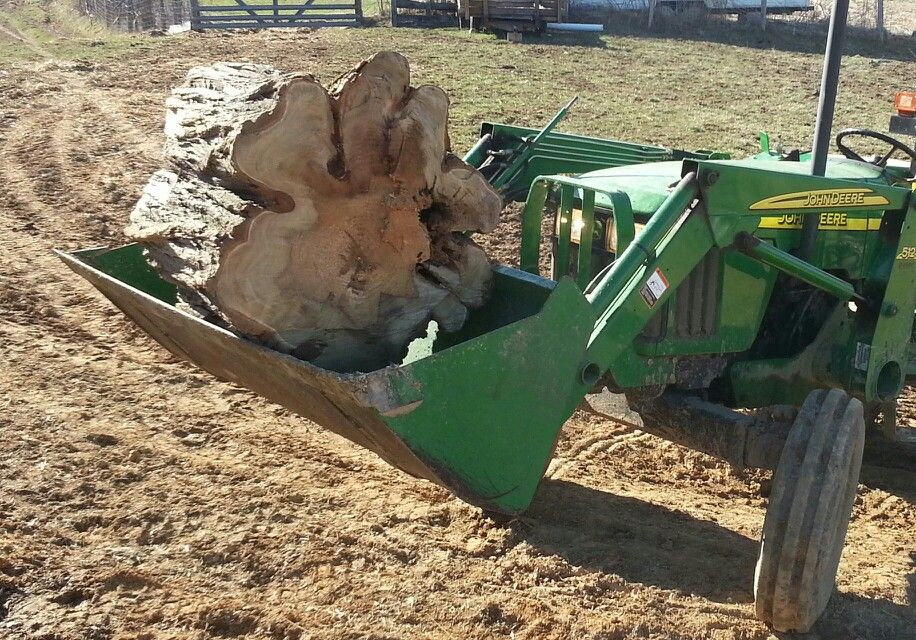
So I got that back to the house, unloaded, and managed to get the bottom flat. So then I had to work on the top.
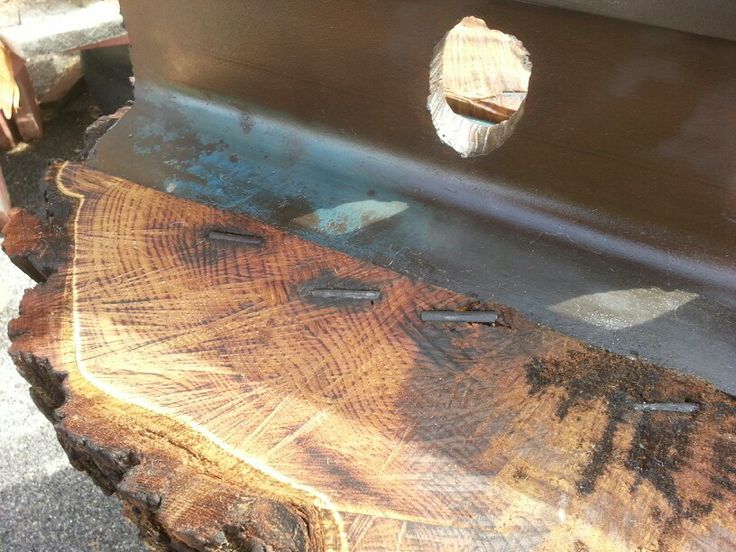
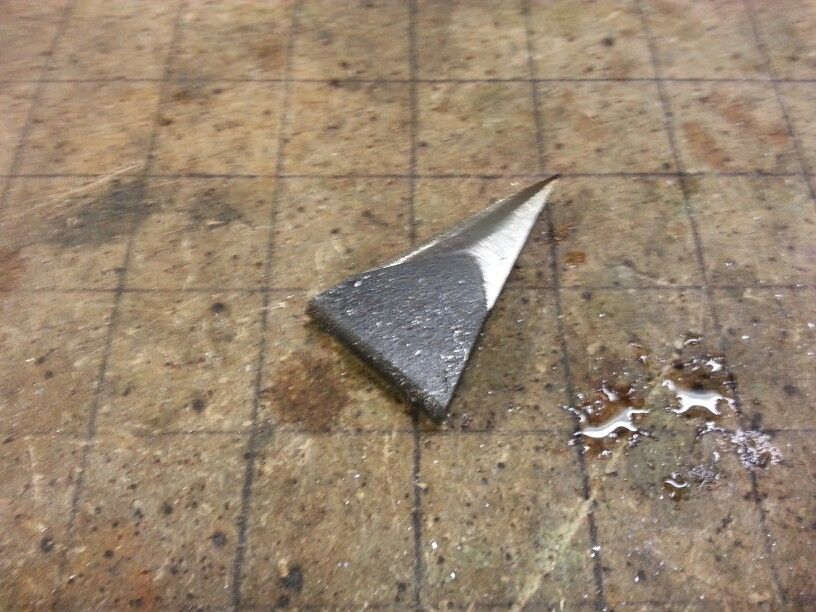
I went through several ideas of how to mount the rail to the top of the stump. I finally settled on attempting to cut a slot with the chainsaw and set the rail into it. I cut a groove the width of the track bottom across the stump. This channel was approximately an inch deep, and just slightly smaller than the width of the base. This let me nudge the base down into the slot, and then use some small wedges (a good use of mystery steel, in this case suspected 5160 that is 1/4" thick) to force the wood against the rail holding it in place. Here are the wedges and the resulting fit. Sorry, didn't take pics during the slot cutting for some odd reason...
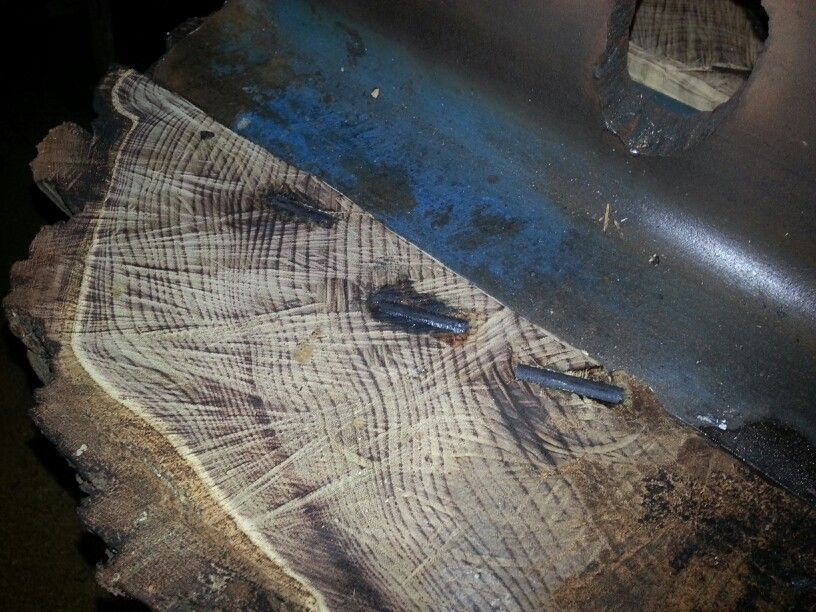
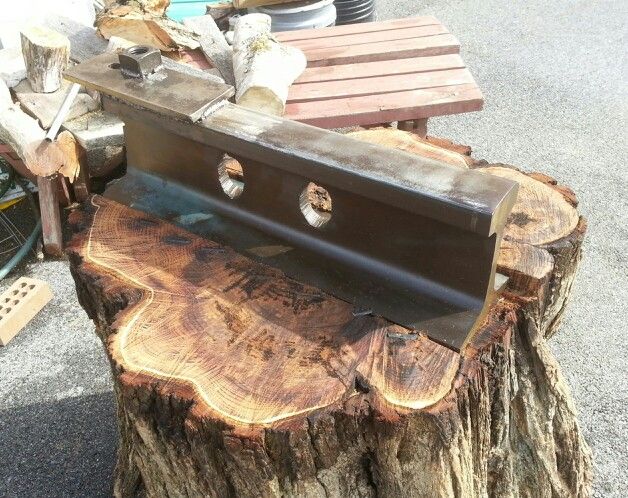
And here is the finished product for the most part...
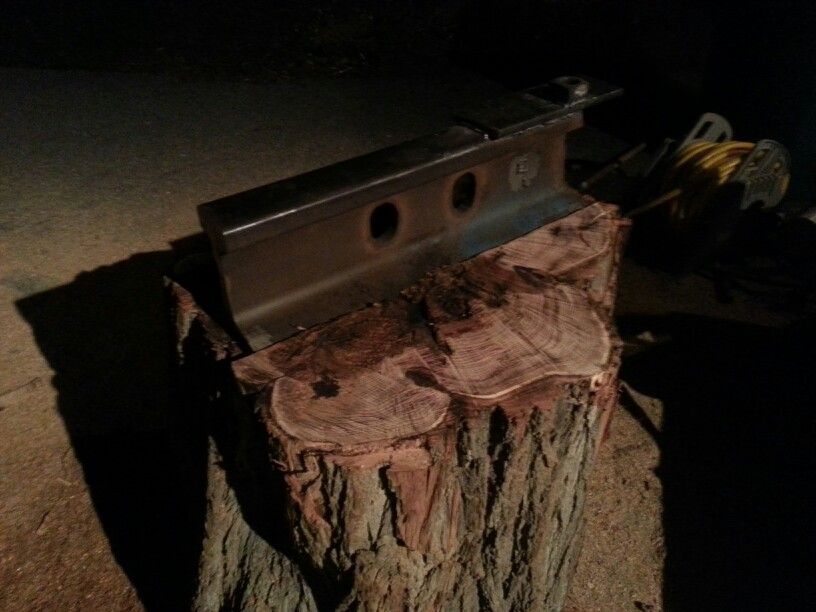
I did pour some thinned epoxy into the slightly rotten sections near the middle of the stump. And also treated the entire lower portion of the stump with insecticide and the top with a water sealer. The rebound I get off of this thing is terrific. And I can grab the overhanging AR500 and partially lift the stump with it. I couldn't be more pleased with the outcome. I know the pic above sucks, and I will shoot a better pic in the daylight today and post it up.
Again, not a how-to of any kind, but if you are strapped for an anvil but have access to a nice chunk of rail...
Hopefully I didn't waste any bandwidth for anyone with this. I built the anvil, retrieved the stump (and all the fire wood) solo, as well as completing the attachment to the stump solo. My friends and family are always eager to see the knives I make or the tools that float through the shop, but not so much some of these hair-brained projects I tend to take off on as a tangent. This one turned out so nice I may just decide it is good enough, and retire the search for a traditional anvil. Who knows....
Thanks for reading.
-Eric
So, I had an anvil. Nothing special, but still, it was an official anvil. But, it was on loan from my Grandfather-in-law who decided recently that he needed it back. For what, I have no idea. He doesn't have a forge, and isn't a smithy that I am aware of... But, so goes the flow.
Prior to the anvil I had been using a section of RR track. Mind you it isn't the best thing for an anvil but it was free, heavy, steel, and easy to come by in my neck of the woods. I have several sections of track, one is about 8" long and serves as a great little portable 'hunk-o-steel' to peen rivets on and the like. Another section is probably 6' long, and while it is heavy, it is awkward and probably not the best for my needs. So I settled on a piece that was about 2' long, and already had a couple of holes cut in the middle with a torch. The holes could be used to strap it down (though I didn't) or for some as yet undiscovered purpose.
RR track is neat stuff. The very top is flat, but only barely. The sides roll off in a tightening radius, and almost all track is work down and smooth as glass, especially if it was used at some point. But, the flat isn't flat enough for my taste. So, I decided to fire up the welder and add a flat plate of AR500 from a grader blade to the top of the rail as a face. I left part of the AR500 hanging over so that I could shape it into a modified horn in the future. I also attached a RR nut to the top as I have a lot of RR bolts and nuts lying around. I can form these bolts into various things, such as the smooth dome attached here, which can be used like an armorer's post anvil. Care has to be taken with the welding here as overheating the steel while getting a good solid fill under the plate and good weld between the two is a concern. I had to make several short between the junction of the RR track and the plate, working my way out from under the plate so to speak without overheating the plate. Blah blah blah; here is the end result...
It has proven to be a close equal to the real anvil I had become accustomed to. Surprisingly good ring, and nice rebound honestly. The problem was the mount though. I had been using a set of 6x6 posts cut about 2.5' high as the stand for the anvil. However the rail is significantly shorter, and a bit longer than the anvil. Therefore it wanted to bounce and move around... So I decided I needed something better. But buying more lumber and going through all that crap again didn't seem like a fun option. Finding a big stump was though, so I threw the Stihl in the truck and headed up to the farm... I found an old locust tree that was in need of felling, so I dropped it and pinched about 3.5' of the stump. My great uncle was the beneficiary of the wood from the cut fest that followed... Three trips like this... Not including the brush dump...
At first I estimated the stump to weigh about 250#... Surely it couldn't be more than that...
Well, after my nearly tragic attempt to slowly roll the stump down the hill you see in the background of the above pic, I decided the weight was probably more like 500#... So, off to get the tractor... Seeing as how I was doing this solo, you would think I'd have had the tractor out to begin with. It does, after all, have a bucket...
So I got that back to the house, unloaded, and managed to get the bottom flat. So then I had to work on the top.
I went through several ideas of how to mount the rail to the top of the stump. I finally settled on attempting to cut a slot with the chainsaw and set the rail into it. I cut a groove the width of the track bottom across the stump. This channel was approximately an inch deep, and just slightly smaller than the width of the base. This let me nudge the base down into the slot, and then use some small wedges (a good use of mystery steel, in this case suspected 5160 that is 1/4" thick) to force the wood against the rail holding it in place. Here are the wedges and the resulting fit. Sorry, didn't take pics during the slot cutting for some odd reason...
And here is the finished product for the most part...
I did pour some thinned epoxy into the slightly rotten sections near the middle of the stump. And also treated the entire lower portion of the stump with insecticide and the top with a water sealer. The rebound I get off of this thing is terrific. And I can grab the overhanging AR500 and partially lift the stump with it. I couldn't be more pleased with the outcome. I know the pic above sucks, and I will shoot a better pic in the daylight today and post it up.
Again, not a how-to of any kind, but if you are strapped for an anvil but have access to a nice chunk of rail...
Hopefully I didn't waste any bandwidth for anyone with this. I built the anvil, retrieved the stump (and all the fire wood) solo, as well as completing the attachment to the stump solo. My friends and family are always eager to see the knives I make or the tools that float through the shop, but not so much some of these hair-brained projects I tend to take off on as a tangent. This one turned out so nice I may just decide it is good enough, and retire the search for a traditional anvil. Who knows....
Thanks for reading.
-Eric