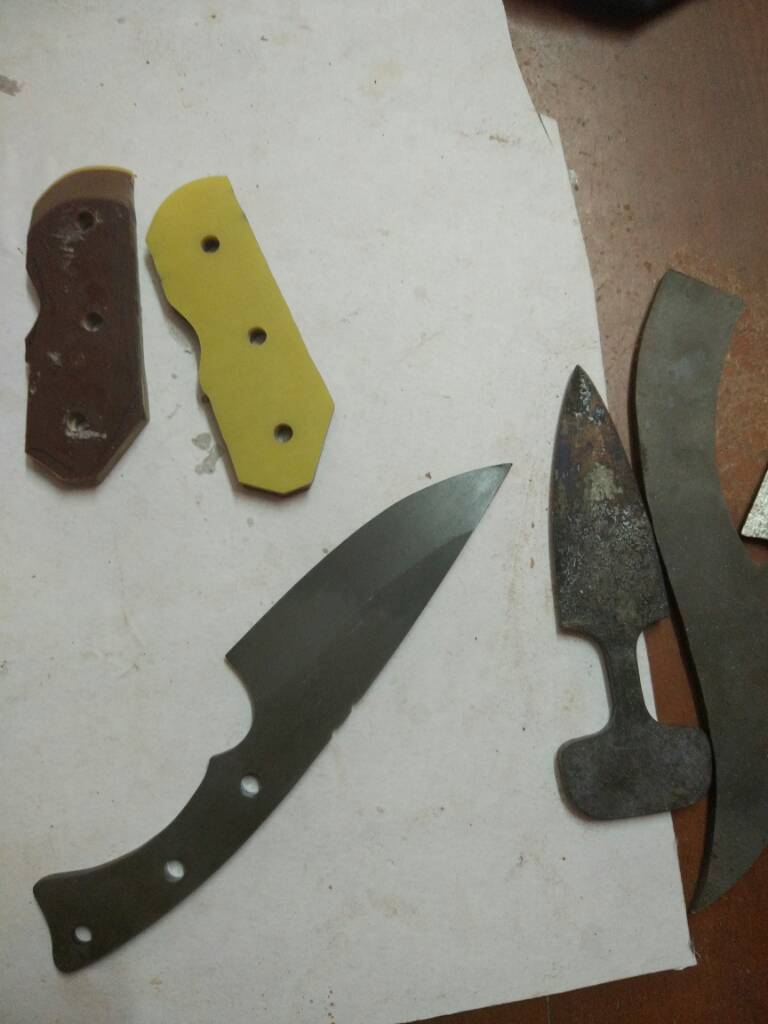
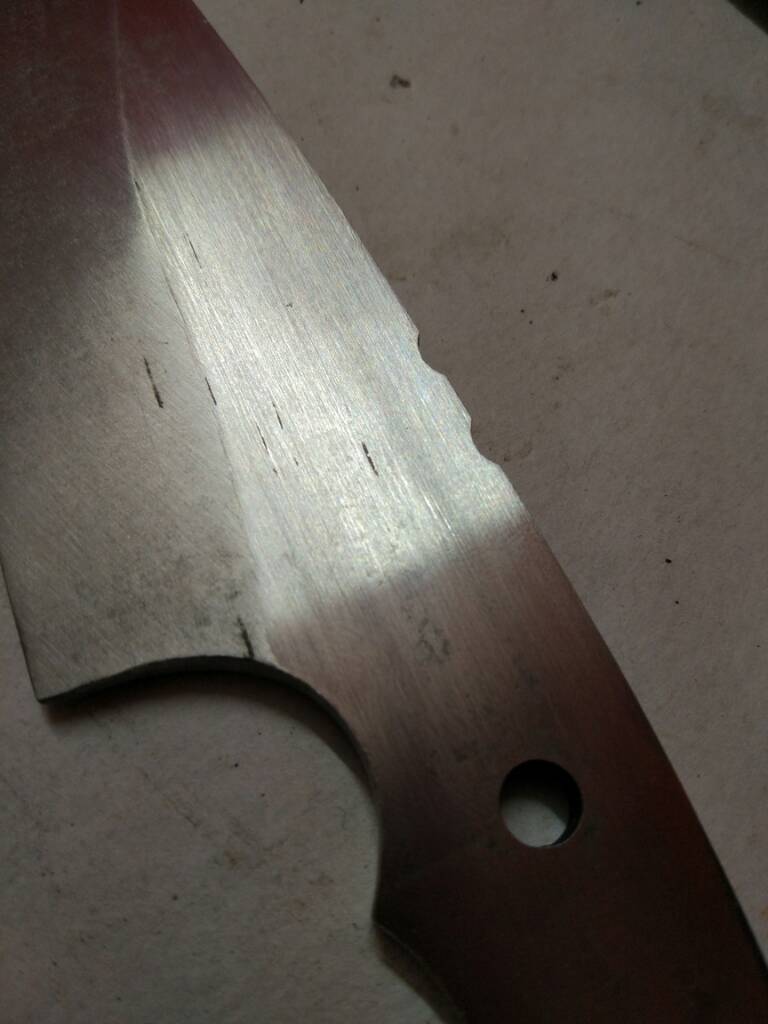
Are these micro-fractures in the steel or simply gouges?

Joined
Sep 6, 2016
Messages
85
I noticed these post annealing when I started filing my bevels. Do these look like micro fractures to you? I have heat treated and tempered it to 425 for 3 one hour cycles and everything seems alright but I'm still worried about these marks.. They're like maybe a 24ish grit mark deep, so no amount of sanding is getting rid of them.. Could this be an intrinsic defect in the steel (my initial stock was terribly warped and heavily scaled.. Just a terrible vendor) because I got it straightened in a hydraulic press to get the warps out. Could that have caused fractures or damaged the steel in some way? I normalized the steel and annealed it post the straightening and heat treated later and everything seems fine by the looks of it, still I'm a bit curious.
22b8a05d3b737ebf2e1cdbaa0e60f51f.jpg

Any tips? Thanks,
Regards

Conflict breeds creativity
 
When you say no amount of sanding gets rid of them, I can't help but think you simply haven't sanded enough... lol. I still see surface decarb in some areas. Keep going!
 
When you say no amount of sanding gets rid of them, I can't help but think you simply haven't sanded enough... lol. I still see surface decarb in some areas. Keep going!
This picture is post HT. I sanded a lot before that.. Anyways I acid etched the blade which took care of most of the surface imperfections for me.. Also brought out an interesting hamon

Conflict breeds creativity
 
I realize it is post HT. I am still seeing lots of decarb. Etching doesn't remove imperfections, it builds on them, sometimes transforming them into something more desirable. I think those dark marks are etched gouges, but the only thing that will confirm that is further sanding. Dig in.
 
The dark streaks, in the direction of the mill rolling, looks like stringers (impurities) to me. Additional
sanding may get past them....and could expose others......Anyhow...as Rick suggested, you'll need
to sand further to remove the decarb'.
 
This is my first knife and I'm not really bothered about the looks so much.. It was jist for practice anyways.
I was only worried that the blade was fractured or something. I gave it a really deep acid etch and it's taken care of quite a lot of the mess
23f7a74301fe88eae1ff9850db57f27c.jpg

Got a cool(ish) hamon..
Plus I'd like to move on and work on my push dagger and a skinner that I have in the works

Conflict breeds creativity
 
When you say no amount of sanding gets rid of them, I can't help but think you simply haven't sanded enough... lol. I still see surface decarb in some areas. Keep going!

Also start lower grits and change directions between grits.

This is my first knife and I'm not really bothered about the looks so much.. It was jist for practice anyways.
I was only worried that the blade was fractured or something. I gave it a really deep acid etch and it's taken care of quite a lot of the mess
Plus I'd like to move on and work on my push dagger and a skinner that I have in the works

Whoa

Jumping to the next thing before you finish this will not give you skills.
It's a big trap.


Do this one to perfection before you do another.


If you are filing, be sure to clean that file.
Filing chips leave deep scars.
 
Last edited:
You asked for help and got some of the best telling you what to do. Why bother asking if you don't want an answer?
Frank
 
I was going to say the same thing, Count. You don't become a musician by playing a few notes of your favorite songs. Losing interest in a project is one thing... but the "good nuff" mentality is cancer for a knifemaker and leprosy for your knives.

You have some good designs in the works... don't short change yourself or your craft. Besides, you haven't established what these marks are.

If they are fractures, you have a problem. It could be from the straightening process you described, which means the whole lot is scrap. Or a failed heat treat, which should be analyzed and corrected.
If they are inherent stringers/inclusions, you have a problem. The steel is not suitable and possibly dangerous for knives.
If they are etched in gouges there is hope... but you'll only know if you finish it out.
 
Last edited:
I am with Russ. Impurities in the steel since they are running in the same direction. They occured during the rolling process. Chances are you will uncover more. You did not say what the steel is. Will they affect the steels performance? Probably not. If you are not worried about looks as you said, just chalk it up to a learning experience and get better quality steel next time.
Brion
 
Whoa.. Didn't think of it that way.. Thanks guys.. I'll anneal and draw file it today and get rid of the scratches and finish it up again, better this time. like I said I'm really new to this and I really appreciate everyone here helping me out.
I guess I was more excited to get more knives done now that I did one.. But like you said, I can't ignore perfection either.
I got a few more blanks surface ground and these didn't show up on any more. So I don't think it's impurities. Anyways I'll work on it a bit more to figure what those are.
Thanks again guys.

Conflict breeds creativity
 
So you used a file to shape the flats and edge bevels by draw filing. Did you clean your file every pass or 2. If not then the file can cause large gouges from build up in the teeth which rips steal out in strips or lines.
 
I used a medium grit silicon carbide stone for the flats and file for the bevel.. It's not cause of the file most likely..

Conflict breeds creativity
 
I had something similar open up on some cpm154 a few months ago. It was a void and was presumably from the mill. It was very small at first and I found it as I was finish sanding at 600. I went back to the grinder and it opened up to about 2" long. I finally got it ground out and finished the knife. I would definitely see how deep they are as it could cause failure down the road.
 
Back
Top