Are you Tech or Trad? - My takes on the bushcrafting knife...

Joined
May 3, 2006
Messages
2,401
Hello all,

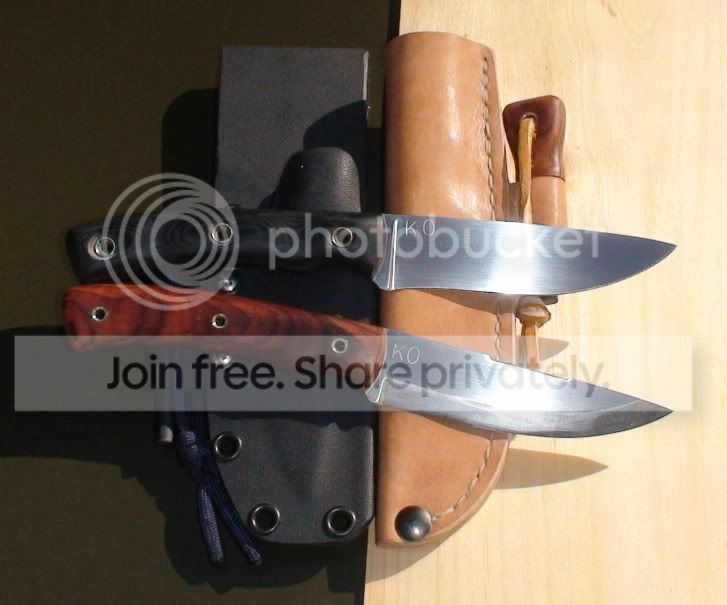
I wanted to make a bushcraft type of blade, but weren't too sure of the design of the knife and sheath. Basically, I was torn between
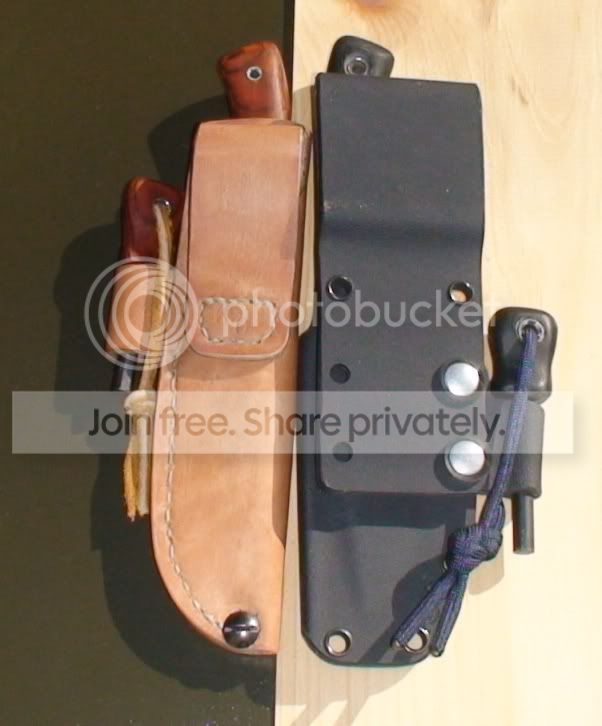
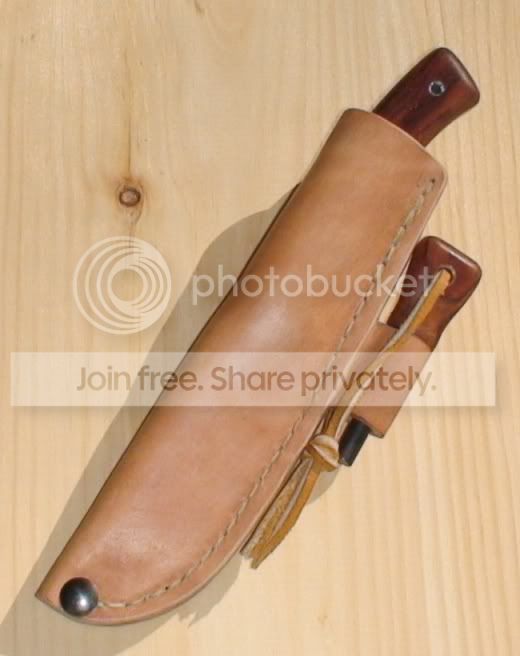
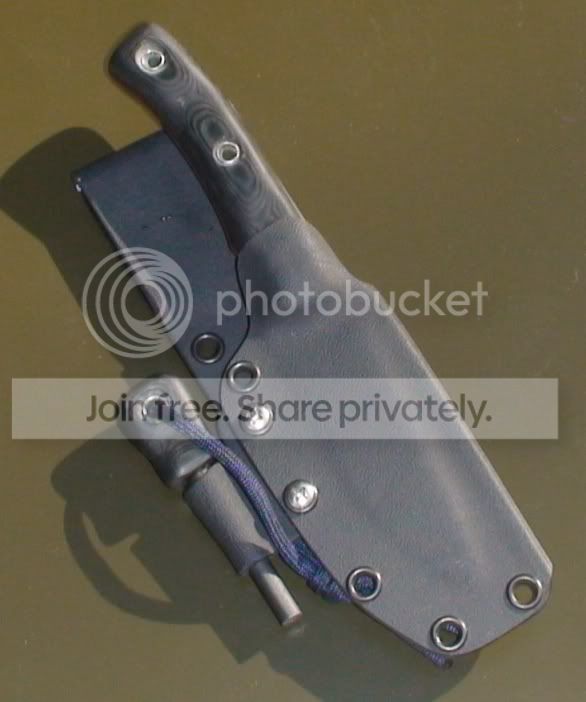
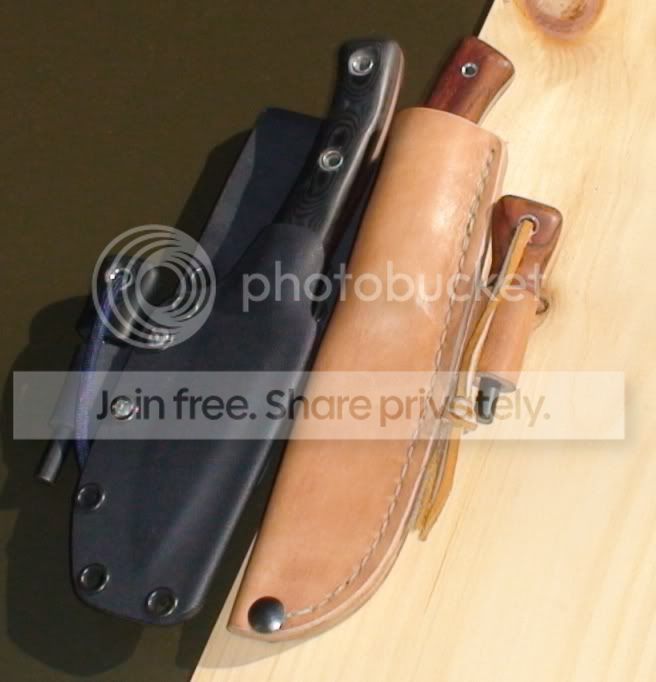
the "Tech" route (space-age material, flat grind, distal taper) or the "Trad" route (wood and leather, more traditional grind).
Not being able to choose, I thought it would be interesting to pursue both at the same time, on two different but similar-sized blades.
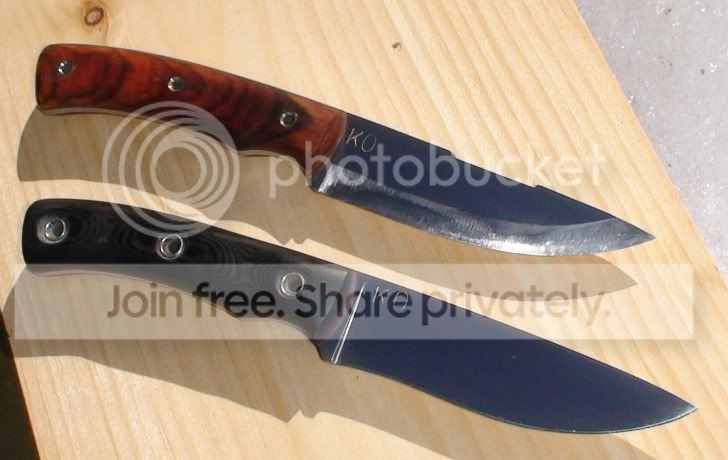
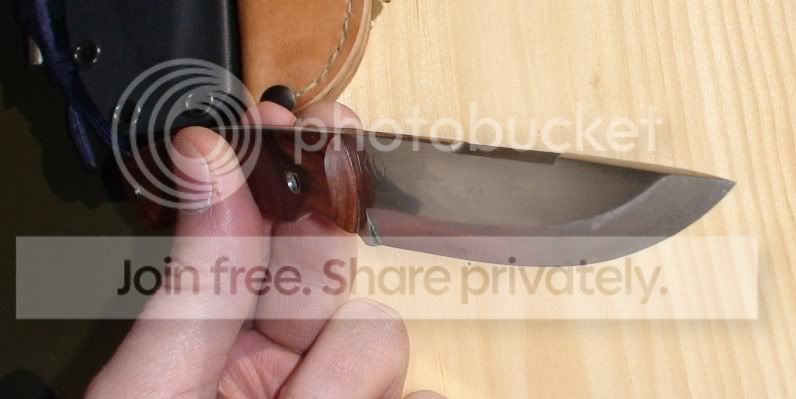
On top of that, I wanted to make my first recurve blade, and give a try to the time-proven scandi grind. Neither were easy to make,
but learned a lot in the process...

Here's the result of my "knife study": Are you Tech or Trad?
TechTrad002.jpg


TechTrad003.jpg


TechTrad004.jpg


TechTrad005.jpg


TechTrad007.jpg


TechTrad008.jpg


TechTrad009.jpg


TechTrad012.jpg


Thanks all for looking...Let me know what you think (design, execution, like/don't like)! Open to ALL criticism!
 
Love both of them! Nice clean users with great thought put into each. Great job!
 
I try not to get caught up in tech vs. trad type issues, it just makes my head hurt. It looks to me like you've shown there's more than one way to skin a cat. :thumbup:
 
Thanks for your comments all...

Maybe I should've put some specs:
Precision ground 154CM, Heat treated by Rob at Ranger Original in Alberta, Canada. RHC 60.5 (scandi) and 61 (recurve). OAL 7.5" (3.5" edge).
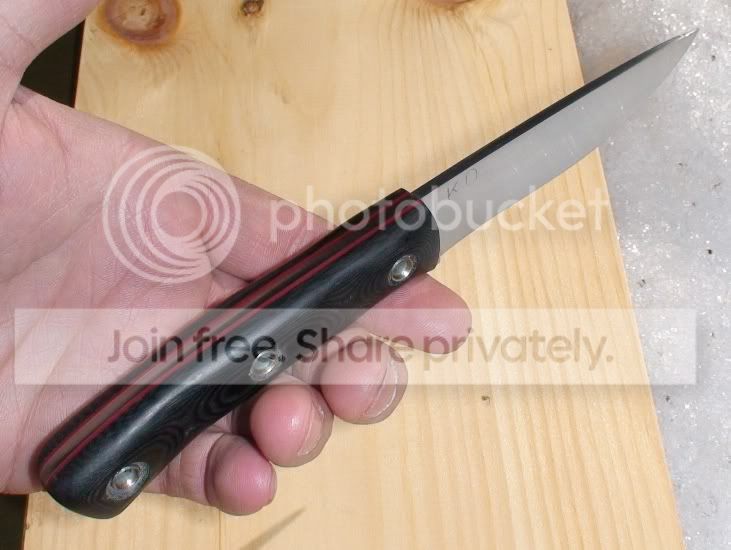
The scandi slabs are cocobolo, stainless tubes. The recurve is black linen micarta, red spacers, epoxied but with flared stainless tubes also. Both blades are hand finished (400 or 600 grit - don't recall). The recurve have a squared spine for the ferro rod, the scandi has a small edgy area on the back to strike the ferro rod. Both ferro rod handles are made with the same material as their matching knife.
 
I really like both of those and I'm a fan of bushcrafty blades. Great work!:thumbup:
 
I like them both, but I lean towards natural materials. Wouldn't mind having one of each to try out. They both look great, nice job.

Larry
 
What makes you think a flat grind is not traditional?

The scandi grind is in my mind a modern artifact directly related to the propensity of manufacturers to blank blades out of barstock or sheet stock with a minimum amount of effort required to make them salable. Back in the day when all blades were forged to shape rather than cut from paralell sided barstock, the flat grind with a distal taper was a naturally occurring profile, with a hollow grind occurring as a secondary result of large water driven stone grinding wheels being used for finish work in Solingen and Sheffield. I would be very surprised if you were to find the current scandi design occurring more than 50 years ago. That said, the flat grind blade looks like a nice user with a long life in front of it. The scandi blade looks like it has a slight hollow grind radius in it, which defeats the stated purpose of the scandi, namely that any idiot can sharpen it because the edge bevel continues all the way up to the flat. The way most people sharpen, it will be good for about 5 sharpenings, and the edge will be too thick. The handle looks nice.

-Page
 
the flat grind with a distal taper was a naturally occurring profile, with a hollow grind occurring as a secondary result of large water driven stone grinding wheels being used for finish work in Solingen and Sheffield

I learnt something there for sure...It makes sense. Thanks Page!
 
I had the pleasure to have both these in my hand along with others on sunday and they are very well made knives.:thumbup:

Bob
 
One of the main purposes of the Scandi grind as I understand it is that they are meant as wood working tools The link below is to the first antique puuukko listed as
hand forged and 75 yrs old. It seems to have the typical Scandi flat short beveled grind... I doubt it is just a modern artifact of the machined barstock world. This seems more akin to the laminated flat beveled knives like in the Japanese tradition.


http://www.tias.com/13253/PictPage/1923025861.html
 
One of the main purposes of the Scandi grind as I understand it is that they are meant as wood working tools The link below is to the first antique puuukko listed as
hand forged and 75 yrs old. It seems to have the typical Scandi flat short beveled grind... I doubt it is just a modern artifact of the machined barstock world. This seems more akin to the laminated flat beveled knives like in the Japanese tradition.


http://www.tias.com/13253/PictPage/1923025861.html
75 years ago is still relatively modern, yes it is older than 50, but it is still post WWI, rolled barstock was plentiful. The picture is too horrible to tell it it is a barstock knife, or actually properly forged to a distal taper. I wish the picture was better

-Page
 
Well i like um both but i see some small problems . I am new too but the leather sheath looks killer but poor with the bolt at the pointed end you should have used a leather rivot. The dark handled knife doesnt look like the pins or tubes are finished off very nice it could be a bad picture. your grinds look clean and sharp very nice overall. kellyw
 
Even though I haven't (yet?) fallen in love with the whole bushcrafty/Scandi style of blade, I really like both of these and they look very well done. Congrats, and great exercise!
 
as the maker of both... which one do YOU like more?

As a matter of fact, I'd agree with Dan Pierson: I'd like the "Trad" handle with the "Tech" blade (without the recurve, though). I also find the design just a tad too small; I'll enlarge my CAD drawing to 125% and it should be perfect :D

Hellgap: I agree with the chicago screw at the tip of the leather one; not the best idea. As for the micarta one, yes, the finish is not the best looking but the tubes are flared on top of the micarta being epoxied...than handle won't move for sure :eek:

I'd like to thank ALL for their comments - very much appreciated! :thumbup:
 
Back
Top