- Joined
- Aug 15, 2000
- Messages
- 135
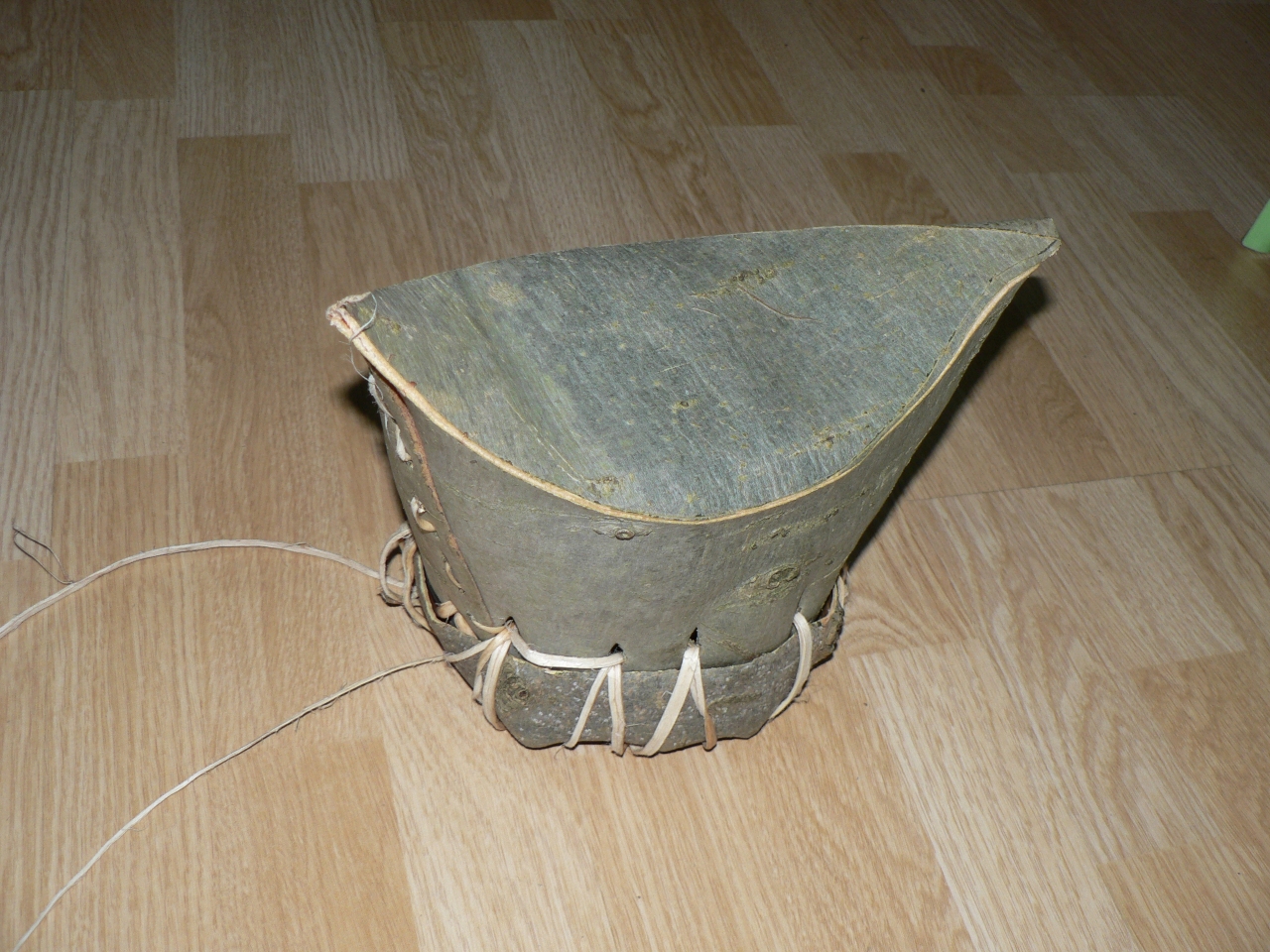
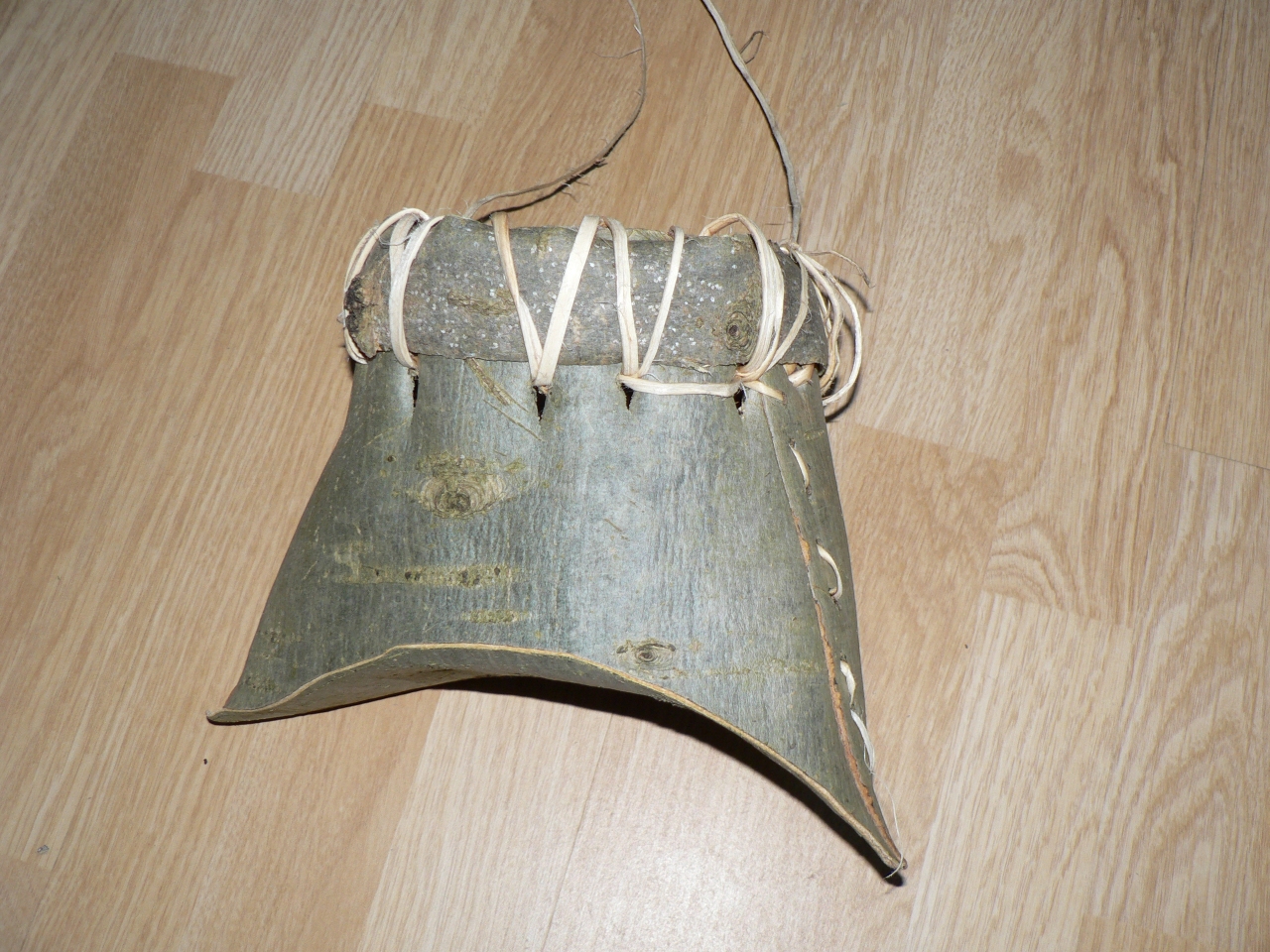
I attended a Bushcraft Course here in the UK a couple of weeks ago where I got the opportunity to make a container / basket from Ash bark. We don't usually get good birch bark over here and Ash bark makes a good alternative. It proved easy to remove at this time of year as the sap was flowing merrily.
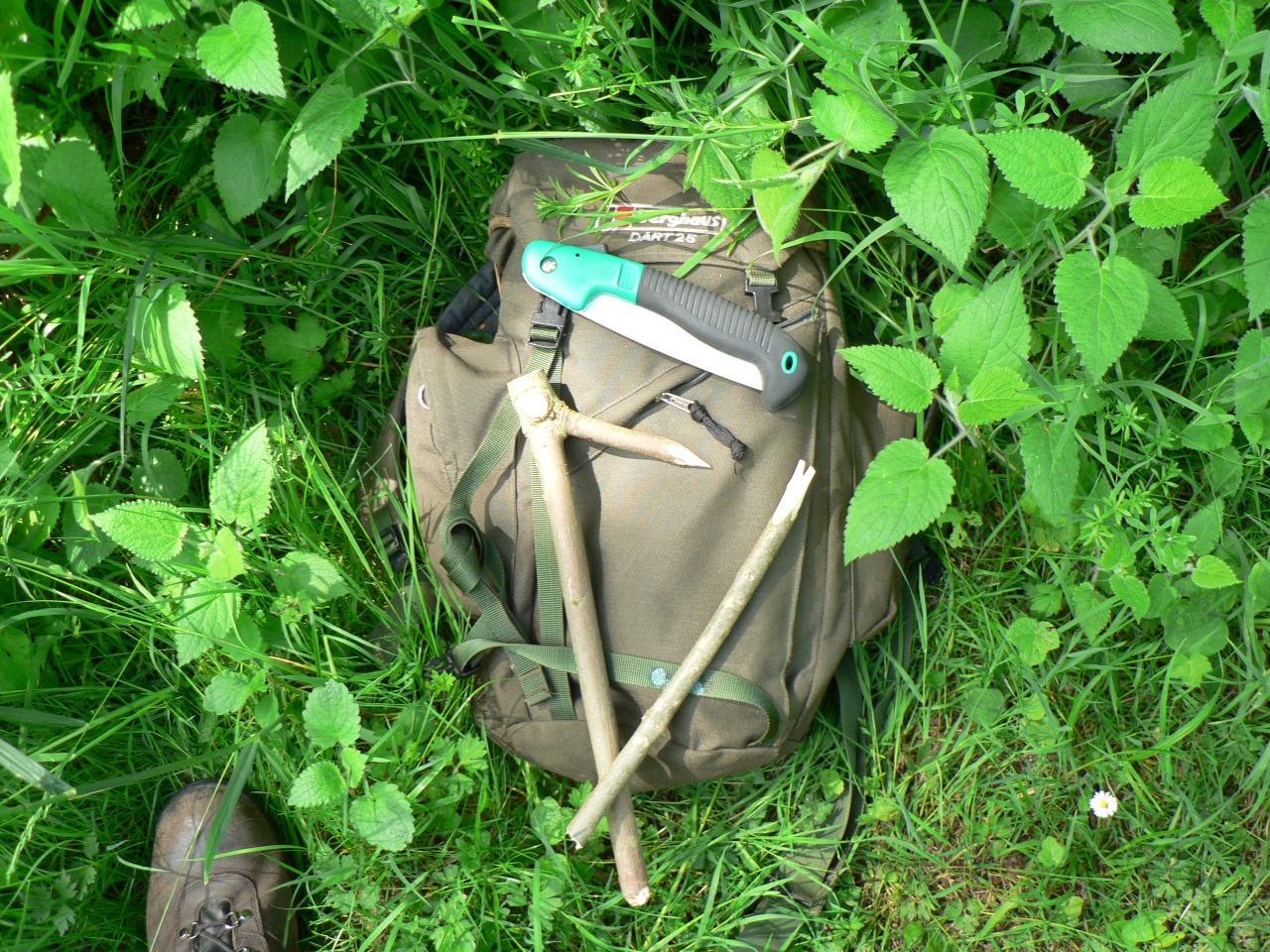
I used my Chris Reeve Shadow IV extensively along with a Fiskars hatchet, cheap folding saw and Leatherman Core. I also used a borrowed Bahco Laplander saw.
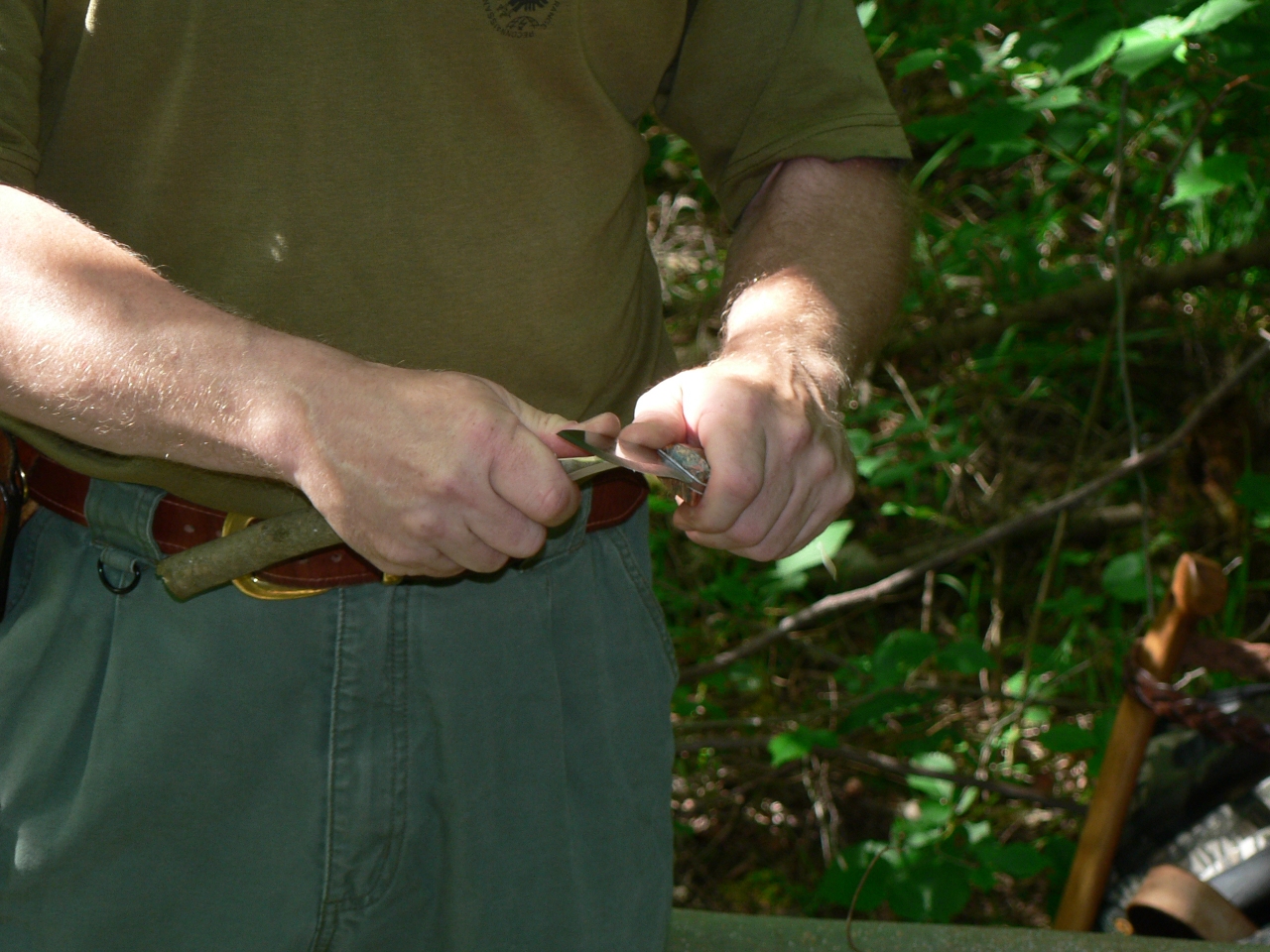
The first job was to fell an ash tree about 4-5 inches in diameter (with permission of course!) which was achieved using the saw. Next a wooden 'spud' or chisel was carved to hep remove the bark. This picture shows Steve Charlton the instructor using his Bernie Garland knife to carve the spud (I used my CR):
The spud was then used to remove the bark, along with the fingers!
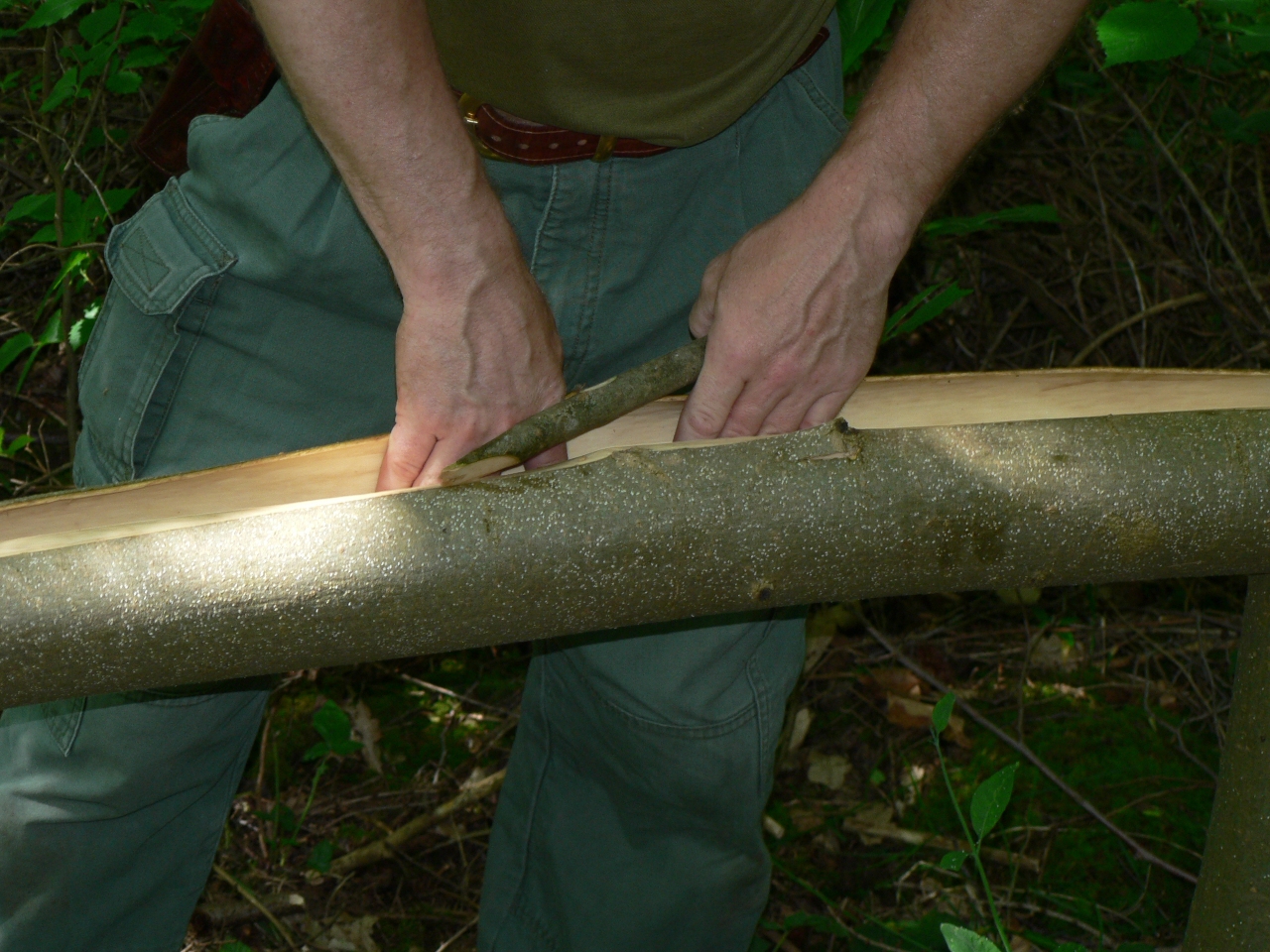
Here's the tree I was using and the slit bark:
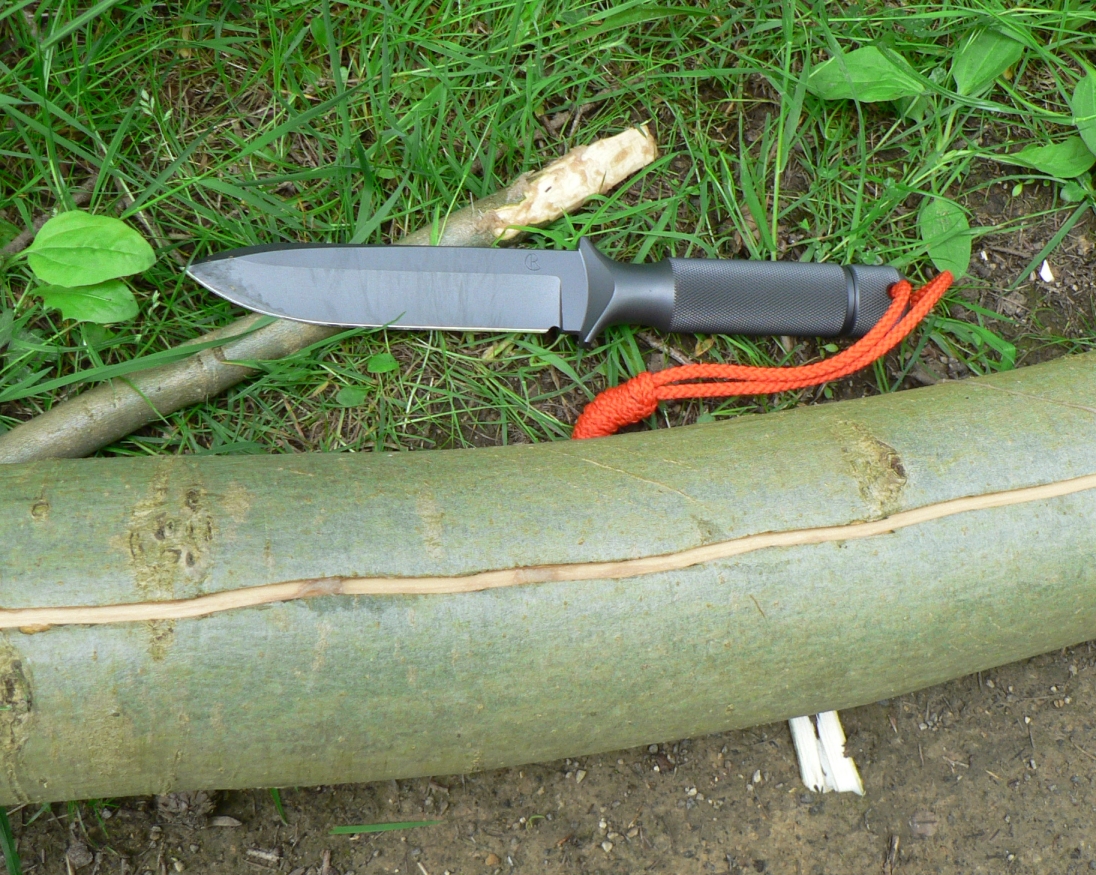
Here's all the bark we removed from my piece of tree:
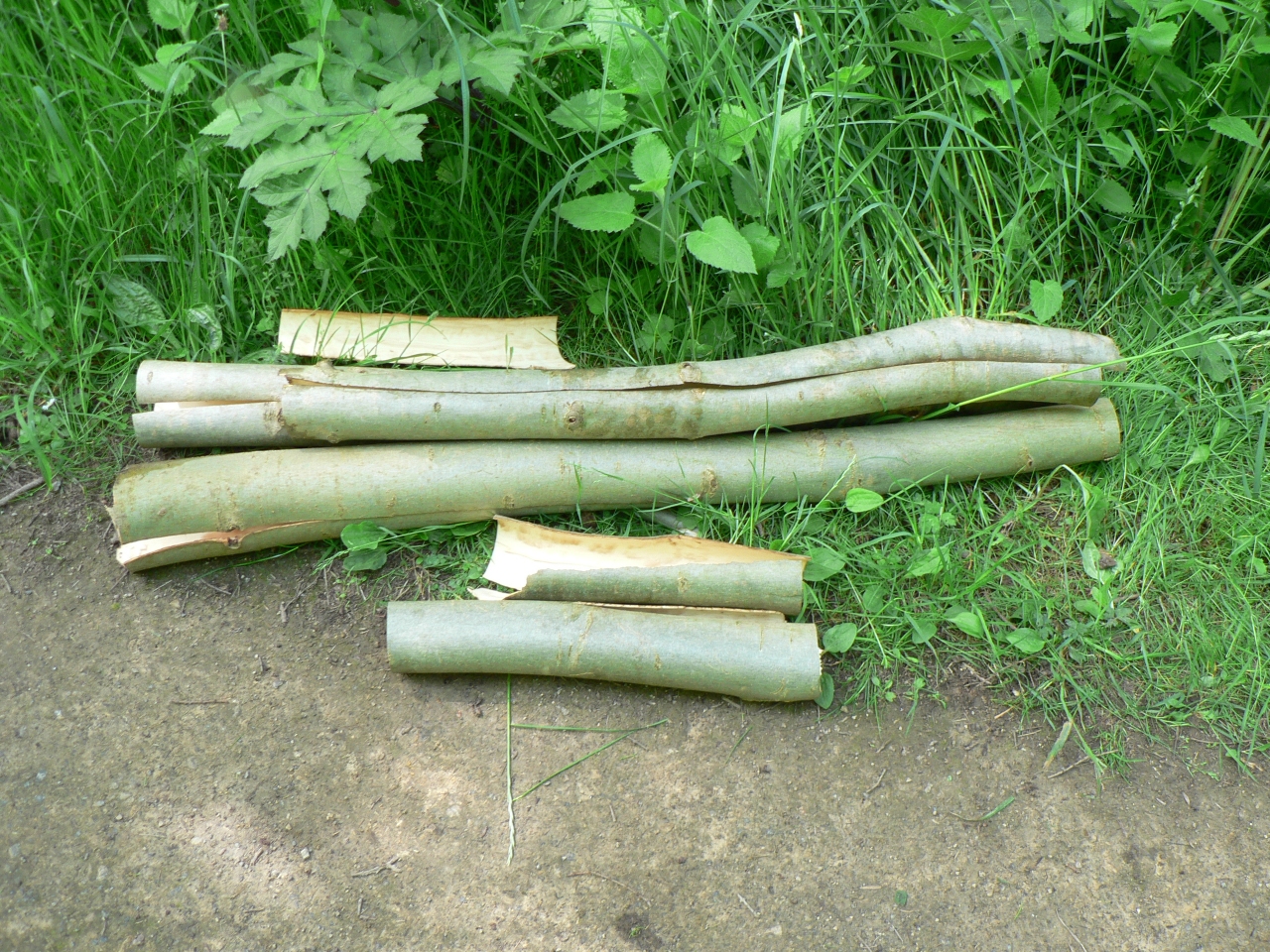
We then made digging sticks and 'brakes' (sticks with 'V' shaped notches) to dig up and strip spruce roots:
Here's Steve using a digging stick and antler pick to loosen the soil above the spruce roots:
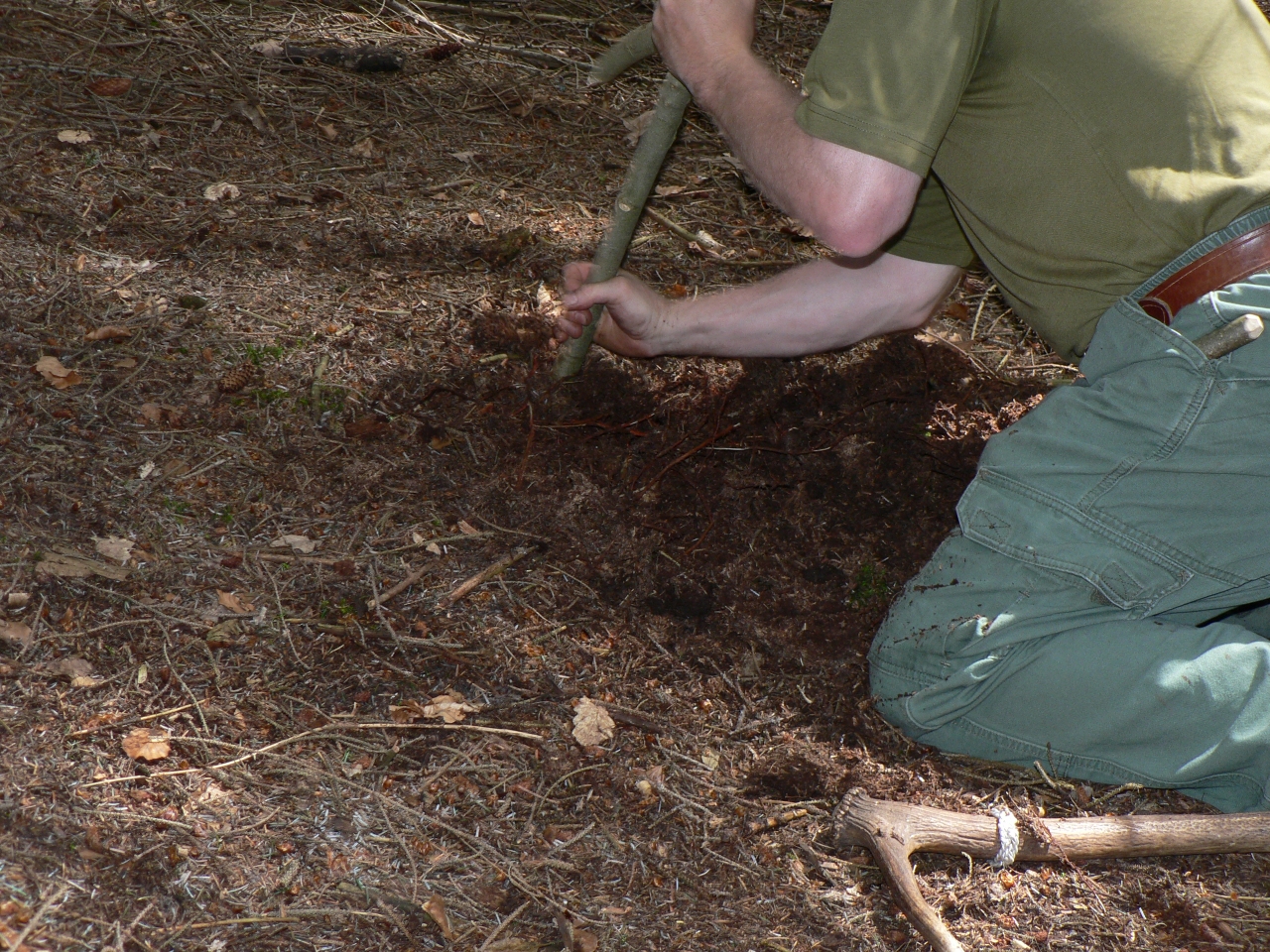
Here are some exposed roots:
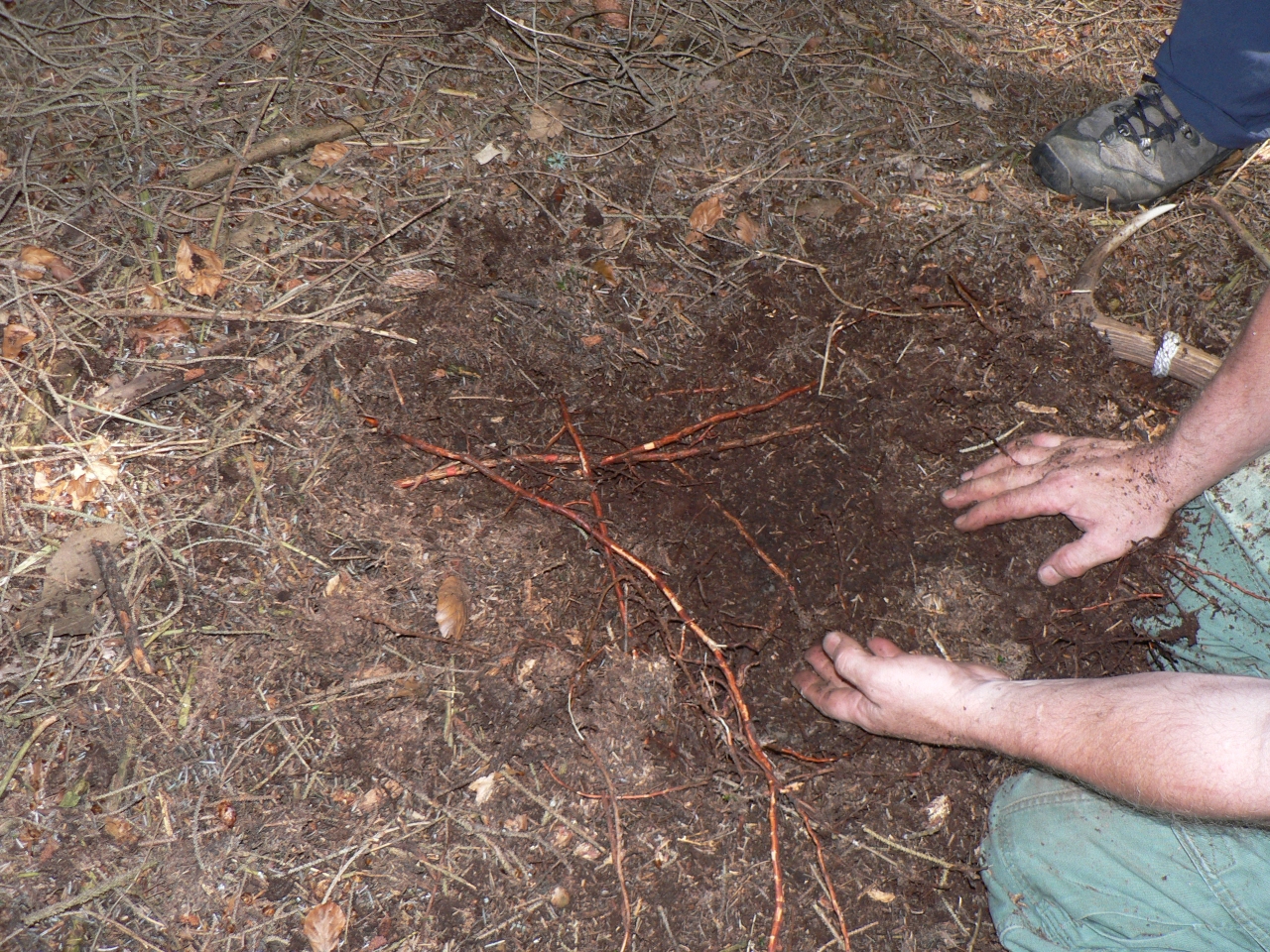
Here are the roots I dug up (a bit thick) with gratuitous CR pic:
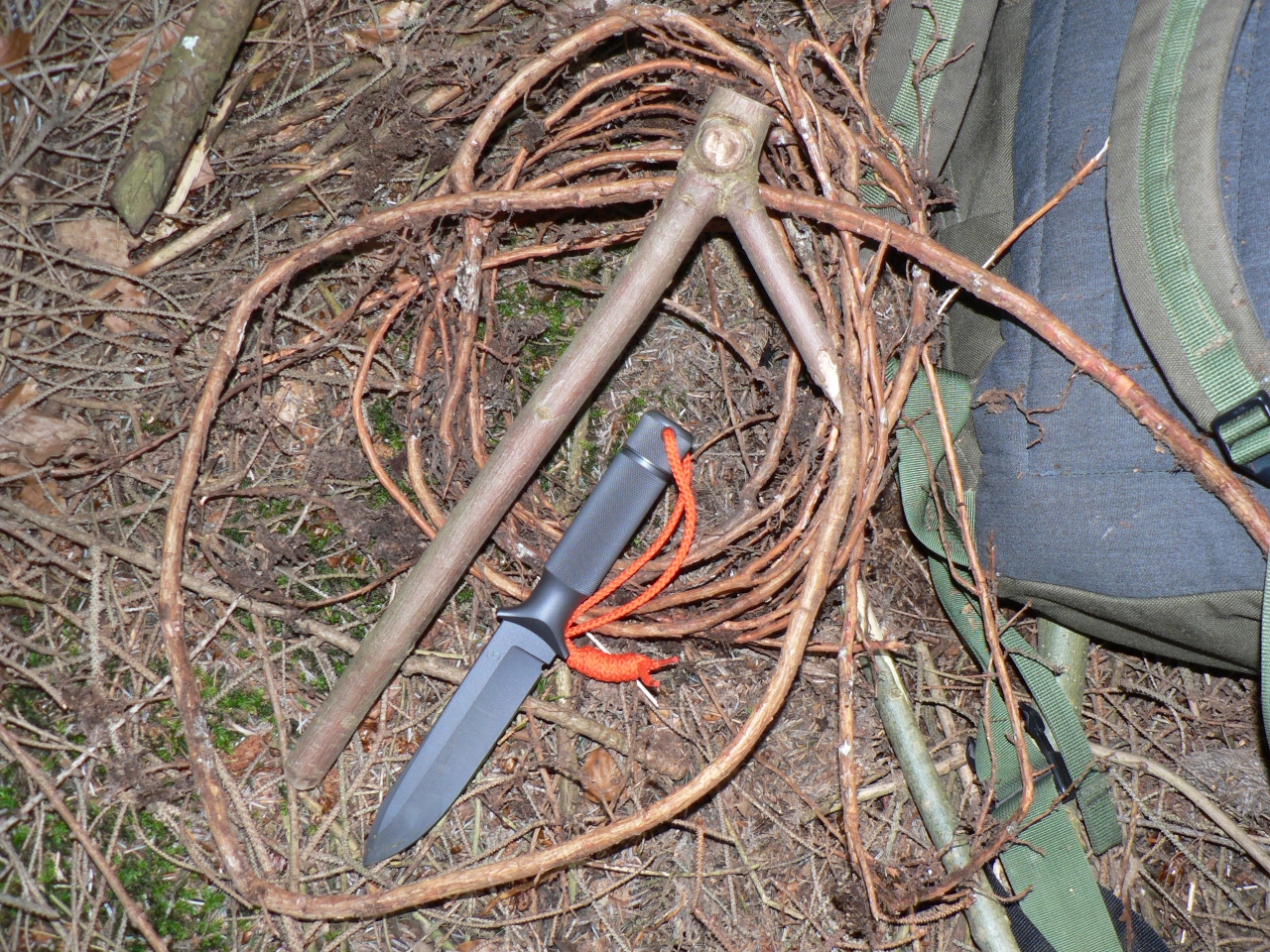
The thick roots need splitting which is slow going if you are not used to it. The trick of bending one side back more sharply to correct run offs does work but it is hard on the fingers! I ended up sticking with overly thick roots due to time limitations.
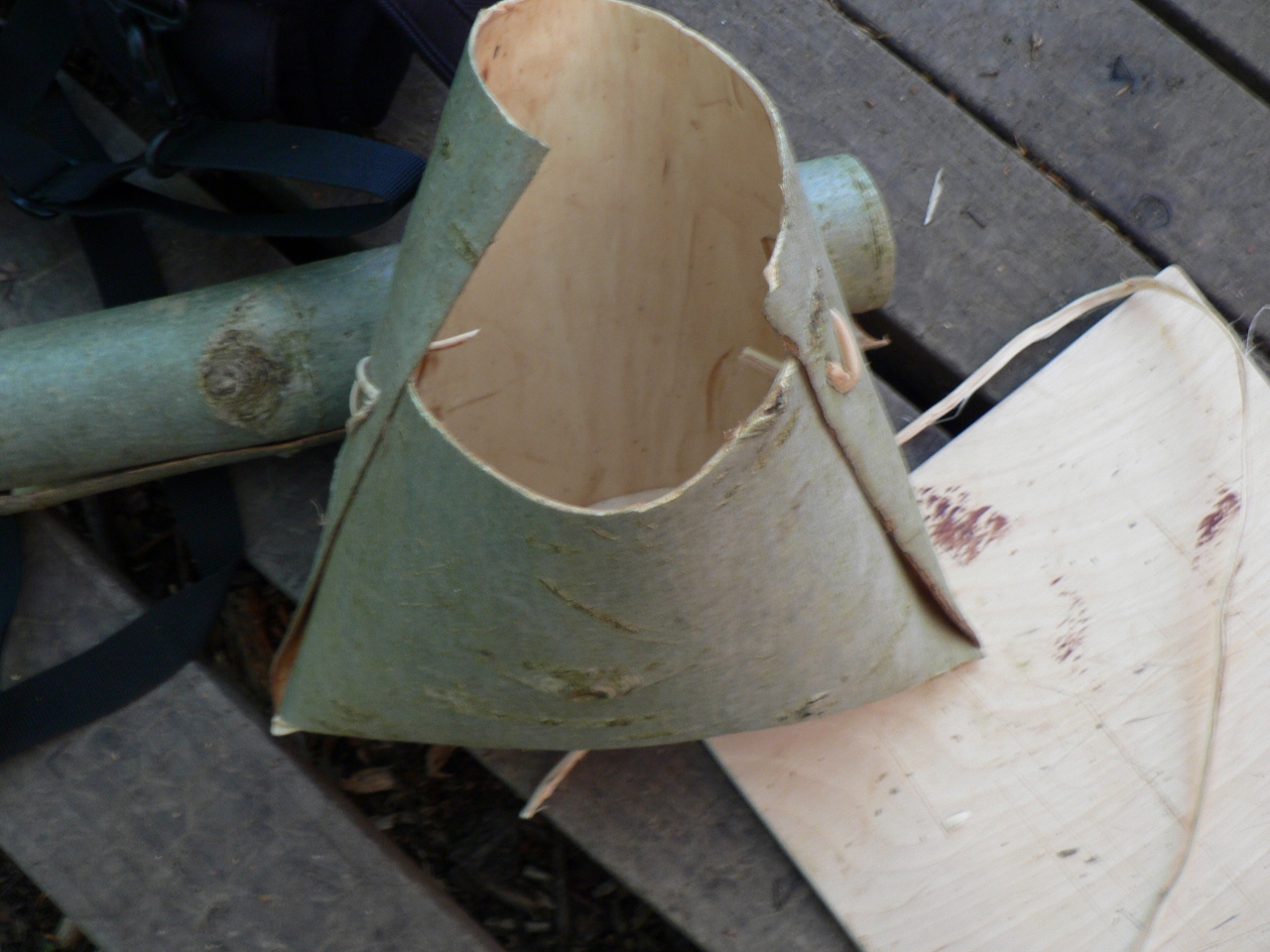
The Bark is then spread flat and an oval scored on the outside. The bark is then folded and stiched at the sides. I used my LM Core's awl for the scoring and piercing:
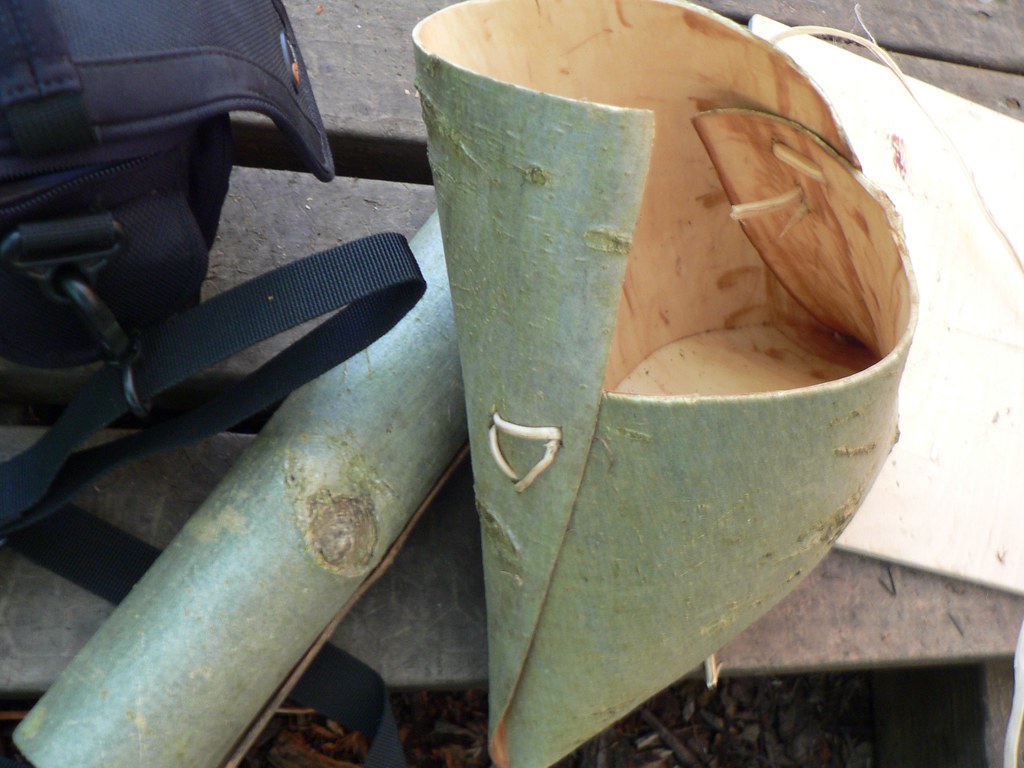
continued below.
I used my Chris Reeve Shadow IV extensively along with a Fiskars hatchet, cheap folding saw and Leatherman Core. I also used a borrowed Bahco Laplander saw.
The first job was to fell an ash tree about 4-5 inches in diameter (with permission of course!) which was achieved using the saw. Next a wooden 'spud' or chisel was carved to hep remove the bark. This picture shows Steve Charlton the instructor using his Bernie Garland knife to carve the spud (I used my CR):
The spud was then used to remove the bark, along with the fingers!
Here's the tree I was using and the slit bark:
Here's all the bark we removed from my piece of tree:
We then made digging sticks and 'brakes' (sticks with 'V' shaped notches) to dig up and strip spruce roots:
Here's Steve using a digging stick and antler pick to loosen the soil above the spruce roots:
Here are some exposed roots:
Here are the roots I dug up (a bit thick) with gratuitous CR pic:
The thick roots need splitting which is slow going if you are not used to it. The trick of bending one side back more sharply to correct run offs does work but it is hard on the fingers! I ended up sticking with overly thick roots due to time limitations.
The Bark is then spread flat and an oval scored on the outside. The bark is then folded and stiched at the sides. I used my LM Core's awl for the scoring and piercing:
continued below.
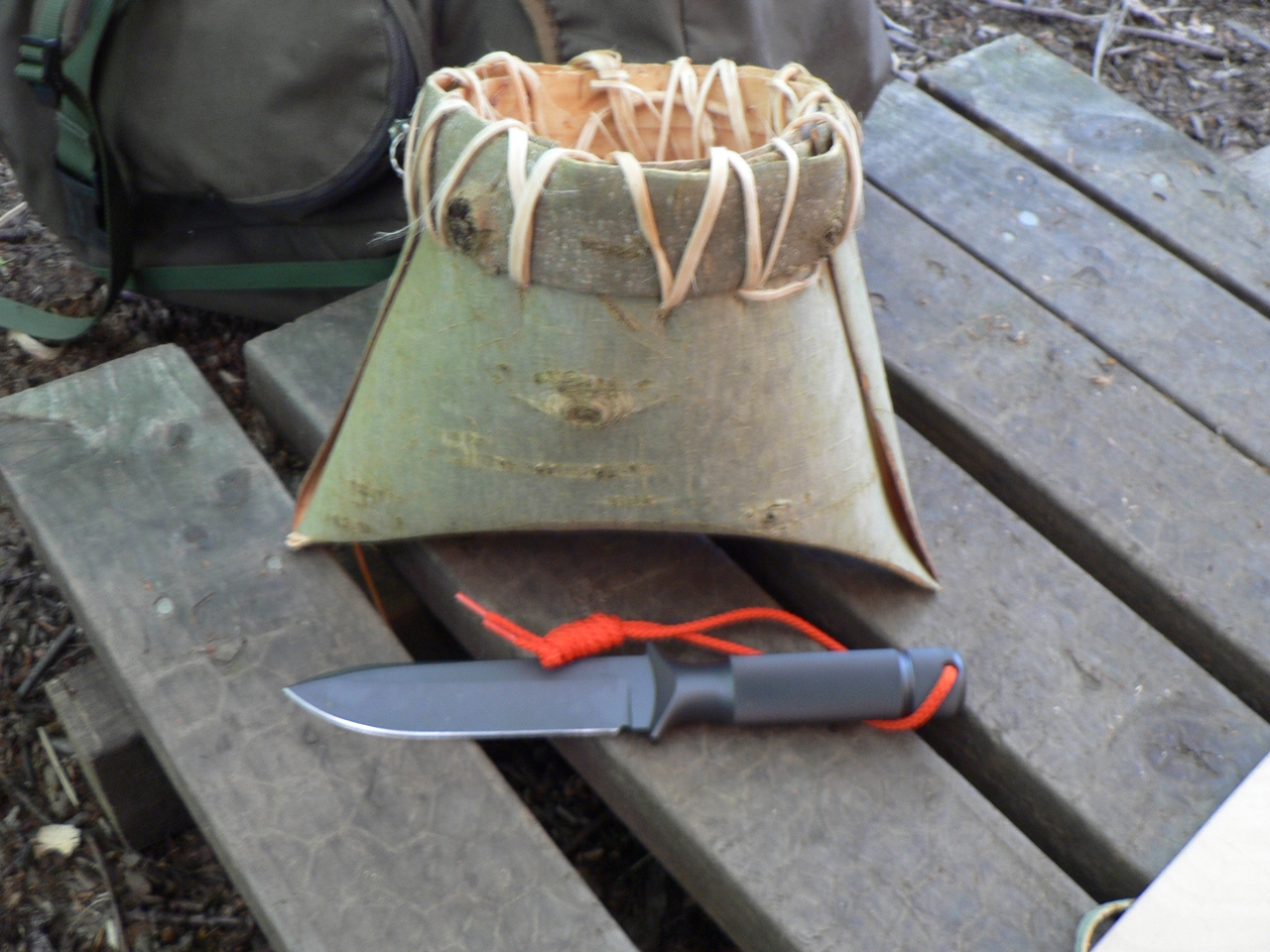
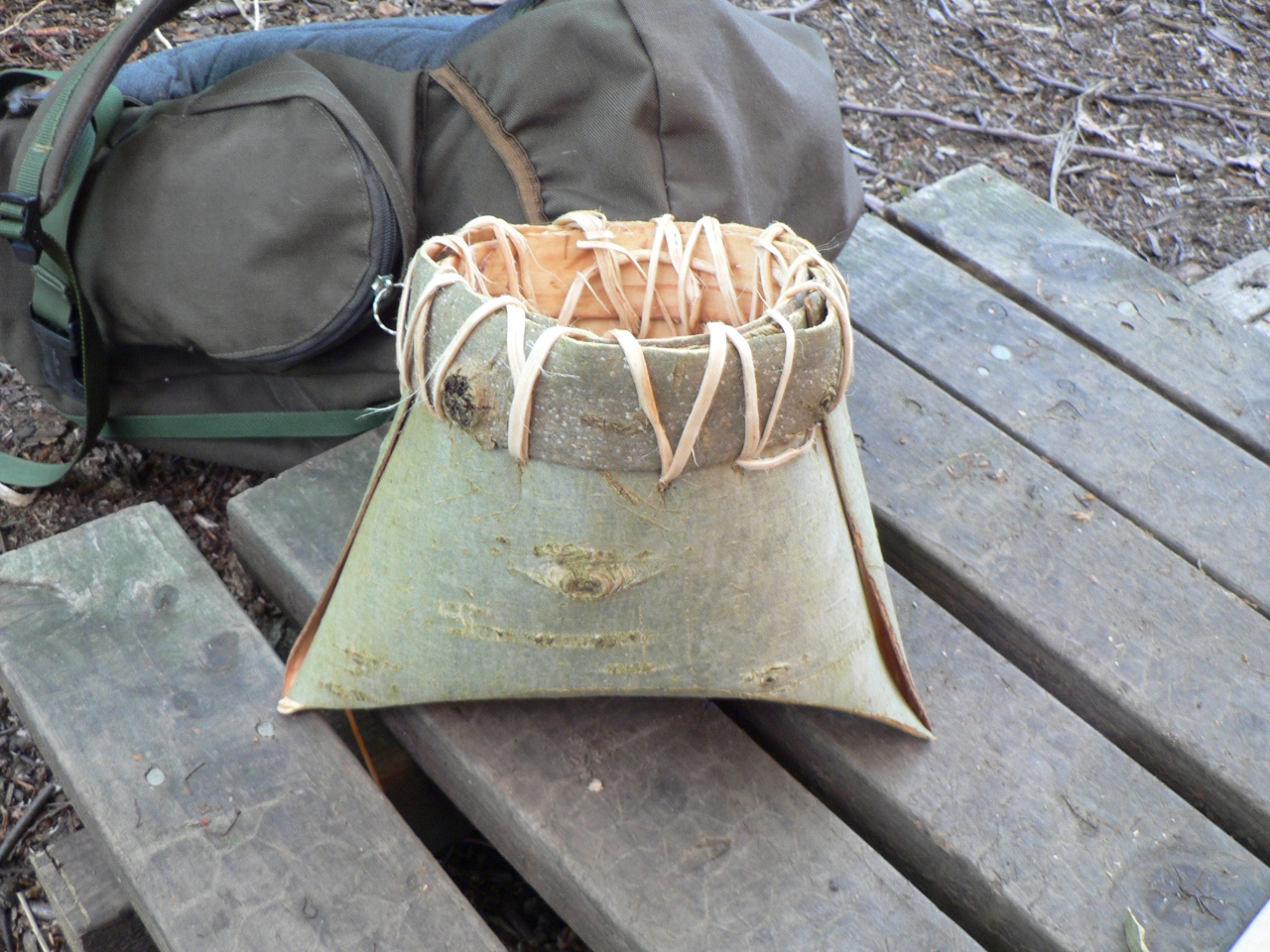


 )
)