At what point does price no longer reflect value?

at the $200 price range, try contact bill siegle (custom maker) here on the forums. any of the custom makers might be able to get you a knife for that matter in that price range.

that's not to say that the three you mentioned aren't good, just trying to broaden your horizons.
 
As for the blades you suggested,I would pick the Bark River.

As far the question,about $300 is the price point I can get pretty much any material and steel I want.After that I am paying for name and hype.
 
It really doesn't matter as there are people who won't spend more than $30 on a knife and others who will spend thousands.
 
Bark River ! I tried a little experiment with a couple of knives I own a becker BK11 and Bark River woodsman. Sharpened both to shaving sharp and cut up some stuff in the kitchen. Lets just say I am completely impressed with Bark River ! You will not be sorry.
 
I've fallen in love with the Fallkniven Northern Lights knives- something about that stacked leather looks great to me. The problem is, once I started looking around, I found others that look similar, but might not be as nice. At what point does cheaper not mean you're getting a good deal?

Looks great... why so cheap? :
Rosarms Cadet $98

First, the Rosarms is less expensive because it is made in Russia. Lower labor costs. It's a lovely thing and I've heard many good things about their quality.

Now on to the main question, which is one I find interesting.

IMO, the answer will depend on the individual and what properties he wants or needs in a knife.

A $12 Mora knife will actually perform the basic cutting function of a knife. If pure cutting functionality is all you require, spending more than that would be a waste.

But then there are grades of steel and grades of finish to consider. You yourself said you wanted something "nice". Improved fit and finish, nicer handles, exotic blade alloys, and special designs all add to the cost of the knife. Only you can determine what best meets your own minimum requirements.

At the same time, you can also spend $30 on a piece of dung that looks shiny and nice, but has terrible fit and finish and horrible balance.

Reading reviews and asking questions here on the forums will get you lots of information from other users. That will help you know which knives are "inexpensive" and which ones are "cheap".

BTW: All of the knives you are looking at are lovely, and you will likely be happy choosing any one of them.


HAPPY CHOOSING!
 
IMO in production knives, when you're going past $200, you're mostly likely paying for a name and gimmicks unless there is some type of exotic handle material or steel..
 
Bark River! Great materials, stupendous fit and finish, an awesome warranty, dead on balance, over built, and its American made.
 
For an awesome, reasonable priced, all around bushcraft/woodsman knife, I'd HIGHLY recommend the RAT RC-4. It's pure utility, built to use hard! You can pick them up, delivered, just under $100.

They also have an unbeatable warentee, break it (don't know how you would break it though) and they replace it, no questions ask.
 
The Great Sin of knife buying is looking at price. Price means NOTHING. There are lot's of people who will come up with all sorts of economic reasoning why price is what it is. The one thing price does is to separate people will pay it from people who won't.

A $100 knife made in a industrialized nation of first world class can and often is of lesser quality and utility than one made in a third world county - which is what most knife buyers don't want you to know. Perpetuating the myth allows them to justify their purchase, and helps support their esteem because the brand they protect has a higher social standing. They are tools of marketers raking in their money.

FEATURES are the only justification for price. Materials, grinds, assembly techniques, packaging, and availability make up the bulk of it's value. An Opinel is just as good as a Sebenza for 85% of what we do, a Kabar will do most of what a Randall would do in the field. Better materials, useful blade shapes, and durable construction can cost more, and be more expensive in cost, plus cause more labor and require more expensive tools and supplies to finish - but the differences are often incremental.

The selling price, however, often rises geometrically. Like Mercedes Benz, the price could include 40% profit - which they use to prevent service provider employees buying their cars. Can't have the maid owning better than the lady of the house.

The real problem is that buying on PRICE is a social statement, and means nothing about the actual abilities of the owner other than they have disposable income. If anything, those who can and have done exploits looked up to by others often have a balanced view of life, and buy on utility, not price. They often get inexpensive, durable knives and use them for a lifetime.

It's the less experienced who buy on PRICE, and often, it's easily discovered.

 
Price no longer reflects value when you don't want it.

Exactly.

A $5.00 knife is of no value to me, 'cause it's a piece of crap. That piece of crap could certainly do the job of cutting stuff for quite a while if I wanted to use it.
It's just that I don't want to use it.
Oppositely a $400 Umnumzaan (The name is still the best selling point for me) could give me a lifetime of use, and be worth well more than the asking price.

A $5 knife isn't necessarily a "piece of crap". I have plenty of days where I'm working along with my trusty Stanley utility knife in my pocket, right next to my Sebenza. Okay, so it's a $12 knife... or you could look at each blade as a $.20 knife. Point is, if I cycle through 6 or 7 Stanley blades, cutting drywall, building felts, roofing, etc., how much abuse does that take away from the Sebenza?

There is definitely an appropriate range of tasks for "cheap" tools, and there is also definitely value in expensive tools - even beyond the point to which it can be qualified in terms of performance.
 
Joshua J nailed it perfectly. When you don't want it, it has no value. Each person has their own limits and thresholds. Person can value is $9 Opinel as much his $ 400+ Sebenza. Only thing what matters is how you value it. If you value something adn want it, you can put $1,200 on knife and that's not overkill if you wanted it. (considering you did not need to actually rob a bank to get that knife or put your last pennies for it or rob your kids piggy banks but then its personal issues and not issues with value)
 
B4 making a decision, take a HARD look Bob Dozier knives. :):)

Semi-custom, hand made, absolutely beautiful, D-2 steel at very reasonable prices ($200-$300) for most models.

Bob learned the knifemaking trade from Bob Loveless himself, the Grandmaster of custom knifemaking.

www.dozierknives.com

It's not often that you can get custom knife quality at semi-production knife prices. But with Dozier you can.:thumbup:

Bark River knives are also truly excellent quality, but not up to Dozier's standards.
 
The Great Sin of knife buying is looking at price. Price means NOTHING.

That's right, just because a knife has a low price does not mean it is a "good" value.

At what price point does it no longer reflect value? When, for whatever reason, a buyer cannot justify paying the price. Of course that's subjective based on the buyer.

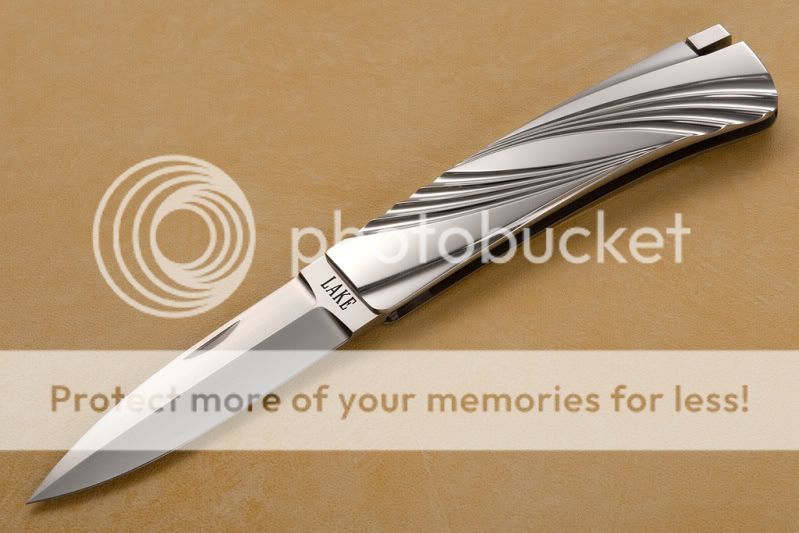
Here is a nice knife, what's it worth to you?
Lake-Lorchener33K.jpg
 
IMHO, there is nothing in this world you cannot do with a less than $100 knife. Either that or, you can go with a $500 knife you would be wary of scratching up.

For your intended purpose, there are several knives in the sub $100 range to go with which are VFM. Get one, use it hard, wait for it to break on you, it might do maybe a few years down the line and then you get another one. Tools are meant to be used and used hard and then probably break.

I recently picked up a Hen and Rooster bowie for $50 and I am amazed by the quality of the knife and sheath. For some one like me who doesnt chop or hike everyday, I am sure it would outlast me.
 
I have a Manitou and it is a great knife but you might want to look at other offerings from Bark River. The Manitou's blade is much thinner than Bark Rivers of similar length and has a pretty steep distal taper. This makes it a really great slicer but isn't the best choice or heavier tasks IMO.
 
Back
Top