At what point does "traditional" become "silhouette" class?

Joined
Jan 27, 2002
Messages
801
It's always easy to say "I can't put it in words, but I'll know it when I see it". Everyone in the "traditionals" subforum knows when a knife clearly doesn't belong...or do they?

I've seen many, many beautiful custom pieces that interpret traditional patterns in high-tech materials--supersteel blades, micarta or G-10 handles, phosphor-bronze bearings, torx-screw construction. Added together, that sounds fairly non-traditional to me. The only difference in those cases seems to be the traditional pattern. So, if you're looking at a high-tech materials, liner-lock sodbuster, what makes that so different from something like a Boker+ Exskelibur?

I guess it's like the reverse of a Jaguar (a Ford wearing fancy clothes): How do you classify a Model T built using F1-class materials and technology?

I don't have an opinion on this one, but I know others do: At what point does "traditional" become merely a silhouette class?
 
For me a knife stops being a "traditional" when the construction of the pattern changes. A stockman with micarta scales is still traditional, imho, but a stockman with torx-screw construction would not be. Knife makers fiddled with scale material "back in the day", so it doesn't bother me when they do it now. If knife makers had access to newfangled steels "back in the day", you bet they would have used them.
 
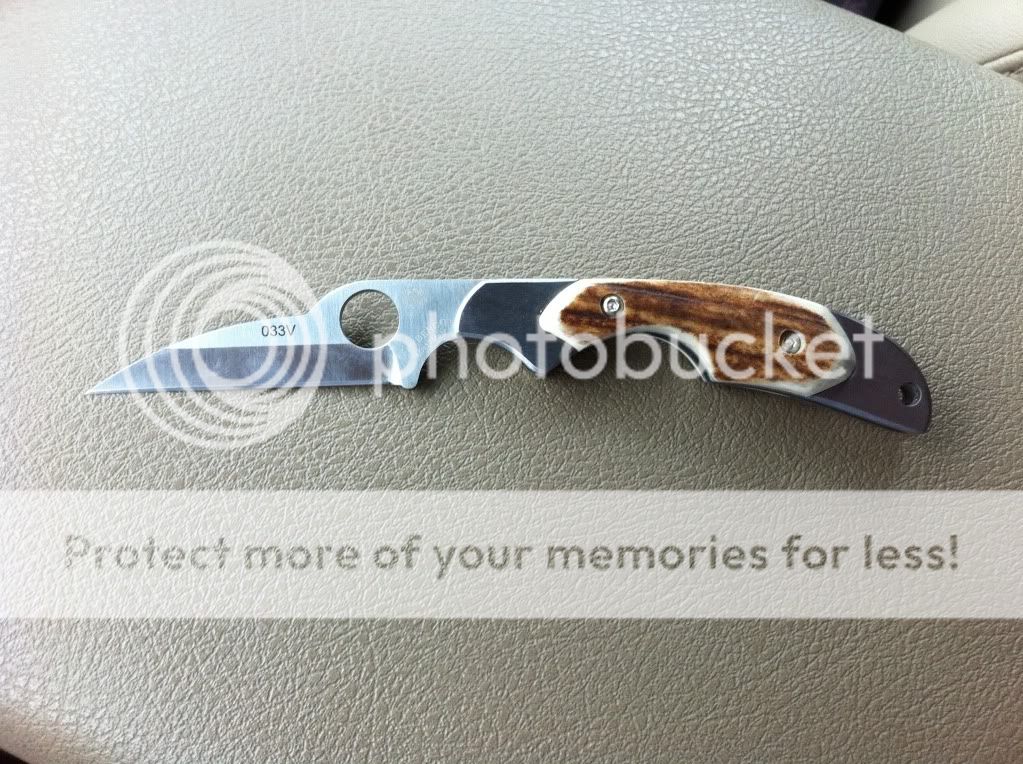
It's Pretty hard to put into words, i posted a Spyderco Slipjoint Kiwi with stag handles in the "What Traditional are you toting today" thread and the mods moved it to the general forum, I thought it's pretty traditional, Slipjoint with Stag handles, with a modern twist, but I guess they disagreed, no issue with it being moved, but I think that it is more of a personal opinion, than a strict definition.
photo4-1.jpg
 
I got dinged for the Original jigged-bone Kiwi. I guess it's that big huge ol' hole in the blade.:D My first "WARNING" came in my first post to the same thread.

If you look at the title of that thread, it has "Traditional Knife" in quotation marks, just like that. So, I thought it looks sort of "traditional" :D

Of course I do understand where it's coming from. Knowledge may be gained, and I've been trying to educate myself on what constitutes a "Traditional Knife" It's an ongoing thing, and always changing.
 
Last edited:
It's Pretty hard to put into words, i posted a Spyderco Slipjoint Kiwi with stag handles in the "What Traditional are you toting today" thread and the mods moved it to the general forum, I thought it's pretty traditional, Slipjoint with Stag handles, with a modern twist, but I guess they disagreed, no issue with it being moved, but I think that it is more of a personal opinion, than a strict definition.

I'm sorry guys and no offense intended but that Spyderco reminds me of a cross between something a Klingon from Star Trek would carry and a dodo...

engraving_of_dodo11534121.jpg


I personally just can't see that one as being very "traditional" just because it has a couple of stag slabs on it. Like Paul Simon says, "one man's ceiling is another man's floor".
(It's all a matter of perspective...but as the line has to be drawn somewhere I suppose Gus and I will have to take the heat for our choices, both good and bad.)
 
Last edited:
For me a knife stops being a "traditional" when the construction of the pattern changes. A stockman with micarta scales is still traditional, imho, but a stockman with torx-screw construction would not be. Knife makers fiddled with scale material "back in the day", so it doesn't bother me when they do it now. If knife makers had access to newfangled steels "back in the day", you bet they would have used them.

Not to pick at your post.....
BUT if you think the knifemakers of old, would've used modern steels and handle materials if they had access to them.
Wouldn't it also be logical to think that they would've used modern glues and methods of fastening, if they had access?
I actually share your opinion, of that a true modern traditional, needs to be pinned together.
I'm just thinking that maybe there needs to be a new concept launched into the knife world. Tried&True Traditional, vs. Modern Traditional!
TTT for the traditionals of old, MT for the traditionals of modernity.

Sorry for my rambling. :o
 
I got dinged for the Original jigged-bone Kiwi. I guess it's that big huge ol' hole in the blade.:D My first "WARNING" came in my first post to the same thread.

If you look at the title of that thread, it has "Traditional Knife" in quotation marks, just like that. So, I thought it looks sort of "traditional" :D

Daniel it has "Traditional Knife" in quotes so folks understand the subject matter as opposed to its being meant tongue in cheek. I would hope that was clear from the vast majority of the posts in the thread.

(And trust me, we wish that the software allowed a term other than "Warning" when we have to contact members regarding any number of administrative issues...but as we didn't write the software it doesn't give us an option.)
 
Last edited:
Its a fine line. Many fine traditional looking one hand openers, yes liner locks exist that are missed out on in forums like this because of the bias but its their loss in the end. Learn where they draw the line and post em elsewhere. To me a liner lock that is made in traditional methods using tools for the hand to build it belongs here if it has a nail nick in the blade or not. Some of the traditional knives like the Kershaw double take I think its called. To look at it it screams traditional yet because it has thumb studs and is set up with liner locks its discounted with the UK pen knife and others. In the same line of reasoning the Case Mid Folding hunter and Case Trapper Lock should be booted as well but I've seen them posted here with no problems by folks. Just IMO.

STR
 
Last edited:
@ Slider817,

Just out of curiosity, what do you find traditional about a Spyderco Kiwi? Is there a pattern it is based on or is it the lack of lock that leads you to classify it as "traditional?" Personally, I don't see anything (other than it being a slip joint) that would make me call that a traditional knife. The big hole in the blade.....no.....we like nail nicks and long pulls around here. :p
 
The idea of 'traditional' is bound to be ever-changing. I think of this, every time I see one of the 'modern' knives posted here. A lot of people have never laid hands on what we would know as a traditional knife (pinned, slip-joint, natural handle material). Many knife-users of a 'certain age' have (apparently) never known anything other than the hole-in-blade, thumbstudded, liner/frame-lock, Ti/Alloy-handled variety of knives. Therefore, to them at least, it IS traditional.

At some point, long ago, I'm sure celluloid and Delrin (and stainless steel) were considered 'non-traditional' too.
 
Its a fine line. Many fine traditional looking one hand openers, yes liner locks exist that are missed out on in forums like this because of the bias but its their loss in the end. Learn where they draw the line and post em elsewhere. To me a liner lock that is made in traditional methods using tools for the hand to build it belongs here if it has a nail nick in the blade or not. Some of the traditional knives like the Kershaw double take I think its called. To look at it it screams traditional yet because it has thumb studs and is set up with liner locks its discounted with the UK pen knife and others. In the same line of reasoning the Case Mid Lock Folding hunter and Case Trapper should be booted as well but I've seen them posted here with no problems by folks. Just IMO.

STR

Steve,

I'll ask the same question of the UKPK....what pattern is it based on? To me...one of the defining characteristics of a traditional knife is the history to the pattern. You can pull out an old catalog and look at all the different patterns. If the pattern or style is a recent design....it's isn't traditional in my eyes. Who knows...maybe in a 100 years a UKPK will be considered a traditional pattern and what is widely considered traditional today will be be called "uber-traditional" or something silly like that. :)
 
To me, a knife is traditional if you could sit down on the bench in front of the court house in 1910 and whittle with the court house regulars, and not have them look at your knife and ask "What the heck is that, sonny?"

Carl.
 
To me, a knife is traditional if you could sit down on the bench in front of the court house in 1910 and whittle with the court house regulars, and not have them look at your knife and ask "What the heck is that, sonny?"

Carl.

Good thing you said "1910", Carl, because nowadays they'll arrest you (or at least confiscate your knife) for doing so regardless of how traditional looking the knife may be. :(
 
BUT if you think the knifemakers of old, would've used modern steels and handle materials if they had access to them.
Wouldn't it also be logical to think that they would've used modern glues and methods of fastening, if they had access?

I think the knifemakers of old would have probably used the fastening methods we have today if they were available to them then. But they weren't. Changing the type of steel or scale material does not change the basic essence of a knife, the way it is put together, the way it functions etc. Changing the type of fasteners or the lock mechanism does, IMHO. A knife that could be taken back in a time machine and not set off alarms as an anachronism in the 1930s would be what I consider a "traditional". The funky acrylic stuff GEC makes these days could probably be passed off in 1930 as celluloid. The laser embellished stuff Case is doing might be more difficult to explain.
 
@ Slider817,

Just out of curiosity, what do you find traditional about a Spyderco Kiwi? Is there a pattern it is based on or is it the lack of lock that leads you to classify it as "traditional?" Personally, I don't see anything (other than it being a slip joint) that would make me call that a traditional knife. The big hole in the blade.....no.....we like nail nicks and long pulls around here. :p

Its no Case Barlow, But its a Pinned slipjoint (The Scales have Screws, and those scales are stag), the hole in my opinion is more for grip than one hand opening, it's pretty awkward to open it one hand, the hole functions as a grip like the Scagel fruitport. I know it's a modern design from a modern company, but at least on paper it shares many of the aspects of a traditional knife, and the Slipjoint mechanism on the Kiwi is a classic one, unlike the newer Spyderco UKPKs.

photo1-6.jpg
 
ok....I'll chime in and play devil's advocate in favor of the Spyderco being "traditional". Yes....hate me if you want

1) It's a slipjoint

2) It has a wharncliffe blade (I know modern knives have this too, but it's an old blade pattern)

3) The hole is similar to a Scagel...just a large nail nick

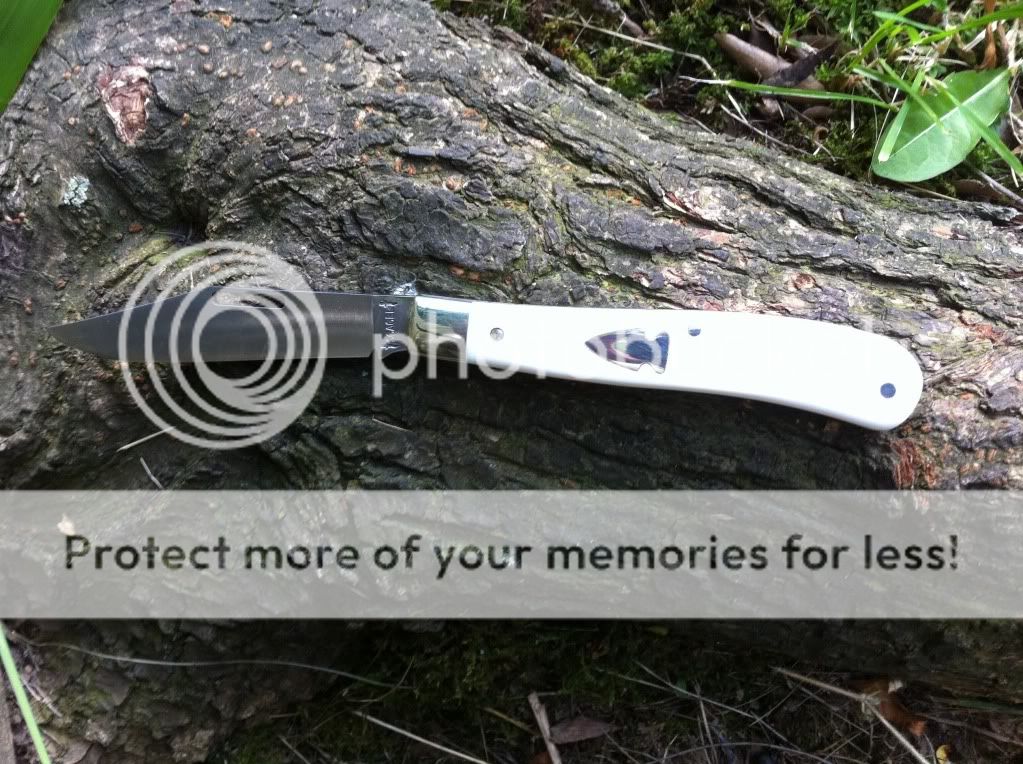
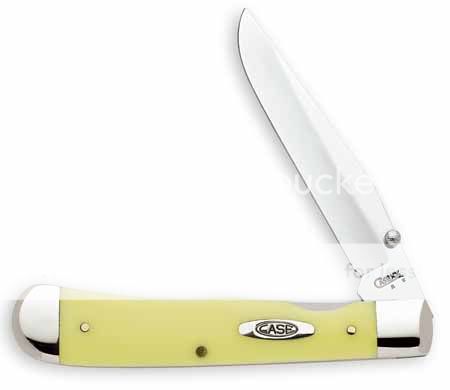
4) The handle is not "traditional" in the traditional sense, but I would also point out that some variations of "traditional" folders have finger grooves (e.g., some iterations of the Buck 110, Ka-Bars, ). I would also point out that the grooves could be compared to an easy-open. Another thought.....would putting a pocket clip on a traditional stockman slipjoint make it non-traditional (even though it's weird)? It's basically customizing a pattern to make it suit the users taste. Or maybe a traditional manufacturer updating a pattern and adding a thumb-stud and liner-lock (e.g., Case Trapperlock). The second pic I stole from Corey (hope he doesn't mind) posted in the "bored" thread I started. I'd consider this a very traditional knife, but it has hex screws and a liner lock.
trapperlock.jpg

BBK1.jpg


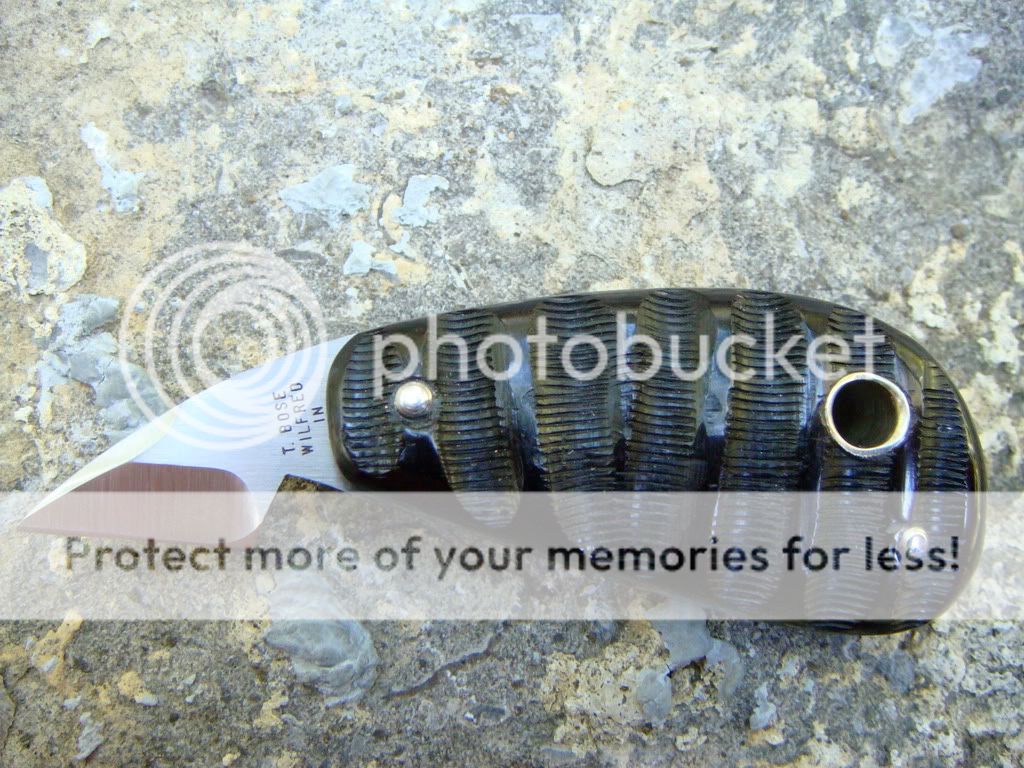
5) Many custom makers do not make patterns that are necessarily "traditional" in the sense that the pattern hasn't been around for a lone time. Examples...(a) a Tony Bose "Tick" and (b) Ray Laconico nessmuk folder (both the blade and locking mechanism are very traditional, but I don't remember seeing nesmmuk folders from back in the day). I don't think that any knife made by Tony Bose (even if it's a medieval sword or a futuristic laser beam knife) would be excluded from the forum.
DSC00259.jpg

CIMG0342.jpg


6) Final question....as time goes by, are we going to be relegated to traditional knife patterns that originated 50-100+ years ago from this point in time? What about when our grand children are talking about "traditional" knives and are drooling oner a very cool slipjoint pattern that was created by one of our talented slipjoint makers in the year 2015...will it not be traditional because the pattern wasn't invented in 1915?
 
Last edited:
Years ago I asked my friend Kit Carson to use jigged bone on his Model 4. He was surprised as he'd never had that request previous to mine (though he had some requests afterward).

Nevertheless, despite the fact that it uses traditional scale material there's no way I'd consider Kit's knife to be traditional.

orig.jpg


In the end it's the totality of the features and characteristics of the given knife that will carry the day.
If we don't draw the line somewhere then we may as well merge with the "General Knife Discussion Forum" as there would be no reason to have a separate venue.
(...And we have made changes when a cogent and convincing argument has been made to support a particular point of view.)
 
Last edited:
And yes I agree with Elliot, the line has to be drawn somewhere and it comes down to whether the knife feels traditional, which the Spyderco lacks. But I thought it would be more fun to make the argument in favor, instead of against.
 
ok....I'll chime in and play devil's advocate in favor of the Spyderco being "traditional". Yes....hate me if you want

1) It's a slipjoint

2) It has a wharncliffe blade (I know modern knives have this too, but it's an old blade pattern)

3) The hole is similar to a Scagel...just a large nail nick

4) The handle is not "traditional" in the traditional sense, but I would also point out that some variations of "traditional" folders have finger grooves (e.g., some iterations of the Buck 110, Ka-Bars, ). I would also point out that the grooves could be compared to an easy-open. Another thought.....would putting a pocket clip on a traditional stockman slipjoint make it non-traditional (even though it's weird)? It's basically customizing a pattern to make it suit the users taste. Or maybe a traditional manufacturer updating a pattern and adding a thumb-stud and liner-lock (e.g., Case Trapperlock)
trapperlock.jpg


5) Many custom makers do not make patterns that are necessarily "traditional" in the sense that the pattern hasn't been around for a lone time. Examples...(a) a Tony Bose "Tick" and (b) Ray Laconico nessmuk folder (both the blade and locking mechanism are very traditional, but I don't remember seeing nesmmuk folders from back in the day). I don't think that any knife made by Tony Bose (even if it's a medieval sword or a futuristic laser beam knife) would be excluded from the forum.
DSC00259.jpg

CIMG0342.jpg


6) Final question....as time goes by, are we going to be relegated to traditional knife patterns that originated 50-100+ years ago from this point in time? What about when our grand children are talking about "traditional" knives and are drooling oner a very cool slipjoint pattern that was created by one of our talented slipjoint makers in the year 2015...will it not be traditional because the pattern wasn't invented in 1915?

What if a pocket clip was added to the same knife? Still traditional?
 
And yes I agree with Elliot, the line has to be drawn somewhere and it comes down to whether the knife feels traditional, which the Spyderco lacks. But I thought it would be more fun to make the argument in favor, instead of against.

Spoken like a true lawyer! :D
 
Back
Top