Atc Vtac

Cliff Stamp

BANNED
Joined
Oct 5, 1998
Messages
17,562
The VTAC made by the American Tomahawk Company is primarily a tactical tomahawk made intended for immediate settlement of interpersonal conflicts :

http://www.americantomahawk.com/products/vtac.htm

Specifications : head is 1060 at 52-54 HRC, handle is modified nylon with an oval cross section with a raised pattern and light finger grooves. It weighs 530 grams and the overall length is 36 cmm. In comparison it is slightly longer (by a head width) than the Bruks Wildlife hatchet and significantly lighter (25%).

The edges all cleanly intersect unlike tomahawks such as made by Cold Steel where the edges actually have flat spots as the bevels don't meet. The angles are about 25 degrees per side, they are convex so they dip under through the shoulder and are more obtuse at the very edge.

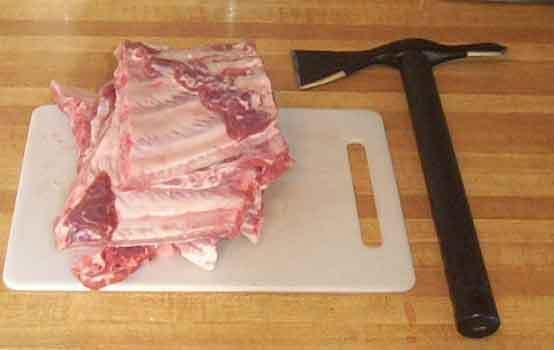
On some ribs it drew right through the flesh and cut with little resistance :


Chopping onions, cubing potatos, etc., preparing a meal, it would really benefit from having a smaller knife to handle such work as the edge isn't optomized for such really light work. The tomahawk is however still much better than no knife and perform similar to the heavy tacticals like the TOP's Steel Eagle, Strider WB, etc. .

For chopping, it was at about 50% of the ability of the Bruks axe in terms of the number of chops through a half dozen rounds cut with it, so about 60% as efficient per weight. This was due mainly due to the high edge angle. This could be see directly in the wood because the surface would show the result of the really high impact forces as the wood would often break in the cut.
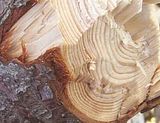


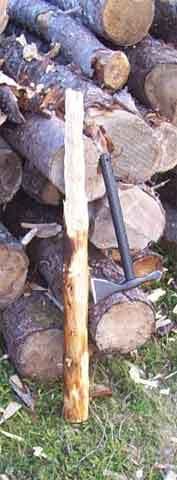
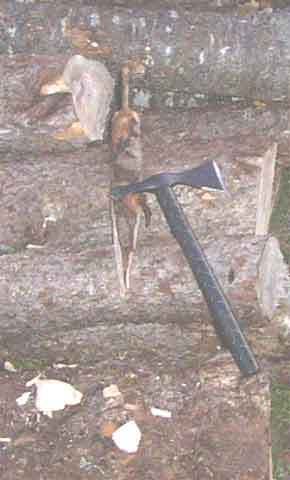
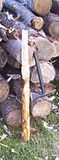
However it should be noted that the Bruks I have has been hand tuned and is full optomized to cut thick and clear wood well and it doesn't get used on heavy knotty wood or seasoned dead wood branches. The VTAC has enough chopping ability to handle basic wood work such as shaping a stout club. It does this a lot faster than trying to shape it with a knife like the Mora 2000 :


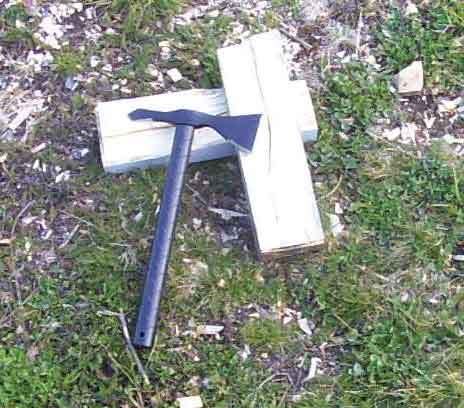
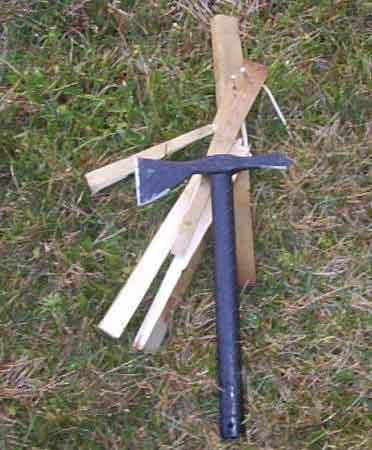
As a splitter, the direct limit is about a 4x4 piece of pine. It takes about 2-3 hits per side to open on both edges to allow the wood to split. The tomahawk wedges around the head simply due to the nature of the grind and the Bruks axe will split this in a fraction of the hits.
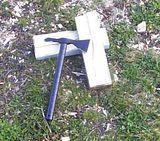


The best method for heavier woods is to carve a wedge and use the side of the head (or a decent cudgel) to pound the wedge through the wood after starting a cut with the Tomahawk :
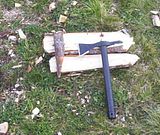


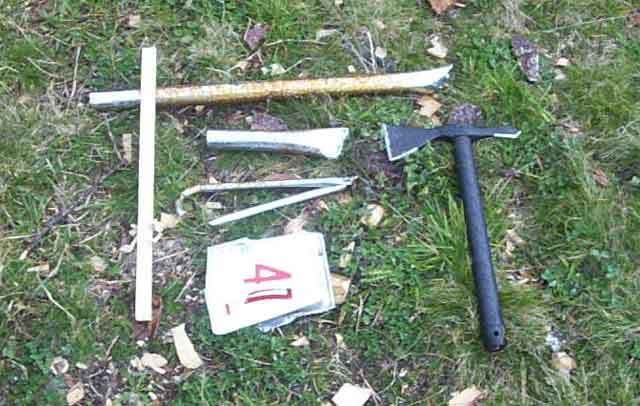
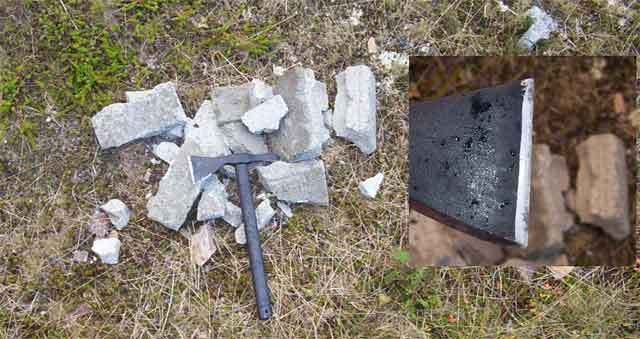
The edge as noted is designed for heavier work which includes heavy cutting of metals. It does this easily with no visible damage to the edge on metals :
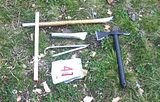


as well as concrete :
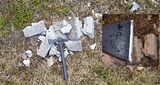


The primary edge was used to fully impact the concrete block. It didn't cut through it as much as just explode it on contact. Note the close up of the edge which shows no visible damage. After the metal and concrete cutting the Tomahawk could still readily split smaller wood directly :
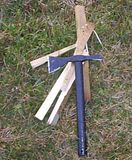


and could even still make shavings :
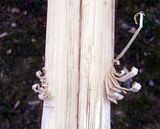


The ones on the right are as sharpenen and the ones on the left are after the impacts. As a side note, working on the shavings it became obvious that the underside edge would be really nice as a drawknife. The ergonomics are solid, all the contact points are rounded. The angle however like the other edges is designed to handle heavy impacts and thus would need to be reduced to be optomized for wood cutting.
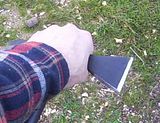


I intended to get some video's of this but it has been raining here for the last week and that camera is a friends which I won't risk in the rain so I just shot some pictures with mine.

-Cliff
 
Looks like just the ticket for the PAW:D

I would prefer something more suited for wood chopping, but the edge could always be reprofiled
 
The edge can be filed so it would only take 10-15 minutes to opomize it for wood working, just be aware of the restrictions it would have in regards for throwing and the like.

-Cliff
 
How well does it throw? Aside from covert deanimation, does it have useful implications, ie small game hunting?

How useful is the spike poll for wilderness use? Would you prefer a hammer poll?

IS the head straight 1060? I though some of these had a welded in bit?
 
How well does it throw?

Throwing can be pretty hard on the handle so I want to get a feel for the wood working side of it for awhile. Plus when I did a search before using it there were lots of comments on throwing and little on the utility.

Aside from covert deanimation, does it have useful implications, ie small game hunting?

As a direct weapon, not for me, that takes a extreme amount of skill assuming you are talking about throwing because you have to be able to hit a moving target at a variable distance. I would just use the tomahawk to make a throwing stick(s).

How useful is the spike poll for wilderness use? Would you prefer a hammer poll?


The main advantage of a spike is penetration, the ability to blast a hole quickly through very difficult to cut materials. It goes through steel belted tires for example as if they were not there, easily puts holes in heavy metal and so forth. There was also some advocation of it for digging as it does make a very nice pick for hard to dig ground. It also works well for prying due to the ability to get high penetration and thus work apart thick woods.

However, in general, I'd take a hammer poll for a utility pattern. Mainly for ease of splitting and I tend to do more impacts than stabs, though you can obviously hammer on the side of the eye with spike polls. I should note that this tomahawk isn't center head balanced. The spike isn't as heavy as the edge and thus it will naturally want to rotate if you hold it in the neutral position. Ideally for wood chopping you want it center balanced because it is more accurate when swinging because edge heavy blades will want to rotate down which pulls on the wrist.


IS the head straight 1060? I though some of these had a welded in bit?

This is one piece forged. There were many variations of tomahawks from ATC, some did have such construction.

Great review Cliff!

Thanks, I want to try some actual field craft with this shortly, build a small shelter, start a fire, etc. .

-Cliff
 
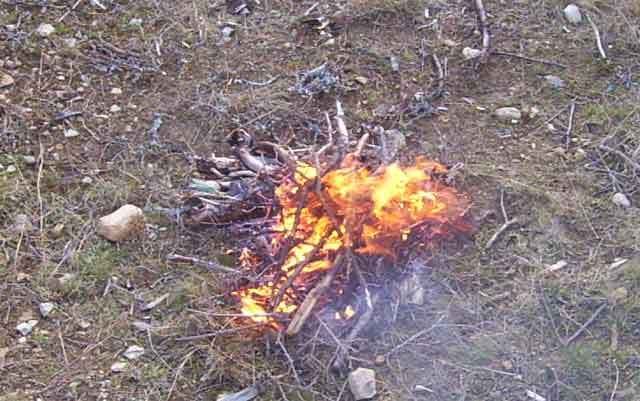
Making a small fire, the vtac gathers the dry limbs well. A highly efficient cutting edge actually doesn't make as much difference here as it does on fresh woods because the dead limbs do tend to crack more than cleanly cut and thus the raw power of the tomahawk actually makes it more productive than the Ratweiler for example. The knife however did better at making shavings and cutting the lighter vegetation for tinder as well as limbing the boughs to get the fire going to get the dry wood to burn. Some work with the sharpened under edge again showed that there is a lot of potential there for brush cutting if it was reground to a more acute profile, it would function similar to a scythe.


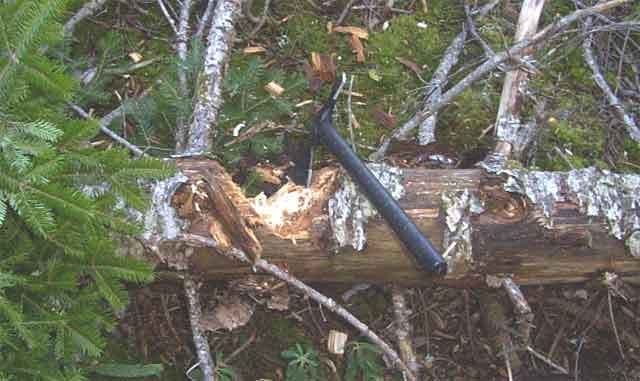
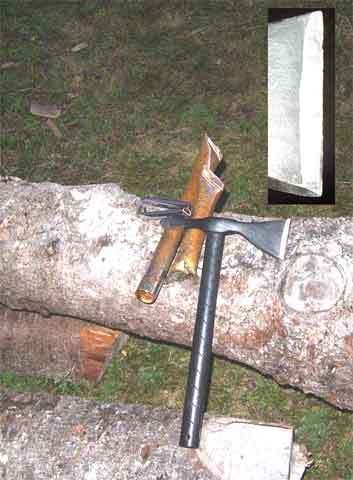
Here is one of the advantages of the tomahawk over the Ratweiler, a decent sized log :


On wood of this size and larger the long blades will start to slow down because they lose penetration on the wood as more of the blade comes in contact. The axe still gets the same regardless of if the wood is wider than the bit or not so is more able to clear chips from thick woods. The tomahawk is of similar capability here as the Ratweiler even though the Ratweiler is significantly more capable a chopper on smaller wood. This wood is also fairly rotted and thus will absorb water which makes it nice for keeping a fire going in the rain because the water won't simply run over it into the coals but the wood will tend to soak it up which is then boiled out by the fire.

Here is the beginning of a small shelter rougher out by the tomahawk and the Ratweiler. Take an existing tree, clear out the branches, use them to form a rough wall on the opposing side, run a piece of alder to another tree and then fill in the back :


This breaks the sun and thus gives you shade, stops snow and sleet and forms a bit of a wind break. A lot more debris is needed for a really nice wind insulation as well as stopping rain. The tomahawk was better here than the Ratweiler at clearing the dead wood limbs but the knife was of more of an advantage on the fresh wood limbs.

I have reground the Ratweiler as noted in its review, reducing the shoulder of the edge to increase the chopping ability. As stock the chopping performance would have been just slightly ahead of the vtac but of a very different nature. A lot less power on the impacts but more efficiently putting that power into cutting ability. I'll likely regrind the vtac as well shortly.

-Cliff
 
I'll likely regrind the vtac as well shortly.

Will sacrifice the durability needed for throwing in order to make this a woodcraft tool? If not, what balance are you looking to strike? What would you consider ideal?
 
Throwing and extreme tactical like lock cutting, yes. I have cut a fair amount of difficult materials and subjected this to extreme impacts so as comfortable with its abilities there so I will be looking at its wood craft potential. The problem with throwing is accidently smacking a rock on a rebound or miss, you need a lot of metal to take that kind of impact without significant deformation.

I filed the edge on the vtac, after about 10 minutes the shoulder was at 14 degrees and it swept up to 18 in the last 0.050". This is still significantly more than is needed for wood cutting, but I figure two stages would be more informative as a reference for cutting ability as a function of geometry plus that was enough filing for me. As a pure heavy wood cutter I would hit it with about 5/10/15 degree bevel with the 10 starting at 0.050" and the 15 at 0.025". That is still fairly robust and should be able to cut dead wood limbs and power through knots with no concern, something I don't do with the Wildlife.

-Cliff
 
Thanks, with the new profile I did some wood work and there was much improvment as would be expected as the edge angle was significantly reduced. As a rough guide, wood cutting performance on tools of this class tends to be change by about the inverted change in edge angle while wood chopping tends to be about half of that. Since I cut the edge angle about in half the cutting was about double and the chopping ability increased by about 50%. This made a fairly obvious difference in use. Cutting down a few small trees there was much less impact as the blade penetrated further and thus pretty much all elements of performance increased. Less chops to take down the tree, more comfortable in hand and less turning. It also easily clipped off the small boughs which it didn't do well before:


The cutting ability was also evident with shaping a wedge because after it hacked one to shape it could be used to carve to refine the shape and it was much more productive here than before. With the stock profile I mainly saw it as a rough tool to work on dead seasoned wood and would want a leuko or similar knife to handle lighter brush work. However with the few minutes of filing I would be perfectly comfortable with just this as a wood working tool .


Of course the more acute edge does have durability issues, repeating the same metal cutting, the edge now took visible damage immediately. Just light, about 0.1 mm or so deep, easily visible up close, but hard to make out at arms length. However the concrete chopping impacted the edge significantly with each impact and after just a few chops parts of the edge were impacted up to about 0.75 mm deep.


The upper part of the edge was used on the concrete and the bottom on the metal cutting.

-Cliff
 
Cliff what does the sheath look like?

I've been considering ordering one of these for a while, but I haven't convinced myself yet.
 
Sheath :


Has a plastic liner. The straps on the back have a velco overlay so you can loop it through a belt and then remove the sheath without removing the belt, or go through an underset of loops which have no velcro closure for a more secure attachment.

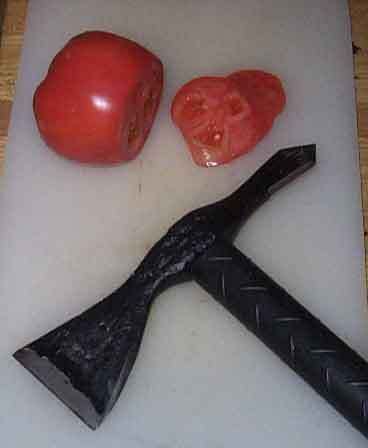
Mainly fooling around I did some light work in the kitchen. It was no problem doing precision cutting, slicing tomatos and such as long as the blade is very sharp :


It is awkward to use to peel potatos and such as the edge is so far ahead of the handle, but it would be no real problem if it had to be done. You would really appreciate a small paring style knife though if any amount of that type of work had to be done.

-Cliff
 
Cliff Stamp, I was wondering after reading your review if a VTAC designed more like this variant that was done by Andy Prisco would better suit the purposes of outdoors use. It has the more sickle-type beard, but a stunted spike. In your opinion, would this one be better, or would you still like the full spike like in this variant?

I recently sent Andy an email asking if they still did custom work. Worse comes to worse, I guess I could always find someone to do the work for me as I don't have the facilities for it.
 
I filed the edge on the vtac... ...the shoulder was at 14 degrees and it swept up to 18 in the last 0.050". This is still significantly more than is needed for wood cutting, but I figure two stages would be more informative as a reference for cutting ability as a function of geometry plus that was enough filing for me. As a pure heavy wood cutter I would hit it with about 5/10/15 degree bevel with the 10 starting at 0.050" and the 15 at 0.025". That is still fairly robust and should be able to cut dead wood limbs and power through knots with no concern, something I don't do with the Wildlife.

-Cliff
Cliff, can you elaborate on the angles you are talking about? I'm not sure I'm understanding where you are measuring from for both distance and angle. Also, how do you actually measure the angles?
 
Cliff, can you elaborate on the angles you are talking about? I'm not sure I'm understanding where you are measuring from for both distance and angle. Also, how do you actually measure the angles?

The distances are the thickness of the edge, so a 0.050":10 degree edge is 0.050" thick and ground at 10 degrees per side. I measure the distances with a vernier caliper and calculate the angles by some basic math (atan).

... or would you still like the full spike

Spike or poll is kind of interesting and I could go either way. The poll is very handy when splitting very hard wood for reverse strikes but the spike saves the edge a lot on harder digging and as well as utility work, poke a hole in thick rubber for example, steel belted tires. After working with both for a lot I tend to currently favor a spike and split hard wood mainly now with wedges and a club which is faster and easier usually than poll strikes with a small axes.

However I am slightly biased here because I have been using poll based axes for a long time so the spike ones are new and interesting to work with, new challenges, new solutions so one of the main reasons I favor them now is just because it keeps things fresh. You really want to work with both and see what you favor, they both have their advantages. One of the common complaints about spikes is simply they are more cumbersome to carry due to the additional edges and not as safe around camp for the same reason.

Did Cliff drop off the forum?

Pretty much, Bladeforums has moved more away from talking about knives and more towards talking about people. This was the exact opposite of what Turber envisioned, in fact his fundamental rule was no insults, which is completely ignored now.

I spend most of my online knife time now writing articles for my cite and running the research group on cutlery performance. Finding out what people are interested in, which makes are willing to work with the group, talking to companies about steels, etc. .

I have started a discussion forum off of my cite which is 100% just on performance which is where all the reviews, articles and such I write will be discussed from now on. These are all peer reviewed, even the ones I write, and there is a probationary period of one month minimum after they are listed on the forum that they are officially published on the cite.

If membership grows and there is interest my goal is to actually form a distinct editing body to formally review articles. I will do this now, but of course mine need to be reviewed and you really need more than one reviewed to prevent the cite from just reflecting one perspective.

-Cliff
 
Back
Top