bainitic 52100

Joined
Sep 19, 2001
Messages
8,968
Can-of-worms.jpg


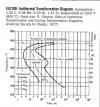
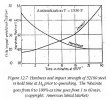
:) Is there any reason I wouldn't go for this structure for this steel? From reading Verhoeven's book that was available on pdf (I think it's been put into print and isn't supposed to be free any more), austenize at 1550F and then an hour @475F gives bainite at ~60 Rc. That doesn't seem like a bad thing, I see Q&T customs in 52100 usually done a few points lower, and the bainite is supposed to be a little tougher.

I dunno, holding @475 for an hour seems easier than triple tempers at close to the same temp on the high side, for a lot longer in total. Would my luck be any better or worse with retained austenite for attempting either structure?

I'm not looking for some wonder structure, but easier is good. Of course, easier is relative, I don't mind the idea of working with salt.
 
I have never done it with 52100 but I have done a lot of that with 5160 and find that it makes a blade that is quite a bit more than "a little tougher" than quenched and tempered blades of Martensitic structure. :eek: :D

The best bet is to do it and experiment a bit to see if it works for you.

I would suggest at least 1 tempering cycle after cooling below Ms at the same temp. you made Bainite at. Getting 100% conversion is controversial and any metastable austenite that does not convert to Bainite may form Martensite when the blade temperature falls low enough for that to happen. One tempering cycle will take care of tempering any Martensite that forms in this situation.

Try it. :)

Also, I have not seen the chart on 52100 but 1 hour at 475f seems a little short for full conversion. At low temperatures conversion is rather slow but then again I do not have access to TTT and CCT diagrams for 512100. Check your data and go for it!

Brian
 
here's one I found a couple days ago http://www.navaching.com/forge/steels.html

here's one I've had on my comp for a while, and a chart for bainite transformation from the Verhoeven book \/\/\/

I was thinking about another temper after the austemper, let the blade cool down and then just stick it back in the salt for another hour. I wonder if some time in dry ice would be worth it to aid in converting retained austenite.
 

Attachments

  • 52100.jpg
    52100.jpg
    29.3 KB · Views: 29
  • Noname.jpg
    Noname.jpg
    40.1 KB · Views: 25
I've never gotten any clear answers on this. Most people seem to think that either they can't get a full 60 Rc (even though it says so there) or that they think bainite wouldn't hold an edge as long. There are some conflicting reports on wear resistance, it would be very interesting to see some rope cutting or CATRA comparing bainite vs. martensite at the same hardness. I learned the other day that the reason bainite is tougher is because it is a stable phase rather than unstable (i.e. martensite), also it doesn't have the same shock in quenching, of course. I don't have any salt pots; I've heard that salt pots can be hard to maintain, are a little dangerous, etc. I'm mostly interested in stainless steels, so bainite isn't something I've ever had a major interest in, but 52100 is just about the best steel to try it with.

Edit: It wouldn't hurt to go in to cryo after and then temper, though it may or may not be necessary.
 
One of the reasons I am building the salt pots is to experiment with absolutely controlled conditions. In a salt pot, 1550 is exactly that on the entire blade. You can quench in another pot at 475 and hold it for an hour. All the while no oxygen gets to the blade. After talking to Bert Foster last fall, I decided to make some ABS test knives in bainite to see how it does. I think if they are properly done they may even be superior. The optimal goal would be to have a 90 degree bend with nearly a full return.

BTW: from what I read on those charts, one hour at 475F is the junction. After austenitization and quench at 475,I would hold a little longer, say 1.25-1.5 hours. There may be some trade off between hardness and toughness, so experiment.
Stacy
 
Back
Top