Mistwalker
Gold Member
- Joined
- Dec 22, 2007
- Messages
- 19,278
***Edit*** : I'd like to express that this material was never meant to be taken as a knife review. It was placed here solely for the purpose of demonstrating an often used wilderness skill.
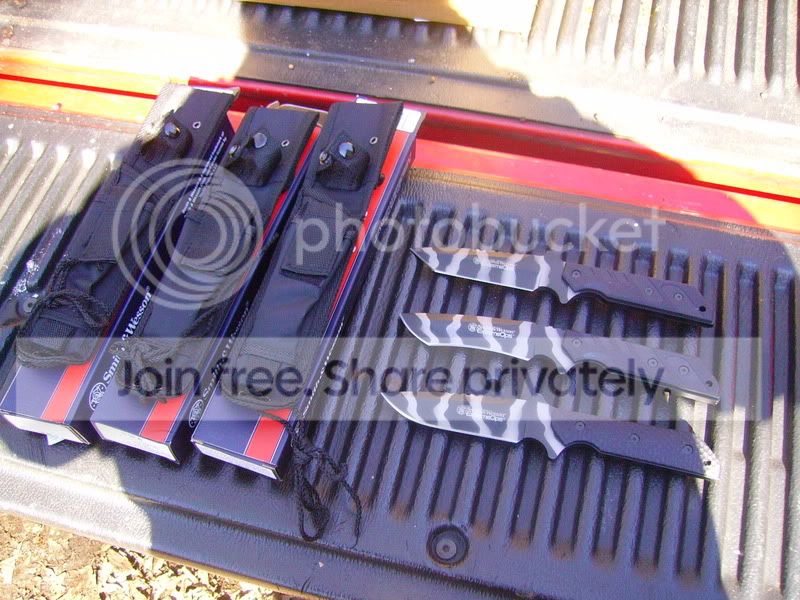
Among the skills needed in a short term wilderness situation batoning is one that often comes in handy. Sometimes climate conditions make it necessary to baton wood in order to get a fire going good. Also batoning can be utilised to make a relatively flat dry "plank" from which to fashion a fire board to use a fire bow or hand drill, and making smaller pieces of wood from lager ones for the purpose of making tools or cooking and eating utensils . The term batoning refers to using a sturdy limb or piece of wood to drive a knife through another piece of wood in the same direction as you would split wood with an axe. For batoning ones need to have a stout knife that can take some abuse. Today I batoned a nearly two foot section of seasoned oak into several pieces using a Smith & Wesson SW6. This knife has a recurve blade that is .25 inches thick and 4.75 inches from ricasso to tip, and the piece of oak I am splitting is just over four inches thick.
Here is the piece of wood I am going to split, the knife, and the other piece of hardwood and going to baton with
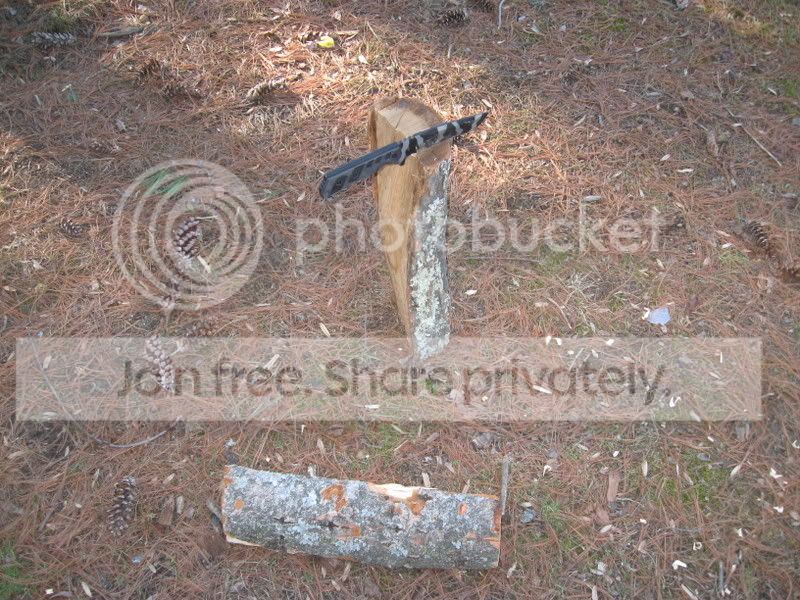
In progress
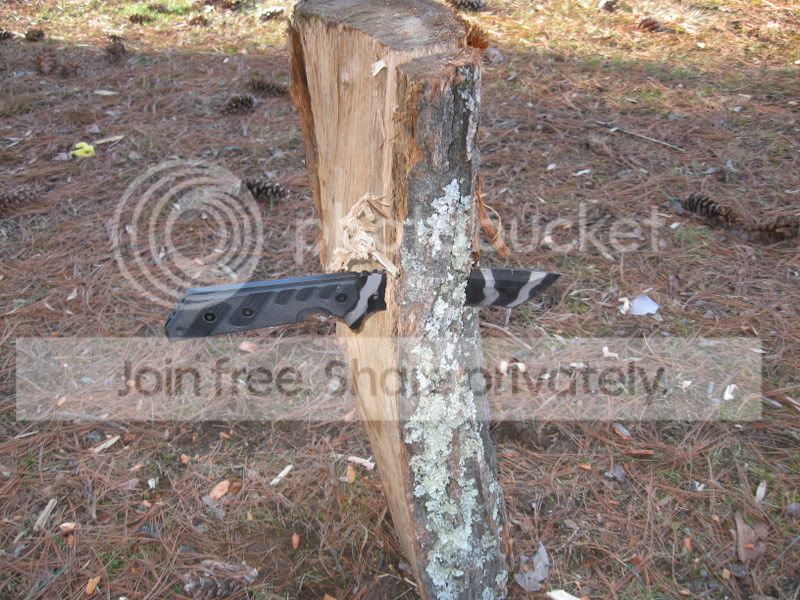
Part of the time there was hardly more than a half inch of the blade tip sticking out for me to strike
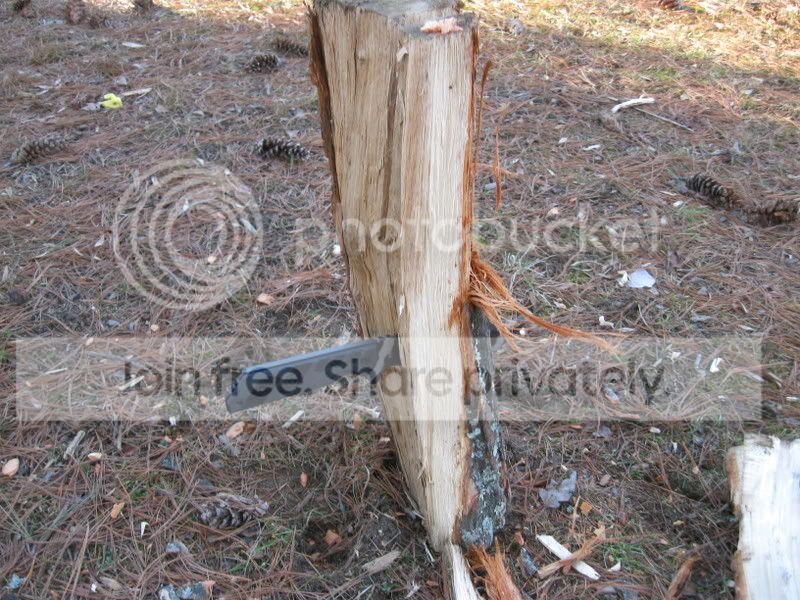
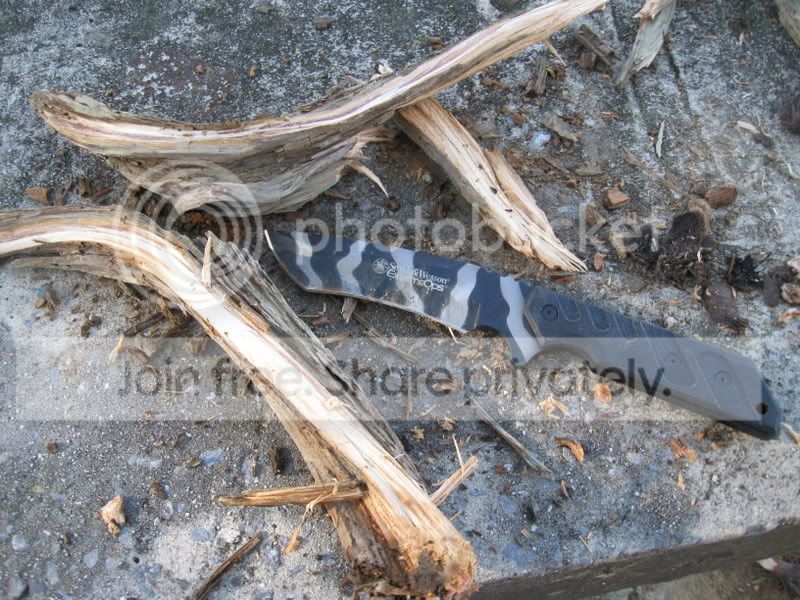
The finished pieces ready for use as kindling, or with a littlle more splitting and whittling to be made into tools or eating utensils, or with a little smoothing one could fashion a fire board.
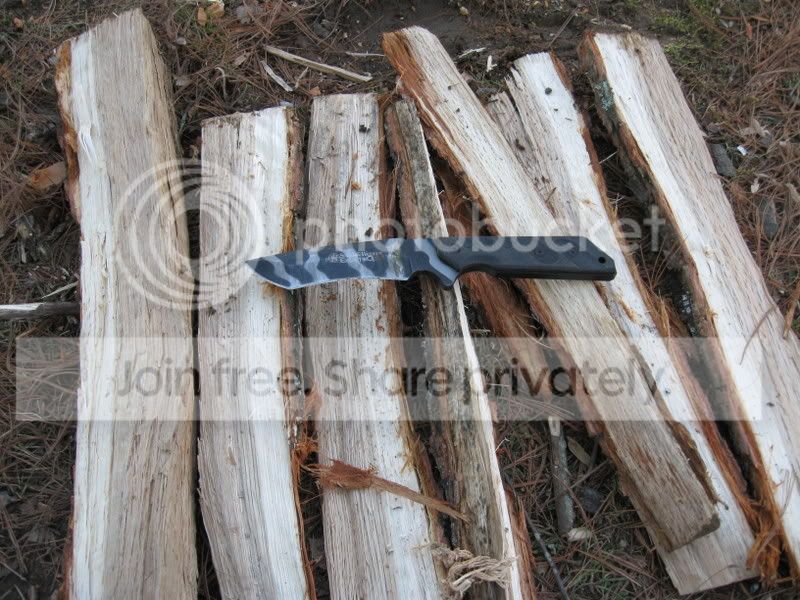
and this knife held up to the task well.
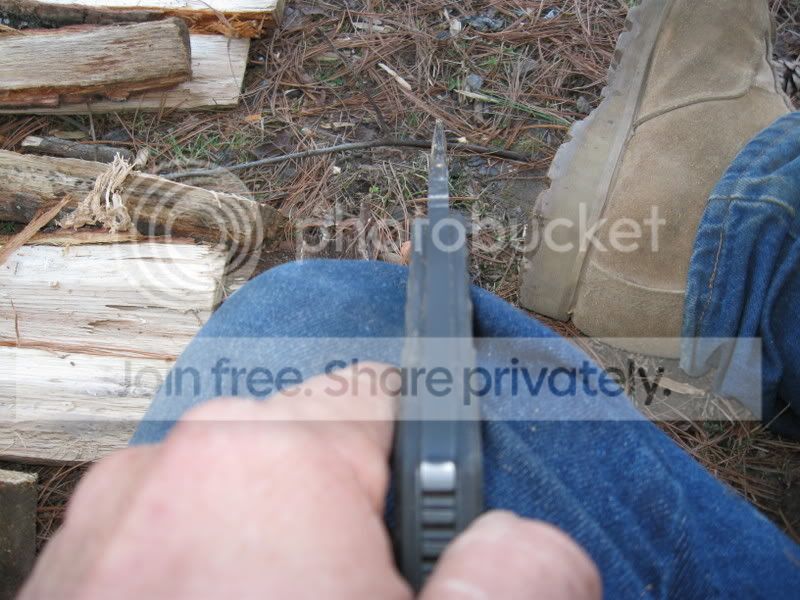
A good stout heavy blade also comes in handy as a pry bar for splitting small pieces of fatwood for slivers and shavings for firestarting.
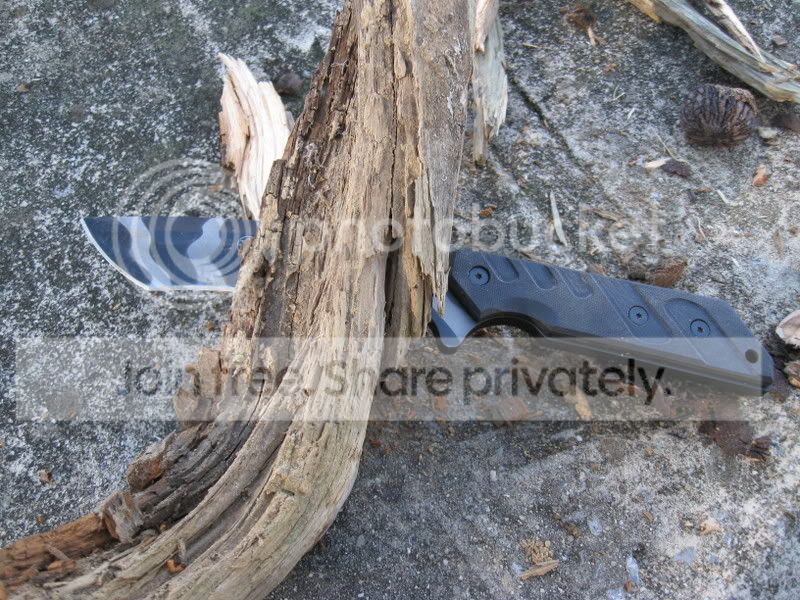
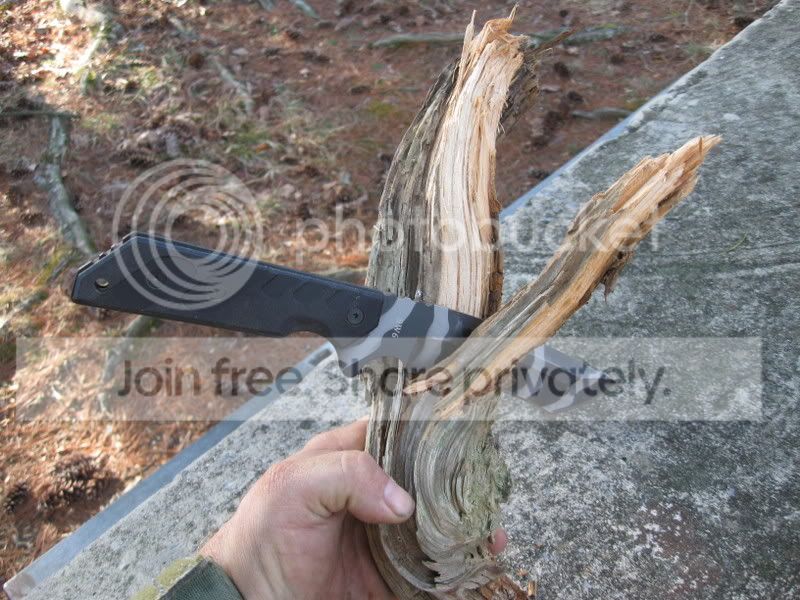
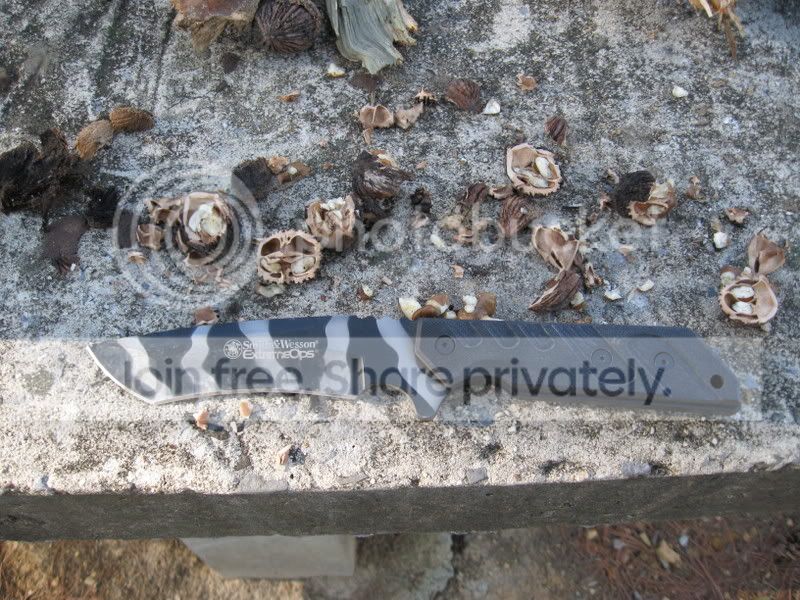
And in the winter, using the spine as a striker it can also come in handy as a nut craker. The Black Walnuts are particularly good this year, I wish I had brought more of them home with me.
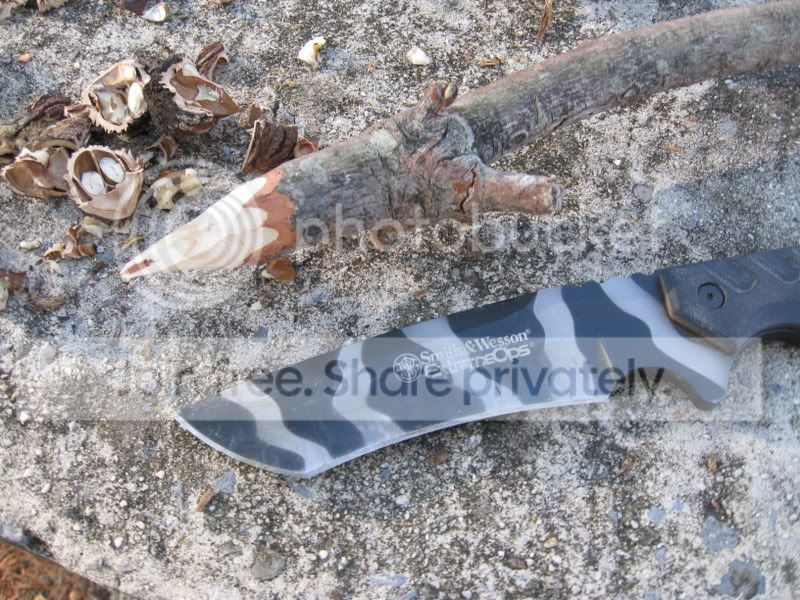
Being able to make wooden points is a plus too as they come in handy for stakes for tying out a tarp or poncho as a shelter, or spikes in a
trap or punji stakes should the need arise. I happen to love this recurve edge as it makes quick work of cutting points and cordage.
Among the skills needed in a short term wilderness situation batoning is one that often comes in handy. Sometimes climate conditions make it necessary to baton wood in order to get a fire going good. Also batoning can be utilised to make a relatively flat dry "plank" from which to fashion a fire board to use a fire bow or hand drill, and making smaller pieces of wood from lager ones for the purpose of making tools or cooking and eating utensils . The term batoning refers to using a sturdy limb or piece of wood to drive a knife through another piece of wood in the same direction as you would split wood with an axe. For batoning ones need to have a stout knife that can take some abuse. Today I batoned a nearly two foot section of seasoned oak into several pieces using a Smith & Wesson SW6. This knife has a recurve blade that is .25 inches thick and 4.75 inches from ricasso to tip, and the piece of oak I am splitting is just over four inches thick.
Here is the piece of wood I am going to split, the knife, and the other piece of hardwood and going to baton with
In progress
Part of the time there was hardly more than a half inch of the blade tip sticking out for me to strike
The finished pieces ready for use as kindling, or with a littlle more splitting and whittling to be made into tools or eating utensils, or with a little smoothing one could fashion a fire board.
and this knife held up to the task well.
A good stout heavy blade also comes in handy as a pry bar for splitting small pieces of fatwood for slivers and shavings for firestarting.
And in the winter, using the spine as a striker it can also come in handy as a nut craker. The Black Walnuts are particularly good this year, I wish I had brought more of them home with me.
Being able to make wooden points is a plus too as they come in handy for stakes for tying out a tarp or poncho as a shelter, or spikes in a
trap or punji stakes should the need arise. I happen to love this recurve edge as it makes quick work of cutting points and cordage.
Last edited: