Beginner Two Brick Forge Questions

Joined
Jun 8, 2015
Messages
12
Hey there all, I'm new to both the forums and knife making. I've used this forum a lot for research and help so I assumed this was the best place to come to for my own questions. Now I've been researching a fair bit about knife making and due to both price and space restrictions I've decided it's best for me to go down the stock removal route for now. I understand the process and have read Wayne Goddard's $50 knife shop (awesome book). It taught me a fair bit about heat treatment and many sides of budget making. My questions are a bit specific. I want to build a two brick Forge with a bernzomatic torch. I understand the process somewhat but I was just looking for some opinions on how effective it is for stock removal heat treating.

So first off does anyone have any two brick Forge plans they recommend? I'm also a bit confused as to the carving of the bricks, what tools do you use and how long does it take? Getting the bricks is no problem and I have access to hard and soft because of my dad's job but is there a specific brand anyone recommends or type? Also I've heard a lot about coating the inside of the bricks with something and sealing it with factory recement I think it is? I'm a bit unclear on those specifics, Wayne Goddard also mentions wrapping the bricks with wire, what's the purpose for that?

For the other part of my question (or rather bombardment of questions) I was wondering about what torch to use and the differences. I'm currently looking at the BernzoMatic Ts4000. I've heard some good things and I know a lot of people recommend the JTH-7 but I can't find it close to me. There is a Ts4000 available from home Depot and it uses Mapp gas. Now I'm not really clear on the differences of Mapp versus propane but I've heard Mapp burns hotter in some situations.

So in closing, is this setup (two brick Forge and Mapp ts4000) effective for general heat treating of stock removal knives? I've got no inclination to build knives bigger than 7" at all at this point, I'm fine just honing my craft on small knives. It seems like an awesome hobby to have and I'm really excited.

One last question though (sorry Haha), if I want to move to forging, which I assume I will eventually, is this setup alright for that? There's a guy near me selling a bunch of blacksmith tools and anvils so I'm thinking I should get a few hammers and an anvil maybe. What kinds of hammers should I be on the lookout for?

Thanks for reading and sorry for all the questions haha, got a bit carried away just wanted some specific advice. Any help and advice is very appreciated, thanks!
 
Of those I've tried, Morgan Thermal Ceramics K23/JM23 are the easiest IFBs to work by a country mile. They are also the best insulators. If you are building the "classic" 2BF with K23s, and are careful, you can scoop out the chamber with a spoon.

Cutting, holesawing and stacking is easier though and is recommended. A normal holesaw for wood/metal will get the job done easily in K23/JM23. I've also used cheap forstner bits. If you are on one of the other brick types, they tend to be harder on tools and the chances of the bit or holesaw being any good for normal use after making a 2BF are reduced.

The wire referred to is probably wire mesh or maybe binding wire: used to hold the bricks together initially and to keep the bits in place if/when they crack during use.

Personally, I'd not recommend MAPP gas for HT. It does burn slightly hotter than Propane, which means the temperature gradients are steeper. This is pretty much the exact opposite of what you want for HT, where an even temperature is usually desirable. MAPP is also expensive. I have not used either of the torches you mention, but the JTH-7 looks like it will cost much less to run because it uses the large cylinders.

If you can buy or build a purpose-designed burner that has sensitive air:fuel mixture control, it will be a much better investment than a torch. Controlling the gas pressure basically determines how much flame you have. Controlling the air:fuel mixture determines how hot the flame is. With adjustments for both, you can have very fine control over the temperature, the atmosphere and the temperature gradient in the forge.

Without air:fuel mixture control, you can just set the pressure to get the target temperature at a particular point in the forge. You then have to live with whatever temperature gradient and atmosphere you get.

It seems the 2BF was intended to be the cheapest thing that would work well enough to get a beginner started. It is very limited. If you find hot work is for you, you should probably expect to buy or build at least a couple more forges during your career as you find you need to do specific things.
 
Of those I've tried, Morgan Thermal Ceramics K23/JM23 are the easiest IFBs to work by a country mile. They are also the best insulators. If you are building the "classic" 2BF with K23s, and are careful, you can scoop out the chamber with a spoon.

Cutting, holesawing and stacking is easier though and is recommended. A normal holesaw for wood/metal will get the job done easily in K23/JM23. I've also used cheap forstner bits. If you are on one of the other brick types, they tend to be harder on tools and the chances of the bit or holesaw being any good for normal use after making a 2BF are reduced.

The wire referred to is probably wire mesh or maybe binding wire: used to hold the bricks together initially and to keep the bits in place if/when they crack during use.

Personally, I'd not recommend MAPP gas for HT. It does burn slightly hotter than Propane, which means the temperature gradients are steeper. This is pretty much the exact opposite of what you want for HT, where an even temperature is usually desirable. MAPP is also expensive. I have not used either of the torches you mention, but the JTH-7 looks like it will cost much less to run because it uses the large cylinders.

If you can buy or build a purpose-designed burner that has sensitive air:fuel mixture control, it will be a much better investment than a torch. Controlling the gas pressure basically determines how much flame you have. Controlling the air:fuel mixture determines how hot the flame is. With adjustments for both, you can have very fine control over the temperature, the atmosphere and the temperature gradient in the forge.

Without air:fuel mixture control, you can just set the pressure to get the target temperature at a particular point in the forge. You then have to live with whatever temperature gradient and atmosphere you get.

It seems the 2BF was intended to be the cheapest thing that would work well enough to get a beginner started. It is very limited. If you find hot work is for you, you should probably expect to buy or build at least a couple more forges during your career as you find you need to do specific things.
Thanks very much for the reply, the jth-7 does seem awesome but I can't find it in stores or anywhere online, it's really weird. Talked about by a lot of people but I can't seem to find a trace of it. Thanks for the gas information, very helpful :)
 
I didn't have a hole saw of the correct size. I just used an empty can. :)

I used .50" hardware cloth. All thread, washers and nuts at the corners.

It's really a quick process once you have the materials. Remember some refractory cement.
 
I didn't have a hole saw of the correct size. I just used an empty can. :)

I used .50" hardware cloth. All thread, washers and nuts at the corners.

It's really a quick process once you have the materials. Remember some refractory cement.
Will do, just made a list of all the materials. That link is the best thing ever thanks so much for that, gave me all the info. Just wondering though, for the first screw do you just line the bricks up and drill with the 12" and drop a landscape screw in there? Do the bricks not shake or anything, I'm just a little confused on how to put the landscape screws in.
 
Well now you have had me thinking for a little bit...

The bricks I used came from Zaph (author of the thread). He *very* generously supplied me with the soft bricks and burner that he uses in his Atlas Forges. I like to think of mine as the ugly stepchild of the Atlas. :)

To answer your questions-

My bricks weren't in the normal shape. I'm not sure what they were originally for, but they seemed like arch bricks. Having had no experience with brick in any capacity other than loading hundreds of thousands of them by hand (not exactly practical experience), I kind of had to puzzle them together. It's very likely that I wrapped them with hardware cloth (like chicken wire only sturdier) before I installed the all thread.

I didn't use bolts. All thread is the name of steel rod that is threaded its entire length. I use it when I don't know exactly how long a bolt I need. I just bought a 4' bar and grabbed matching nuts and washers at Lowes.

The refractory cement I got at Tractor Supply. I got the caulking kind and the high temp stuff in the bucket. Can't recall the brand, but it's obvious when you see it.

Don't cut your port until you figure out your burner. For obvious reasons I recommend an Atlas burner. Mine, I believe, was a prototype or version 1.0 as I believe he is using stainless now. In any case it works very well.
 
Well now you have had me thinking for a little bit...

The bricks I used came from Zaph (author of the thread). He *very* generously supplied me with the soft bricks and burner that he uses in his Atlas Forges. I like to think of mine as the ugly stepchild of the Atlas. :)

To answer your questions-

My bricks weren't in the normal shape. I'm not sure what they were originally for, but they seemed like arch bricks. Having had no experience with brick in any capacity other than loading hundreds of thousands of them by hand (not exactly practical experience), I kind of had to puzzle them together. It's very likely that I wrapped them with hardware cloth (like chicken wire only sturdier) before I installed the all thread.

I didn't use bolts. All thread is the name of steel rod that is threaded its entire length. I use it when I don't know exactly how long a bolt I need. I just bought a 4' bar and grabbed matching nuts and washers at Lowes.

The refractory cement I got at Tractor Supply. I got the caulking kind and the high temp stuff in the bucket. Can't recall the brand, but it's obvious when you see it.

Don't cut your port until you figure out your burner. For obvious reasons I recommend an Atlas burner. Mine, I believe, was a prototype or version 1.0 as I believe he is using stainless now. In any case it works very well.
Oh that clears up quite a bit, thanks for the explanation :) I'll look into getting some all thread, so from what I understand at this point is to line up the bricks, wrap them in wire mesh, drill the hole and run the thread through it and do the same for the other corners.
 
Oh that clears up quite a bit, thanks for the explanation :) I'll look into getting some all thread, so from what I understand at this point is to line up the bricks, wrap them in wire mesh, drill the hole and run the thread through it and do the same for the other corners.
You got it.

Now that you've got me all thinking about it I grabbed my forge. I'd forgotten two key things about it.

1. It's more like the crackhead cousin of the Atlas Forge.

2. Somehow I forgot that I only secured two corners.

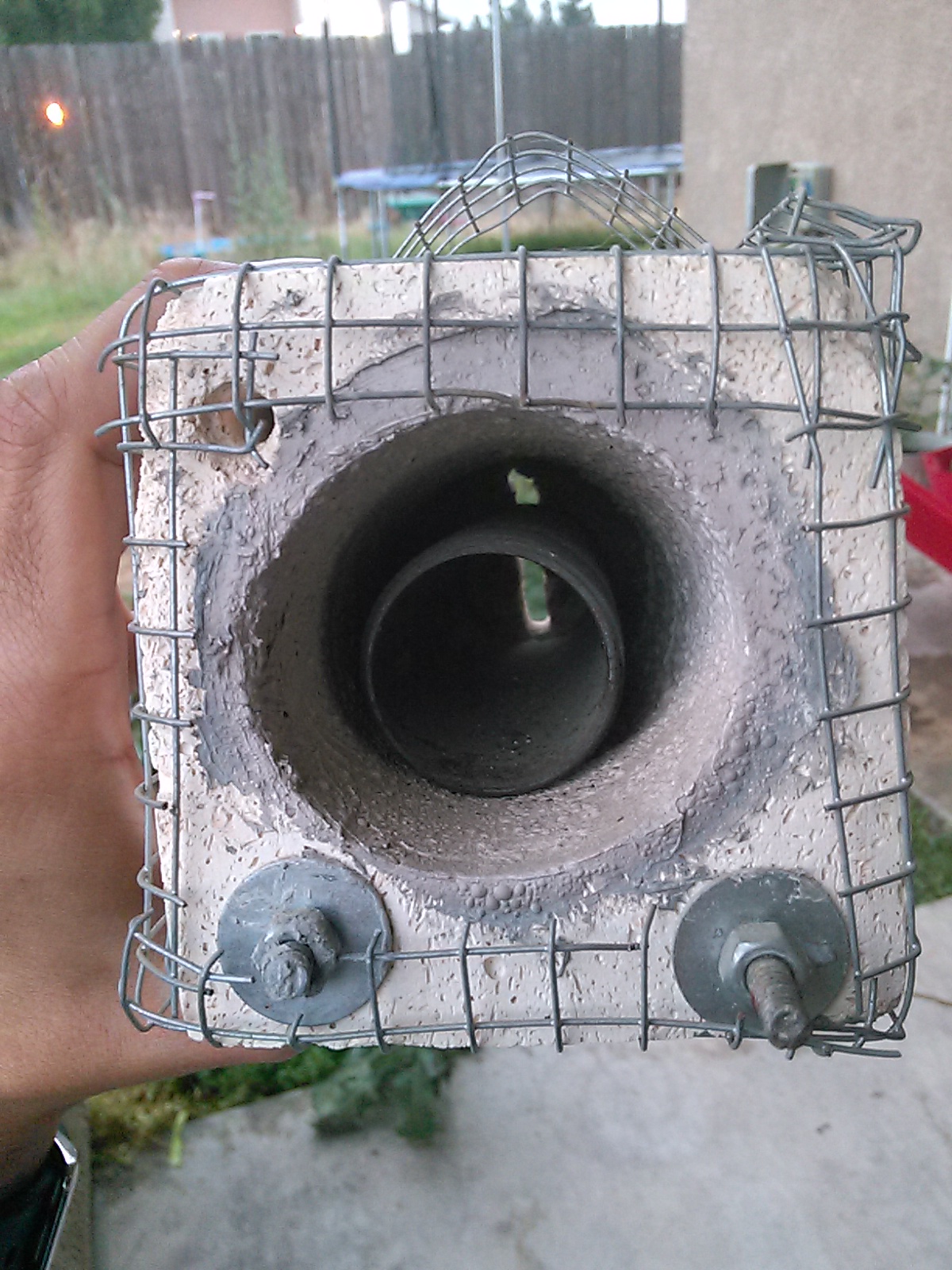
Here you can see the pipe nipple that I use as a muffle to keep the considerable heat as evenly distributed as possible (a very good idea!).

0sR8tGe.jpg


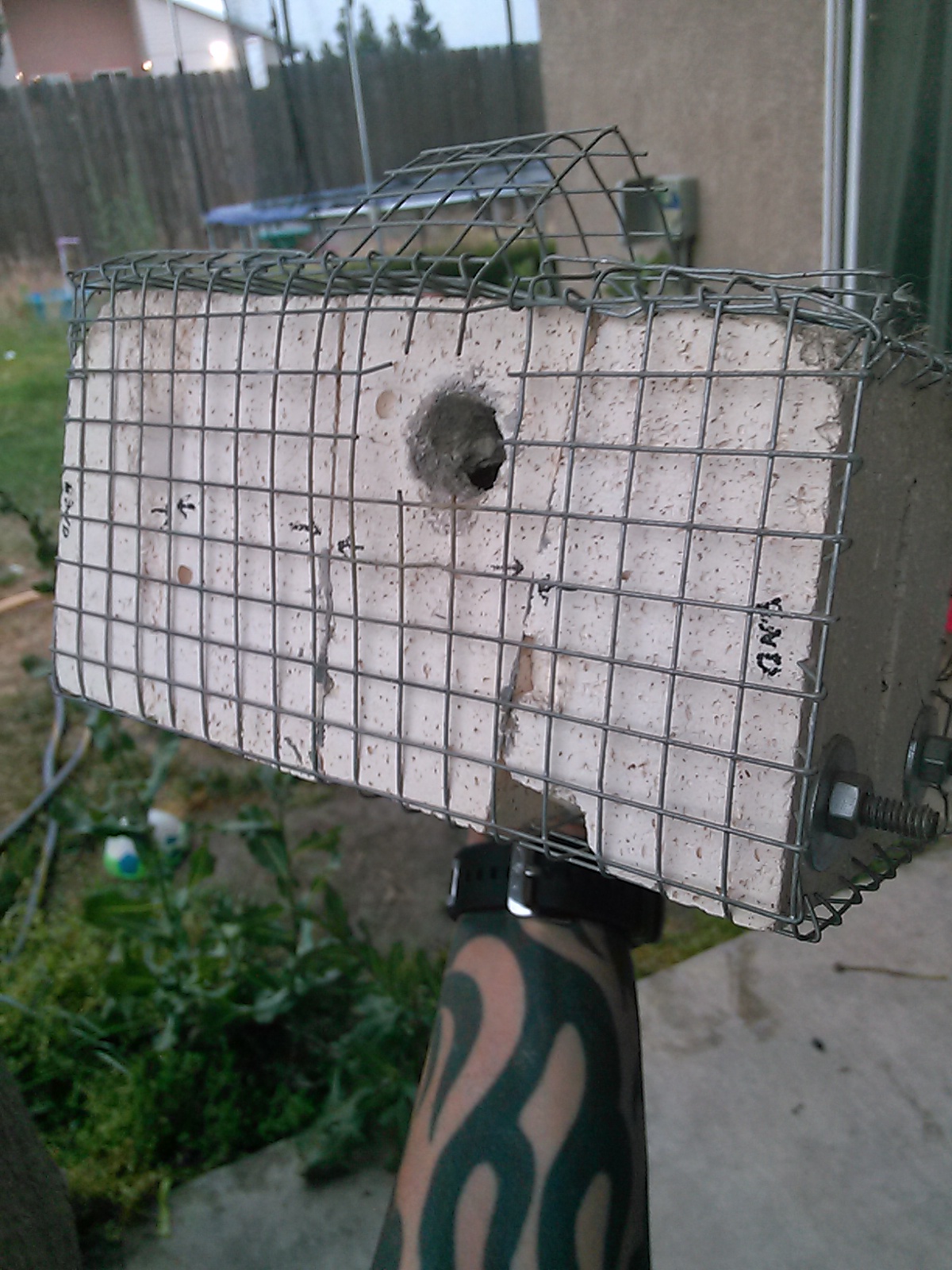
In this pic you can see the odd brick shape and my desperate attempt to keep them mostly lined up with sharpie.

7u6W3Fy.jpg


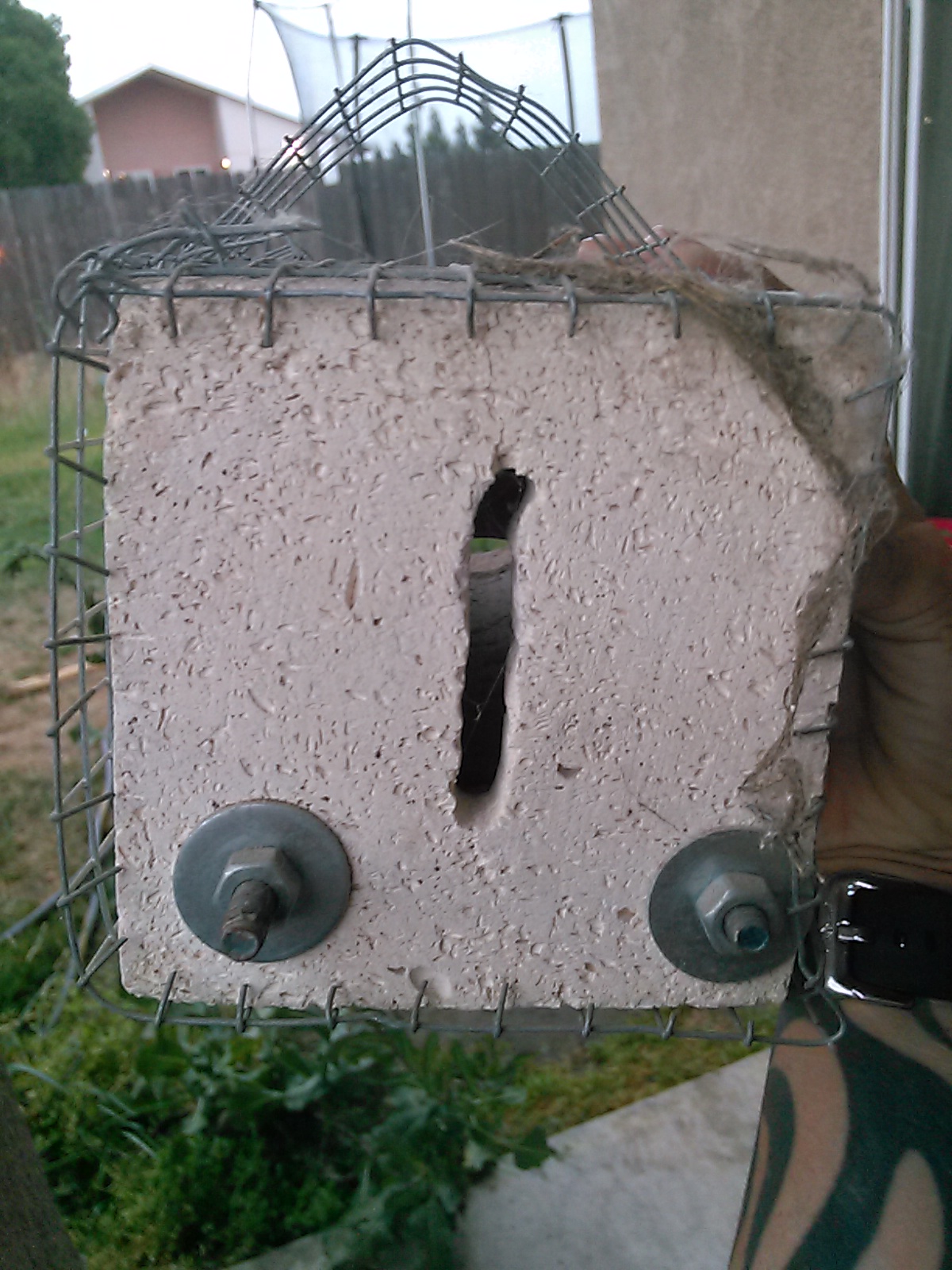
Port on the end. (I don't suggest the spider webs.)

wzTBJUy.jpg


I kept the round brick that came out of the center cuts to use as a plug, but they are entirely unnecessary with my burner.

Just to clarify... I'm not a knife maker. I'm love making the occasional knife, but (obviously) I'm more interested in what the knife goes into. All of this just to say that just about everyone here has faaaar more experience in ht'ing steel. Still, I wholeheartedly suggest grabbing some 1084 (or any eutectoid) steel, doing some research and giving it your best shot. If nothing else it really makes you appreciate what the average badass around here does. :)
 
You got it.

Now that you've got me all thinking about it I grabbed my forge. I'd forgotten two key things about it.

1. It's more like the crackhead cousin of the Atlas Forge.

2. Somehow I forgot that I only secured two corners.

Here you can see the pipe nipple that I use as a muffle to keep the considerable heat as evenly distributed as possible (a very good idea!).

0sR8tGe.jpg


In this pic you can see the odd brick shape and my desperate attempt to keep them mostly lined up with sharpie.

7u6W3Fy.jpg


Port on the end. (I don't suggest the spider webs.)

wzTBJUy.jpg


I kept the round brick that came out of the center cuts to use as a plug, but they are entirely unnecessary with my burner.

Just to clarify... I'm not a knife maker. I'm love making the occasional knife, but (obviously) I'm more interested in what the knife goes into. All of this just to say that just about everyone here has faaaar more experience in ht'ing steel. Still, I wholeheartedly suggest grabbing some 1084 (or any eutectoid) steel, doing some research and giving it your best shot. If nothing else it really makes you appreciate what the average badass around here does. :)

Oh wow thats great! Haha thanks for the pictures it clears up a lot. Pipe muffler seems like a great idea, I was a bit worried about the heat distribution with the suggested torch tip considering its so cheap. This may help ease my doubts. I've seen mention of 1084 before, I was looking to start with 01 carbon as I've seen that around a lot too. Well atleast I can get some variety Haha. Thanks for all the help :)
 
I have 1084, a little 1095 and a bunch of o1. I believe o1 is hypoeutectoid and 1095 definitely is.

I won't go so far as to tell you that heat treating hypo steel in the 2bf is a terrible idea, but you should have everything studied up and fully understood to bother. 1084 (and 1080, but I have no experience with it) is the exact right steel to use in the 2bf. If you can get it non-magnetic, then go about 1 shade of red hotter you're good to quench. Other steels require a soak time and more exacting temps.

Canola oil heated up (can't remember the temp, but most everyone here knows. Somebody?) is what you'll likely want to use btw. The Goddard book is great, but there's no need for his "goop quench" if you are using Aldo's 1084.
 
I have 1084, a little 1095 and a bunch of o1. I believe o1 is hypoeutectoid and 1095 definitely is.

I won't go so far as to tell you that heat treating hypo steel in the 2bf is a terrible idea, but you should have everything studied up and fully understood to bother. 1084 (and 1080, but I have no experience with it) is the exact right steel to use in the 2bf. If you can get it non-magnetic, then go about 1 shade of red hotter you're good to quench. Other steels require a soak time and more exacting temps.

Canola oil heated up (can't remember the temp, but most everyone here knows. Somebody?) is what you'll likely want to use btw. The Goddard book is great, but there's no need for his "goop quench" if you are using Aldo's 1084.
Ooh I see. That's very specific thanks. Haha yah the goop quench seemed like a lot of work to be honest. For some general heat treating questions after going a bit over non magnetic should i let it sit and air cool and repeat that process three times? I've heard you should do that and then heat again, quench and let it go to air temp before you temper it for 2 hrs at 400 Fahrenheit I think it was? Not really sure.

Also do you know where I can get quenching and tempering info for different steel types? Would a quick Google search just do it or is there a chart or something?
 
Where's The Count when you need him? :)

At the top of the forum there is a Sticky that will have you reading for weeks. Everything you need to know is there.

I have no idea where you got that info, but it's bad.

I take my blank (ground, but leave a little meat at the edge) and place it in the hot forge. I keep one of those telescoping magnet deals handy. As the steel gets hot I'll pull the blank from the forge and check it with the magnet. When the magnet is no longer attracted to the blade I let it go roughly one shade hotter (if you are VERY careful you can do this in low light. Please be careful!) then it goes directly into the oil.

Depending on the knife, and it's uses, you'll choose your tempering temperature and run it through at this temp (in the oven is fine for your first attempts, although there are much better ways) two or three times.

These are pretty vague directions and you should absolutely read up on what is happening with the steel and why. It's pretty complex and it would be irresponsible of me to try and author the proper steps because I'm not really qualified. You'll get a lot of satisfaction from having understood what you did and you'll definitely make a better product.
 
Thanks for the pointer to the sticky, ill be sure to check it out. I'm sure the edge quench and all that is covered somewhere too. For now can I get away with simply a point first dip or should I be trying to use a regulator block or something like that.
 
Thanks for the pointer to the sticky, ill be sure to check it out. I'm sure the edge quench and all that is covered somewhere too. For now can I get away with simply a point first dip or should I be trying to use a regulator block or something like that.
It's been like 10 years since I read books on knife making as I've found the information here more accurate/valuable. For that reason I can't really recall exactly what you're referring to.

It sounds like you are talking about placing a block in the quench to lay the edge on?

No one else seems to be reading this, which is a shame because, again, I don't want to give inaccurate information, but I *believe* 1084 was developed for easy heat treat. I believe it's right on the edge of being a hypoeutectoid steel so you get good carbon content without the complex heat treat.

After its at the critical temp you will want to go tip first and make a slicing motion in the oil. Not side to side as this can induce warpage.

Don't worry about weird steels, bad advice youtube videos and heat treat methods from books.

Can someone please let this guy know if I'm being accurate? Bueller?
 
Yah that's what I was referring to, it was mentioned in 50$ knife shop so I thought it was a good thing to do. I heard about the slicing motion, so just back and forth? What's a good time to keep it dipped in the oil? Thanks for referring me to the sticky. Lots and lots of info there :)
 
Lots of good info here. Just thought I would mention that the JTH-7 is a discontinued item, which is why you can't find it in stores. Even so, it's only around 3-4K BTU output.
OLW is almost right, 1095 is hypereutectoid, not hypo. Specifics aside, it's not easy to get a good HT in any forge using 1095. Best to stick to 1084, it's super easy to HT, very inexpensive, and makes a great knife. I know the fancier steels are tempting, but save your money and spend it on other tools than fancy steel when just beginning.
 
Back
Top