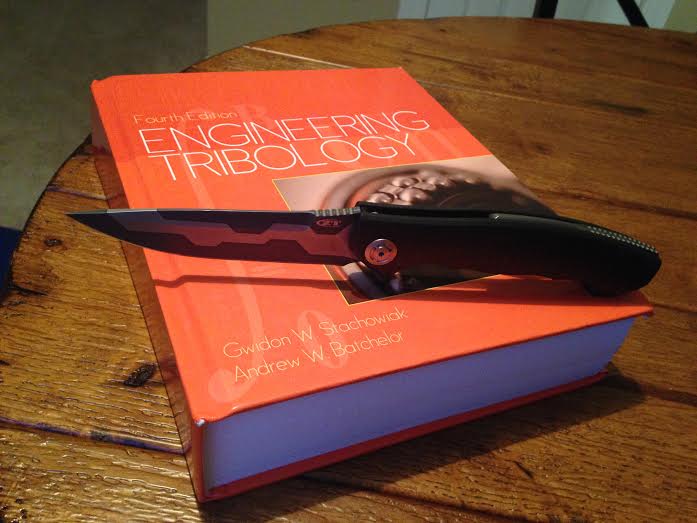
All of the coefficient of friction stuff doesn't really work very well when the actual surface pressure is so low that it is in the same range as the surface tension of the lubricant.
Whether it is a thrust bearing a ball bearing, the total surface area does matter - fewer bearings on smaller races turn easier under no load than larger ones. Anyone who has spent time working on various bearings of a bicycle knows this.
The problem with thrust bearings and washers is that the "work" they provide is at the edges, not in the middle. A bigger washer makes the turning part more stable as it rotates on its axis, decreasing other areas of drag, but the increased surface area means surface tension is going to be higher. But if you use a big washer that has less surface area you get more even loading with less surface tension.
Purple,
"Stiction" is already an engineering term, usually used to describe the tendency for aluminum to stick under load. Having worked with titanium spindles and bearings for years, I have yet to hear anyone suggest that titanium work hardens into a harder, smoother race under load. Any engineering reference you'd care to post would be appreciated. Titanium tends to work harden in the worst ways from friction and wear - usually leading to surface fracture which is most similar to galling.
This is an interesting discussion, but there seems to be a lot of theory that doesn't really match up with simple real world observations of how simple machines function.
And if you want something more to ponder - consider that thrust type needle bearing used in knives cannot roll their entire length because they are rolling across multiple circumferences. So some part of the bearing is always dragging on the races.
I don't think much of bearings because good washer systems can be incredibly smooth, and are much stronger than bearings. But if you like them - great. Just don't overtighten them because tight bearings do much greater damage than tight washers due to the tiny surface areas.