- Joined
- Feb 15, 2002
- Messages
- 1,705

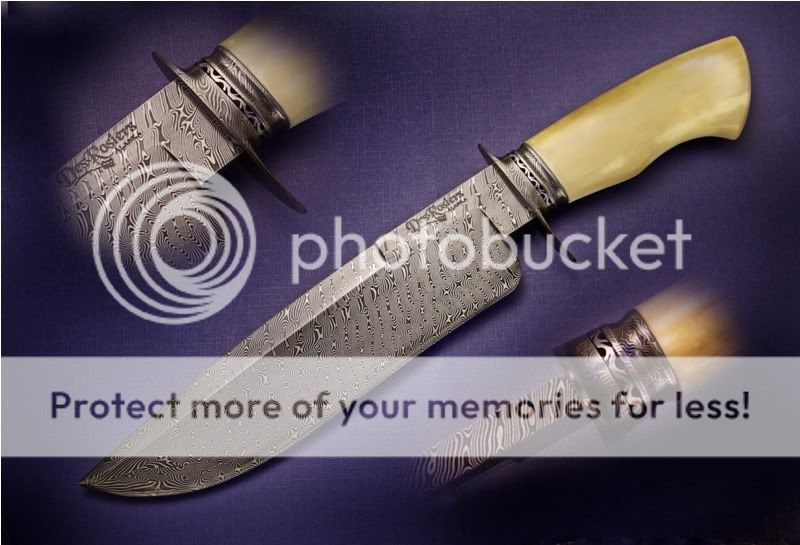
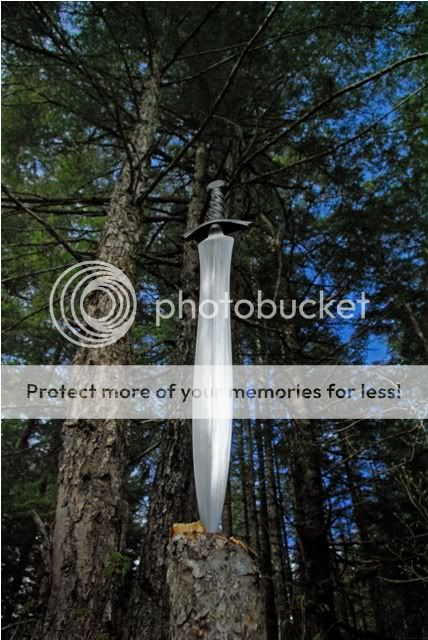
David asked at the top, "What distinguishes a truly great (knife) photograph?"
Naturally there's no single answer but this very fine image by Coop stands out and there are two BIG reasons why - things you might not be aware of consciously.
The first has to do with the "Rule of Thirds." Take Coop's image and divide it into thirds, both vertically and horizontally. The dividing lines intersect about half-way toward each corner of the frame. The point here is that our human eye finds it more pleasing when the key focus points in the image are off-center. In Coop's image, two of the 4 intersections fall roughly over the center of the two hilts. Sure it's a beautiful piece of work on a gorgeous red background, but that's only mildly relevant. The composition of the image is critical. Don't be a slave to the rule of thirds, but respect the fact that in most instances its observation results in a better image.
Second, concerns the use of converging/diverging lines in arranging the knife/sheath and whatever else is in the frame. Again, using Coop's shot above, draw a line through the long axis of each sword and through the length of each guard. Imagine the various lines crossing outside the photograph somewhere. This creates a sense of depth or 3d-like effect. But the real power of converging/diverging lines is that it divides the frame up into triangles and triangles, it turns out, are very attractive to the human eye. In a painting or photograph they create sloping lines which have greater appeal than straight up and down or perfectly horizontal arrangements, which always make for a boring image.
Sure, there are other reasons this is a wonderful knife photograph, but IMHO, Coop made terrific use of two major design concepts that virtually guarantee a superior composition or 'layout.' Building on that with skillful lighting and good color balance gets one closer to the goal of a great image. The rest comes from one's unique creativity, knowing when to break the rules, and all the technical stuff like avoiding lens flare, perfecting focus and managing depth of field etc., etc., etc.
This is a different way of looking at the subject, not the only way, but certainly one useful and valid way of beginning to sort out what makes for a great knife photograph.


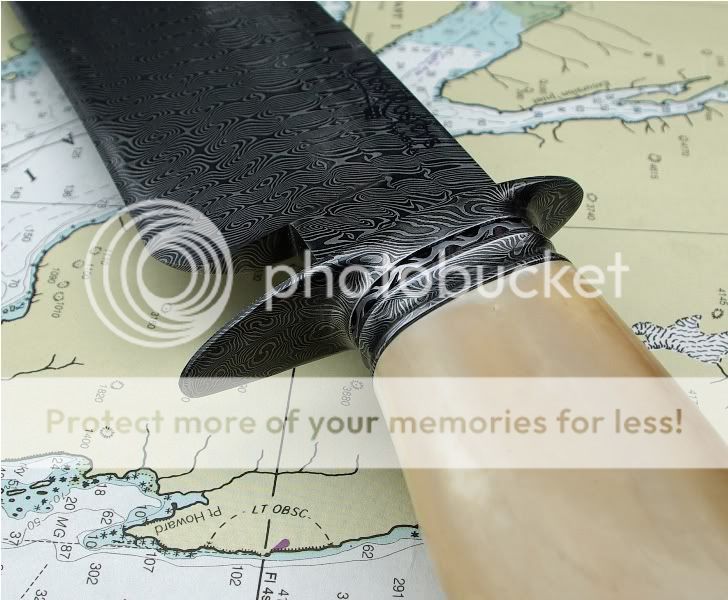


 I have yet to master so many angles of damascus. My only consolation is that the customer will be delighted to find the knife is even cooler in person