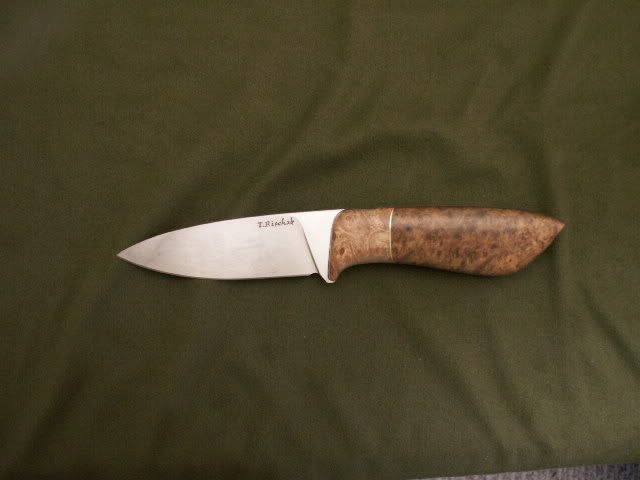
Best way to finish a black walnut handle?

The steel wool that already was mentioned works well, but I happen to like a glossier finish, so I buff. :thumbup: I know theres companies that don't stabilize there walnut (some use BLO/Shellac), but the reason I mentioned getting it stabilized is because walnut is open grained there is a bit of extra work involved, and secondly there isnt an oil finish that will offer benefits like having it stabilized IMO. I have traditonally finished walnut for yrs using oil and other methods, and I really like caseys gun oil. However, theres a lot less finishing thats required once its professionally stabilized (WSSI). No raised grain, none of the traditional issues (swelling, shrinking, waiting for oil to dry, etc), and it buffs up to a gloss finish on the buffer right quick.

Larry


Larry,

Have you got a way to deal with stabilized wood that makes it look like it's finished wood instead of plasticized wood?

Mike
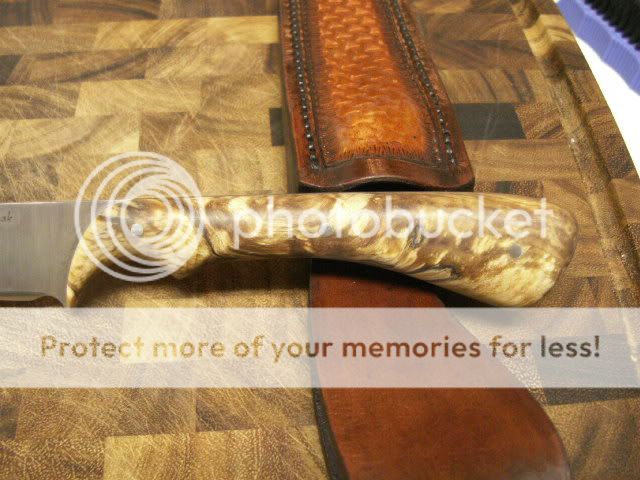
 
These pics are some info to Mike Krall's question about stabilized wood looking plastic. Although in neither pic I am using walnut at the time, you can see the difference between unbuffed and buffed. When I buff handles I do not use any buffing compound at all, only a clean flannel buff. I had a blade with stabilized walnut burl on it that I finished with about 5 coats of teak oil on it, and it looked like the second blade.

Here is a piece of stabilized birch sanded to 1000, 0000 wool and oil, and buffed. Looks like plastic.
BFillethandle2.jpg


This one is stabilized maple and teak burl. Sanded to 1000, 0000 wool and oil, no buff. I did not fill in the inclusions on purpose.
Jeep4.jpg

Jeep6.jpg
 
gixxer,

Pictures worth a lot! I think that may be the first time I've seen stabilized wood that didn't look like it was made of plastic. Thanks a lot for doing that.

Mike
 
Just to add my $0.02... I use nearly all stabilized wood when I use wood and I don't think any of it looks or feels like plastic. Maybe just a difference in opinion... :)
 
I'm with Nick... I've only used a few pieces of stabilized wood so far, but I don't think it looks or feels like plastic. It kinda smells like plastic when you grind it, but I don't think stabilizing necessarily takes away from the natural look of nice wood. Most of the time, it brings out the chatoyance and depth of the grain nicely. I think the "plastic" look/feel depends on how you finish it. Sure, if you polish it to a very high grit, and coat it with with CA, and buff it, you can make it almost like glass. But you don't have to go that far.

I'm pretty much done with "natural" woods... stabilized woods give me a lot more finish options without worrying if they're going to get nasty-looking or start to rot/crack/shrink :eek: 5 years down the road.

Mind you, I got my start in finishing wood by customizing and building solid-body guitars. I'm a huge fan of the look and feel of hand-rubbed oil finishes on maple and mahogany guitar necks. I sure don't have anything against that approach, as long as you're willing to accept that it WILL get dirty eventually if your hands are on it a lot. "Raw" oiled maple in particular gets mellower and prettier with lots of use; custom shops charge big bucks to put that sort of finish on necks. But it requires a certain amount of maintenance or it will just end up looking dingy, and feeling sticky and rough.

There's more than one way to skin a cat. :)
 
Back
Top