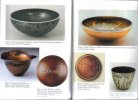
big mokume gane

I amend my earlier statements.
I was referring to silver and copper mokume' - my mistake!.
Nickel silver and copper fuse in the 1875 area.( If you add silver to the stack the temp drops to 1360).The problem is that you have to be very sure of the alloys that you are using.Most copper sheet is not pure copper,and nickel silver can be a wide variety of nickel/copper alloys.
Mike is right about striking the billet hard,don't do it. Gentle taps to start with will "set" the fusion.A hard blow can squirt molten metal all over the shop - not a nice thing to happen at waist level!! As it drops in temperature increase the weight of the blows.Don't do any of the hard forging until below black heat.If twisting,grind the edges off to avoid tearing and delamination.Better yet,forge down to a round billet before twisting.
All bets are off if you are not very sure of the temperature in the oven.
 
i am stil thinking about taking it up a little higher in temp is there any good way to tell just how well my stack fused
i dont want to melt it down
 
solder the split.hammer the bar round ,anneal it and twist the bar. trying to refuse it will be a waste of time and effort. you will know real fast if your billet fused right with a little twist action applied to it.
 
wish me luck im getting ready to do some twisting on it :thumbdn: :thumbup:
we will see how it goes and about an hour or so
 
bunk :thumbdn: it only sorta worked next time around im going to try fuse temp at 1870
but at least i see how to do it now and forging it man you need some heat to do that i was using my kiln to get it up to heat :foot:
i need to set up a forge soon
i ll post pictures of the mess soon i hope
butch
 
you were forging it hot? i guess some people do, but i never found a need to forge any non ferrous mokume above room temperature.
 
yep i was forging it hot it was moving well next time i ll try some cold working
i do believe that i just never got the billet to fuse all the way in the first place
also twisting was harder then i thought it was going to be even at 1800 but then agaiin the stack was about 3/4x3/4 x5 inches i ll just look at it as learning and i ll do it better next time
butch
 
make your next billet 3/8ths inch X 3/8ths inch X 5 inches long. i think you bit off more than you could handle before learning the basics. if you can't fuse a 3/8ths inch billet and have it hold together while twisting it cold, you will need to rethink your plans. it should work and twist like soft butter.

twist.jpg
 
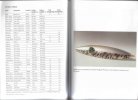
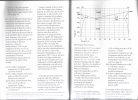
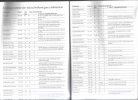
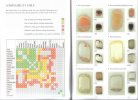
I picked up a copy of "Mokume Gane" by Ian Ferguson a couple of months ago for the cool pictures in it and to satisfy my curiousity about how mokume is made. I contains a bunch of tables and graphs showing various technical details about the metalurgical properties of the various metals, none of which I understand. There is also a bibliography that refers to a whole bunch of other books on the subject. The co-worker who borrowed my copy was able to find a used copy on Amazon for something like $15. I am attaching scans of them in case you guys find them of use. Sorry for the low quality of the scans due to shrinking the file size to fit BF's limitations. I can e-mail better copies if anyone wants them.

Phil

Edited to add: Zooming in on the images does help make out the text. It may be easier to save the image to your computer first, depending on the browser that you are using.
 

Attachments

  • mokume book 1b.jpg
    mokume book 1b.jpg
    57.2 KB · Views: 10
  • mokume book 2b.jpg
    mokume book 2b.jpg
    88.4 KB · Views: 8
  • mokume book 3b.jpg
    mokume book 3b.jpg
    82.6 KB · Views: 3
  • mokume book 4b.jpg
    mokume book 4b.jpg
    71.5 KB · Views: 6
  • mokume book 5b.jpg
    mokume book 5b.jpg
    68.1 KB · Views: 11
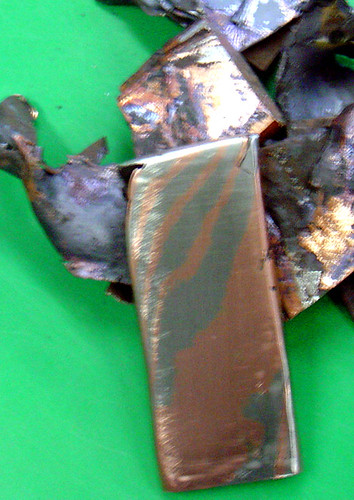
i might be able to save some of this after all but not for the gaurds and fittings i had planed
looks like i might drill a few holes in it and pound it thiner maybe i can use it for bolsters on a folder its a 1/4 inch thick and alittle over an inch and a 1/4 wide
132986305_81dc9255d3.jpg

butch
 
Back
Top