-
The BladeForums.com 2024 Traditional Knife is available! Price is $250 ea (shipped within CONUS).
Order here: https://www.bladeforums.com/help/2024-traditional/
You are using an out of date browser. It may not display this or other websites correctly.
You should upgrade or use an alternative browser.
You should upgrade or use an alternative browser.
Big Soddie Pivot?
- Thread starter Lycosa
- Start date


- Joined
- Apr 12, 2009
- Messages
- 13,532
I think, in the specific example of a Case soddie, it's called a 'compression rivet' (two pieces, a 'male' and 'female' side, press-fitted together). Some other makes use a 'bird's eye' fitting, which I think is a threaded nut-and-bolt type of fitting, screwed together and then the exposed ends are cut/ground off. Both are fairly large in diameter.
I'd bet the large diameter of the pivot rivets on any of them is a necessity because it's the only hardware providing any strength in the pivot, due to the absence of bolsters. In other knives with metal bolsters, the bolster itself adds a lot of lateral strength as an anchor for the pivot pin, so the pivot pins themselves don't necessarily need to be as huge. If the soddies used the same size pins as on other bolstered knives, the pivot would easily pull apart with sideways pressure. The delrin or wood handles on a soddie aren't anywhere near strong enough to anchor/support a smaller pin.
I'd bet the large diameter of the pivot rivets on any of them is a necessity because it's the only hardware providing any strength in the pivot, due to the absence of bolsters. In other knives with metal bolsters, the bolster itself adds a lot of lateral strength as an anchor for the pivot pin, so the pivot pins themselves don't necessarily need to be as huge. If the soddies used the same size pins as on other bolstered knives, the pivot would easily pull apart with sideways pressure. The delrin or wood handles on a soddie aren't anywhere near strong enough to anchor/support a smaller pin.
Last edited:

- Joined
- Aug 30, 2008
- Messages
- 36,643
It is special and significant for the sod buster. I think the appeal of the traditional sod buster is it's strength, hence the pivot, and the durability and ruggedness. I guess I have nothing to add to Lycosa's post. LOL. I do have 2 sodbusters. They are a no nonsense knife. They are like a T 50 staple gun. They are common, rugged, inexpensive, and they work like a draft animal.

- Joined
- Feb 22, 2007
- Messages
- 9,008
I think, in the specific example of a Case soddie, it's called a 'compression rivet' (two pieces, a 'male' and 'female' side, press-fitted together). Some other makes use a 'bird's eye' fitting, which I think is a threaded nut-and-bolt type of fitting, screwed together and then the exposed ends are cut/ground off. Both are fairly large in diameter.
I'd bet the large diameter of the pivot rivets on any of them is a necessity because it's the only hardware providing any strength in the pivot, due to the absence of bolsters. In other knives with metal bolsters, the bolster itself adds a lot of lateral strength as an anchor for the pivot pin, so the pivot pins themselves don't necessarily need to be as huge. If the soddies used the same size pins as on other bolstered knives, the pivot would easily pull apart with sideways pressure. The delrin or wood handles on a soddie aren't anywhere near strong enough to anchor/support a smaller pin.
David,
You bring up a great point. It seems some do different styles. Like the GEC I don't quite get how that one works. They called it press fit bite washers. But when I look at my pivot it just look like a pin and washer with a gap between filled with epoxy. I don't understand it.
Kevin
- Joined
- Apr 12, 2009
- Messages
- 13,532
David,
You bring up a great point. It seems some do different styles. Like the GEC I don't quite get how that one works. They called it press fit bite washers. But when I look at my pivot it just look like a pin and washer with a gap between filled with epoxy. I don't understand it.
Kevin
The GEC does look more different than any of the others I've seen (I don't have one, but based on the pics I've seen here). I initially assumed it was a birds eye type, but I'm not so sure what it is. Based on the 'press fit bite washer' description, that sounds like the inside of the washers might be tapered or something, to keep them from backing off the pin. I've read that at least some of the birds eye fasteners are sometimes filled with epoxy during/after assembly. Closes up the gaps between threads in the fastener (keeps moisture out), basically, and helps to keep it from unscrewing itself, I would assume.

- Joined
- Nov 15, 2007
- Messages
- 3,372
Thanks David for useful info.
Mike
Mike
I would also geuss that the bigger the pivot, the more surface area to spread the different forces out. It is suppose to be a hard-working knife afterall. I never realized some of the pivots started out as essentially a corby bolt. Makes sense and is nice to know. Also, if that's true, then trying to tighten it up with a hammer could do more damage than help, threaded things typically don't appreciate being hammered on.

- Joined
- Jul 25, 2010
- Messages
- 7,432
Hi guys!
Here you can see the pivot-pins of the Case Soddie and the Otter knife pivot
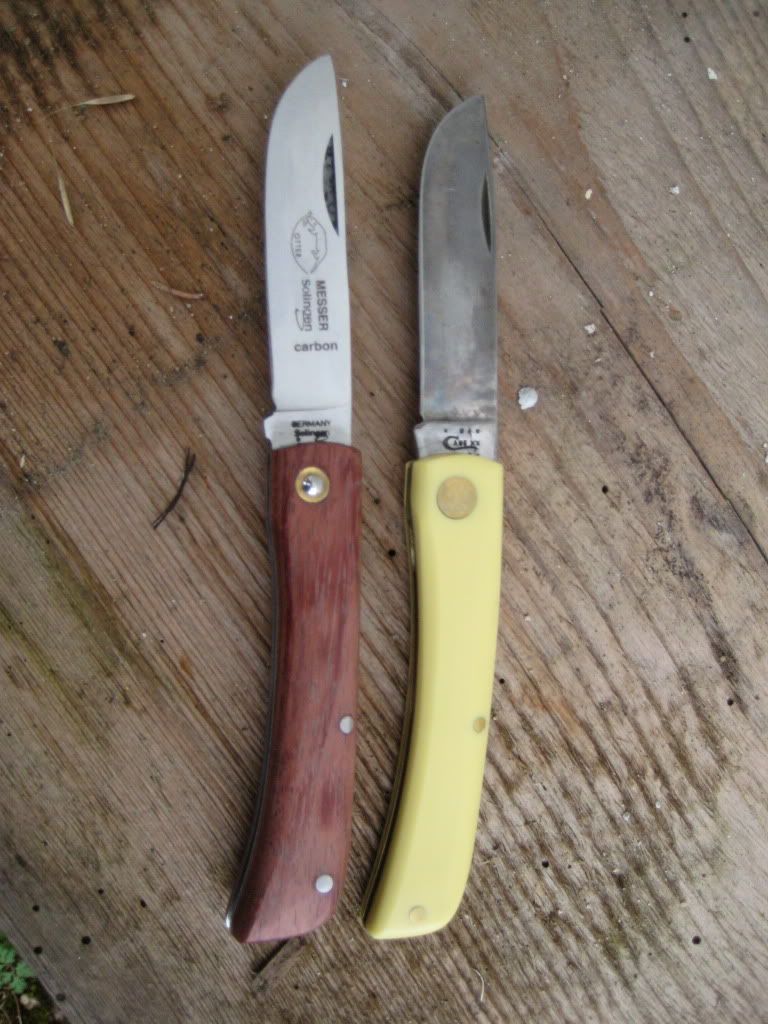
It seems, that the Otter pivot is just pinned through the handle. Nothing special like on the US made.
Getting back to the here answered questions - I think the Case used pivot is tougher than the german made one. It really seems, that there´s just a pin through the pivot - here comes the german one. The US made one seems to be more complicated to build.
Just my two Cent (I hope, I understand the replies to the TO)
Kind regards
Andi
Here you can see the pivot-pins of the Case Soddie and the Otter knife pivot
It seems, that the Otter pivot is just pinned through the handle. Nothing special like on the US made.
Getting back to the here answered questions - I think the Case used pivot is tougher than the german made one. It really seems, that there´s just a pin through the pivot - here comes the german one. The US made one seems to be more complicated to build.
Just my two Cent (I hope, I understand the replies to the TO)
Kind regards
Andi
Brian.Evans
Registered Member
- Joined
- Aug 20, 2011
- Messages
- 3,267
I'd bet the large diameter of the pivot rivets on any of them is a necessity because it's the only hardware providing any strength in the pivot, due to the absence of bolsters. In other knives with metal bolsters, the bolster itself adds a lot of lateral strength as an anchor for the pivot pin, so the pivot pins themselves don't necessarily need to be as huge. If the soddies used the same size pins as on other bolstered knives, the pivot would easily pull apart with sideways pressure. The delrin or wood handles on a soddie aren't anywhere near strong enough to anchor/support a smaller pin.
Wood and delrin maybe not, but G10 and Micarta, absolutely.
My first slipjoint I am working on is a shadow pattern. I think stabilized wood would be ok without a larger pivot, but I still like the look.
http://www.knives.mutantdiscovery.com/destruction.html
- Joined
- Apr 12, 2009
- Messages
- 13,532
Wood and delrin maybe not, but G10 and Micarta, absolutely.
My first slipjoint I am working on is a shadow pattern. I think stabilized wood would be ok without a larger pivot, but I still like the look.
http://www.knives.mutantdiscovery.com/destruction.html
No argument there. I've seen some of the threads on a related note in the Knifemaker's forum. G10 and Micarta (and carbon fiber also), as well as the stainless liners and pivot hardware usually seen on such knives, is a whole lot stronger.


- Joined
- Nov 29, 2005
- Messages
- 851
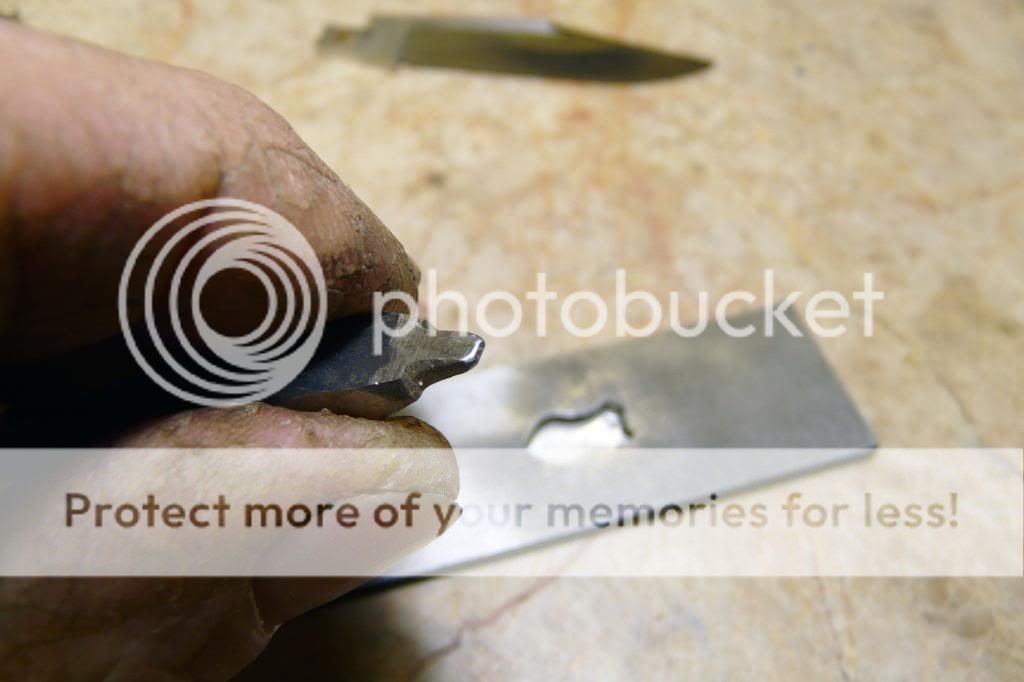
Here's my old Case Sodbuster which I bought new in 1973. As you can see I used it hard and finally the spring broke. Instead of sending it in for repair, I used it as a pattern. The pivot has brass washers and a 1/8" pivot pin. Someday I'll make it a new spring.