Blade Maintenance on Good Kitchen Knives

No difference between the stone and the steel in terms of the "outcome of the polished edge" as long as the grits are all the same. There is a difference in the time involved and the feel of the stone, but the results will be same when finished.

Diamond stones in their finest grits are coarser than finishing waterstones. Most kitchen knife sharpening experts who use diamond stones, use waterstones for the finishing. I'm not aware of any diamond stone that can finish like a finishing waterstone or 5000 or higher grit. Perhaps there is one somewhere but I don't know about it if there is.

I'm curious about the stainless steel comment. Most powder steels and, of course, ZDP are stainless steels. They wouldn't be different from other stainless steels in that regard. Why would the material from which the sharpener is made be meaningfully different between powder steels and ZDP and other stainless steels other than the time required?


Since you believe there is no difference in sharpening abrasive and their outcome on final finish you probably would not understand.

The DMT XXF 8000mesh diamond hone once broke-in leaves a very similar finish to a 8000 grit waterstone on most steels. You must also understand the way a diamond cuts to make a accurate comparison of the finishes.

CPM steels are a mix of carbon and stainless, and ZDP is a stainless, yes, but it has 3% carbon and has a very high hardness so in sharpening it tends to act more like a carbon steel.
 
Since you believe there is no difference in sharpening abrasive and their outcome on final finish you probably would not understand.

I'm not sure how my beliefs would affect my understanding. Actually I would understand perfectly. You are confusing the feel of the stone and the time spent with a difference in the finish. There isn't any scientific explanation for how two abrasives with the same grit size can come up with different finishes. You can have a belief but that isn't the same thing as a fact. The laws of physics dictate against it.

The DMT XXF 8000mesh diamond hone once broke-in leaves a very similar finish to a 8000 grit waterstone on most steels. You must also understand the way a diamond cuts to make a accurate comparison of the finishes.

Good, now I know of one. Thanks. I'm not fond of diamond abrasives so I haven't experienced many of them.

CPM steels are a mix of carbon and stainless, and ZDP is a stainless, yes, but it has 3% carbon and has a very high hardness so in sharpening it tends to act more like a carbon steel.

And how would that affect anything other than the feel of the abrasive and the time spent sharpening?
 
Whatever method you use don't forget to remind your significant other to handwash your knives. The sharpest edge in the world won't last if it's thrown into the dishwasher or into a sink with the pots and pans.
 
I'm not sure how my beliefs would affect my understanding. Actually I would understand perfectly. You are confusing the feel of the stone and the time spent with a difference in the finish. There isn't any scientific explanation for how two abrasives with the same grit size can come up with different finishes. You can have a belief but that isn't the same thing as a fact. The laws of physics dictate against it.

I don't know the mechanism, but there is a difference in finish between identically-sized abrasives of different compositions.

I fist learned this when I was beginning lapidary. When cutting obsidian, you can't get a satisfactory polish with diamond. There's always a haze to the surface, even on 50,000+ grit. Throw a little cerium oxide or alumina on a leather pad, and it polishes it up beautifully.

That's the reason that gem-cutters have many different finishing wheels and discs. Some stones respond well to chrome oxide, others to tin oxide or cerium, even others only finish on diamond.
 
Thank you so much, Knife Outlet.

One more favor. I have the DMT Diasharps in XXCourse, Course, and XFine. I do not have a Fine stone. What do you recommend in order to lap the Spyderco UF stone down ot 1 micron?

Best,

John
 
I don't know the mechanism, but there is a difference in finish between identically-sized abrasives of different compositions.

I fist learned this when I was beginning lapidary. When cutting obsidian, you can't get a satisfactory polish with diamond. There's always a haze to the surface, even on 50,000+ grit. Throw a little cerium oxide or alumina on a leather pad, and it polishes it up beautifully.

That's the reason that gem-cutters have many different finishing wheels and discs. Some stones respond well to chrome oxide, others to tin oxide or cerium, even others only finish on diamond.

Phillip, I would submit to you that where there is a different finish, there is a difference in grit size. As you know, there are no standards. Comparing a stone rated at X grit doesn't make it the same grit size as another stone rated at the same X grit. If the abrasive is hard enough to cut steel then the cuts will be the same size if the grits are the same size. You can make a case that the abrasive grits can be different shapes and I've certainly read that case. But that is a little like arguing the number of angels that can fit on the head of a pin. Basically, if the grits are equal, the results will be equal.

A common example I read about relates to the observation that many people make that natural Japanese waterstones leave a "mistier" finish than the shiny finish you see from aluminum oxide finishing waterstones. In fact, my own natural waterstones do the same thing. The reality is that the natural stones, despite descriptions to the contrary, are somewhat larger in average grit size than the manufactured stones of the "same" grit size. I would rate my own natural waterstone at around 3500 to 4000 grit even though it is rated at 6000. The 6000 grit manufactured stone will leave a shinier finish every time.

The comment you make about things responding better to one abrasive or another is not the issue. I agree with that completely. All I'm saying is that when all is finished, the results will be the same if the grit size is the same. There is no question that carbon steel feels different on a stone than stainless or that one stone may be more or less efficient than another on a given material. There is no question that the amount of work involved in grinding one steel compared to another is different. No question either that one stone will feel very different from another despite being of the same or similar grit. I'm only talking about the end result - not the methodology for getting there.
 
Thank you so much, Knife Outlet.

One more favor. I have the DMT Diasharps in XXCourse, Course, and XFine. I do not have a Fine stone. What do you recommend in order to lap the Spyderco UF stone down ot 1 micron?

Best,

John

Lapping a Sharpmaker stone won't change the grit size. It may smooth the stone so that it cuts slower but it won't really affect the sharpening job to any meaningful degree. If you want less abrasion, get smaller grits.

I'm the wrong person to talk to about diamond grits. I don't use them personally so my own experience is limited. My issue with diamond is that the abrasives are fixed. So the abrasives wear down over time. In the beginning the diamond abrasives cut aggressively and then later on they cut less aggressively as they wear down. The grit doesn't change but the speed with which the abrasives work sure does. I find that they become worn fairly quickly and never really perform very well after that.

At least that's been my limited experience with them. I don't use anything that has a fixed abrasive.

I like waterstones because the abrasives are lodged in a water soluble matrix. As you sharpen, a slurry develops which keeps fresh abrasives coming to the surface all the time. The waterstones cut like crazy because of that. So the wear affects the size of the stone, not the cutting ability of the abrasives.

Oil stones work the same way but are slower than waterstones.
 
You have no experience with diamond stones but you give your opinion like fact.

Good, now I know of one. Thanks. I'm not fond of diamond abrasives so I haven't experienced many of them.

That's because AFAIK it is the only one.


I have the DMT Diasharps in XXCourse, Course, and XFine. I do not have a Fine stone. What do you recommend in order to lap the Spyderco UF stone down ot 1 micron?

You need the Fine stone.


Lapping a Sharpmaker stone won't change the grit size. It may smooth the stone so that it cuts slower b
ut it won't really affect the sharpening job to any meaningful degree. If you want less abrasion, get smaller grits.

Thats funny, sure did make a difference with mine.

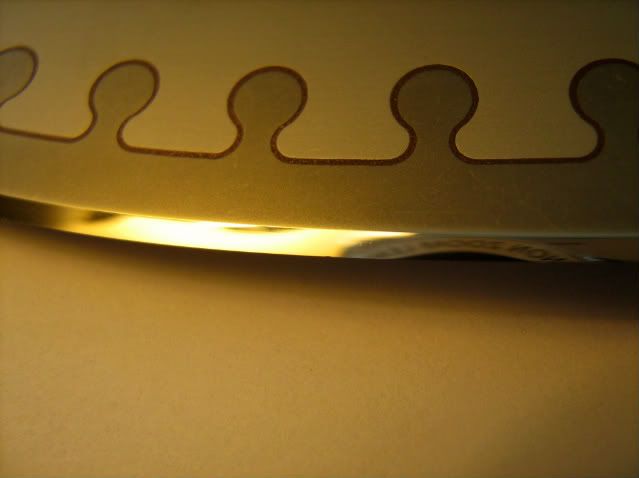
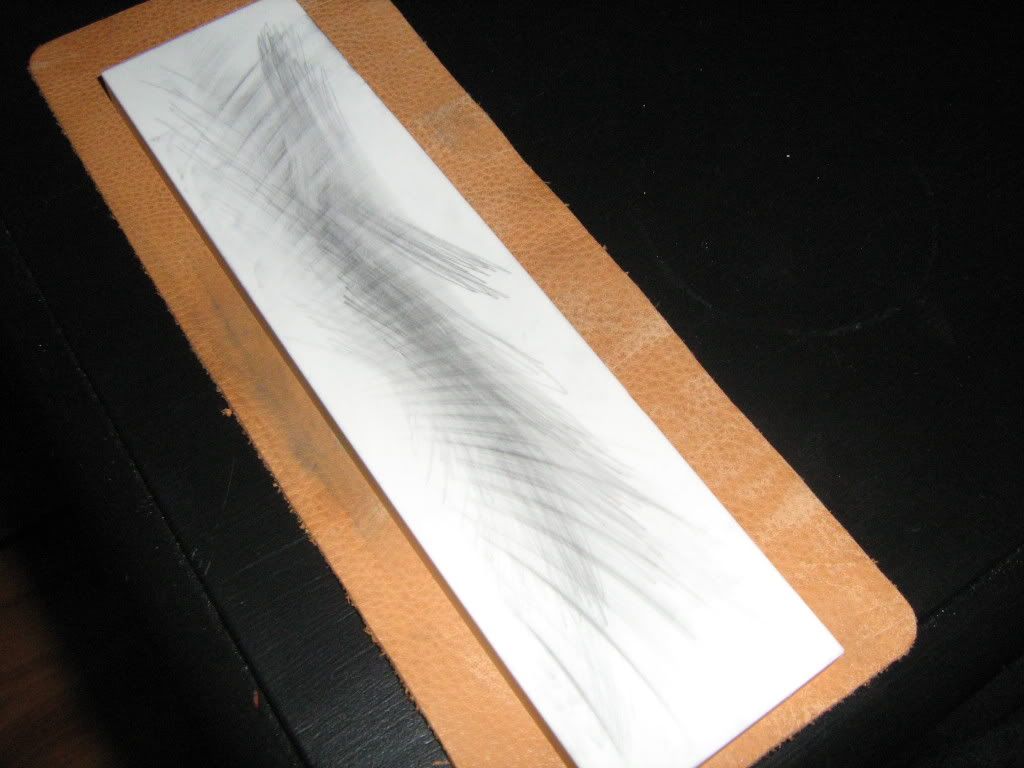
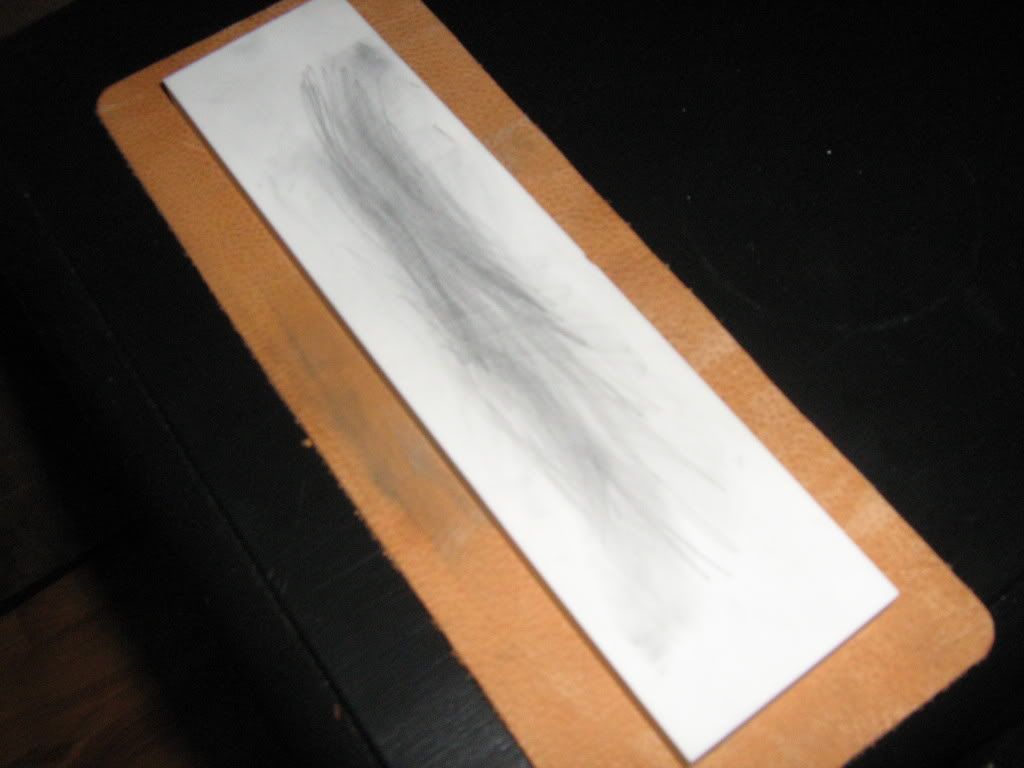
Picture469.jpg


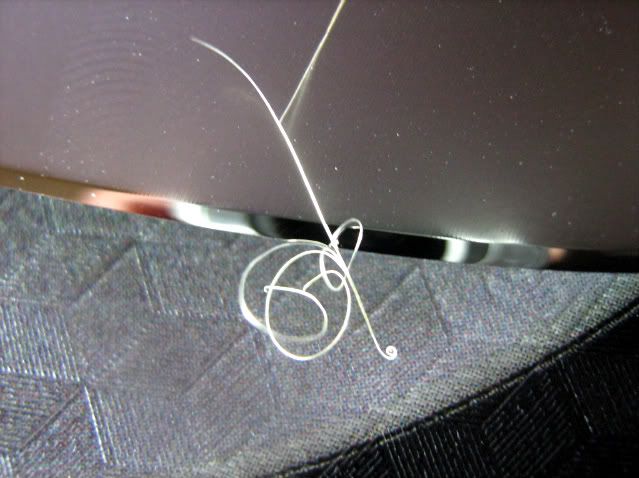
Picture470.jpg


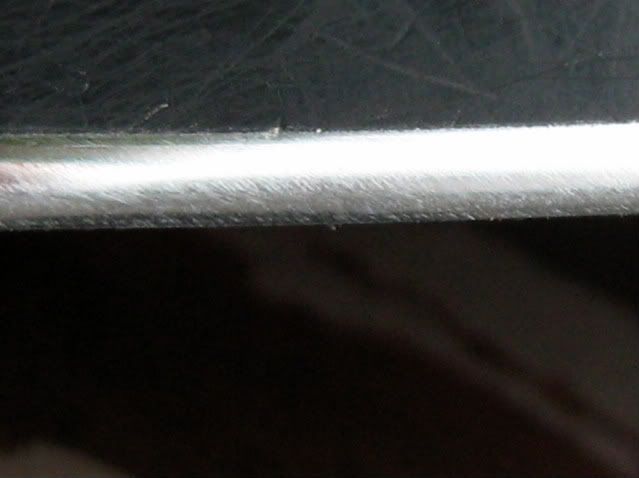
Picture594.jpg


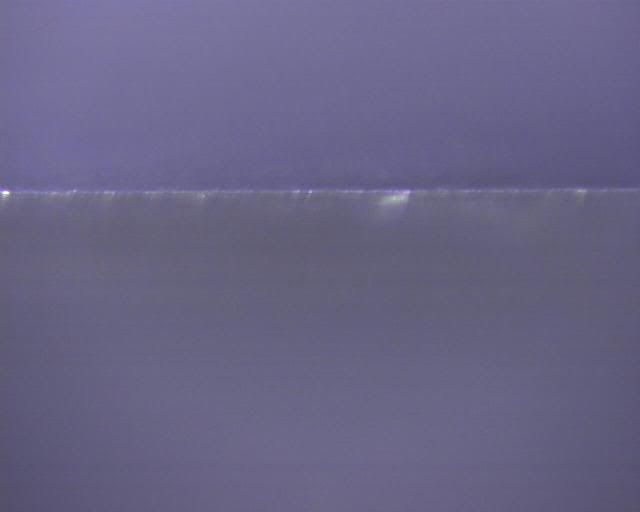
Picture593.jpg
 
You have no experience with diamond stpmes but you give your opinion like fact.

I beg your pardon. If you read what I wrote, I was describing my own experiences. I didn't state any fact that was beyond my own experience. I didn't comment on the poster's question because I don't have experience with the stone he asked about. Your comment is trolling. It is designed to belittle me, not to contribute to a debate.


Thats funny, sure did make a difference with mine.

[/IMG]

Are you planning to describe what differences you are trying to make with the images? I don't understand the point you are making.
 
Okay, so basically, if I read you guys correctly, I shouldn't steel the blade, to maintain edge I should strop it occasionally, and if it really starts getting dull, I'll hit it with the stones (in my case, soft and hard Arkansas - yes I know it will take longer than diamond stones)
 
Are you planning to describe what differences you are trying to make with the images? I don't understand the point you are making.

I do a lot of finishing on an un-lapped Spyderco UF and I can tell you while the polish is very close to that in knifenut's pics it just isn't quite there. The polish does appear finer from a lapped UF.
 
Not a trolling comment or is it ment to belittle you, If anything its what you and others try and do to me. I make a comment then get discredited by the next 5 posts.

Just like this comment.
Lapping a Sharpmaker stone won't change the grit size. It may smooth the stone so that it cuts slower but it won't really affect the sharpening job to any meaningful degree. If you want less abrasion, get smaller grits.

How do you think Sal first started making the UF stone? If lapping it had no effect then the UF stone would have never been made.

The pictures are to show what a lapped UF ceramic can do. This next picture shows the finish of a un-lapped UF stone.

Picture799.jpg


This is a 400x pic of the edge of the mini-rukus above, no stropping just the stone.
PIC001-2.jpg


Here is the results I got before lapping. Not as close up but it doesn't need to be.
ceramic2.jpg
 
How can I say that? Because it is true. Lapping an abrasive doesn't alter the grit size. It just smooths the surface. It just cuts the tops off of the abrasive grits. The result can't physically cut better. Science says it can't work that way.

I think what you are doing is burnishing the edge. You may be familiar with cabinet scrapers. They operate using burrs that are applied by burnishing them with a hard, smooth steel. The burnishing doesn't grind the burrs or cut anything. It literally pushes them into shape. I believe what you are doing is pushing the steel into a polish rather than grinding it into one. You are burnishing it for the most part. I'm not criticizing that. I'm just explaining that it doesn't really address my original comments.

I understand that removing friction makes edges cut better and I understand that polished edges reduce friction. I'm not arguing that. I'm still on the grits is grits thing. I'm arguing that the results will be the same if the grit size is the same. You are countering by showing me something that doesn't even involve the grits. It is burnishing primarily with a little bit of grinding thrown in.

I don't think we are disagreeing on what makes an effective edge. I'm not criticizing your edges or your sharpening ability. I'm sure you do a great job of sharpening. I'm not so sure you understand all the physics behind it. That's all. I'm arguing that the same grit size will produce the same results. I'm getting contrary arguments with nothing that dissuades me from my original statements. I'm getting contrary arguments that show that there are other ways to skin the cat than to grind with grits. I say A and you say wrong. I'll prove it by showing you B.

Hope that helps explain my position.
 
Okay, so basically, if I read you guys correctly, I shouldn't steel the blade, to maintain edge I should strop it occasionally, and if it really starts getting dull, I'll hit it with the stones (in my case, soft and hard Arkansas - yes I know it will take longer than diamond stones)

I don't think anybody said that. I, for one, don't think there is anything negative about steeling a blade as long as you don't use pressure and try to grind the blade with the steel. It can help make an edge last longer between sharpenings.

The Japanese don't do it and part of the reason is tradition and part of it is that they use harder steel in their knives and don't need as much straightening. I steel hard Japanese kitchen knives all the time. It doesn't hurt them a bit.

But steeling isn't sharpening. It is straightening. When the blade needs sharpening then you will have to do more than steel it.


The strop, on the other hand is for neither sharpening nor straightening. It will sharpen a leeeeetle bit and can straighten tiiiiiiny bit but basically its purpose is to polish. Polishing reduces friction. Not a bad thing. Just a different thing.
 
I'm not showing pic's to show my sharpening ability I'm showing them to show the difference that the stone has produced. The stone IS sharpening by removing metal not burnishing, otherwise it would not look like this.

Side 1
Picture472.jpg


Side 2, the ultra ultra fine side.
Picture473.jpg
 
When I lap the UF stone can I use a Lansky fine?
This won't mess up the diamond stone correct? Also, when lapping do I just rub it across or do I do single strokes going one direction?
 
When I lap the UF stone can I use a Lansky fine?
This won't mess up the diamond stone correct? Also, when lapping do I just rub it across or do I do single strokes going one direction?


You must have a stone of similar size and usually works best if you use a figure 8 pattern. There is no guarantee that it will not damage the diamond hone.
 
I'm not showing pic's to show my sharpening ability I'm showing them to show the difference that the stone has produced. The stone IS sharpening by removing metal not burnishing, otherwise it would not look like this.

Side 1
Picture472.jpg


Side 2, the ultra ultra fine side.
Picture473.jpg

Again, you didn't read what I wrote. I said "primarily" burnish. Not "completely" burnish. Tell you what. I'll leave the debate. Crown yourself a winner. Best of luck to you.
 
Really? this is what you wrote.

Thanks for the crown but I didn't want it, simply showing you what the stone is really doing but you refuse to believe it.

I think what you are doing is burnishing the edge. You may be familiar with cabinet scrapers. They operate using burrs that are applied by burnishing them with a hard, smooth steel. The burnishing doesn't grind the burrs or cut anything. It literally pushes them into shape. I believe what you are doing is pushing the steel into a polish rather than grinding it into one. You are burnishing it for the most part. I'm not criticizing that. I'm just explaining that it doesn't really address my original comments.
 
You're right. I said "for the most part." I didn't quote myself accurately. Sorry, if you are trying to say that you lapped a stone and it made the grits smaller or provided a better polish without burnishing, then you simply don't understand what is going on. You keep thinking I'm fighting you over your observations. I'm not. I'm trying to explain the what is behind your observations. I'll stop doing that now. Take care.
 
Back
Top