- Joined
- Mar 19, 2012
- Messages
- 7,863
OK so I buy two stacks of leaf springs, 78 Chevy motor home $20 and I have my fingers crossed that it will be 5160, after reading what seems like a encyclopedia size book on heat treating with every recipe you can think of I settled on this method
annealed buy taking steel to just past magnetic in the forge shutting it off and letting it cool over night, next hammer out a basic blade shape and normalize 3 times allowing the blade to cool to black heat between cycles, then cool to room temperature, grind out a basic hollow ground shape and normalize 2 more cycles, now I am ready to heat treat,
with all my tinkering around, taking steel to non magnetic I haven't been comfortable with the speaker magnet on the bench method, just didn't seem sensitive enough, so I hung a rare earth magnet from a string and was happy doing it that way, I feel there is a fine line between weak and non-magnet state, so any way I did the best I could keeping the blade at non-magnetic for a 5 minute soak and then I oil quenched in 135 degree motor oil
so far so good.... ground off the scale and tempered in a toaster oven, 2 cycles at 400, allowing the blade to cool to room temp between cycles, sharpened the blade to a 5x belt, at this point it easily shaves the hair off my arm
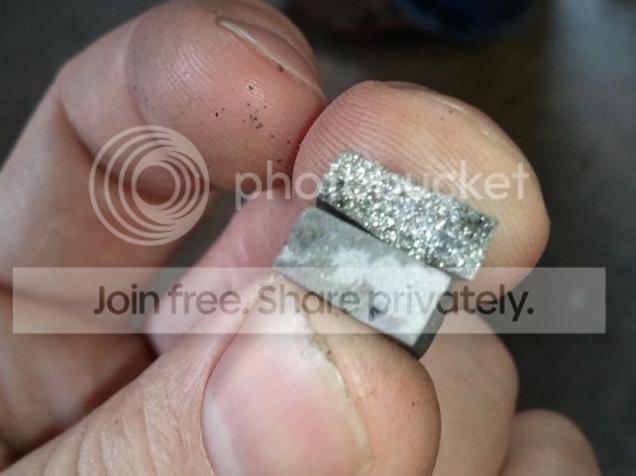
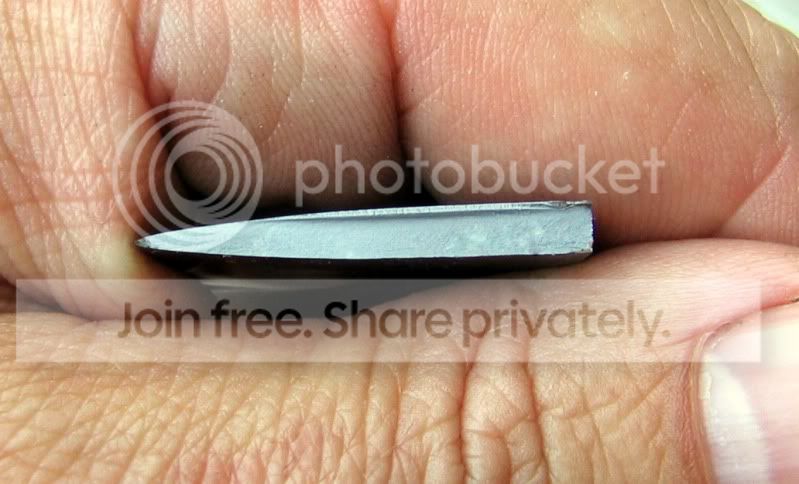
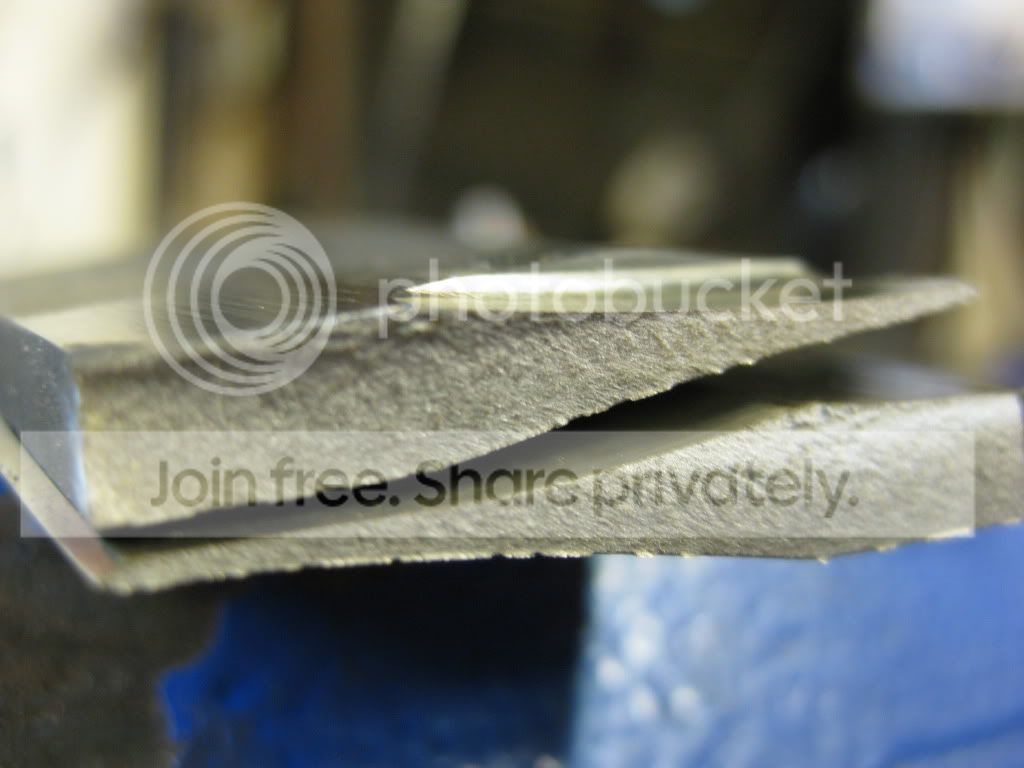
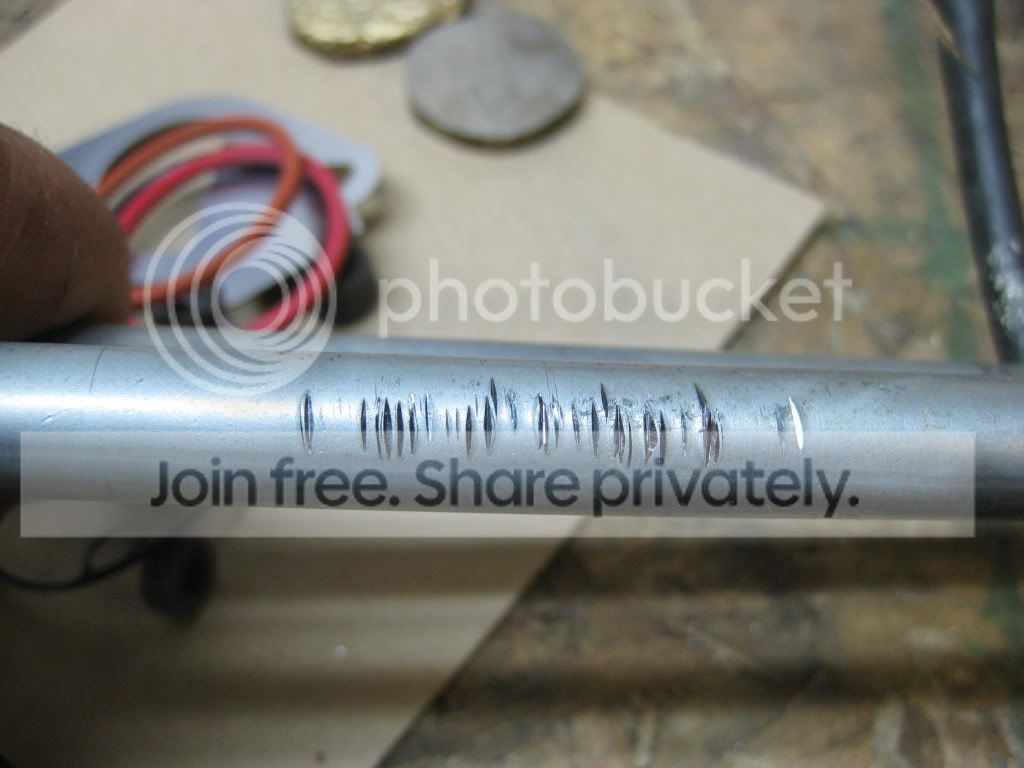
so for the test, I started whacking a piece of 5/8 home depot steel rod, not sure what kind of rod they have? and I only managed to put 1 small chip in the blade ( whacked the entire length of the blade three times ) and then broke the blade in the vice to have a look at the grain structure.
So what do you guys think ;0)
edit--- the edge grind is 21 degrees

annealed buy taking steel to just past magnetic in the forge shutting it off and letting it cool over night, next hammer out a basic blade shape and normalize 3 times allowing the blade to cool to black heat between cycles, then cool to room temperature, grind out a basic hollow ground shape and normalize 2 more cycles, now I am ready to heat treat,
with all my tinkering around, taking steel to non magnetic I haven't been comfortable with the speaker magnet on the bench method, just didn't seem sensitive enough, so I hung a rare earth magnet from a string and was happy doing it that way, I feel there is a fine line between weak and non-magnet state, so any way I did the best I could keeping the blade at non-magnetic for a 5 minute soak and then I oil quenched in 135 degree motor oil
so far so good.... ground off the scale and tempered in a toaster oven, 2 cycles at 400, allowing the blade to cool to room temp between cycles, sharpened the blade to a 5x belt, at this point it easily shaves the hair off my arm
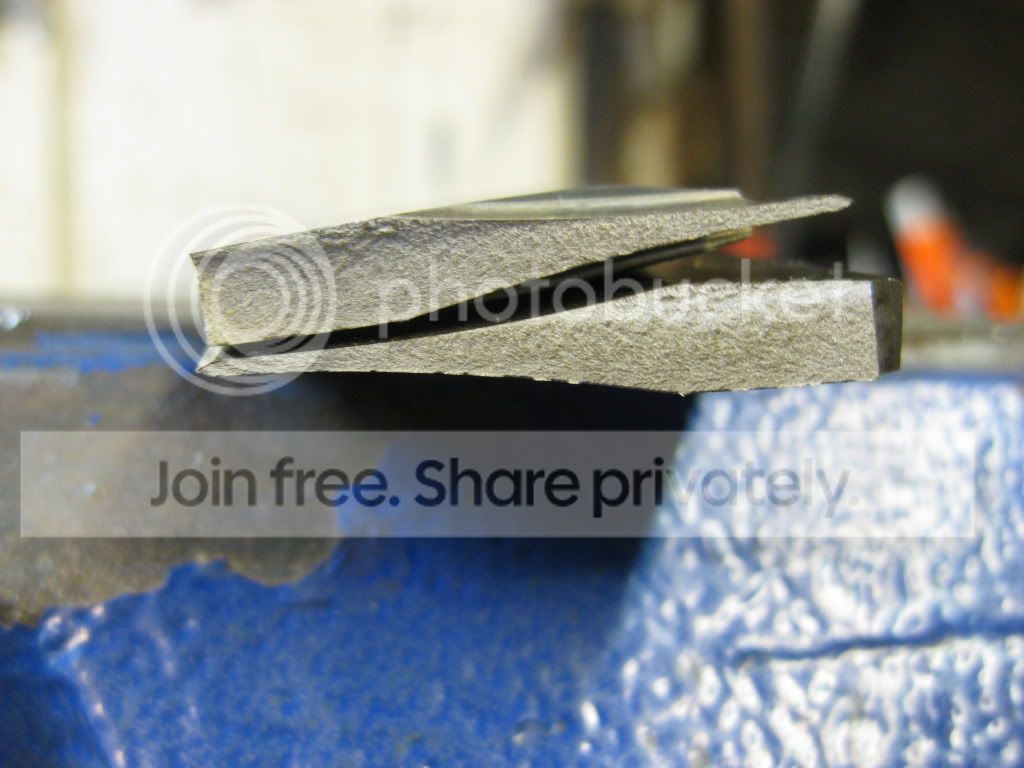
so for the test, I started whacking a piece of 5/8 home depot steel rod, not sure what kind of rod they have? and I only managed to put 1 small chip in the blade ( whacked the entire length of the blade three times ) and then broke the blade in the vice to have a look at the grain structure.
So what do you guys think ;0)
edit--- the edge grind is 21 degrees
Last edited: