
-
The BladeForums.com 2024 Traditional Knife is available! Price is $250 ea (shipped within CONUS).
Order here: https://www.bladeforums.com/help/2024-traditional/
You are using an out of date browser. It may not display this or other websites correctly.
You should upgrade or use an alternative browser.
You should upgrade or use an alternative browser.
Blades came slightly bent after laser cut
- Thread starter PEU
- Start date


- Joined
- Jul 25, 2007
- Messages
- 1,380
IMHO It is completely unreasonable to expect a waterjet/laser/plasma vendor to prevent/fix the warp problem, unless you specified a flatness tolerance.
Options to fix are (1) straighten and/or (2) grind flat. It might make sense to work it as-is and fix the warp during heat-treating.
The most efficient way I've found to straighten cold annealed steel is as follows. It is the same concept as a 3-point vise but has the benefit of preventing overcompensation. You'll need an anvil (or block of flat, smooth steel, doesn't have to be fancy or huge), a non-marking mallet, some type of non-marking shim stock (brass, aluminum, business cards, plastic cut from a yogurt container, thin leather, etc), and a flat reference (ideally a strip of granite countertop that is about 2" wide, or a steel rule).
Ideally you'll set up the flat reference at eye level, and backlight it so you can see exactly where the warp is. Set the knife on the flat and position it concave down. Eyeball the gap, let's say it's about 0.030".
Now you need two shims (or stacks thereof) that are about 0.030" or less. Superglue or tape these to your anvil about 5" to 7" apart on a 10" knife. Now set the knife on the anvil such that it bridges the two shims, again with the concave down. Move it around and smack it with the mallet in the section between the shims. Go back to the flat reference and see what you got. You will need to experiment with shim thickness, shim arrangement (you can also use just one), etc.
One really good trick is to straighten half the knife at a time. Do this by hanging half the knife off the flat reference. Get one half straight, then the other half. As the last step, you will have a single kink in the middle that you need to work out.
I've straightened over 4,000 knives with this method to a flatness of 0.010" or better, although now I work them as-is and straighten them during heat-treat.
Options to fix are (1) straighten and/or (2) grind flat. It might make sense to work it as-is and fix the warp during heat-treating.
The most efficient way I've found to straighten cold annealed steel is as follows. It is the same concept as a 3-point vise but has the benefit of preventing overcompensation. You'll need an anvil (or block of flat, smooth steel, doesn't have to be fancy or huge), a non-marking mallet, some type of non-marking shim stock (brass, aluminum, business cards, plastic cut from a yogurt container, thin leather, etc), and a flat reference (ideally a strip of granite countertop that is about 2" wide, or a steel rule).
Ideally you'll set up the flat reference at eye level, and backlight it so you can see exactly where the warp is. Set the knife on the flat and position it concave down. Eyeball the gap, let's say it's about 0.030".
Now you need two shims (or stacks thereof) that are about 0.030" or less. Superglue or tape these to your anvil about 5" to 7" apart on a 10" knife. Now set the knife on the anvil such that it bridges the two shims, again with the concave down. Move it around and smack it with the mallet in the section between the shims. Go back to the flat reference and see what you got. You will need to experiment with shim thickness, shim arrangement (you can also use just one), etc.
One really good trick is to straighten half the knife at a time. Do this by hanging half the knife off the flat reference. Get one half straight, then the other half. As the last step, you will have a single kink in the middle that you need to work out.
I've straightened over 4,000 knives with this method to a flatness of 0.010" or better, although now I work them as-is and straighten them during heat-treat.
Last edited:
- Joined
- Sep 21, 2013
- Messages
- 1,574
As a consumer I would expect them to come back flat. Could be that I don't understand the process and how it could warp them but I would be of the same opinion as PEU.

PEU
Gaucho Knifemaker
- Joined
- Aug 6, 2006
- Messages
- 1,182
The background story is like this:
Purchased a full sheet from the distributor with another local knifemaker, split it. He sent to laser cut too to another provider, all came out flat. Mine came out bent. That rules out that the sheet was curved before laser cutting.
My provider provided only excuses when I talked with them today.
Pablo
Purchased a full sheet from the distributor with another local knifemaker, split it. He sent to laser cut too to another provider, all came out flat. Mine came out bent. That rules out that the sheet was curved before laser cutting.
My provider provided only excuses when I talked with them today.
Pablo
- Joined
- Sep 10, 2000
- Messages
- 4,786
I have found AEB-L easy to straighten by simply sticking one end into an open vise, positioning the blade so that the bend is at the vise edge and giving the blade a gentle pull. If the bend is a smooth one you may want to start near the outside of the bend and "feed" it slowly down with a little pull each time.
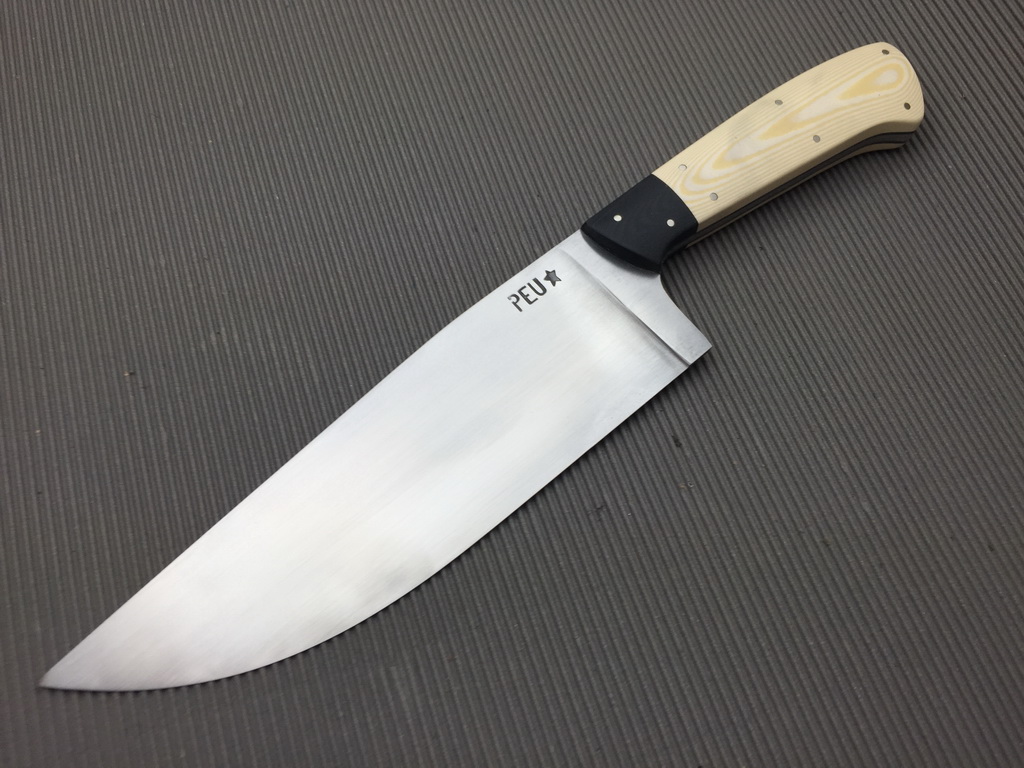
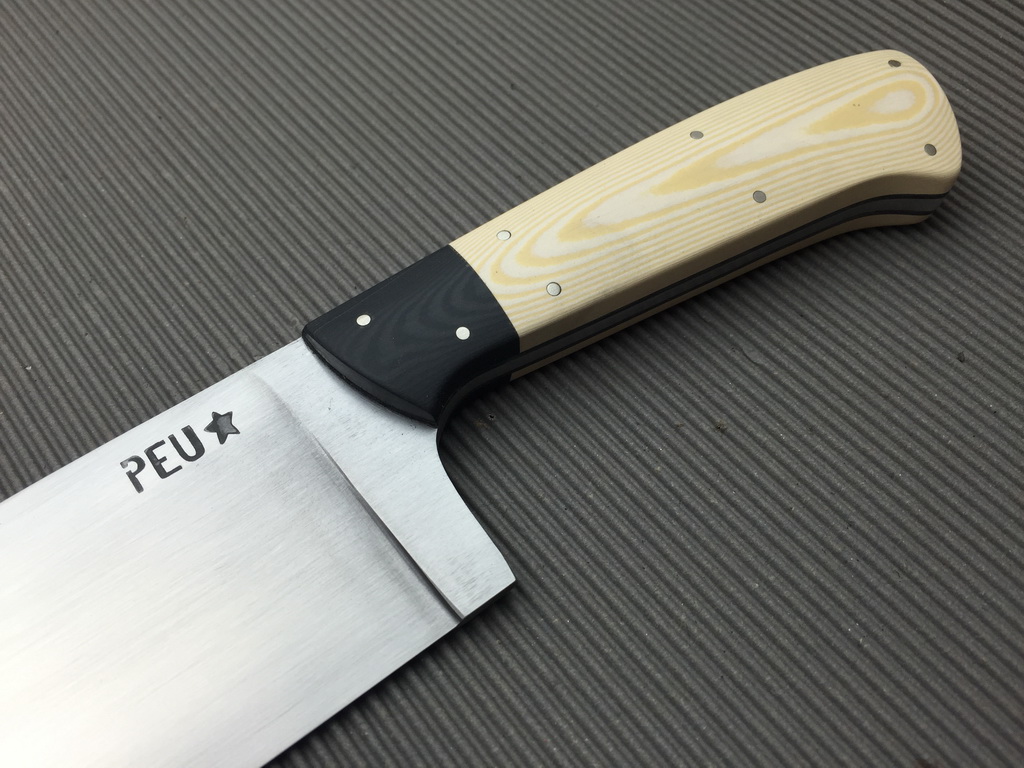
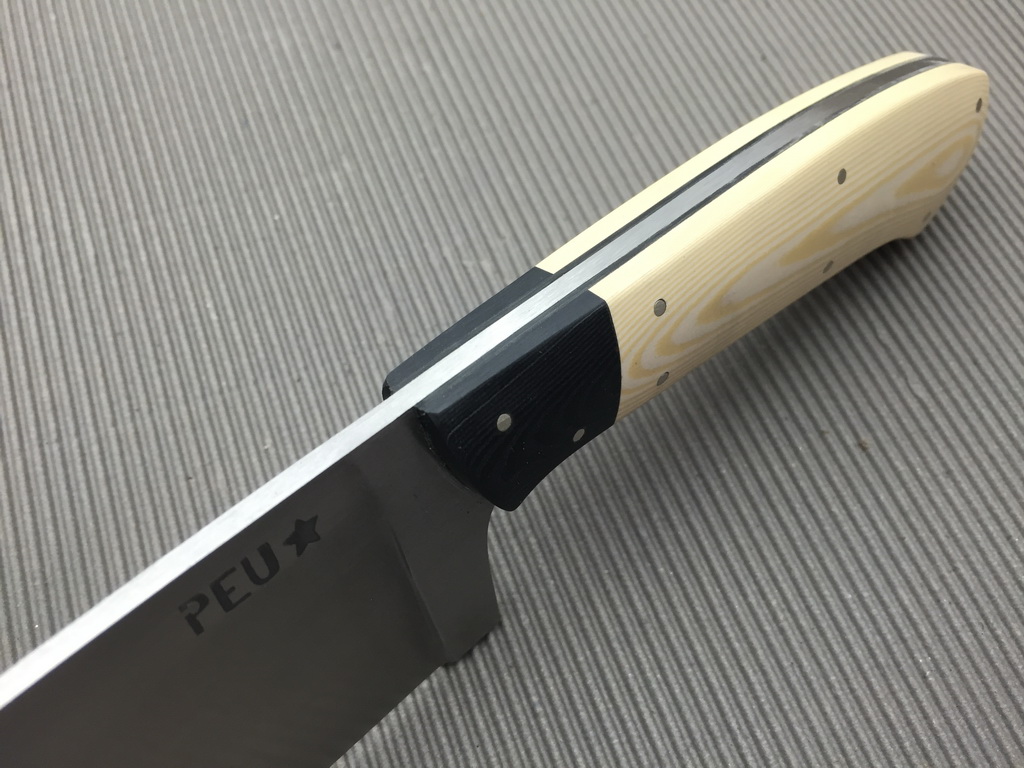
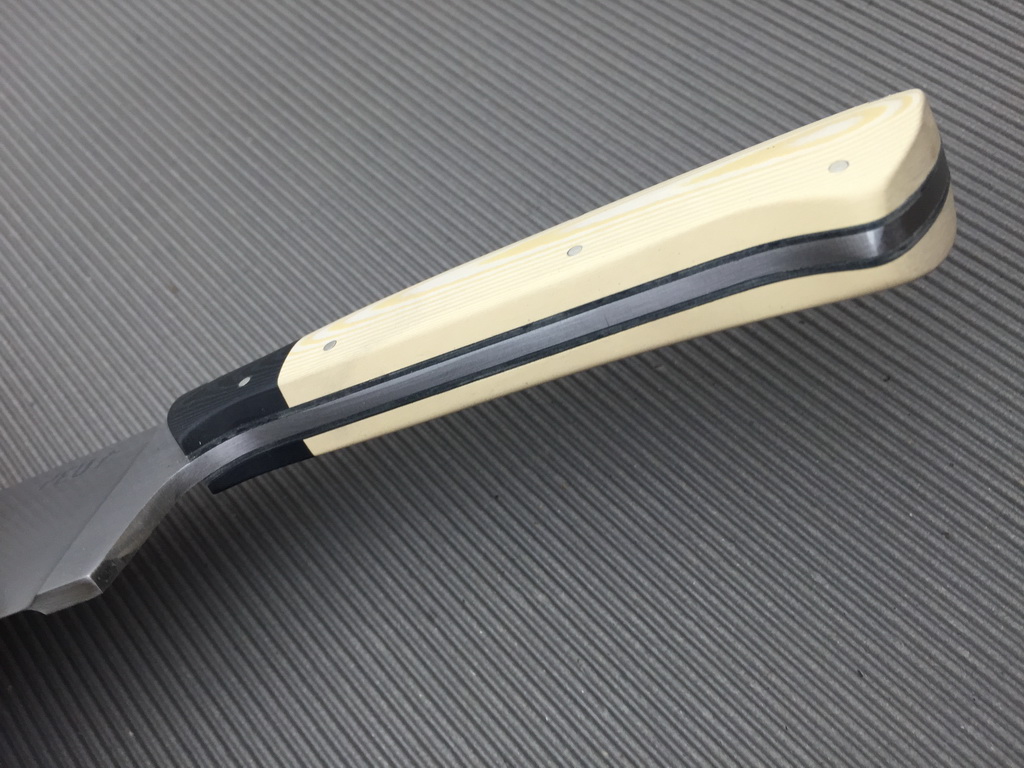
You do some lovely work PEU
Frank
You do some lovely work PEU
Frank
- Joined
- Sep 10, 2000
- Messages
- 4,786
Very nicely done , Sir.
Frank
Frank