
- Joined
- Jun 17, 2001
- Messages
- 5,705
Here you go: http://www.bugtothebone.com/

The BladeForums.com 2024 Traditional Knife is available! Price is $250 ea (shipped within CONUS).
Order here: https://www.bladeforums.com/help/2024-traditional/


You beat me to it Ray!
I was going to say:
You might be able to get around all the hassles, by finding a university, museum, or maybe even a "taxidermist", who have the beetles, and tell them you are doing research on cleaning, preserving and dying bone for knife handles and craft objects. They might even do it for free, or just charge you a small fee.


after soaking all the meat off two weeks probably boil them with laundry detergentfor ten to twenty minute and the spray them with peroxide as soon as the come out while they are still hot
I am a taxidermist and this is what I suggest you do
This and the other methods will work. I've used most of them. However, for the "best" results in cleaning and preserving, bugs and natural drying are the "best" way to go. This may not always be convenient to do, so the other alternatives may be a more practical choice depending on the circumstances.

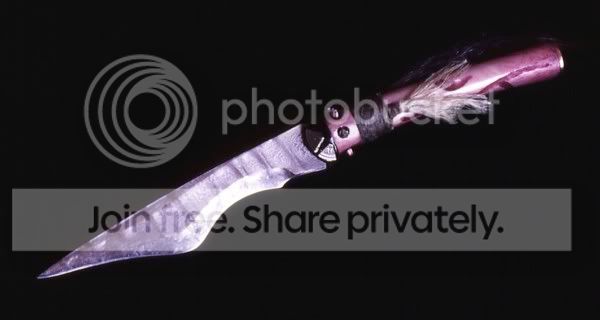

Heres a piece I did a good while back, bug cleaned and air dried lamb bone, died with wild, natural, hand picked cochineal die. The blade is meteoritic hand forged air hardening pattern welded steel. Inlays of rat's teeth and cleaved coinage. The inlays are done with natural pinon pine rosin mixed with Alaskan moose dung , cutlers rosin. The wrappings are homemade AZ century plant fiber cordage with cochineal die.
You dont get that look, feel and HADO any other way!
All three planes on the blade "flats", or audience sides, are hand forged hollow...
Tai, I sure hope you had this knife pasteurized before you sent if off.
... think about it. What does the pinon pine use the rosin for?,... killing bugs, fungus and germs.
What lives in pine rosin?

