
-
The BladeForums.com 2024 Traditional Knife is available! Price is $250 ea (shipped within CONUS).
Order here: https://www.bladeforums.com/help/2024-traditional/
You are using an out of date browser. It may not display this or other websites correctly.
You should upgrade or use an alternative browser.
You should upgrade or use an alternative browser.
Boundary Waters Canoe Area, any tips?
- Thread starter led4them
- Start date
- Joined
- May 5, 2006
- Messages
- 1,265
I went for three weeks many years ago (gosh, it's been too long!).
Still one of my favorite camping experiences ever. Canoes really allow you to truck around plenty of food so you can stay out there longer than you can backpacking. And the fishing is absolutely amazing. I caught a smallmouth bass that was unbelievable!! I had no idea they could get so big!
I think I entered the lottery but I can't remember - it's been so long. Plan ahead - it's a very popular place, even crowded during peak times like August. If I went back I'd probably try to go into the Quetico north of there where it's likely to be less crowded (you have to find a Canadian ranger station and register with them since you're crossing an international boundary - and most people don't want to hassle with it so they stay stateside).
Bring bug repellant or an accepting attitude toward mosquitoes. Think about where you place your camp - a windy island in the middle of a lake is going to be a lot less buggy than a boggy site at the edge of a lake. Think dry and windy.
My biggest piece of advice is - be very careful in securing your food from bears. Hang it high or bring bear canisters. DO NOT leave your pack at a portage site when carrying your canoe across to another lake - either have someone sit with it, hang it or carry it along with your canoe. You may think leaving your pack for ten minutes at a portage site is ok, that a bear is not going to come along and grab it. But I would walk off into the woods at portage sites and find "kill zones" of shredded backpacks where bears had dragged them off and demolished them. The one close encounter with a bear (perfectly harmless - just looking for a free meal) was at a portage site (it came to investigate because I was sitting perfectly still guarding the food packs and didn't realize I was there and I wanted to see how close it would come). I honestly believe that they stake out the portage sites out waiting for a tired canoer to decide to leave their pack while they carry their canoe.
I assume you're renting a canoe - get a synthetic one, not a heavy aluminum one. Unless you're really strong, the extra savings in weight is worth the extra cost IMO. Most portages are very short (under a mile) but depending on your route some of them can be a bit longer and actually have some limited degree of altitude changes.
You're psyched beyond belief! The BWCA is awesome!
Still one of my favorite camping experiences ever. Canoes really allow you to truck around plenty of food so you can stay out there longer than you can backpacking. And the fishing is absolutely amazing. I caught a smallmouth bass that was unbelievable!! I had no idea they could get so big!
I think I entered the lottery but I can't remember - it's been so long. Plan ahead - it's a very popular place, even crowded during peak times like August. If I went back I'd probably try to go into the Quetico north of there where it's likely to be less crowded (you have to find a Canadian ranger station and register with them since you're crossing an international boundary - and most people don't want to hassle with it so they stay stateside).
Bring bug repellant or an accepting attitude toward mosquitoes. Think about where you place your camp - a windy island in the middle of a lake is going to be a lot less buggy than a boggy site at the edge of a lake. Think dry and windy.
My biggest piece of advice is - be very careful in securing your food from bears. Hang it high or bring bear canisters. DO NOT leave your pack at a portage site when carrying your canoe across to another lake - either have someone sit with it, hang it or carry it along with your canoe. You may think leaving your pack for ten minutes at a portage site is ok, that a bear is not going to come along and grab it. But I would walk off into the woods at portage sites and find "kill zones" of shredded backpacks where bears had dragged them off and demolished them. The one close encounter with a bear (perfectly harmless - just looking for a free meal) was at a portage site (it came to investigate because I was sitting perfectly still guarding the food packs and didn't realize I was there and I wanted to see how close it would come). I honestly believe that they stake out the portage sites out waiting for a tired canoer to decide to leave their pack while they carry their canoe.
I assume you're renting a canoe - get a synthetic one, not a heavy aluminum one. Unless you're really strong, the extra savings in weight is worth the extra cost IMO. Most portages are very short (under a mile) but depending on your route some of them can be a bit longer and actually have some limited degree of altitude changes.
You're psyched beyond belief! The BWCA is awesome!

Great tip about the packs, them bears are pretty sneaky. I have my own aluminum portage canoe, it only weighs 80lbs. So I'm taling it.
Naked, the website I checked is I think, boudarywaterscanoearea.com, it is the official site, google it should be the first one up. They have a permit system and it looks like it only costs 30 bucks or so. They have to have your res. by 12/1 and a lot of the put ins only allow a couple of overnight camps.
I am taking my 12yo daughter, she loves that stuff.
Are firearms allowed?
Naked, the website I checked is I think, boudarywaterscanoearea.com, it is the official site, google it should be the first one up. They have a permit system and it looks like it only costs 30 bucks or so. They have to have your res. by 12/1 and a lot of the put ins only allow a couple of overnight camps.
I am taking my 12yo daughter, she loves that stuff.
Are firearms allowed?

- Joined
- Jul 19, 2007
- Messages
- 241
I too did the BWCA quite a few years ago and if you follow akennedy73's advice you'll have a great time and wonderful experience. I did mine in a aluminum canoe since most of the synthetics were not available then. A pack rod might be worth considering. At the very least a two piece rod. Bring a good filet knife.
It's a beautiful area, but think about the time of year when you want to go. June and July are very buggy months full of flying biting insects. It is best to camp on islands as has been mentioned if you must go at that time of year. August is the best month of the year including late July. September is also very nice with warm days and cool nights and a whole lot less tourist traffic with the kids back in school.
Another thing that is nice about island camping is that it is much more unlikely to encounter a black bear. Becareful on the portages and well used camp grounds. These are the areas that the bears lurk, because of the easy pickings from coolers.
Another thing that is nice about island camping is that it is much more unlikely to encounter a black bear. Becareful on the portages and well used camp grounds. These are the areas that the bears lurk, because of the easy pickings from coolers.

- Joined
- Dec 9, 2005
- Messages
- 2,617
It's a great time, I go every year and love it.
As mentioned above July and early to mid Aug. will keep you in your tent and out of the water and woods. I like late May, all of June, late Aug. and early Sept., heck I just like going.
I use a set of books called, The Boundary Waters Canoe Area, by Robert Beymer. One is the western region and the other eastern region. These are great resource books and list all entry points and suggested routes and loops for every entry point with level of difficulty for each one.
Here's a pick of my ride.
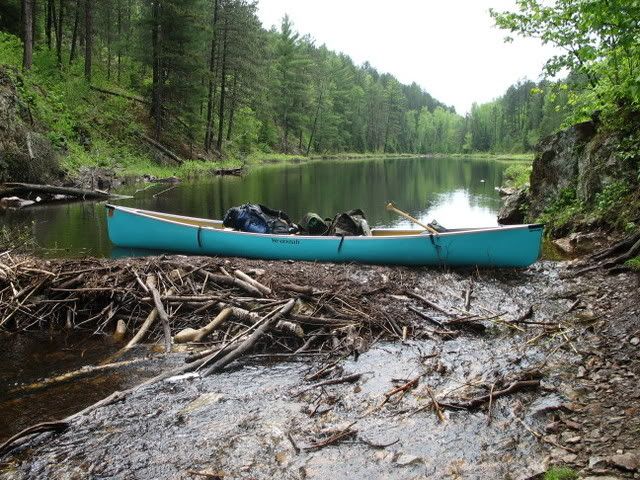
And yes, you can bring a firearm into the BWCA just don't go into Canada with it.
I have some running to do but will be back to give you a little more info.
Helle
As mentioned above July and early to mid Aug. will keep you in your tent and out of the water and woods. I like late May, all of June, late Aug. and early Sept., heck I just like going.
I use a set of books called, The Boundary Waters Canoe Area, by Robert Beymer. One is the western region and the other eastern region. These are great resource books and list all entry points and suggested routes and loops for every entry point with level of difficulty for each one.
Here's a pick of my ride.
And yes, you can bring a firearm into the BWCA just don't go into Canada with it.
I have some running to do but will be back to give you a little more info.
Helle
I live in MN and have been in the the BWCA many times Use Duluth style packs, I have found no difference with bears on the mainland and on islands, bears swim just fine, if there are problem bears in your area, the bear will be hitting all the campsites on a lake have one set of Fisher Maps and one set of Mckenzie maps, they both have good and bad points, leave that 80lb canoe at home and rent a kevlar canoe. Subscribe to the Boundry Waters Journal for a year of stories, pictures and adds you can check out. Firearms are ok just follow state laws, DO NOT plan on going into Canada with a firearm the canadians don't look kindly without all the proper paper work, bring head nets for the bugs in summer, bring fishing gear, theres lots more one could say. Plan and pack carefully and have a great trip.
- Joined
- Dec 9, 2005
- Messages
- 2,617
OK, check out BWCA.com and do some searching around you'll have more info then you know what to do with.
The best camp sites IMO are usually on points or islands the wind does a good job of keeping the other Mn state bird away. Also helps to spray your clothes down with permanone, and yourself with Ultrathon.
If you are going to be doing a loop route over several days always leave early before the winds come up, it's much easier and you don't know if your intended camp site is open until you get to it so the earlier the better because if it's not open you have to keep going until you find one that is, which can be a serious bummer after a long day, especially if you have to keep movin on in the dark.
You must know how to use a map and compass. As mjhMN has stated Fisher and McKenzie maps are the ticket and it's nice to have both. I also use a GPS to mark my entry point, portages and campsites as I come to them also.
I like a can of Yard Guard by the USFS toilet back in the woods.
Hang anything to do with food or hygiene, and your tackle box or bag. I use dry bags and as long as your not packing fresh foods you'll be fine. Also if you do fish clean them away from your camp and dump the guts in the woods.
The only thing in my tent is sleeping gear, clothes, PFD/pillow, flashlights, weapons, and people.
We usually fish, so I keep my reels in my pack and poles in a cheap Flambeau container then bungee it to the canoe.
Canoe packs work best because they ride lower in the canoe, my partner started using a internal frame pack last year because there more comfortable on long portages. I see a lot of both but prefer a canoe pack myself.
One more thing, get into town the day before if you can and stay at a hotel or local camp ground, I have also heard some outfitters have bunk houses
Hope it helps.
Helle
The best camp sites IMO are usually on points or islands the wind does a good job of keeping the other Mn state bird away. Also helps to spray your clothes down with permanone, and yourself with Ultrathon.
If you are going to be doing a loop route over several days always leave early before the winds come up, it's much easier and you don't know if your intended camp site is open until you get to it so the earlier the better because if it's not open you have to keep going until you find one that is, which can be a serious bummer after a long day, especially if you have to keep movin on in the dark.
You must know how to use a map and compass. As mjhMN has stated Fisher and McKenzie maps are the ticket and it's nice to have both. I also use a GPS to mark my entry point, portages and campsites as I come to them also.
I like a can of Yard Guard by the USFS toilet back in the woods.
Hang anything to do with food or hygiene, and your tackle box or bag. I use dry bags and as long as your not packing fresh foods you'll be fine. Also if you do fish clean them away from your camp and dump the guts in the woods.
The only thing in my tent is sleeping gear, clothes, PFD/pillow, flashlights, weapons, and people.
We usually fish, so I keep my reels in my pack and poles in a cheap Flambeau container then bungee it to the canoe.
Canoe packs work best because they ride lower in the canoe, my partner started using a internal frame pack last year because there more comfortable on long portages. I see a lot of both but prefer a canoe pack myself.
One more thing, get into town the day before if you can and stay at a hotel or local camp ground, I have also heard some outfitters have bunk houses
Hope it helps.
Helle


mewolf1
Gold Member
- Joined
- Oct 24, 2005
- Messages
- 13,179
Pack two persons gear per Duluth pack, but pack each seperatly in DOUBLE can liners. This way if it rains or you capsize the packs will float AND stay dry, hopfully. One food pack(in can liners.wet flat bread sucks). Tape your fishing poles to the thwarts. Wear your PFD. Don't take much in the way of food that doesn't swell up in water. Get a good water purifier(Giradia sucks) Learn how to hang your food properly and don't have so much as a hard candy in your tent, the bears will smell it. Bring one extra paddle per boat. DON'T FORGET THE DEET. Plan on the possibility of all four seasons of weather at the end of May.
Oh yah,
Get the hell outa there before freeze-up.
Oh yah,
Get the hell outa there before freeze-up.
Great tips, thanks a lot. Will bears smell MRE's still in the sealed bag? What about pepper spray or are they docile enough to run off. Here in Mo I pack my gear in garbage bags inside USGI canvas duffles, with the backpack straps, should they be replaced with the Duluth? I like the idea of a loop trip, what is the best area for a novice like me to the BWCA?
Hopefully by next year I'll be able to portage well, a year ago yesterday, I was in a near fatal MC accident when some idiot pulled out in front of me and stopped broadside causing me to T-bone her at 60mph. I have Ti from "heel to hip" on the left leg, but I am proud to say I totaled her new Impala with my HD and am alive to tell the story.


So I would like a route with the shorter portages, JIC.
Hopefully by next year I'll be able to portage well, a year ago yesterday, I was in a near fatal MC accident when some idiot pulled out in front of me and stopped broadside causing me to T-bone her at 60mph. I have Ti from "heel to hip" on the left leg, but I am proud to say I totaled her new Impala with my HD and am alive to tell the story.
So I would like a route with the shorter portages, JIC.


- Joined
- Feb 22, 2006
- Messages
- 64
I go kinda often. I have never enter a draw-but I don't go when other do. The outfitter I have used is http://www.williamsandhall.com/.
I made my first trip there the second week in august. It was very dry and the mosquitos were only bad at night. because of a bad forest fire this spring, no open fires anywhere. we were on the water 6 days. Our outfiter provided the duluthpacks, kevlar canoes, food and bearproof, plastic kegs for the food. We were fortunate not to have even seen a bear and we covered a lot of territory! Our leader (recovering scoutmaster) has been up there about 12 to 15 times. We started on Seagull lake, off the Gunflint Trail.
I was impressed with the outfitter and her staff.http://www.seagulloutfitters.com/default.htm
Some of the portages we did were downright tough, even with the lighter canoes. It was dry and the footing reasonably good- hard to imagine some of them in a rainy season. Fishing for s.m.bass was great, but walleye were down deep. assumed we could easily pick up some Northern but they must have been deep also.
would go back in a heatbeat but would probably plan to set up camp at a beautiful base site and do some day/side trips.
Saw the milky way and the big meteor(sp?) shower . Awesome!
I was impressed with the outfitter and her staff.http://www.seagulloutfitters.com/default.htm
Some of the portages we did were downright tough, even with the lighter canoes. It was dry and the footing reasonably good- hard to imagine some of them in a rainy season.
Fishing for s.m.bass was great, but walleye were down deep. assumed we could easily pick up some Northern but they must have been deep also.would go back in a heatbeat but would probably plan to set up camp at a beautiful base site and do some day/side trips.
Saw the milky way and the big meteor(sp?) shower . Awesome!
Will bears smell MRE's still in the sealed bag? .
YES! and your toothpaste and anything else like creams, gum, wrappers, deoderant etc... Dirty dishes will bring them to camp as well, clean them well away from the camp.
It all gets hung up at least 10 feet between trees and 10 feet high.
Skam