

- Joined
- Jun 29, 2009
- Messages
- 942
*Changed the title to accurately reflect what I'll be using this for*
Hey guys. A friend of mine is finishing up his Masters in engineering and has to do a project. We were going through ideas that could be fun and as soon as a heat treating oven was mentioned we saw no further need for discussion So, going off the tutorial from british blades and making a few slight alterations we have all the bricks cut and most of the body/frame ready to go. So, to my question. When I picked up the firebrick I asked the guy about inswool and he said that that they had quite a bit of "scrap" that I could have and he gave me probably 15-20 sq ft of 1" inswool. So, this is a whole new ballgame for me and I was wondering if adding a layer of inswool between the brick and the frame would make any difference? I have never used a forge like this or used inswool or ever used firebrick so I don't know exactly how they insulate. Does the brick insulate so well that the outside of the brick doesn't even get hot? Would inswool do anything for insulation/efficiency or just act as a spacer with no thermodynamic effect?
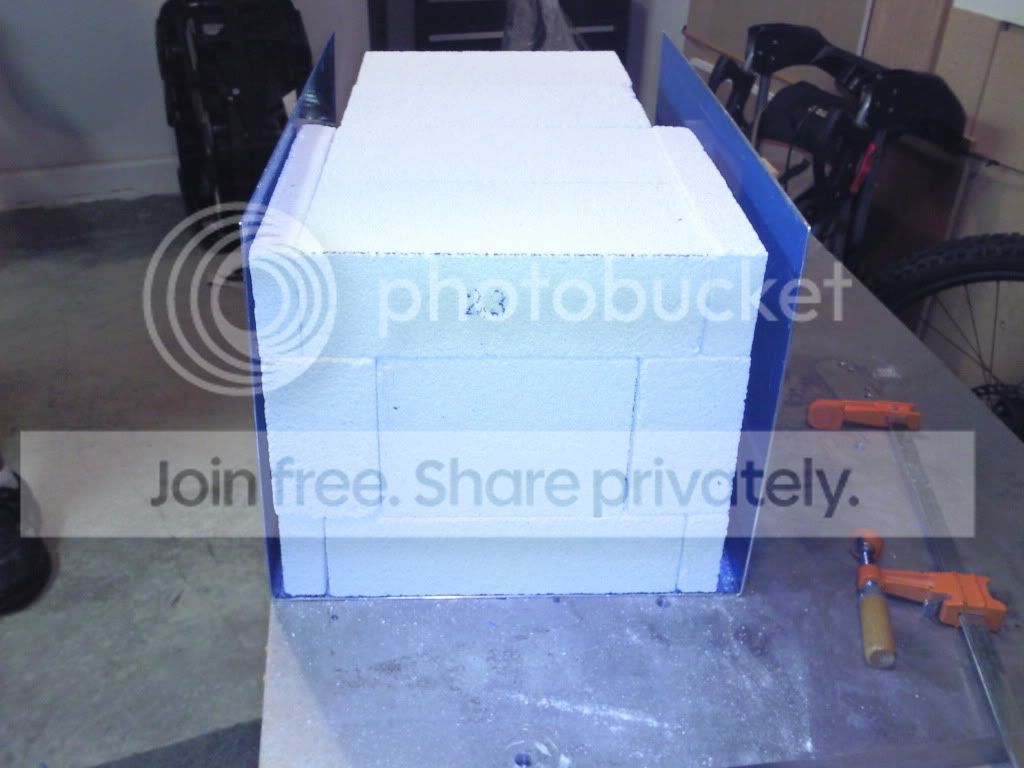
Here's a shot of what the back of the forge will look like:
I was also wondering about the element. Do I need to buy a wrapped kanthal element? I have heard of people wrapping their own and I have access to a lathe and other equipment so I can wrap the wire myself very easily if its easier this way...
Hey guys. A friend of mine is finishing up his Masters in engineering and has to do a project. We were going through ideas that could be fun and as soon as a heat treating oven was mentioned we saw no further need for discussion
So, going off the tutorial from british blades and making a few slight alterations we have all the bricks cut and most of the body/frame ready to go. So, to my question. When I picked up the firebrick I asked the guy about inswool and he said that that they had quite a bit of "scrap" that I could have and he gave me probably 15-20 sq ft of 1" inswool. So, this is a whole new ballgame for me and I was wondering if adding a layer of inswool between the brick and the frame would make any difference? I have never used a forge like this or used inswool or ever used firebrick so I don't know exactly how they insulate. Does the brick insulate so well that the outside of the brick doesn't even get hot? Would inswool do anything for insulation/efficiency or just act as a spacer with no thermodynamic effect? Here's a shot of what the back of the forge will look like:
I was also wondering about the element. Do I need to buy a wrapped kanthal element? I have heard of people wrapping their own and I have access to a lathe and other equipment so I can wrap the wire myself very easily if its easier this way...
Last edited:


 and a HT oven will hopefully allow me to do the whole process start to finish