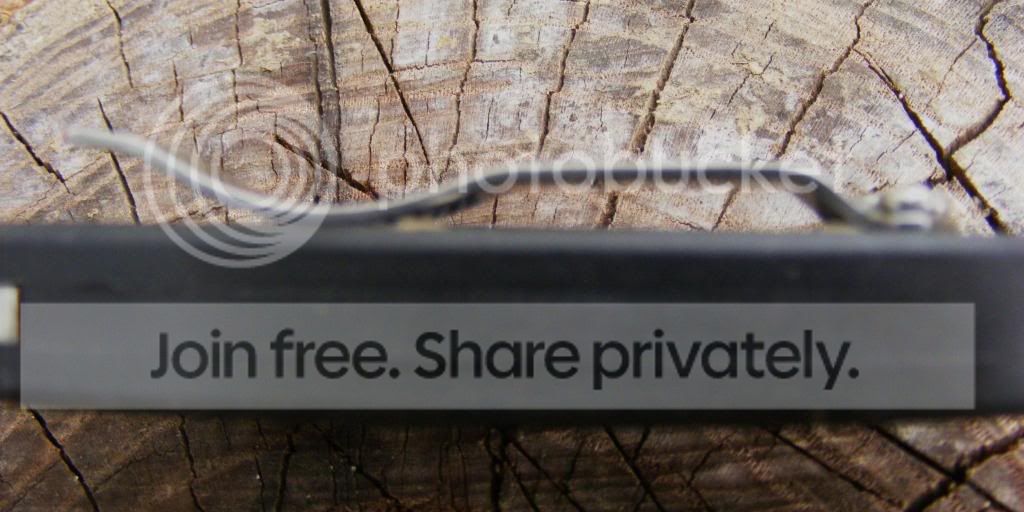
What is a rescue knife? Well, theoretically, it's a knife that will help remove the victim of a vehicle collision. It's usually distinguished from a "normal" knife by its rounded blade and serrated edge. The similarities end there. Some "rescue knives" have seperate seatbelt cutters, carbide glass breakers, saws for windshield glass, whistles, oxygen tank wrenches, and entire kits of screwdriver-like attachments.
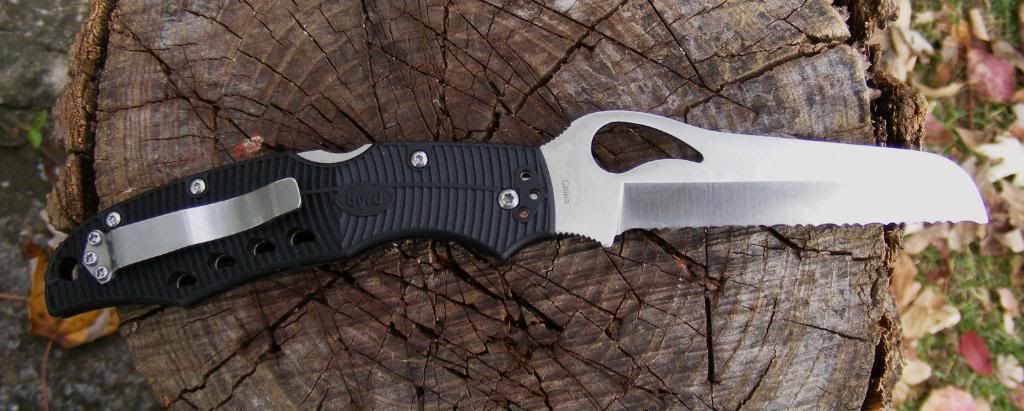
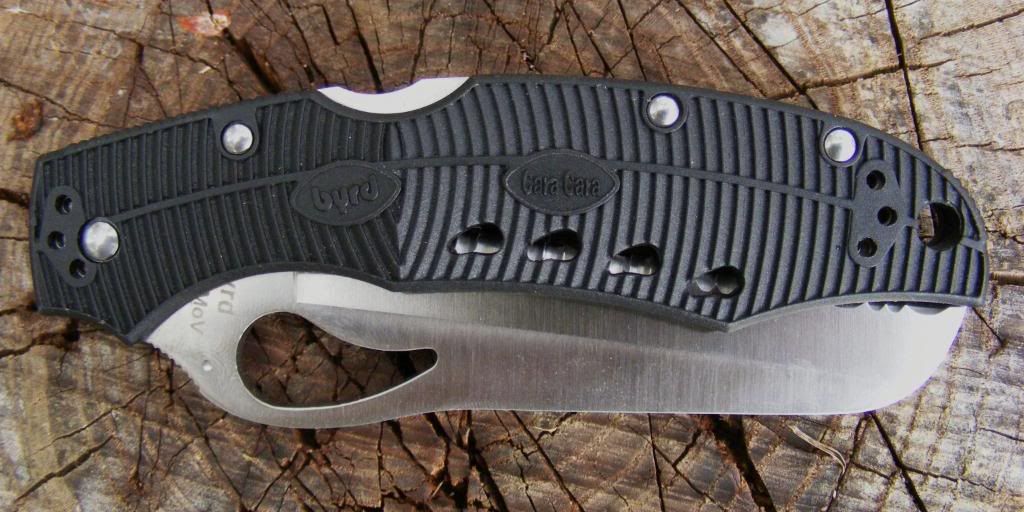
Today's knife is a simple, straight-forward tool. It has only two of the features listed above: a rounded sheepsfoot blade and a fully serrated edge. It's simple and very effective. It's the Byrd Cara Cara Rescue knife, model BY17SBK. In-store cost is around $25, and the knife is made in China. Let's look at the specifics.

The Handle: The Cara Cara Rescue (to be referred to in the review as simply the "Rescue") has a handle made of black FRN, and it has steel liners underneath (the handles are hollowed out, or nested, to hide the liners from sight).
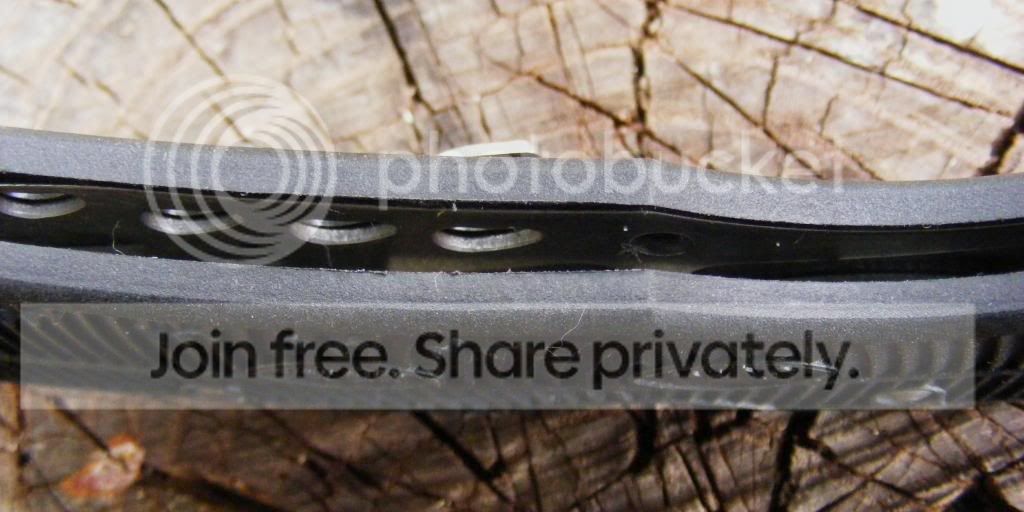
The Rescue is 4-3/4" long when closed, and is 7/16" thick not counting the pocket clip. The handle is a screw-together type; the knife is held together with three Torx (T-6) handle screws and one T-8 screw to serve as the blade pivot screw.
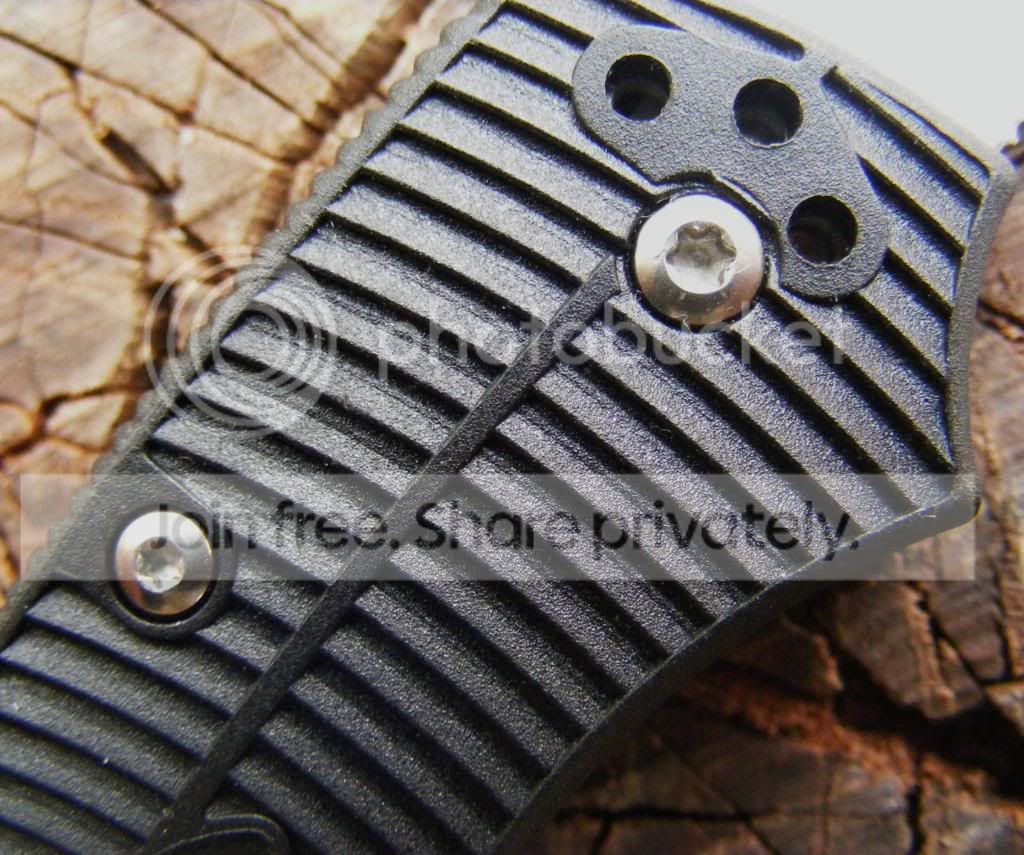
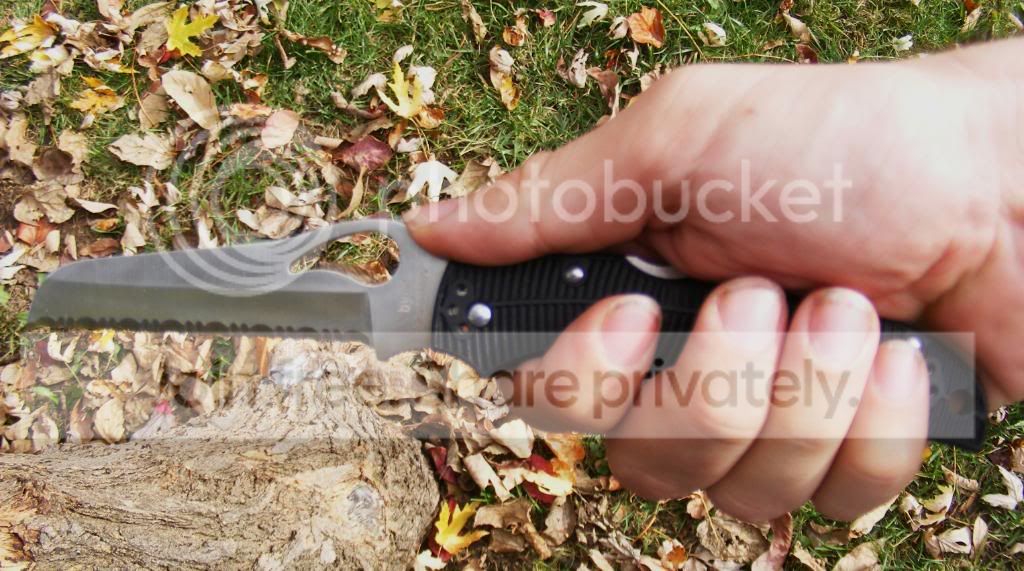
Overall, the handle is comfortable to use. It's the same handle as the one on the regular Cara Caras.
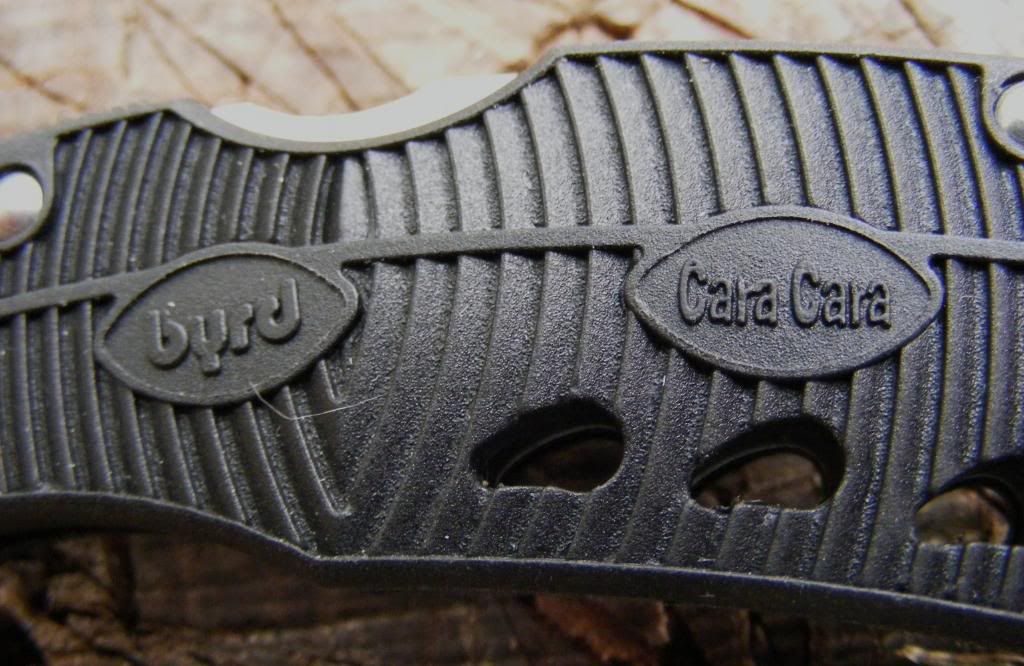
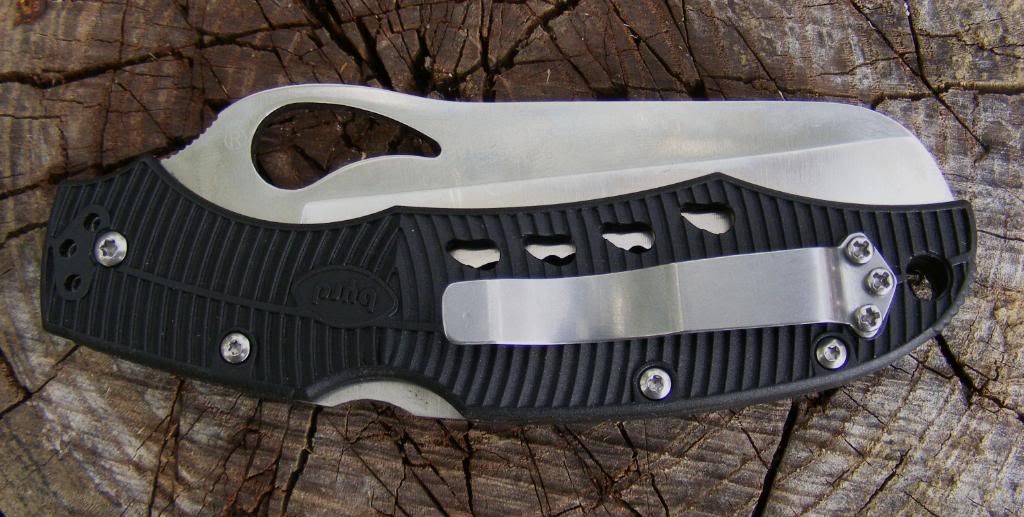
There's a lanyard hole, and it will accomodate a length of non-gutted 550 cord with ease.
There is also jimping along the spine for the first 1-1/2" (from the blade to the lockbar) and it's functional. The handle is long enough that you can use it to break a window. I've done this in a demonstration, but the width of the knife due to the handle and the blade width made it hard to get a good grip on.
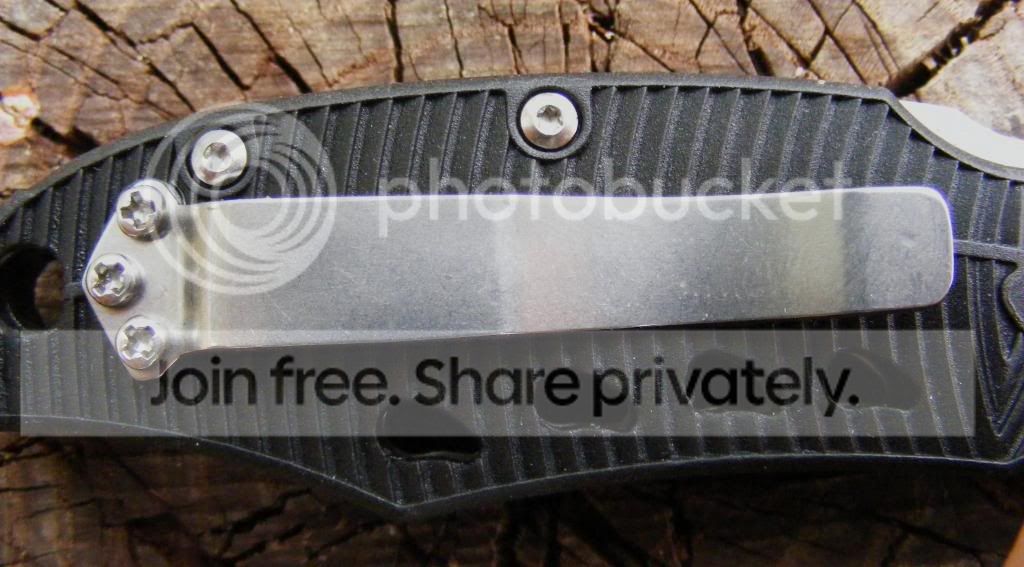
The pocket clip is brushed stainless steel, and is move-able to any of the four corners of the knife. Tip up or down, left or right-handed. It's held on with three Phillips screws, which I believe are size #2. See the fifth photo in the post below this for my only complaint about the pocket clip.
The blade locks open via lockback, positioned 1/3 of the way in the back of the handle. It has the David Boye detent, and mine was a little stiff in releasing. I found that if you loosen the last T-6 screw (the one closest to the blade) you can make the lockbar's tension a bit less. Lock-up is solid, and the Rescue has zero blade play.
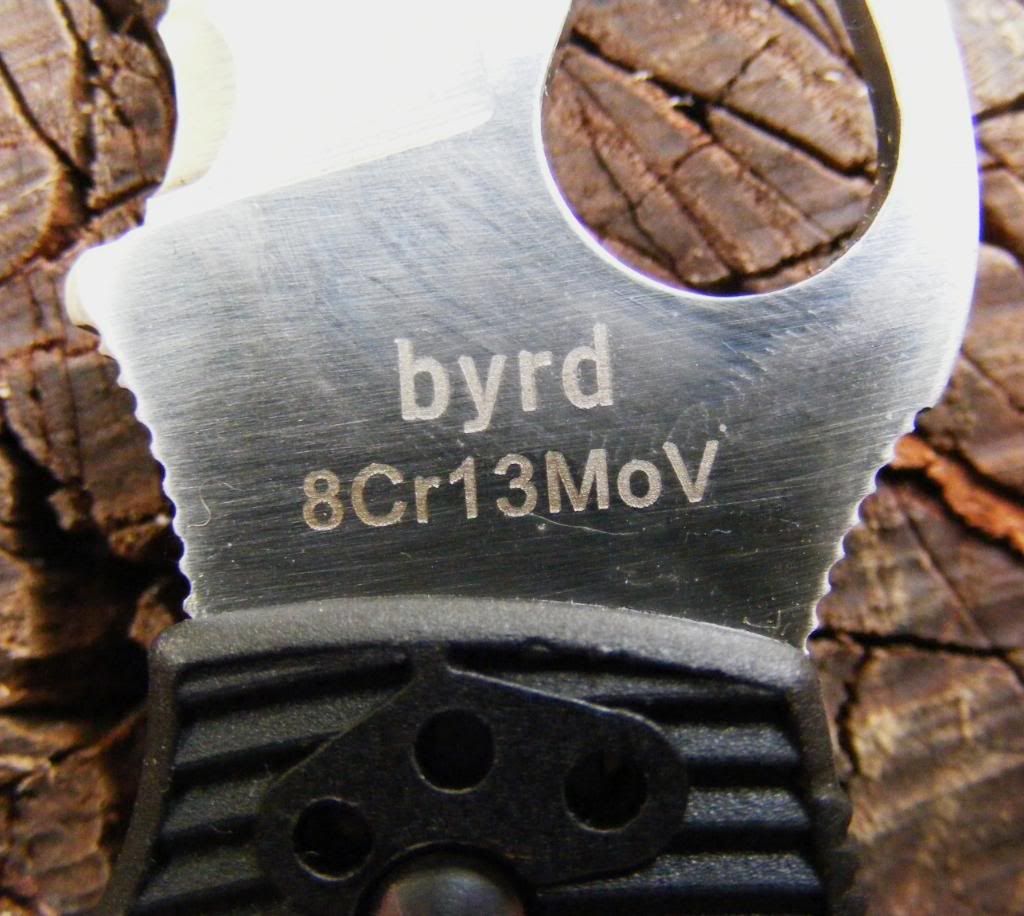
The Blade: The Rescue's blade is 4-1/8" long with 3-3/8" of cutting edge, and is 1/8" thick. It's made of 8Cr13MoV, which is pretty close to AUS-8 in most respects. Using my Tenacious, Persistence, and Byrds of this steel, I can say that it's a great user steel. The blade is fully serrated all the way from the kick to the tip, with no run of plain edge.
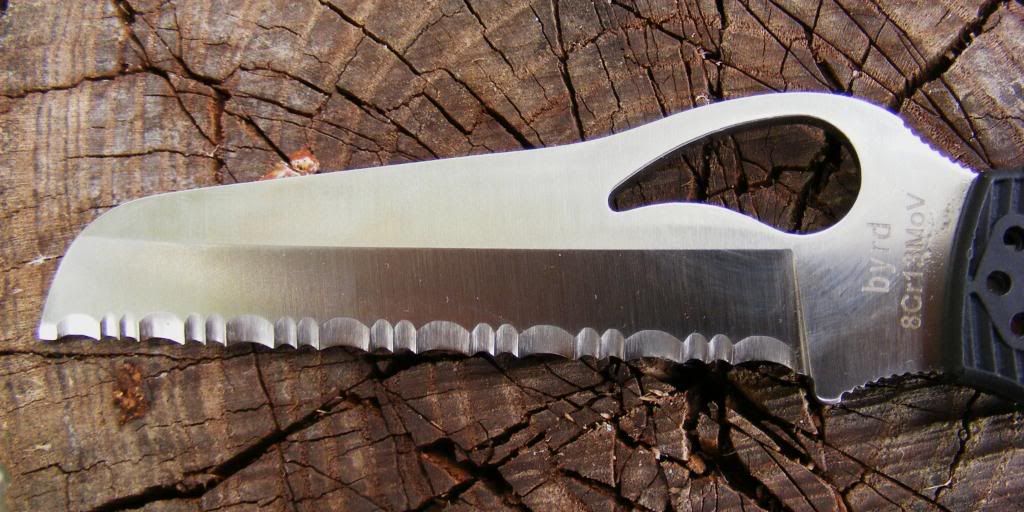
Both sides of the blade are hollow ground (it's not a chisel grind) but only the left side is sharpened.
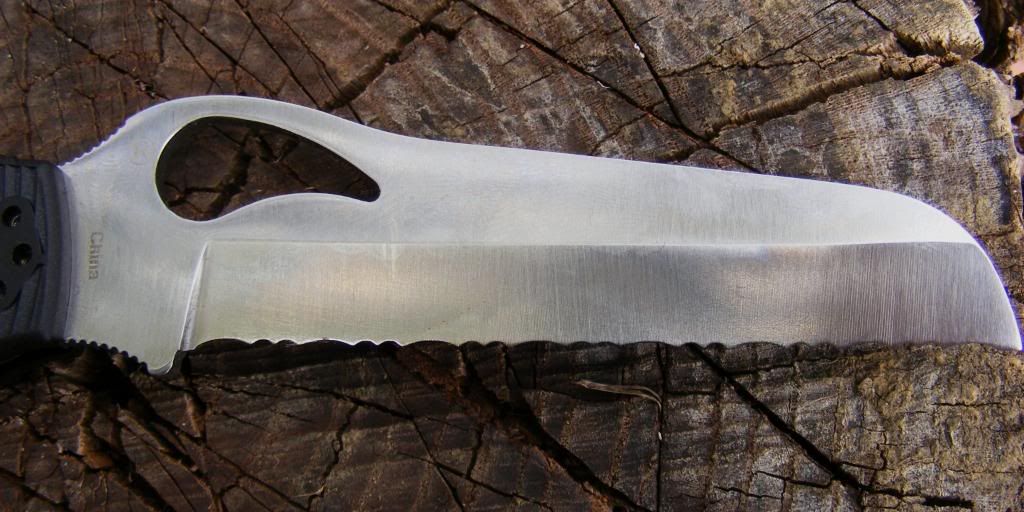
It came out of the box amazingly sharp. I could use any of the individual serrations, small or large, to cleanly slice paper.
Opening is accomplished with the now-traditional Byrd comet hole. It's 1" long and 1/2" wide; big enough to open with turnout gloves on. There's jimping on the spine and on the choil, and it serves its purpose well. The blade is a sheepsfoot design; it's rounded slightly at the tip to prevent stabbing your patient when using it. I've found that in the tight quarters of a car, you can actually puncture a person with it if you insert the cutting edge first, so simply slide the spine underneath what you need to cut first.
Overall, the Cara Cara Rescue is a pretty useful tool. If you're a Firefighter, EMT, Paramedic, farmer, livestock tender, fisherman, or in any other occupation that requires a sharp, yet non-piercing knife, get the Cara Cara Rescue. It's inexensive and very effective. If you wish, you can get the Meadowlark Rescue; it's the same knife with a shorter handle and blade. The Cara Cara Rescue (and Meadowlark Rescue) is also available in plain edge and half-serrated. Stick one in your car if you're one of those "just in case" guys
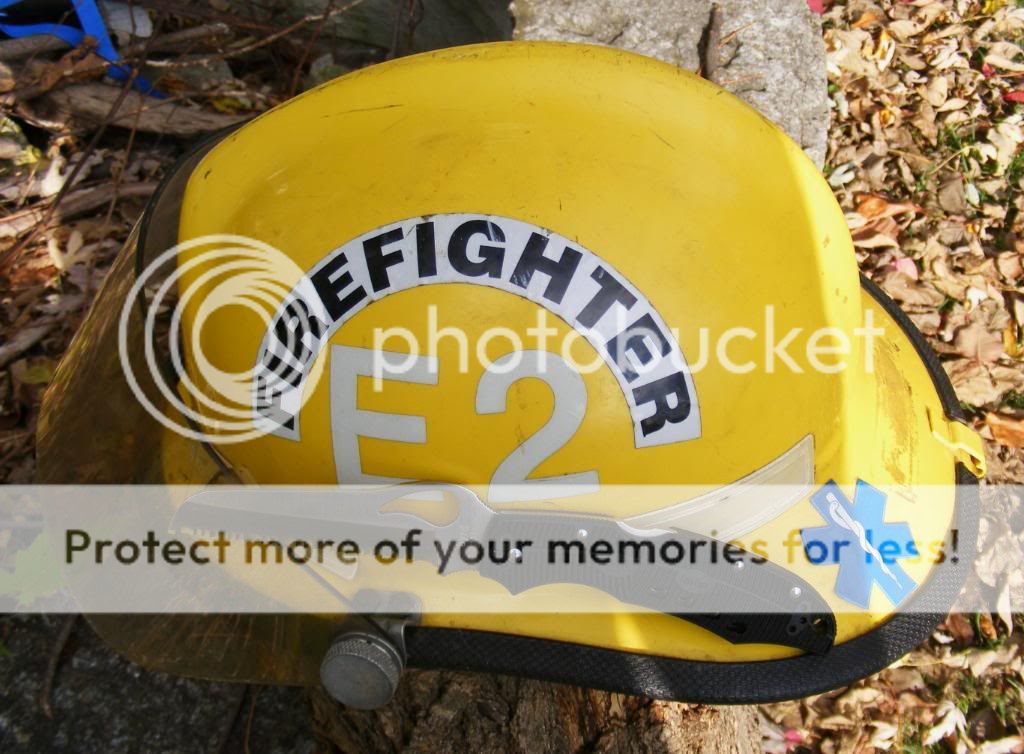
Today's knife is a simple, straight-forward tool. It has only two of the features listed above: a rounded sheepsfoot blade and a fully serrated edge. It's simple and very effective. It's the Byrd Cara Cara Rescue knife, model BY17SBK. In-store cost is around $25, and the knife is made in China. Let's look at the specifics.
The Handle: The Cara Cara Rescue (to be referred to in the review as simply the "Rescue") has a handle made of black FRN, and it has steel liners underneath (the handles are hollowed out, or nested, to hide the liners from sight).
The Rescue is 4-3/4" long when closed, and is 7/16" thick not counting the pocket clip. The handle is a screw-together type; the knife is held together with three Torx (T-6) handle screws and one T-8 screw to serve as the blade pivot screw.
Overall, the handle is comfortable to use. It's the same handle as the one on the regular Cara Caras.
There's a lanyard hole, and it will accomodate a length of non-gutted 550 cord with ease.
There is also jimping along the spine for the first 1-1/2" (from the blade to the lockbar) and it's functional. The handle is long enough that you can use it to break a window. I've done this in a demonstration, but the width of the knife due to the handle and the blade width made it hard to get a good grip on.
The pocket clip is brushed stainless steel, and is move-able to any of the four corners of the knife. Tip up or down, left or right-handed. It's held on with three Phillips screws, which I believe are size #2. See the fifth photo in the post below this for my only complaint about the pocket clip.
The blade locks open via lockback, positioned 1/3 of the way in the back of the handle. It has the David Boye detent, and mine was a little stiff in releasing. I found that if you loosen the last T-6 screw (the one closest to the blade) you can make the lockbar's tension a bit less. Lock-up is solid, and the Rescue has zero blade play.
The Blade: The Rescue's blade is 4-1/8" long with 3-3/8" of cutting edge, and is 1/8" thick. It's made of 8Cr13MoV, which is pretty close to AUS-8 in most respects. Using my Tenacious, Persistence, and Byrds of this steel, I can say that it's a great user steel. The blade is fully serrated all the way from the kick to the tip, with no run of plain edge.
Both sides of the blade are hollow ground (it's not a chisel grind) but only the left side is sharpened.
It came out of the box amazingly sharp. I could use any of the individual serrations, small or large, to cleanly slice paper.
Opening is accomplished with the now-traditional Byrd comet hole. It's 1" long and 1/2" wide; big enough to open with turnout gloves on. There's jimping on the spine and on the choil, and it serves its purpose well. The blade is a sheepsfoot design; it's rounded slightly at the tip to prevent stabbing your patient when using it. I've found that in the tight quarters of a car, you can actually puncture a person with it if you insert the cutting edge first, so simply slide the spine underneath what you need to cut first.
Overall, the Cara Cara Rescue is a pretty useful tool. If you're a Firefighter, EMT, Paramedic, farmer, livestock tender, fisherman, or in any other occupation that requires a sharp, yet non-piercing knife, get the Cara Cara Rescue. It's inexensive and very effective. If you wish, you can get the Meadowlark Rescue; it's the same knife with a shorter handle and blade. The Cara Cara Rescue (and Meadowlark Rescue) is also available in plain edge and half-serrated. Stick one in your car if you're one of those "just in case" guys
Last edited: