
- Joined
- Jul 2, 2013
- Messages
- 7,037
Just picked up this No. 98. All stainless excepting the scales. Hefty.

Cool! With the exception of no awl, looks like the civie version of the military issue knife. :thumbup:

The BladeForums.com 2024 Traditional Knife is available! Price is $250 ea (shipped within CONUS).
Order here: https://www.bladeforums.com/help/2024-traditional/
Just picked up this No. 98. All stainless excepting the scales. Hefty.
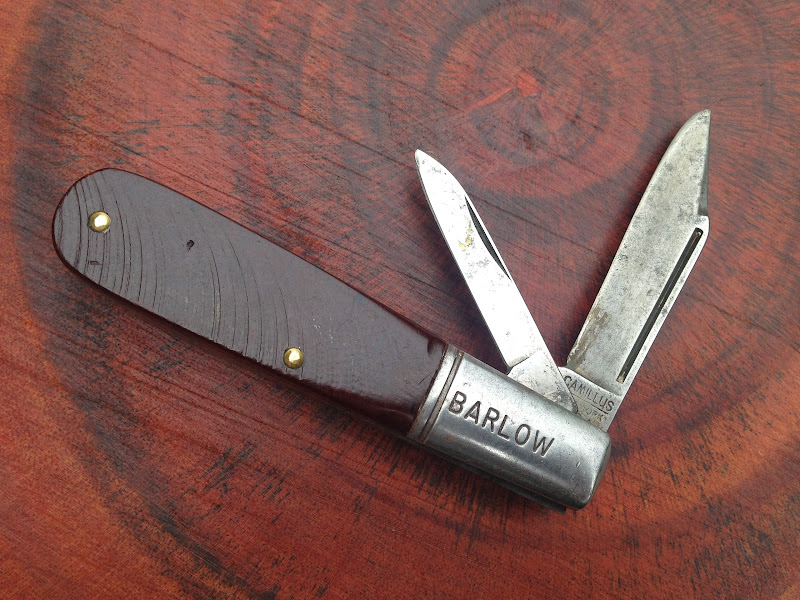
In fact, it was Aaron’s nephew, Adolph Kastor, immigrated from Germany in 1870, who hired Henry's younger brother, Albert as a salesman at age 16 in 1922. In October, 1876, the 20-year old Adolph Kastor had his new company operating in a building on Canal Street in New York City, Adolph Kastor & Bros., importers of German made knives. This eventually became Camillus Cutlery. In 1932, August Kastor retired from Kastor Bros. and sold his shares in Kastor Bros. to Albert Baer. This is how the Baer's came to begin Camillus ownership.
Henry started out at age sixteen working for Frank Seeman Inc., an advertising agency in New York in 1916 and attended classes at the Art Student‘s League at night. But he soon joined the U.S. Navy in 1917, serving in WWI.
Returning home at the war‘s end, Henry was employed with his two uncles in their furniture business. Both Uncles died four years later in 1922 and Henry, then 22, took over the business, traveling from Maine to Georgia three weeks of the month as salesman.
It was while making a sales call in New York City that Henry met with a bizarre accident. Opening a door he thought led to a stairwell, Henry plummeted four stories down an open elevator shaft. He survived the fall, but spent six months in Bellevue Hospital recovering from his injuries… a broken pelvis, two broken arms and nose, and a potentially fatal skull fracture.
For those six months he was recovering in the hospital younger brother Albert, then 18 and employed with Adolph Kastor & Bros., visited nightly and wrote to Henry’s customers, taking care of their orders so that no customers were lost.
Henry joined his younger brother Albert in the knife business when the latter bought out the Divine family who owned what would be renamed the Ulster Knife Company in Walden New York. And continued with his brother when he, under the auspices of IKAC, purchased the Schrade family ownership of Schrade Cutlery, subsequently renamed Schrade Walden just at the end of WWII, and still later when he bought the remaining shares of the Kastor family in Camillus Cutlery in 1963, and Imperial Knife Associated Companies in 1983 to form Imperial Schrade Corporation.
Henry's creativity bloomed in the cutlery world with colorful logos, slogans, and unique knife designs including the Old Timer lines (1958) and the Uncle Henry lines (1967) that saw Schrade rise to the top of the heap in the marketplace, holding the title of the world's largest manufacturer of quality cutlery for years.
From the 1989 Schrade newsletter:
“Henry Baer possessed a natural business accumen which along with his sense of humor and affability made him a success. His creativity was evidenced by many Schrade innovations. And his commitment to making quality product demanded that he field test all Schrade designs before they were introduced to the public.”
In 1983, Henry Baer was elected into the Cutlery Hall of Fame for his contributions to the cutlery industry.
He was artistic in the more commonly thought of arts as well as in his knife design work. His inter-office memos were decorated with caricatures of himself doing whatever action he was requesting of his staff in the memos. His communications with customers were often spiced with poems and jokes, his watercolors and self-portrait artwork hung in the factory. I have a few examples of his sketches and caricatures from some papers of the early 1970's.
The dominant factor in the cutlery industry in the 20s was the Remington Arms Company. Remington, before the days of their acquisition by DuPont, made guns and ammunition. After the First World War, they frantically sought product lines to use the excess facilities created during the War. Thanks to a man of German descent, Tillmans, Remington entered the pocket knife business.
Tillmans was imported from Solingen, Germany, by Adolph Kastor to run a factory at Camillus, New York. He, in turn, brought over workmen from Solingen and soon Camillus was like Yorkville in New York - a German speaking community. You can imagine the shock and surprise of the Sherwood and Bingham families, to see their original English speaking force dominated by the Germans. Tillmans started a man's chorus, known in German as a Mennicore. They traveled around New York State and sang German songs. One of their stops was Utica, New York, home of Utica Brewery which was owned by the Francis X. Matt family who came from solid German stock. Old man Matt liked the singing so much, he convinced Tillmans to stay in Utica with the promise he would build him a cutlery factory, which he did. This was the background and origin of Utica Cutlery. Tillmans soon tired of Utica and when he heard from a former Utica salesman, A. H. Willy, that Remington Arms Company wanted to build a cutlery factory, he applied for the job and Remington was soon in the knife business.
I might add that at one time Tillmans did a similar thing for the American branch of the German company, H. Boker & Co. So in terms of 1974, Mr. Tillmans was responsible for three of the now seven pocket knife manufacturers.
Why yes, as a matter of fact, after starting their business by importing knives chiefly from Sheffield, the Kastors brought in quite a few German cutlers. They built a dormatory to house them, Germania Hall. The deal was, you work hard, be dependable and do quality work, and we'll pay passage for other members of your family to come here and work. One of their best German foremen, Carl Tillman, and his crew quit in protest in 1915 because the Kastors made knives for the U.S., British and Canadian Navies, and also for the Dutch.
The Kastors even had their own factory in Solengin-Ohligs Germany, Germania Cutlery Works, run by Adolph Kastor's brother, Nathan Kastor. It operated from circa 1896 thru 1938. Why did it close in 1938 you ask? Well, the Kastors happened to be Jewish, and the leadership of the Nazi party did not think factories should be owned by Jews. No, it wasn't needed to produce knives and bayonets, it was converted to make ribs for umbrellas.
A. Kastor & Bros. was Adolph, Nathan, Sigmund, and August. Then later, the sons, Alfred B., Adolph's oldest son, and Robert N. assumed the leadership when Adolph retired in 1922. Robert resigned and joined the New York Stock Exchange in 1929. Albert Baer replaced him as Sales Manager. He signed Babe Ruth to endorse figural knives. August Kastor retired in 1932, and Albert Baer bought his stock in the company. By 1936, they had become the nations largest supplier of private branded knives. In late 1939, Albert Baer left Kastor Brothers under a cloud. He then bought Ulster from the Dwight Devine family, and the rest is history.
Oh yeah, he retained his stocks, and after the death of Alfred Kastor in 1963, Camillus ownership passed to Baer's two daughters.
Codger
The factory was not seized by the Nazis because of your knife, or any knives. It was seized by the Nazis because the Kastors were Jewish. The factory was handed over to an umbrella manufacturer, who was a Nazi, and began making steel umbrella ribs.
Kastor was an American company. The branch of the family that ran the factory in Ohligs left Germany after the factory was seized, and came here.
Kastor later changed its name to Camillus. The Camillus factory was owned by Kastor since the 1890s. Camillus was named after the town where it is located.
BRL...

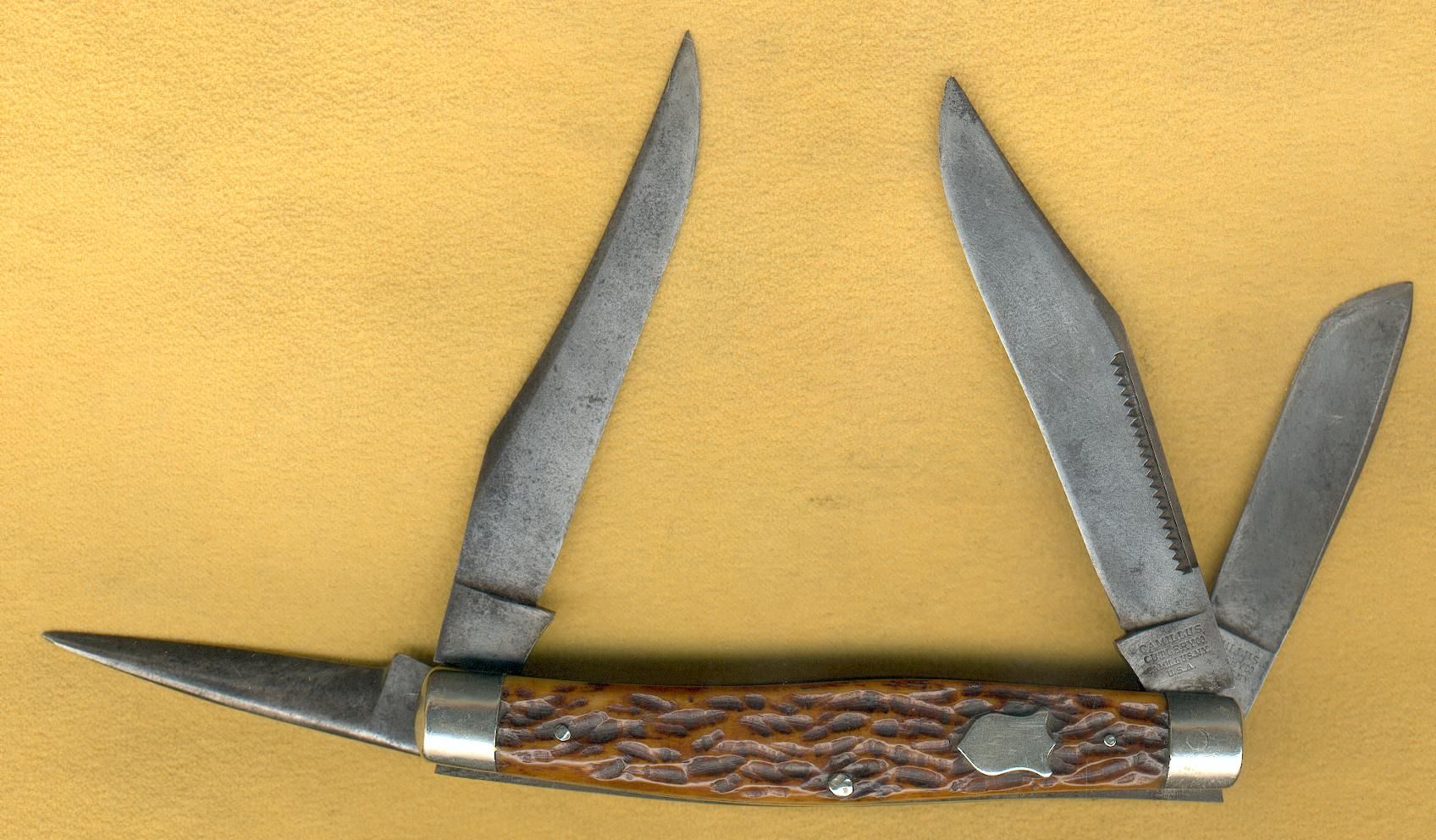
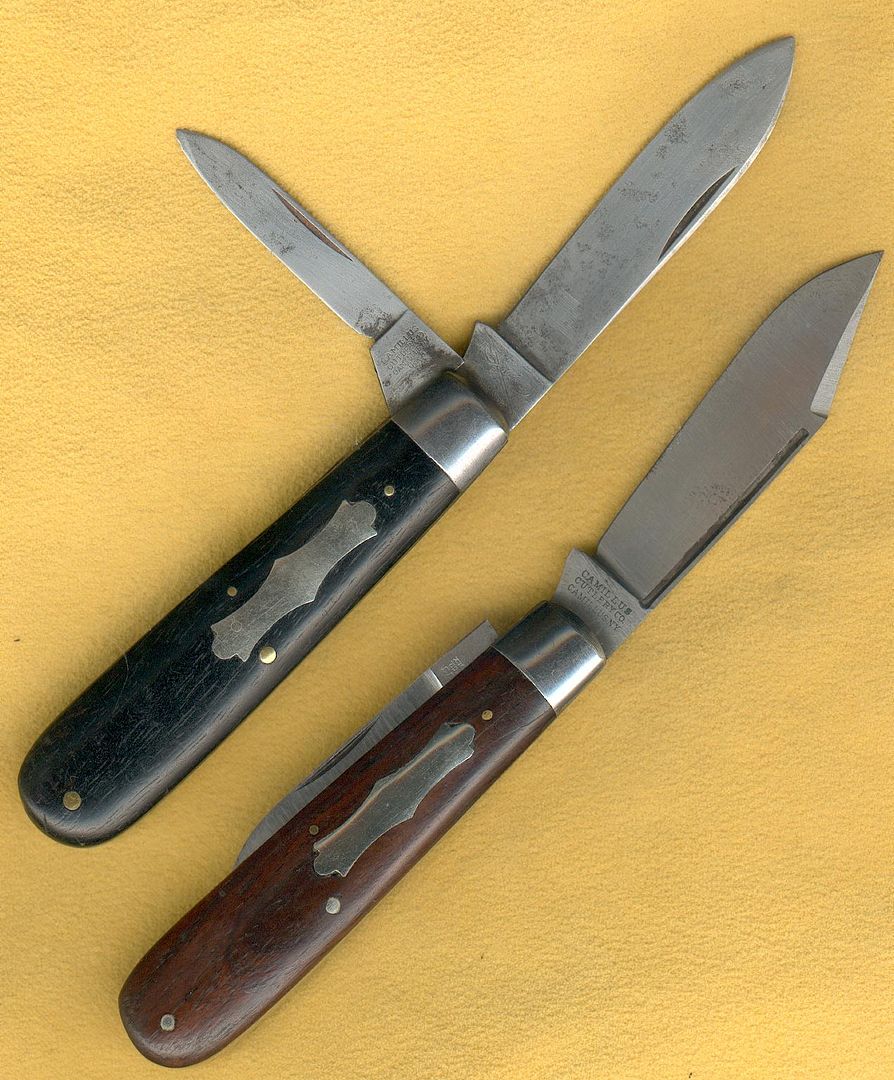
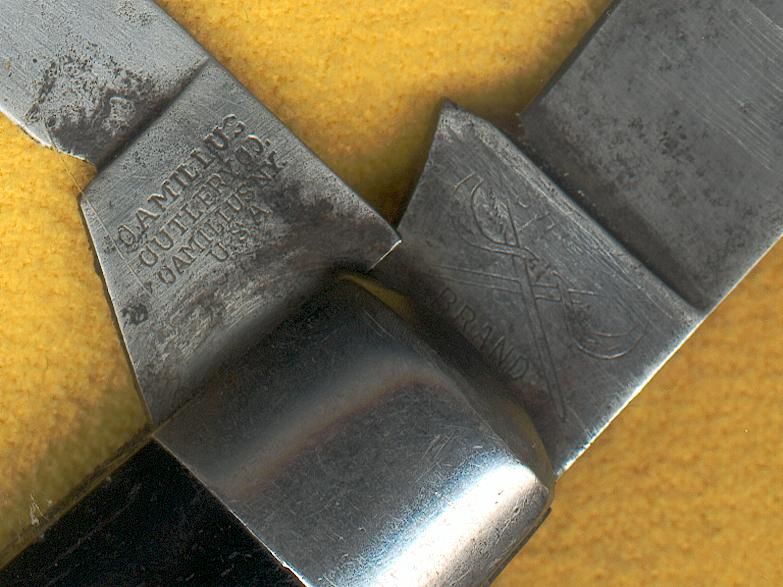
If you were to take the scales off the No. 98, it and the military knife would be the same thickness. The can opener on the No. 98 is better as the cutting edge is beveled. The spearpoint blades are very similar. Same profile and length and nearly the same thickness at tang. No. 98 a tad thicker. Also, the spearpoint on the military knife has more taper toward the point so is thinner there too. The military is a hefty knife. The No. 98 seems more so. Enough that it should probably ride on the belt vs in the pocket. Probably why the No. 98 wasn't in the catalog longer.


The Turk! Anyhoo, not to hijack this thread but I'm going to. I have a question or two. Cold Steel sold at one time some knives under the name of Classic Knives. They were made by Camillus. The ones that I think they made were the Arkansas Hunter, Classic Stockman, Junior Stockman and a Muskrat. Am I correct on this? Did another knife company also make these?
Did Cold Steel have any other knives made by Camillus?