Can a traditional folder be "too nice"?

Status
Not open for further replies.
Joined
Dec 8, 2010
Messages
340
I just recently purchased my first (well, first as an adult anyways) traditional folder. As I was looking through the four of this particular model that the store had in stock, to select the best one, I commented on how each was a little different, and you could tell that they were made by different people.

The salesman replied that my comment was the exact reason he liked traditional folders so much... each is a little different. He felt that was part of what gives them personality.

Now, based upon my other thread "What is the allure of traditional folders?", one of the points made was that the modern style CNC machined folders, with all of their perfection, have no personality, because there's no evidence of handcraft. So, in the same vein, would a traditional folder that was made with too much desire for perfection, also lack the same personality?

The reason I ask, is that I've seen some traditionals that are so well made, it's hard to tell if they were done by hand, or by machine (and I'm a professional machinist). Once you reach that level of perfection, don't you kill some of the personality that comes from the imperfections that you see on a lower end handmade production folder?

One particular knife that brought this to mind was the Pena Stockman posted recently. It is so perfect, so well made, that it is almost "clinical". It has sort of a hospital feel to it. The knowledge that it is indeed hand made helps quite a bit, but I still can't shake that feeling.

I think this is the same reason some people are so nuts for the HI Kukris...
 
I just recently purchased my first (well, first as an adult anyways) traditional folder. As I was looking through the four of this particular model that the store had in stock, to select the best one, I commented on how each was a little different, and you could tell that they were made by different people.

The salesman replied that my comment was the exact reason he liked traditional folders so much... each is a little different. He felt that was part of what gives them personality.

Now, based upon my other thread "What is the allure of traditional folders?", one of the points made was that the modern style CNC machined folders, with all of their perfection, have no personality, because there's no evidence of handcraft. So, in the same vein, would a traditional folder that was made with too much desire for perfection, also lack the same personality?

The reason I ask, is that I've seen some traditionals that are so well made, it's hard to tell if they were done by hand, or by machine (and I'm a professional machinist). Once you reach that level of perfection, don't you kill some of the personality that comes from the imperfections that you see on a lower end handmade production folder?


The knife that brought this to mind was the Pena Stockman posted recently. It is so perfect, so well made, that it is almost "clinical". It has sort of a hospital feel to it. The knowledge that it is indeed hand made helps quite a bit, but I still can't shake that feeling.

Knifemakers who build custom handmade versions of traditional slipjoints pride themselves on the tight tolerances and the exact fit & finish.The skill level is guaged by this.

Alot of productions,the ones that are less in f&f,are usually on the lower price level,or one's that got by QC.

Older Vintage slipjoints may have this appeal you are referring to.
-Vince
 
I would be upset if I paid what the Pena stockman cost and got Case quality. I'm sure if he made another one, it wouldn't be exactly the same as the first.
 
I understand what you guys are saying... but people specifically mentioned that the clinical precision seen in mid-tech knives like the Galyean was a turn-off, yet also say that clinical precision is desirable.

Do you understand where I see a contradiction here?

For me there is NO differentiation between handcraft and CNC machining, because I can easily keep a tolerance of .002" or better using a machinist scale, a loupe, a centerpunch, a caliper, and a scribe.

So for me it isn't handcrafted vs. machine made, it's precise vs. not so precise.

I would be upset if I paid what the Pena stockman cost and got Case quality. I'm sure if he made another one, it wouldn't be exactly the same as the first.

No two of anything are exactly the same, even CNC machined parts. It's all just varying levels of repeatability. On one hand, people say repeatability is bad, and on the other, good.

I'm not trying to pick on anyone, or create a stir... I'm just trying to have a discussion on when precision is good, and when a lack thereof can also be appreciated.

For instance... hand stitched beading is extremely expensive, because you can tell it's handcrafted. Automated beading is much less valuable... and the only difference is the precision.

Older Vintage slipjoints may have this appeal you are referring to.
-Vince

Vince,

A lot of people in the other thread I made referred to this appeal as well. I was just confused, because I thought the appeal of handcrafted goods, was that you could tell it was handcrafted.

At some point, proving that you can do work as precise as a CNC machine, only serves as a skill excercise, and a waste in time... because you reach a point when the two items are indistinguishable.

Please understand, I'm only bringing up these points as points of interest, not as argument.

The fact that you have knowledge of an item's handcrafted origin is a huge part of it's appeal no matter how well crafted it is.


I consider myself an extremely skilled craftsman, and I have a huge amount of respect for other skilled craftsmen, including Mr. Pena. I just thought this would be an interesting discussion.
 
Last edited:
Can a traditional folder be "too nice"?

No. As nice as custom slipjoints are (and they really are in a different league from the production versions), they are still manmade items, crafted by human hands. I've seen some stunning ones, but I don't think the slipjoint has been made yet that is perfect. Even knives by Tony Bose retain that hand-crafted spirit. The difference lies in the precision. Knives made by master cutlers are true pieces of art, akin to a Stradivarius. On the other hand, a production knife like a Case swayback jack is more like a violin made by an apprentice luthier. Functional, and entirely serviceable, but it just doesn't compare. Both are hand-crafted, but while one is strictly a tool, the master piece is both a tool and a marvel of craftsmanship.

- Christian
 
If sounds like what you are referring to is that some custom traditional's are so perfect when new that they loose some of the burly handcrafted feel of the bygone era.
Well you might be correct. But when people are paying those sorts of prices they demand the ultimate in fit and finish.

As for being handcrafted well there is no doubt that a Tony Bose knife is handcrafted. No factory could turn out a knife with that level of quality and finish. That is how you know it is handcrafted.

Most top custom knife makers are perfectionists and always strive for the perfect knife....... Fit, feel, balance and operation.

However if you carry and use a custom knife for what it was intended it quickly takes on the beautiful patina of work and use.
Left behind is the sterile new finish and it is replaced with the honest face of life and a look and feel that any working man would recognize.

Of course your knife quickly drops in value and collector status.

Some of my favorite threads here are pictures of used customs. They look the way traditional's should............:)
 
There is nothing clinical or sterile about the Pena stockman. You'd just have to hold it in your hand and look at it, feel it, deploy it and use it to realize what a wonderful piece of human craftsmanship it represents. These knives aren't perfect and when you have some experience with them you get to know all the nuances (good and bad) that "make" or "break" a knife. That said, not too many folks want to paint a mustache on the Mona Lisa or put a scratch in the quarter panel of their favorite vehicle. To each their own.

As in the other thread, if someone doesn't get it (after doing the above) there'd be nothing I could do or say to help them understand. Nor do I expect everyone to "get it".
Be a pretty boring and bland world if we all marched to the beat of the same drummer.
 
There is nothing clinical or sterile about the Pena stockman. You'd just have to hold it in your hand and look at it, feel it, deploy it and use it to realize what a wonderful piece of human craftsmanship it represents. These knives aren't perfect and when you have some experience with them you get to know all the nuances (good and bad) that "make" or "break" a knife. That said, not too many folks want to paint a mustache on the Mona Lisa or put a scratch in the quarter panel of their favorite vehicle. To each their own.

As in the other thread, if someone doesn't get it (after doing the above) there'd be nothing I could do or say to help them understand. Nor do I expect everyone to "get it".
Be a pretty boring and bland world if we all marched to the beat of the same drummer.

I'm just trying to have a discussion between different viewpoints. "Getting it" implies that one is wrong, and one is right.


Many of the people who commented that handmade imperfection is desirable, also in the same post, commented that they love traditional folders because they are ideal for actual use. They are practical, well designed, and easy to carry.

Just as someone would not paint a moustache on the mona lisa, nor would one use the mona lisa to pry open a paint can.

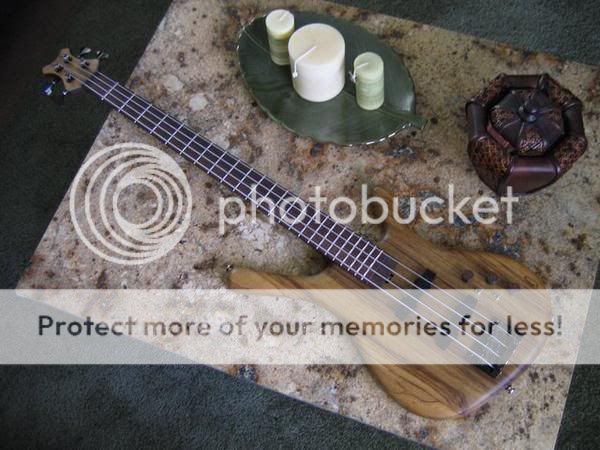
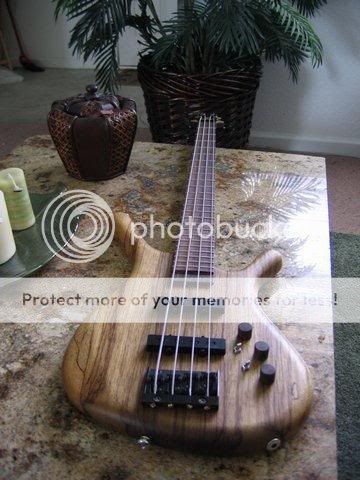
I personally would find it absolutely absurd if someone used a knife like the Pena as a working knife... just like I would find it absurd if someone used this bass guitar I hand-built, to smash on a stage during a rock concert:

463784810_l.jpg

463785448_l.jpg


I know what perfection is, and I know what craftsmanship means... I strive every day to reach perfection, and be a good craftsman. One thing that I also know, is that the two aren't always mutually exclusive. ;) :)

Imperfection can still display craftsmanship... but an unreasonable pursuit for perfection can sometimes mean more than an appreciation for good craftsmanship. Sometimes it means an impractical and unhealthy obsession. I know this all too well.
 
We are having a discussion and "getting it" is not right or wrong, it's a state of mind. What works for one is not what necessarily works for another. It doesn't imply anything. You're reading into my remarks.

(And guitars are off-topic in this sub-forum, there's no need to post 'em up here. ;))

It's not quite as simple as precision and tight tolerances. I know a little about that as well. I worked as a machinist on high tech systems years ago and my grandfather was a master machinist at the Brooklyn Navy Yard.

(Plus my career in international law enforcement required me to deal with high tech defense systems and issues in the arms smuggling and anti-terrorism arena.)

I am not insulted by you mentioning the Pena stockman. Not in the least.

Some folks think it's ridiculous to spend the kind of money a high end custom knife requires. Others think it's ridiculous to spend that kind of money and not use it. Others think it's crazy to not put that quality of knife on the shelf and keep it for posterity. Others think it's a tool and spending more than you would on a Rough Rider is indulgent.

I have a lot HI khukuris. I admire handmade knives. Some I use, some stay on the shelf and some I can't afford.

"Getting it" is not about right or wrong. It's a matter of perception. I have no issue with how anyone goes about buying, using or collecting knives.
 
We are having a discussion and "getting it" is not right or wrong, it's a state of mind. What works for one is not what necessarily works for another. It doesn't imply anything. You're reading into it.

(And guitars are off-topic in this sub-forum. ;))

It's not quite as simple as precision and tight tolerances. I know a little about that as well. I worked as a machinist on high tech systems years ago and my grandfather was a master machinist at the Brooklyn Navy Yard.

Plus my career in international law enforcement required me to deal with high tech defense systems and issues in the arms smuggling and anti-terrorism arena.

I am not insulted by you mentioning the Pena stockman. Not in the least.

I only posted the pictures to show that I'm a person that knows craftsmanship through his own hands... not one that knows it vicariously through others. Not that vicarious living is always to be looked down upon...

Either you recognize craftsmanship, or you don't. It doesn't matter whether it's a guitar, a knife, or a sculpture.

By craftsmanship I don't mean taste... some people think my bass is butt-ugly. I'm sure some think the Pena is butt-ugly (although I can't imagine how they could).

Some folks think it's ridiculous to spend the kind of money a high end custom knife requires. Others think it's ridiculous to spend that kind of money and not use it. Others think it's crazy too not put that quality of knife on the shelf and keep it for posterity. Others think it's a tool and spending more than you would on a Rough Rider is indulgent.

I have a lot HI khukuris. I admire handmade knives. Some I use, some stay on the shelf and some I can't afford.

"Getting it" is not about right or wrong. It's a matter of perception. I have no issue with how anyone goes about buying, using or collecting knives.

I agree that premium handmade knives should not be used, but I also agree that they should be used. I have many internal conflicts... the topic of this thread is one of many that I entertain.

The real compromise is that they should be used, but not abused. At least that's how I feel. That is the same I would expect of someone that I made a musical instrument for.


As far as the Pena... I do notice the little things, like the smooth transition from blade grind to base, the uniform edge break on the bolsters and blades, and the axial taper on the shield, which keeps the edges from sticking too far up from the scales. There are a lot of obviously handmade finishing touches on the knife, which could only be done by hand. My comments were mostly based upon the fact that the knife is so well made, it takes a trained eye, such as a collector or a machinist, to see what seperates that knife from a well-executed CNC machined version of the same. That is what I meant by clinical...
 
Last edited:
Well, I hope you work out the conflicts so you can enjoy whatever direction your knife habit leads you in. If we can be of help, give us a shout. I don't think I can add anything further.
 
I personally would find it absolutely absurd if someone used a knife like the Pena as a working knife... just like I would find it absurd if someone used this bass guitar I hand-built, to smash on a stage during a rock concert...

Why? Many knifemakers spend years trying to reach the pinnacle of their craft. They struggle long and hard to make a knife that is both beautiful and functional. More often than not they want their creations to be used, instead of just being squirreled away. I myself have a few customs that I use on a regular basis, and I have no reservations doing so. As much as I enjoy admiring the craftsmanship that went into making them, I derive the most satisfaction from actually using them. I have other knives that I use as beaters, but I don't hesitate to use my customs to whittle, peel some fruit, or open a letter, along with a myriad of other tasks that I use my pocketknives for.

That said, there is a difference between use and abuse. I don't abuse my customs, nor do I abuse my production knives. Use, even hard use, is acceptable. Abuse on the other hand is just stupid and a quick way to ruin a perfectly good knife.

- Christian
 
Last edited:
Well, I hope you work out the conflicts so you can enjoy whatever direction your knife habit leads you in. If we can be of help, give us a shout. I don't think I can add anything further.

Thanks for your contribution. I enjoy almost everything I do... there was a point at which I decided that I would no longer allow internal conflicts to keep me from enjoying life.

I feel bad for some of those who do... everyone is conflicted in some way, but some folks, especially often in collector's hobbies, let it control them.

Sorry for straying so far off topic. My original confusion was really how some folks could criticize perfection in a modern folder, and then in almost the same sentence, compliment it in a traditional folder.

Why? Many knifemakers spend years trying to reach the pinnacle of their craft. They struggle long and hard to make a knife that is both beautiful and functional. More often than not they want their creations to be used, instead of just being squirreled away. I myself have a few customs that I use on a regular basis, and I have no reservations doing so. As much as I enjoy admiring the craftsmanship that went into making them, I derive the most satisfaction from actually using them. I have other knives that I use as beaters, but my I don't hesitate to use my customs to whittle, peel some fruit, or open a letter, along with a myriad of other tasks that I use my pocketknives for.

That said, there is a difference between use and abuse. I don't abuse my customs, nor do I abuse my production knives. Use, even hard use, is acceptable. Abuse on the other hand is just stupid and a quick way to ruin a perfectly good knife.

- Christian


By working knife, I don't mean any use at all... I mean hard use. I would be absolutely against any musical instrument I make being shelved. I would also be against them being used in anything but the most respectful and caring way.

Taking an item that is crafted with heart, and then using it in way that carelessly damages it, pretty much craps all over the soul of the original maker/artist.

When I make an instrument, I make it to be played... just like a master smith makes his knives to cut. As long as the person knows how much work went into the Pena, etc. in their pocket, I don't have one problem with that knife living in that pocket every day. For me, it's about respecting the hard work and care that went into it... of course, most people willing to shell out that kind of money, already do respect the craftsmanship... that's why they're paying up in the first place.
 
The reason I ask, is that I've seen some traditionals that are so well made, it's hard to tell if they were done by hand, or by machine (and I'm a professional machinist). Once you reach that level of perfection, don't you kill some of the personality that comes from the imperfections that you see on a lower end handmade production folder?

One particular knife that brought this to mind was the Pena Stockman posted recently. It is so perfect, so well made, that it is almost "clinical". It has sort of a hospital feel to it. The knowledge that it is indeed hand made helps quite a bit, but I still can't shake that feeling.
A large part of the allure of a traditional slipjoint is the feel
in your hand, the feedback when you open and close the blade/blades, the sounds. All these things are missed in a picture on the internet. In hand, I can assure you that Enrique's stockman is far from clinical. I think Elliott said this very well in his post but I think it really needs to be emphasized.


I'm sure if he made another one, it wouldn't be exactly the same as the first.
In the last six months or so I built two stockmans, one right after the other, on the same pattern, and as hard as I tried to make them the same I failed.

I agree that premium handmade knives should not be used, but I also agree that they should be used. I have many internal conflicts... the topic of this thread is one of many that I entertain.
I personally as a maker love to hear that one of my knives are being carried and used. I build them with use in mind!
 
Last edited:
I personally as a maker love to hear that one of my knives are being carried and used. I build them with use in mind!

And as a knife collector and user I love to hear this from a maker. I can only imagine 100 years from now that the beautiful customs made by Ken and others will still be serving their purpose as a well built tool that is pleasing to look at, hold and use.
 
A large part of the allure of a traditional slipjoint is the feel
in your hand, the feedback when you open and close the blade/blades, the sounds. All these things are missed in a picture on the internet. In hand, I can assure you that Enrique's stockman is far from clinical.!

By clinical, I was saying that it was so nicely crafted that it could pass as machine made... and machine made is (in my mind at least), very clinical.

It wasn't really a commentary on the design, aesthetics, or functionality. It has plenty of character. I would love to own it. That's why I commented that the knowledge of its origin is what makes the knife. It wouldn't be all that impressive if someone showed you pictures lacking enough detail, and then informed you it was machine made. It would be something more along the lines of "Well, that's pretty nice", instead of "WOW!".

In the last six months or so I built two stockmans, one right after the other, on the same pattern, and as hard as I tried to make them the same I failed. !

I meant more along the lines that a skilled craftsman can make two objects so similar, that only one with a trained eye would be able to quickly discern the differences.


I personally as a maker love to hear that one of my knives are being carried and used. I build them with use in mind!

I completely agree... you put a lot of work into them for the to just sit around doing nothing. If they aren't going to be used, why even put blades in them?


edit: I checked out your work, it is very nice BTW.
 
Last edited:
I for one have an inverse tolerance for imperfections and price. As the price goes up, my tolerance goes down. I don't expect dead on tolerances and consistency in a $30-$50 knife, but it would be nice.

I have never lamented the precision construction of any knife, and doubt I ever will. Personally I find obvious failure to meet reasonable tolerances unattractive, and undesirable on any knife. I think the variance in quality from one knife to another in the Case brand (to keep it relating to your other post) is a joke, and something they should be ashamed of. I will not buy one that I can't handle first unless I have no other option for a knife I just have to have (not often). What would you think of a company that made bicycles, or watches, or pens, or airplanes with the consistency that Case makes knives? Case makes/sells great knives, just not every time (or even close).

So to answer your question, no a traditional folder cannot be too nice, if by too nice you mean precisely fitted, every time. And they can't be too nice to use either.
 
I for one have an inverse tolerance for imperfections and price. As the price goes up, my tolerance goes down. I don't expect dead on tolerances and consistency in a $30-$50 knife, but it would be nice.

I have never lamented the precision construction of any knife, and doubt I ever will. Personally I find obvious failure to meet reasonable tolerances unattractive, and undesirable on any knife. I think the variance in quality from one knife to another in the Case brand (to keep it relating to your other post) is a joke, and something they should be ashamed of. I will not buy one that I can't handle first unless I have no other option for a knife I just have to have (not often). What would you think of a company that made bicycles, or watches, or pens, or airplanes with the consistency that Case makes knives? Case makes/sells great knives, just not every time (or even close).

So to answer your question, no a traditional folder cannot be too nice, if by too nice you mean precisely fitted, every time. And they can't be too nice to use either.

I completely agree, Case leaves something to desire in repeatability.

OTOH, I just paid $40 for a USA made stockman, which is only slightly over the price I'd pay for a Chinese version of the same knife, with likely equivalent quality.

I have noticed though, as price goes up on Case models (the special edition damasacus stockman for instance), they do seem to be a bit more careful.


Replying to your comments about what I meant when saying "too nice", I was basically saying, that the closer you get to perfection, the less attributes of handmaking remain. Based upon what I've been told by slipjoint fans, those aspects of hand finishing are part of what make traditional folders have their allure.

One of the things I do like about the case knives (assuming they are mechanically sound), is that each one is a bit different.

So, if the liners and scales fit tightly together, the bolsters are flush and the pins are properly flushed, the blades don't have play, and the tension is correct... it isn't a bad thing if the hand-finishing is a bit different on each knife. If every knife had the exact same finishing, then any one person's knife wouldn't be all that unique, except in the case of natural stag or wood scales.
 
I think you're over-thinking things OP. As far as perfect vs. imperfect - you maybe have taken some of the comments in the previous thread out of context. As an example, bone or stag scales are far from being the most stable/durable handle material - but many prefer stag to g10. Not because it is better, but because they like it more - that simple. No analysis required here. Objects or tools are more dear to some than others, again - personal choice. My girlfriend walks around everyday wearing jewelry worth more than my car is. If it was mine, it would never leave the safe. Is that because I value her jewelry more than she does? Seriously, buy knives you like and use them as you see fit. This ain't a high school philosophy class. :D

ETA - If anyone used the word "sterile" in describing modern folders - I would assume they are referring to design and materials - not fit and finish/tolerances.


Adam
 
Last edited:
Status
Not open for further replies.
Back
Top