Canoeing thread

Joined
Sep 26, 2005
Messages
3,516
Just found this amazing vid on youtube, the things you can do in a canoe is amazing.
http://www.youtube.com/watch?v=_4RJAeP7pDI&feature=related
Anyway. my dad gave me his old aluminum canoe, and it works great, but I really don't get out there enough. I now own some old family land on a beautiful lake so there's plenty in my future I am sure.:D
Just wondering, any thoughts at all on the subject, how long have you been doing it, how long until you get as good as the guy on the video, etc.
 
I've hunted geese on a river from a canoe.Not bad with two people .Alone ,dealing with current ,rocks, geese, shooting ,etc it's very tricky.I met a deer hunter [didn't know his skills] who shot a high powered rifle off the side of the canoe - he ,canoe,rifle went over and the deer was safe !!
 
i don't know much about canoeing, but i know that on an group paddle i went on (i was in a little kayak) the couple in an old aluminum canoe (with many fiberglass patches, funnily enough) decided to try to take the "rapids" with the kayaks. (the other canoes got out and carried). they hit a rather pointy rock i guess, and tore up a big triangle flap in the bottom, like a can opener would.

what i now know about aluminum canoes with tears is that they can be remedied for the short term with a few layers of duct tape (lucky i had some). the canoe was turned around and paddled backwards with one of the folks in another canoe. this raised the torn part a little bit, taking off pressure. they got through the last two miles like this.

carry a patch kit!
 
Liam,

The canoe work done in that video is very impressive. Learning to paddle a boat on its secondary stability is not something learned easily. Every boat has both primary and secondary stability. When you originally sit or kneel in a canoe, the tendency for the boat to feel "tippy" is the primary stability. When you have the boat on edge, the boat will feel as if it wants to continue to roll but will settle to some degree. This allows the boat to turn much more efficiently. This is the secondary stability.

In over 10 years of guiding and instructing canoeing, I personally don't like to show people how to do this. It is a skill I demonstrate and show them. From a survival/practical standpoint, I don't want to mess around with possible capsizing for the sake of a more efficient and pretty manuever. In my opinion, the extra effort to perform a standard sweep, rudder stroke or J-stroke is far less than the effort to self rescue, swim to shore and dry off.

This guy is an amazing paddler and I give him a lot of credit for his grace on the water. However, learn what you are comfortable with and make a decision on your own whether or not grace is more important than safety.

By the way, canoes like the one you picked up are the best kind when they are free or really dirt cheap. Nice score.

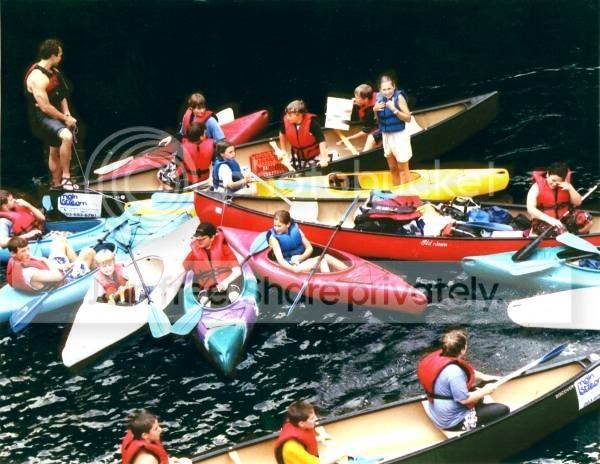
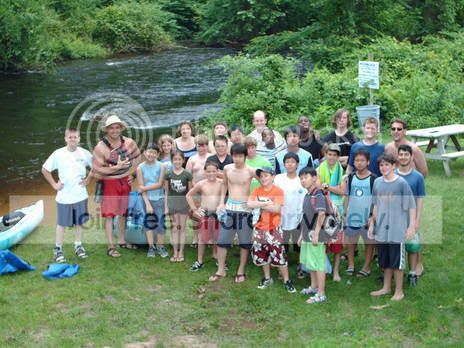
Here are some blatant photos from my guiding years.
NewHartfordParkandRec.jpg

ResizedRectorySchool2.jpg


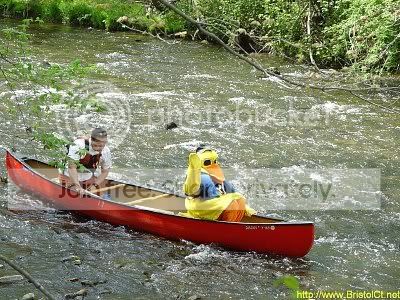
And this one is just ridiculous from a fundraiser I helped out with
DuckRace3.jpg
 
Thanks k estela, good advice. I learned my j stroke a few summers back when I worked at a YMCA camp, I really enjoyed it, very peaceful.
 
I don't like aluminum canoes much, but I certainly wouldn't complain if someone gave me one for free. . . Great score! It should be great for the lake or fairly calm rivers, but watch out for those rocks! As for the video, I've never seen anything like that before. Looks like a good technique to have in your bag of tricks.
 
Aluminum canoes for rocks went out years ago .The best is the ABS sandwich type.
 
In my opinion, you could learn this in a day and be proficient in a weekend. there is much one can learn to do in a canoe. Free style canoe is cool to watch but takes a long time to get good at.http://www.youtube.com/watch?v=5YBell8ByGI
Tippiness is relative to the time spent in your boat pushing the limits with a PFD on.
http://www.youtube.com/watch?v=dqC_0xx9pE8&feature=related
If you put a canoe in the water it just sits there; it's not tippy. Get in it and it wobbles, now decide wich is stable, the boat or you. JMO
 
My first job, detassling corn at 14 years of age, I saved up $500.00 and bought a colman canoe! Funny thing is they are cheaper now then when I bought it. I used to bring that thing everywhere - at least when my mother let me strap it to the car (at the time this was a Lada LOL - for the canucks that remember these crappy Russion cars; the canoe was worth more money!). I punched that thing through all kinds of rapids, twisted up the frame some, but was always able to hammer it back except one time when I actually snaped the cross bar and had to order a replacement. It was heavy as heck - I think 74 lbs. I still have that old canoe somewhere at my dads - it is more brownish now than the original red and has all its war wounds on display on the bottom.

I always loved canoeing as you weren't so gear limited when canoe camping. I learned my strokes when I bought that thing (never graduated to a 2nd stability stroke - never new it existed until tonight!). Never felt very comfortable in a kayak - in fact if I have a choice I get in the canoe every time. I thought about buying a nicer canoe in the last few years but haven't really gotten to it. Maybe a 26 lb kevlar is in the future - but then so are two or three new knives :)

Thanks for the video and reminding me about this great hobby.
 
estela times 2 + more.

If you have a quiet pond, it could be fun; but do not
be deceived, this style is not good for rough water.

Note some important things on gear:
Those canoes are small or medium 2-man canoes. They are
not set up for solo (seat in the center), but they are used solo.
They have a wide beam making it hard to paddle with a
vertical paddle, as demonstrated early in the video.
There is no gear in the canoe; this is very unrealistic.

The solution for this: get a real solo canoe.
Use a normal style and keep most of the keel-line in the water
most of the time.

For me, kneeling in a canoe hurts the knees a lot and hurts the
ankles somewhat. If you are only doing it for an hour after school,
OK. But for 4 hours, it will begin to hurt even with knee pads.
Think about a canoeing vacation, 12 days, it would be Very uncomfy.

Watch the video again and note how close they come to swamping,
on purpose: not a good wilderness survival technique.
This style would be much safer with a kayak or covered canoe.

If you try this style on rough water, you could die, literally.
Learn how and what you need on whitewater and lakes (with waves).
 
I've got three canoes right now that my dad bought in 1989. Not that old, but comparative to my age, they've been in the family a while. I've got two Mohawk canoes which just reopened and relocated to Arkansas! Excellent boats. And I've got a '89 Wenonah WC1 racing canoe that is my pride and joy. I haven't had much time to use any of them lately, but the rest comfortably in my garage waiting for the next trip.

Canoeing has been a family tradition, and lots of memories to reflect on. I look forward to taking my son on some trips when he is a little older. Just one of the things to remove us from the flow of a busy life.

I wish I had some property with a lake! Enjoy it while you can!
 
Just wondering, any thoughts at all on the subject, how long have you been doing it, how long until you get as good as the guy on the video, etc.

I have been canoing since the late fifties/early 1960's. Back then the only canoes I was familiar with were Grumman aluminum, but there were wood and canvas, stripper and fiberglass also.

In the early seventies, my friends and I got the "whitewater fever" and eventually moved up to plastic boats after destroying several fiberglass and aluminum ones. I think they were Blue Hole Sunbursts circa 1974 and among the first ABS boats. We took unreasonable chances on rivers like the Cossatot (Skull Crusher), Big Piney and Hailstone without the technical equipment available now like airbags, good PFDs and helmets.

By the late seventies/early eighties I had calmed down and was doing solo canoe camping and easier whitewater runs. Fewer risks, less adreneline, concentrating more on technique. I've done a lot of hunting and fishing from canoes. Once you are familiar with "reading" moving water, your canoe, and your own balance, it isn't hard. Not unlike riding a bicycle. Learning efficient strokes is important.

I never got into freestyle though. I enjoy watching people who do and are good at it.

Codger
 
Codger, on your solo trips, did you go for distance? relaxation? refining outdoor skills? Curious what you did to pass your time.
 
All of the above. I watch and participate in nature. As mentioned, I sometimes hunt or fish. I explore smaller creeks finding springs and caves. I practice woodcraft, tracking, shelter building, navigating. Pretty much whatever strikes my fancy at the time. Distance isn't as important as time. In other words, I don't try to break records or beat my own best times. I set a relaxing pace and allow for side trips or zero days when weather keeps me in camp. I might figure a certain trip will take five days of steady paddling, but allow ten days for the trip.

Camping on the river I am loath to pack up a wet camp, so don't always get an early start on the day. Particulary when the days are short like in the winter. The river, being hemmed in by bluffs, doesn't get sun real early in the day even on clear days and depending on the orientation of the camp, it may be mid-morning before the tent dries if even then.

And also in the winter, there are times when the river freezes completely over and progress is painfully slow. I've had to turn my canoe around and bounce up and down to break ice, then backpaddle to let the broken ice go through the shoals ahead of me. It is hard to describe the sound echoing off the bluffs of the ice breaking on the rocks. And if you get caught in the ice, you can't control the canoe.

Some day I would like to cover all 145 miles or so of the Buffalo River in one trip, but so far I have only done it in sections, many of them quite a few times. The headwaters are only navagable in early spring high water and like riding a runaway freight train thru the rock gardens. Not a place to be with a loaded canoe.

Codger
 
I have been since the early 80's, had a Coleman canoe then, wrapped over an submerged tree once got it unstuck and finished the trip. I canoe camp a lot.
Carry a couple of sandbags, fill them with gravel and lay them in the bottom. That way your canoe will set lower in the water, and be more stable. When you enter or exit the canoe don't pull the bow on shore like a boat, pull your canoe parallel to the shore and step in the center.
Canoes are great, they are peaceful floating down a stream and you don't need gas.
 
The Buffalo! Sadly, I don't think I'm going to get to paddle it before I leave Arkansas. My childhood river is the Jack's Fork in Missouri, which those who can't make it to the Buffalo have called it the little Buffalo before, only to console themselves.

My two canoeing related dreams are 2 weeks on the Grand Canyon (Look out 2009!) and 2 weeks in Canada somewhere, currently researching some different areas. I wouldn't mind a smaller fur trade river.
 
Is that the one in Missouri?

Lol! It seems every state has a Big Piney river or creek! No, the one in Arkansas.

http://gorp.away.com/gorp/resource/us_river/ar/bigpiney.htm

http://www.paddling.net/places/showReport.html?984

The "Mother Hole" spoken of had a different name back in the day. It was "M.F. Falls" and consists of a fall with two big rocks Big Mother and Little Mother. The current naturally takes you right into the rocks and few of us back then made that run the first time. Other features had creative names like "Cascades Of Extinction".
 
Looks a lot faster than ours, it is Big Piney River, flows through Ft. Leonard Wood to the Gasconade. We have a Little Piney Creek, that flows into the Big Piney.
 
Back
Top