Care and feeding of stabilized wood

Joined
Feb 5, 2010
Messages
3,911
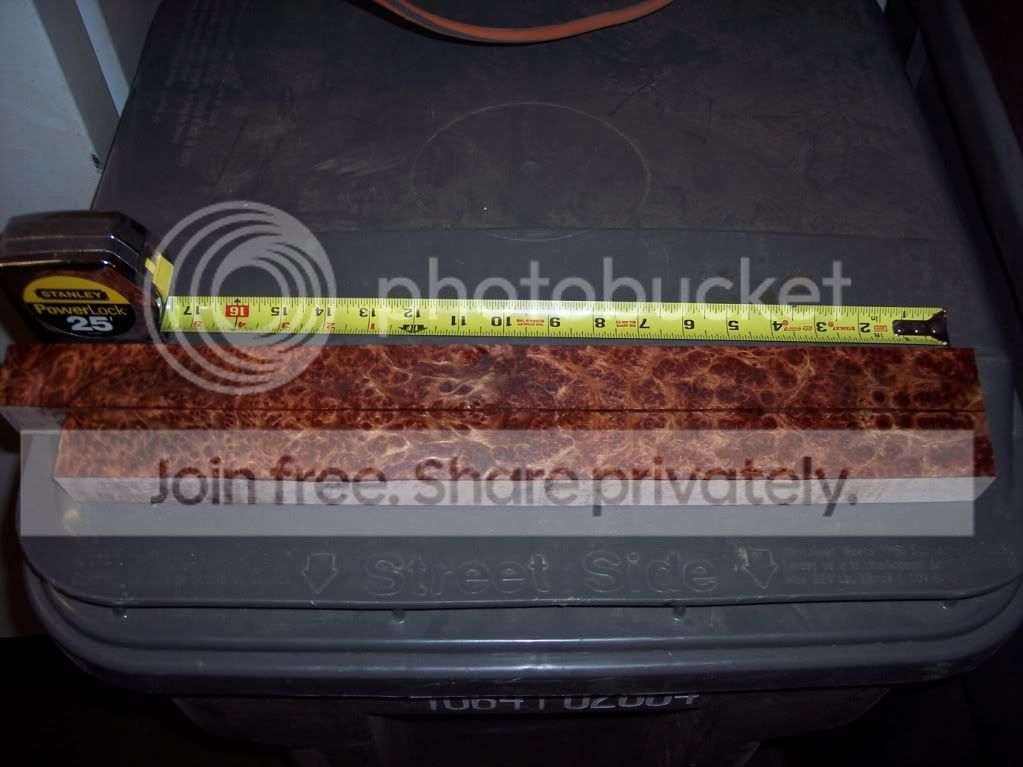
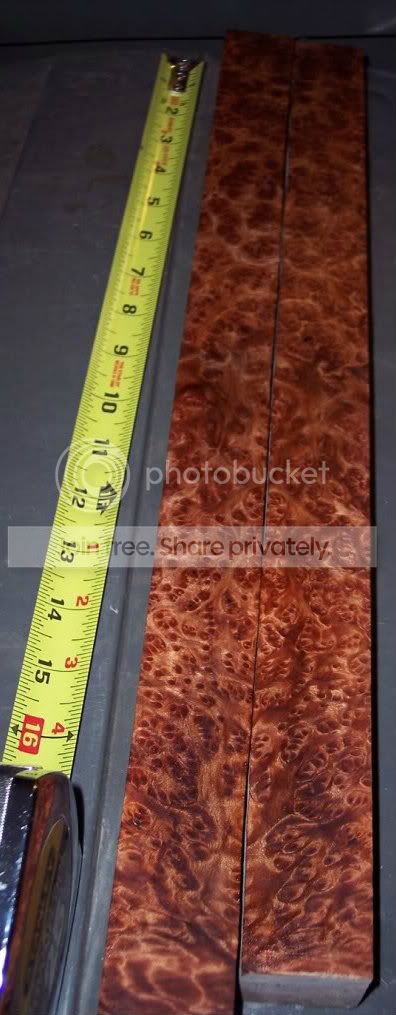
Long ago I found a piece of what I presume to be redwood or cedar burl that I sliced up (in my own amateurish way) and sent off for stabilization. When it came back I sanded off the external gunk and was disappointed by how dead the pieces looked. Essentially, I threw them in the drawer and haven't seen them or done anything with them since.

Several other pieces of wood that I sent out for stabilization also came back looking less lively than I had hoped when sending them off.

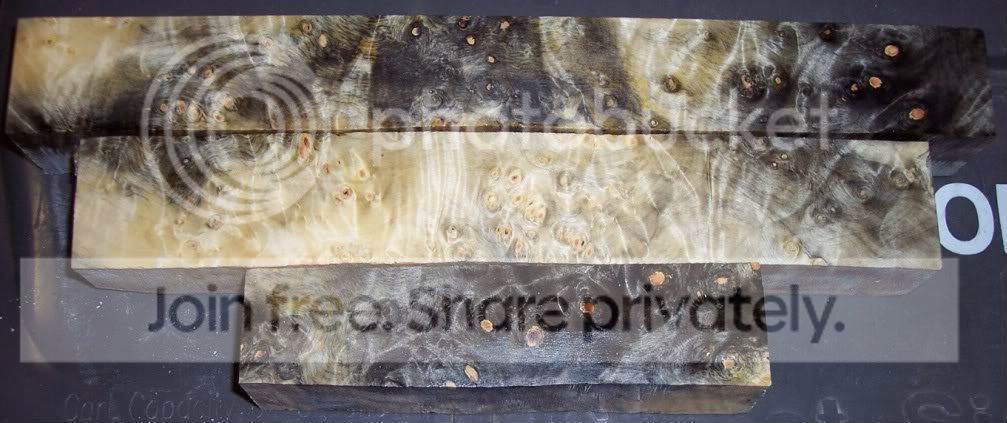
Today I learned something about stabilized wood. I received a piece of stabilized buckeye burl that looks like it had a lot of unrealized potential. I decided to wipe it down with Howard Butcher Block Conditioner (a mix of mineral oils and natural waxes) and the contrast, figure and chatoyance all jumped off the wood immediately. I was so excited I gave the same treatment to all the other pieces of stabilized wood I have and was amazed at even some of the early redwood/cedar pieces. All the life I'd hoped to see is now visible.

So, for those who are collecting stabilized wood, as I am, be sure to give them a wipe with some moisturizer to reveal the beauty underneath. It will really help you see what the final handle will be able to show.

- Greg
 
Sometimes the result of stabilizing is disappointing. I sent off a dozen English, Bastogne and Claro Walnut scales to be stabilized and they returned with a completely different and dead color. They wound up grey to black. As it turns out, the polymers are so expensive, they are reused. I imagine mine were toward the end of their useful life and the result was unusable scales. The other types of wood I sent came back beautiful. You get what you get.
 
Don't judge stabilized wood by its surface look. After sanding into the wood, and taking it to a fine surface (1000 grit or higher), then buffing/polishing it......it can have an entirely different look than it appears to have.
Woods with resins can have a dramatic change in color, but when shaped and finished, have things show up that make your eyes pop.

As to the surface coating, stabilized wood needs to be finished to a fine degree before it stops looking dull and sometimes will look grayish until buffed. The color almost always intensifies after buffing, but buffing can make it look a dull gray color if the buff rubs or burns the polish into the wood pores. If you power buff wood handles, use a clean 4-6" combed cotton buff and matchless white polish on a buff running 800-1200 RPM. What you want is about 100-150 SFM. Go light on the pressure and wipe down the handle regularly as you slowly bring up the shine. Lean in too hard,or run the buff too fast, and you will burn the finish.

Using a surface sealing clear finish will accentuate the 3-D effect of some woods, like curly woods and buckeye burl.

A CA finish, done right ,is one of the best ways to bring out all the subtle details in the stabilized wood.

Using a surface coat, like butchers block oil or other oils/waxes will do the same, but is sort of a temporary fix, as it will not hold up in use like a full finish taken to a super-fine polish. Some people don't like the oily feel of the finished handle.

Cured wax/oil finishes that have to be applied and then sanded, and built up in layers - like the tung oils and Danish oils - work well, too, but can be a lot of work. Darker woods, like walnut and woods with large pores do well with this type of finish. A sanding sealer starter coat, where you apply the finish and while wet, start sanding with 400 grit paper or fine steel wool and rub the finish/sanding dust into the pores is a step often left out.....and when skipped, it shows.

In doing a CA finish, I recommend less experienced makers do hand polishing over power buffing. The 3M polishing papers are the absolute champ for getting the surface glass smooth and shiny...without getting the polish buffed into the wood and making it dull, as a buffer may do. The cloth like papers go from 400 grit to 8000 grit in a six sheet , color coded set.

here is a link to Bruce Bump's WIP which has his CA finish tutorial in it ,too:
http://knifedogs.com/showthread.php?2771-Hidden-Tang-Construction-my-way
 
I should have been clearer. I was not suggesting use of the butchers block conditioner on a finished handle. I was trying to help someone with a "disappointing" block of wood see past the gray exterior in order to realize the potential that block has to make a great handle.
 
Hey Greg,
Sometimes I do that for pics to get an idea what I got. Sand one side to a high grit (220 cuz I hate sanding), and use danish or minwax antique to temporarily pop the grain. You can see from the pic the other sides look chalky and white still. It lasts a little longer than water for this purpose, bu like Stacy said its not "permanent". These will hopefully be pointy sticks someday soon....

RWB1.jpg


RWB2.jpg


BEB.jpg
 
Patrice Lemée;10321165 said:
That's some good looking stuff Larry. :thumbup:

Stacy, what is the debonder for in Bruce's tutorial?

Patrice, The debonder is much like acetone but is actually formatted to debond superglue. I buy it from Alpha Knife Supply. It doesn't dry very fast like thinners or even acetone
 
Bruce, I am sorry I did not make myself clear. I do know what debonder is but I was curious as to why use it after you've built up a thickness of superglue. Is it only to smooth away the bumps so there is less sanding to be done? Thanks for responding, again I am sorry I was not clear.
I think that finish would be perfect for the dagger I am working on.
 
I did miss your handlke treatment when first done, Bruce, but have read it over a couple of times now. Thanks. I'm going to see if that debonder treatment may help me with a couple of other knife materials. Thanks for the link, Stacy. Frank
 
I was under the impression that the purpose of the debonder was to keep the CA from drying so fast, so it has a chance of penetrating deeper into the wood, thereby forming a deeper finish.
 
The debonder helps to smooth over the rough-ish texture that a CA finish can have as it dries. Basically it melts the very outer layer a tiny bit and allows it to become smoother. As you said, it helps you not have as much sanding to do.
 
I think you chaps misunderstand the process:

The debonder/acetone dissolves and thins the CA and allows you to rub it into the wood. You then sand the wood smooth - removing all surface CA.

By repeating this many times, you fill the surface of the wood with acrylic resin, as well as fill all pores and surface cracks, and in the final sanding/polishing bring up a high polish.

There should be no final CA coating ON the surface. The CA is IN the wood surface.
 
Maybe Bruce will chime in Stacy cause it doesn't sound like that in his description. It's 3-4 coats of superglue then dry then the debonder. :confused:
 
Will the CA treatment work on stabilized wood? I though stabilization would prevent the wood from absorbing anything? I know that wax will temporarily brighten up stabilized wood, but assumed it was merely brightening up the resin itself and not the wood?
 
I was not aware that Bruce left much CA on the surface after rubbing the debonder dissolved mix into the wood and sanding it smooth.

The CA method works well with stabilized wood. It is a common misunderstanding that stabilized wood will not allow any penetration. It will not swell or shrink, but if there is a grain or pores, water or other things can fill those voids. One test for determining stabilized wood is to sand the end grain and then soak it in water for a few minutes. Set it end grain down on a paper towel. Pick it up after a few minutes and wipe it off. If it is stabilized, all the water should have drained out, if the end looks wet, the wood is not stabilized, or poorly stabilized. Some do this test by weighing the dry, vs wet, vs drained wood. There will be a small difference between dry and drained on stabilized wood, but there will be little difference between wet and drained on non-stabilized.
 
I was not aware that Bruce left much CA on the surface after rubbing the debonder dissolved mix into the wood and sanding it smooth.

The piece of wood Bruce had used was one of the first I had sent out to be evaluated when I was starting to do my own stabilizing years back. The buckeye did not have the weight gain/increased hardness usually found with stabilized wood. I am just second guessing Bruce, but I think part of the CA build up was to give additional protection to the surface of the wood.

This also helps to make the point, not all stabilized wood is the same. I did my own stabilizing for a couple years and got good at it. But it was still not as good as that done by K&G. They have been stabilizing wood for a long time so they'd better be good at it. ....they are.

Stacy is giving good advice for finishing stabilized woods.

The biggest thing that is affecting the look of stabilized wood or any surface is how light reflects off the surface.
Any small pores, pits or irregularities in the surface affect the brightness of colors and visibility of the figure.
Thorough sanding and polishing, followed by a finish will show the wood to it's best potential.

Some will just sand and then buff the wood. This can look good, but what is happening with a less experienced polisher is the buffing compound is accumulating in any small openings and dulling the look of the wood. If a surface finish is used on the piece after sanding, followed by paste wax and hand buffing the piece can look much better.

A quick disclaimer
More experienced polishers can get a great finish when power buffing.
It is a developed skill that takes time to learn to do without over buffing, burning or injuries.
 
The CA glue is the final finish except for a coat or two of furniture polish afterward. Yes it does soak into the wood pores and sets up for a stabilized effect but also builds up for the final coat. The whole purpose of the debonder is so smoother more even coats can be applied and eliminate the need to sand between coats. Sanding between coats will display a foggy appearance but smoothing with the debonder between coats will give a crystal clear finish. The only sanding is for the final progressive sanding. A satin finish will result wherever you stop in grits but carry it all the way to 2000 grit and a quick buff on a white rouge cotton wheel will result in a high gloss.
Good discussions here. Thanks for asking guys.
I think you chaps misunderstand the process:

The debonder/acetone dissolves and thins the CA and allows you to rub it into the wood. You then sand the wood smooth - removing all surface CA.

By repeating this many times, you fill the surface of the wood with acrylic resin, as well as fill all pores and surface cracks, and in the final sanding/polishing bring up a high polish.

There should be no final CA coating ON the surface. The CA is IN the wood surface.
 
Greg that is good to know when I get wood back.

Separate question, is there a good way to finish the handle of stabilized wood that gets the "pop" of the burls but not have a really slippery handle? Most of my wood working experience is done with the waxes and oils and the application and sanding steps.
 
Back
Top