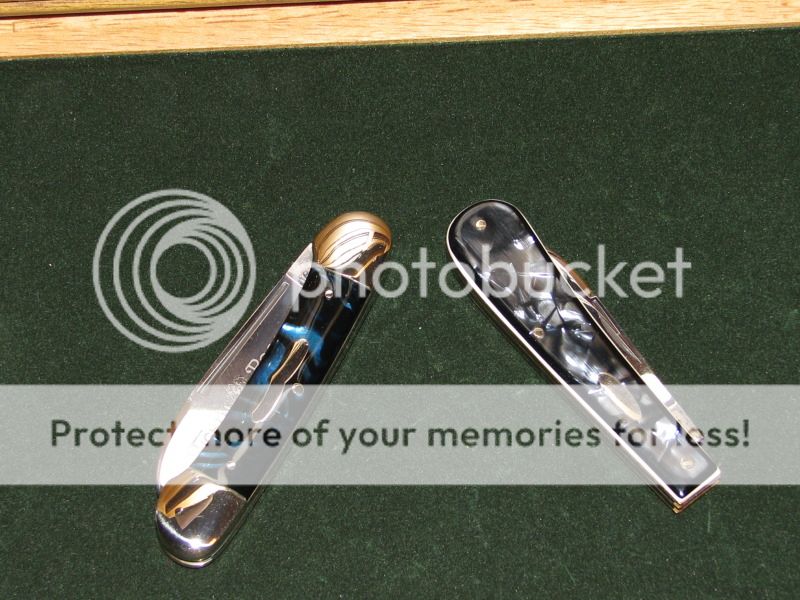
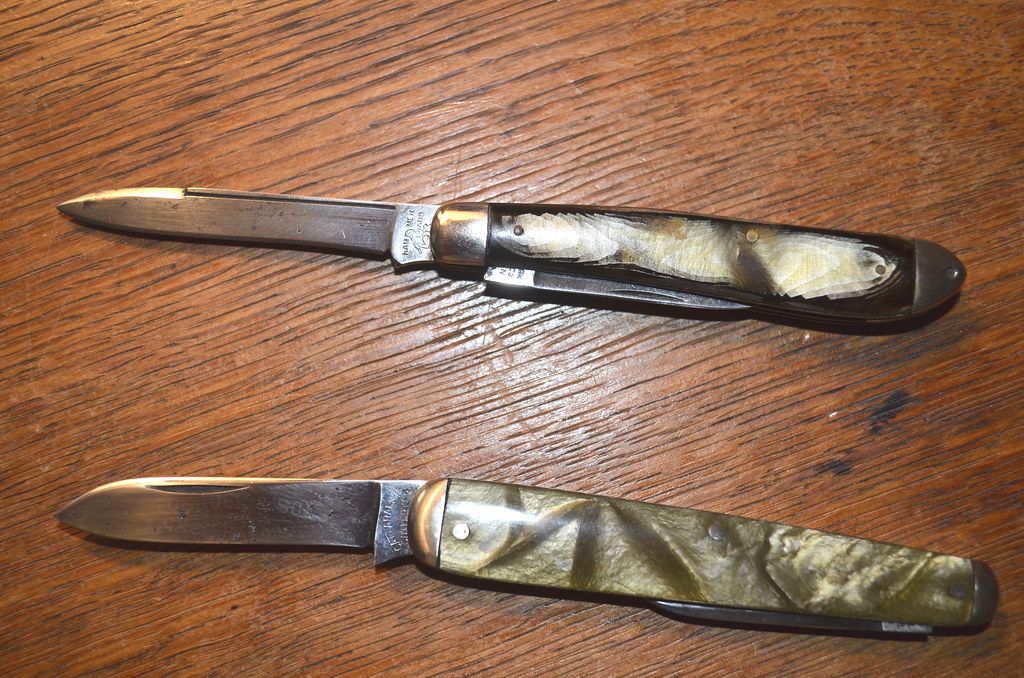
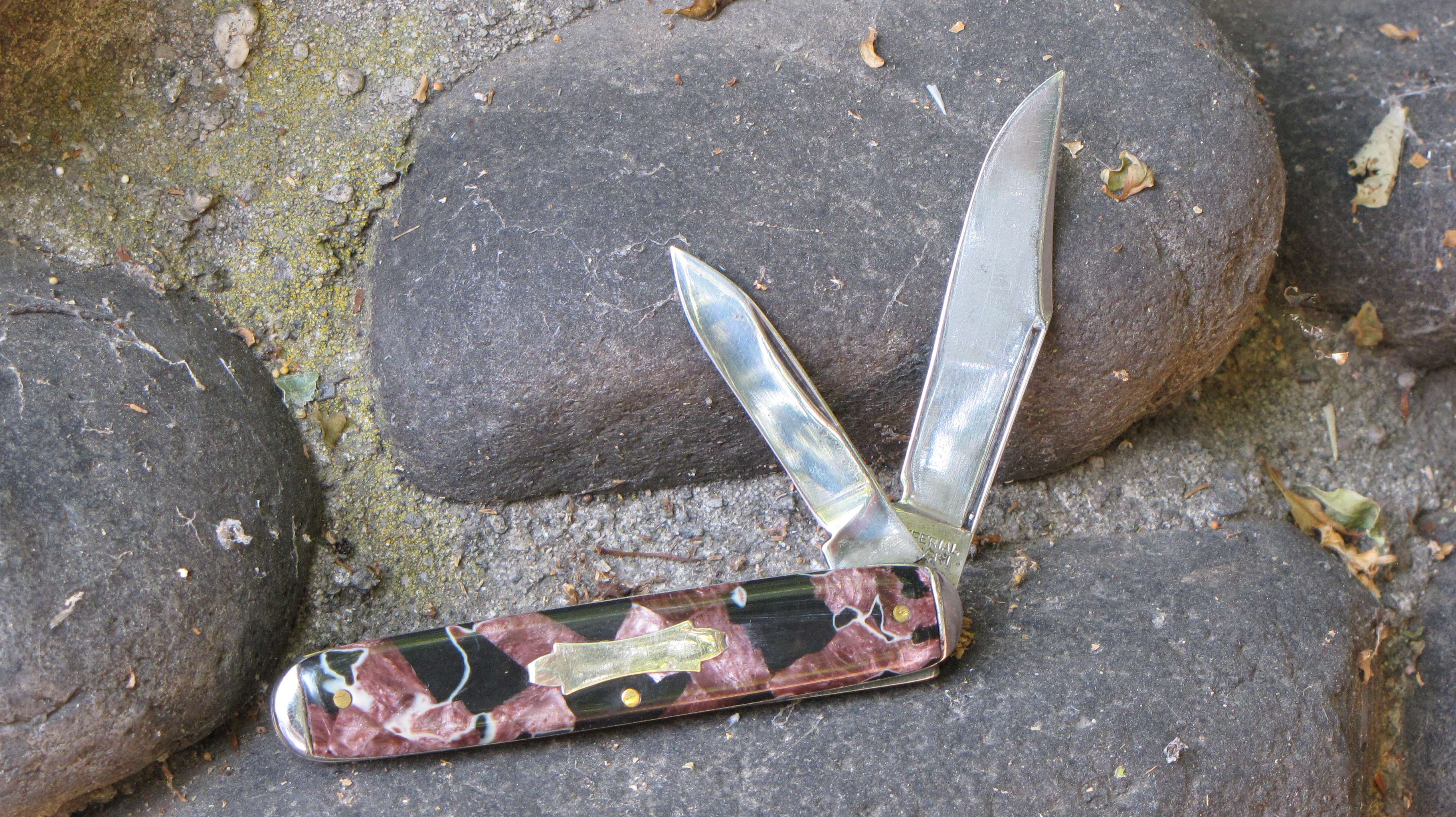
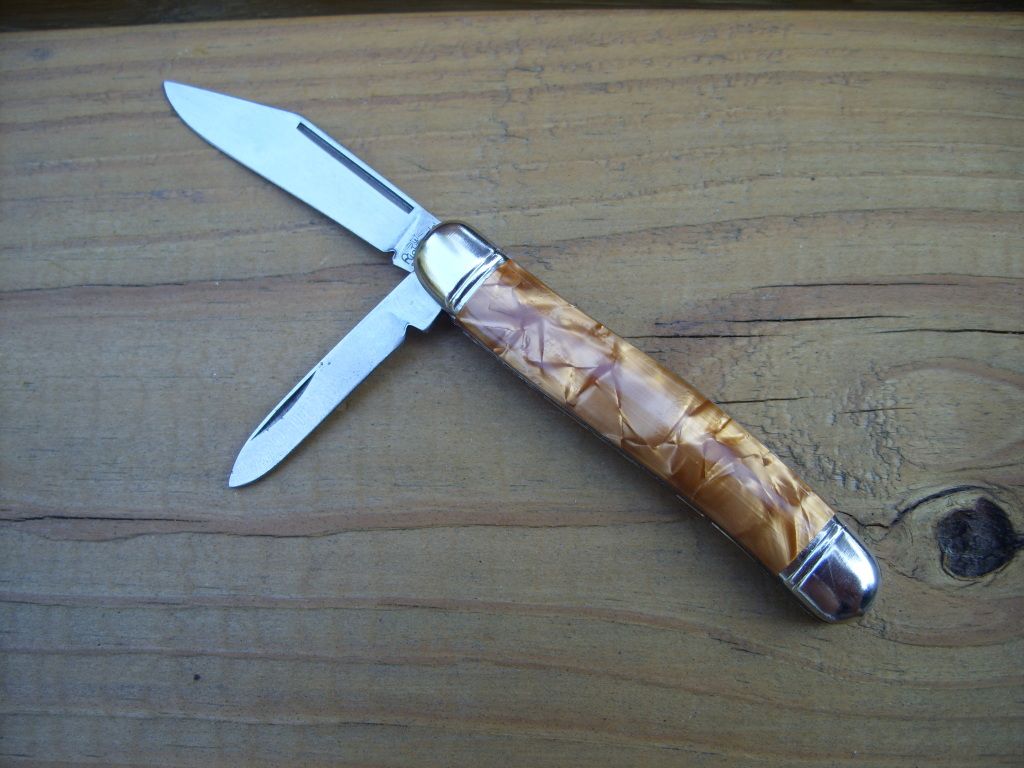
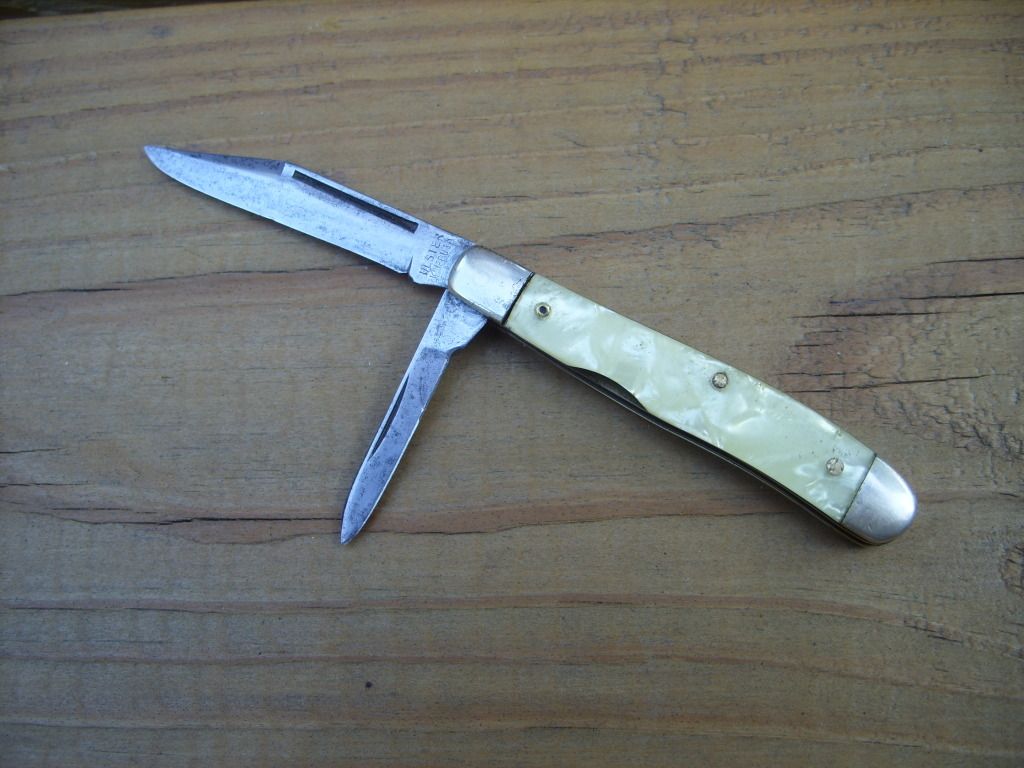
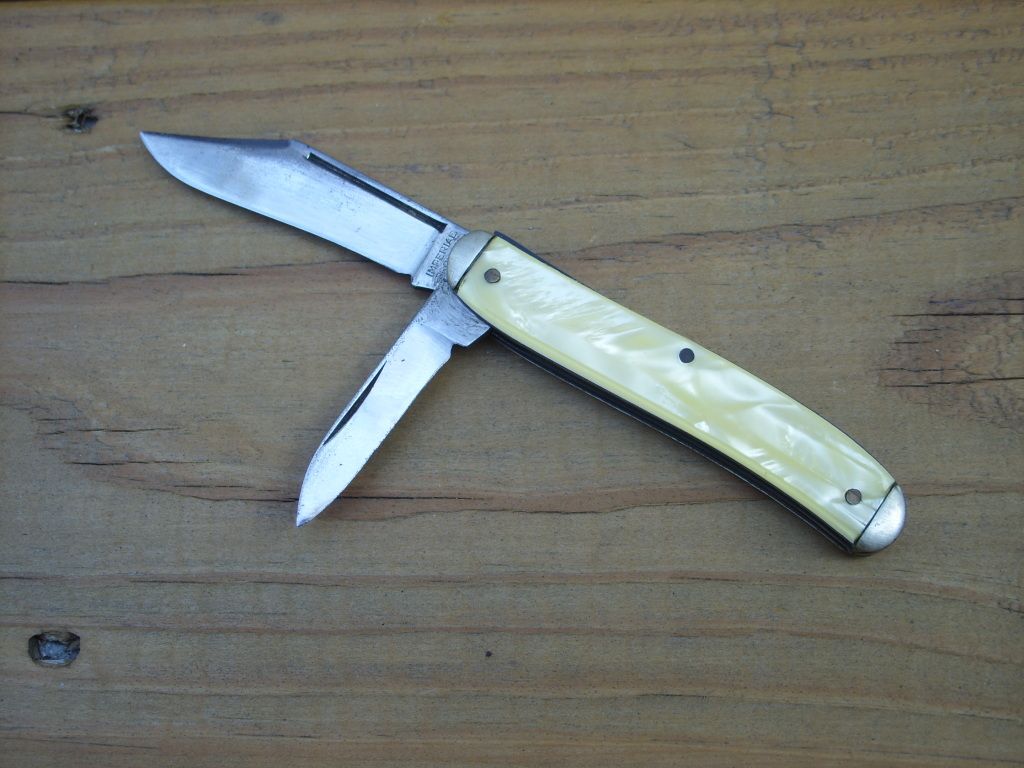
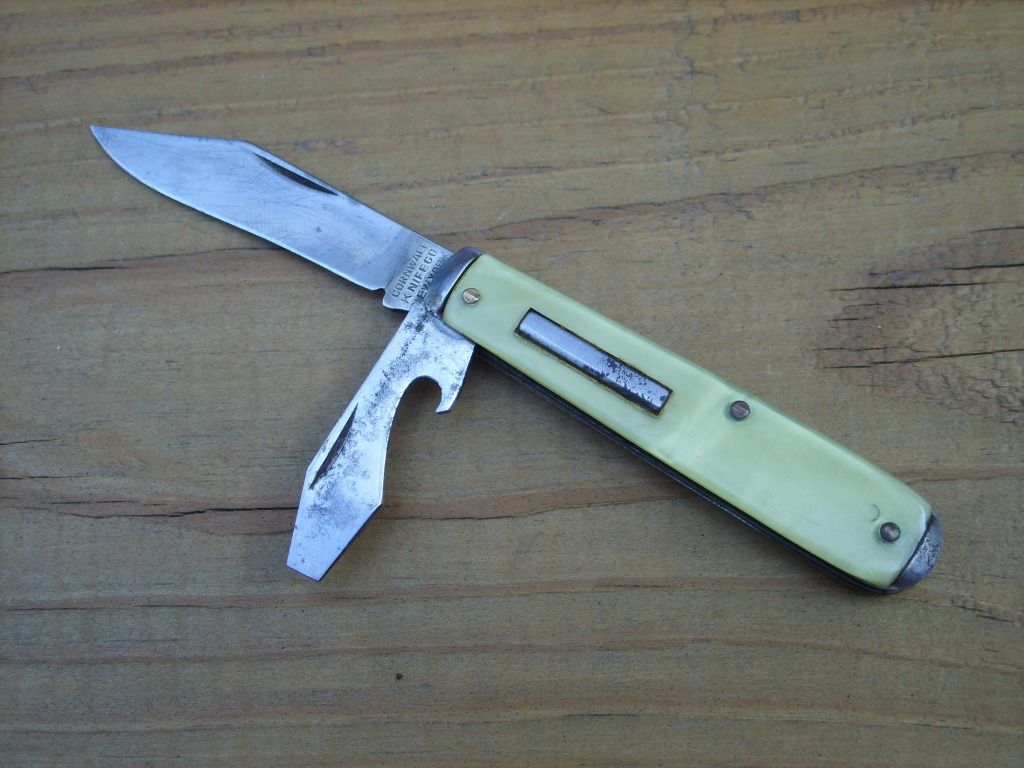
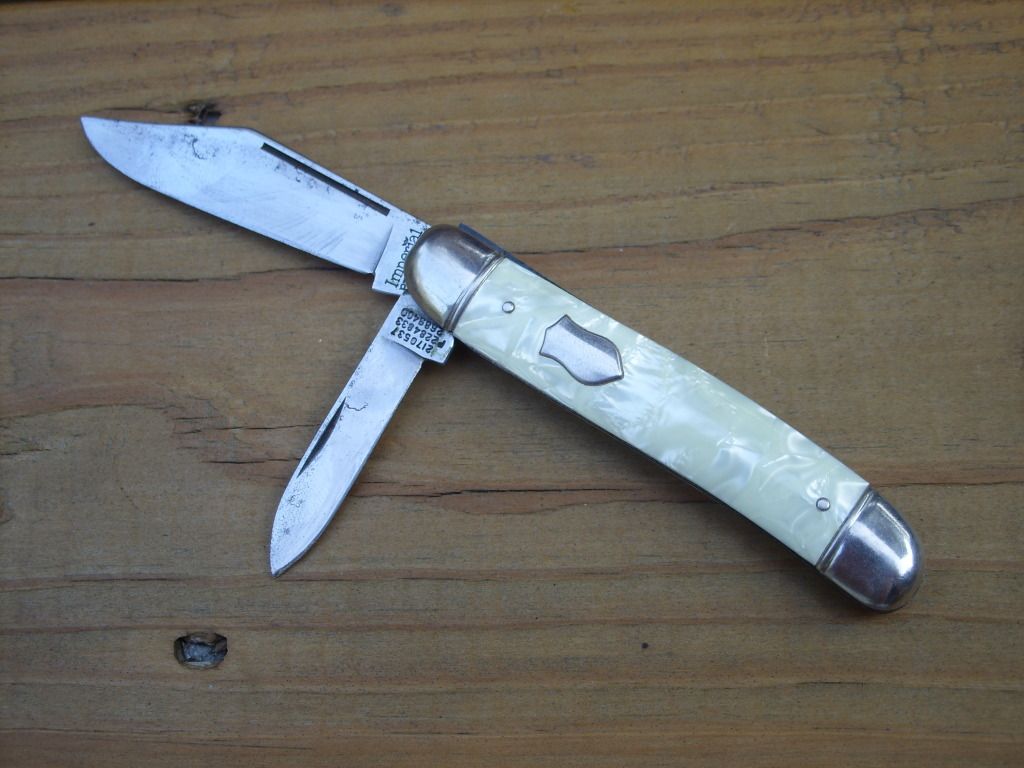
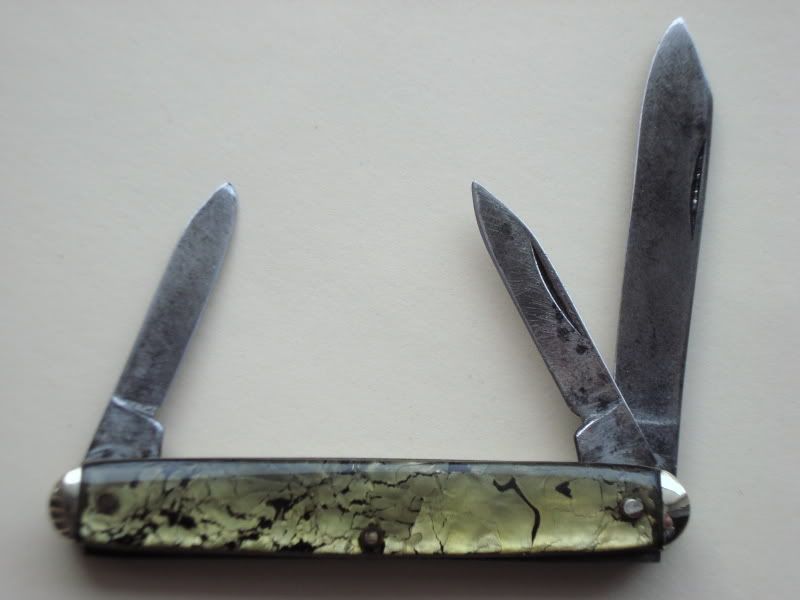
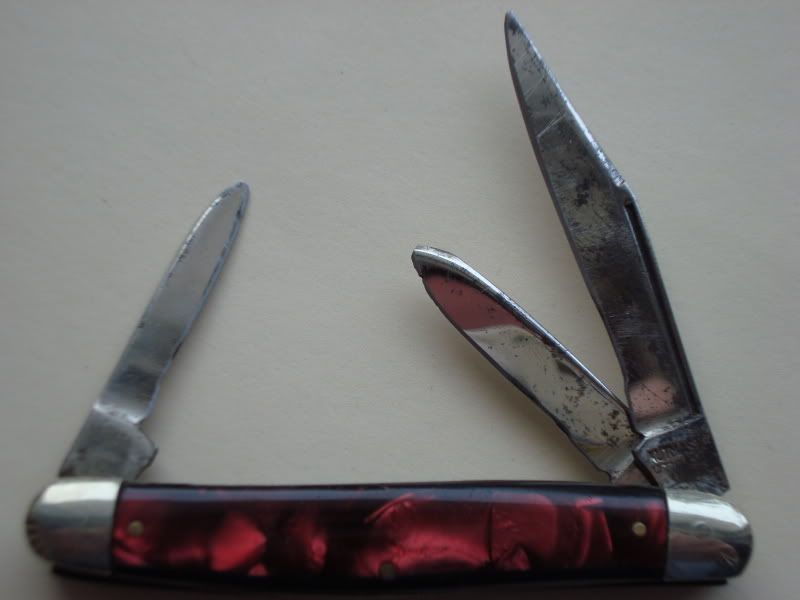
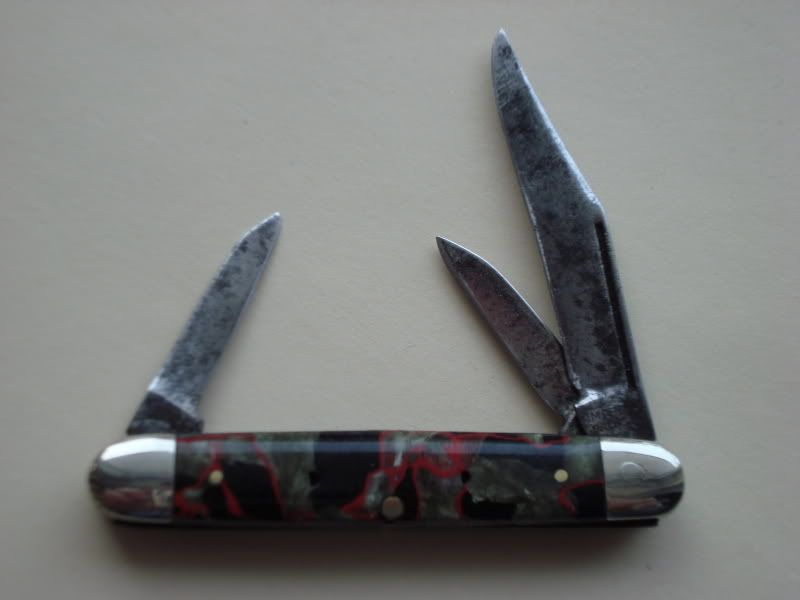
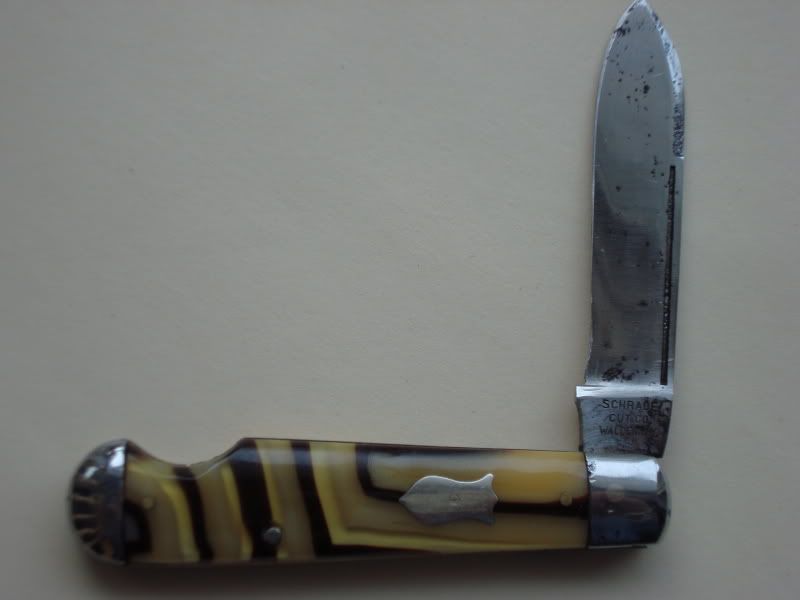
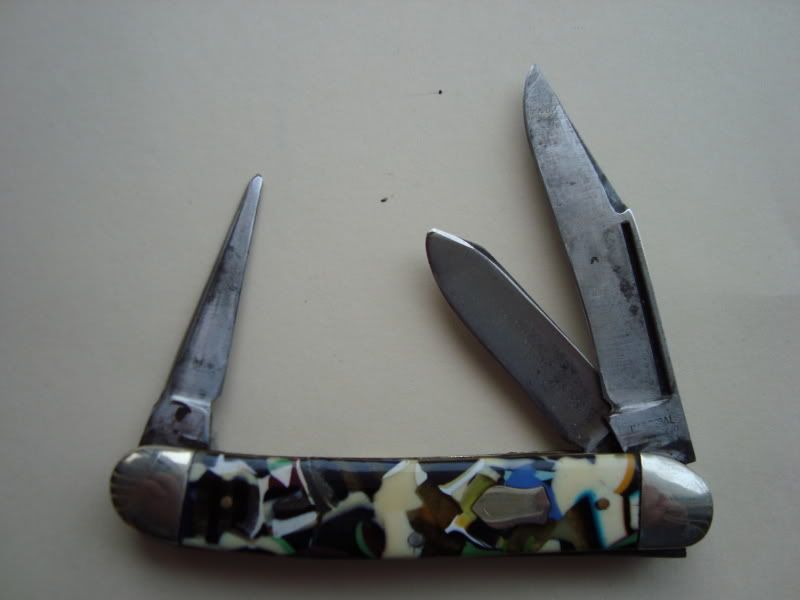
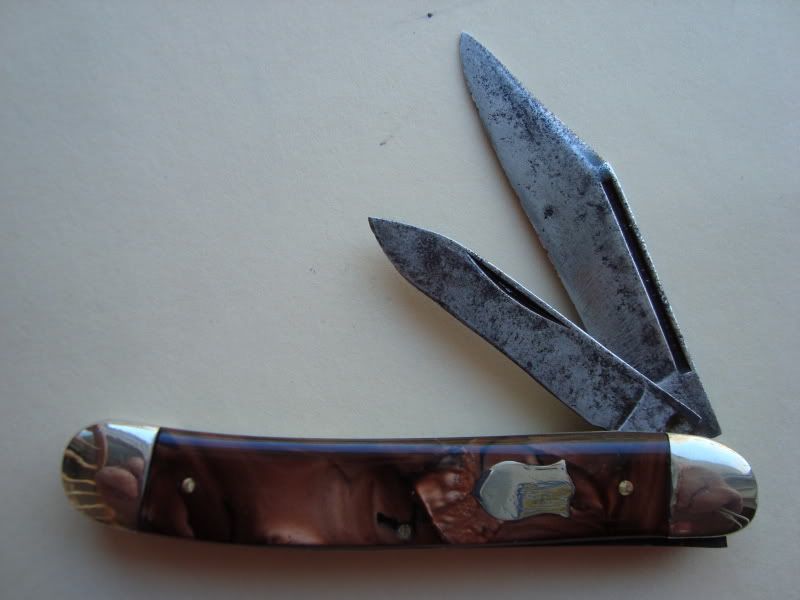
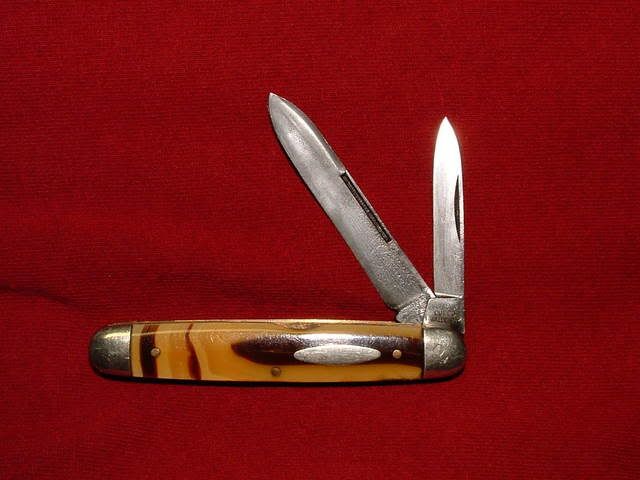
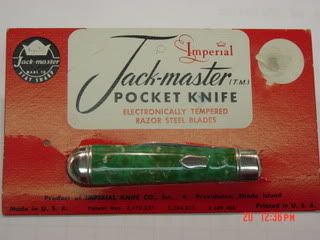
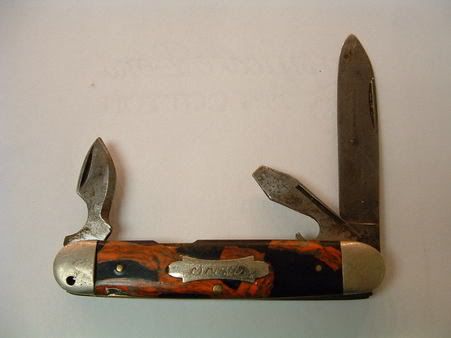
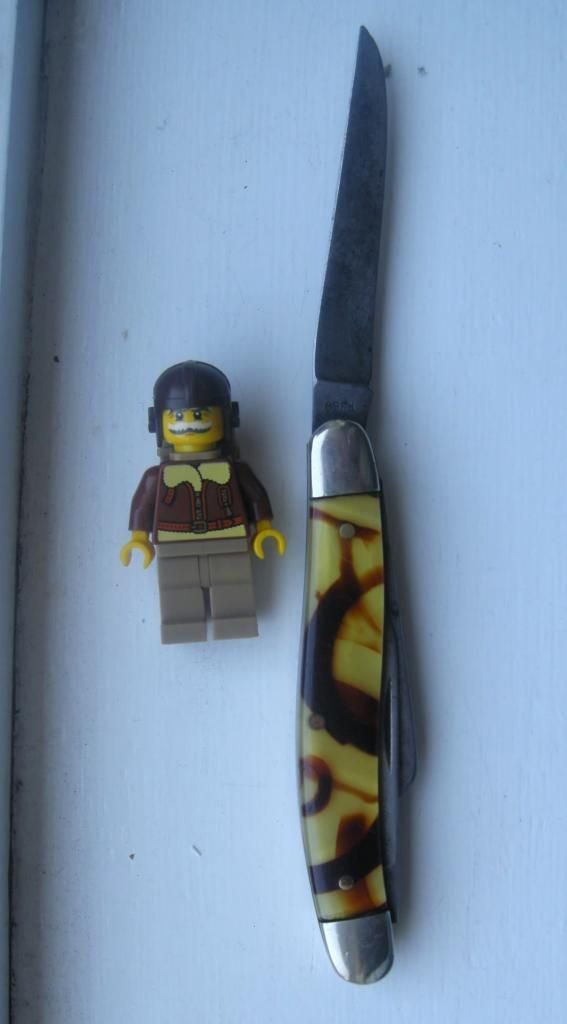
Celluloid has a fascinating history as one of the earliest plastics, with a chemistry just slightly removed from gun cotton. As Sword and Shield mentioned, it seems that the cell that has the most fillers is the most stable, the least stable being clear (used in advertising knives like we would see Lexan today), and I've read that the "Christmas tree" colors (lots of metal flakes) are the least. Ultimately though it depends on who made it, the exact balance of the chemistry (nitric acid, cellulose fiber etc.), how long it was cured etc.
Here's a fascinating article I found linked somewhere here:
http://www.oregonknifeclub.org/celluloid_02.html
When I was a photography student I always wondered why the film we used was called "safety film", being made out of cellulose acetate. Original motion picture film made from cellulose nitrate was so flammable that projection booths had quite a bit of fire suppressing equipment installed because the original projectors used lighting sources that created a lot of heat. Once cellulose nitrate starts burning it doesn't want to stop as it creates its own oxygen.
Decomposing celluloid (nitrate) destroys the knife because of the release of nitric acid. It's unfortunate that something that is unstable can also be so beautiful, I have yet to see handles in acrylic or other plastic that look as terrific as celluloid.
Also, I know guitar players that will only use celluloid (Fender tortoise) picks, they 'sound' different than other materials. As a lousy guitar player I don't know, but I do know that the Fender picks are extremely flammable...