- Joined
- Mar 2, 2010
- Messages
- 1,416
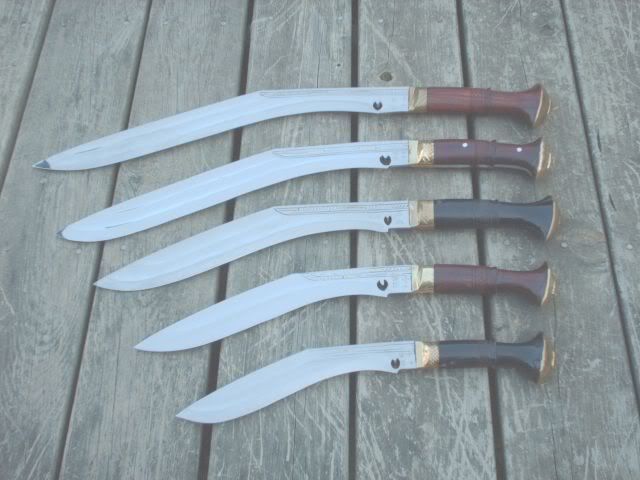
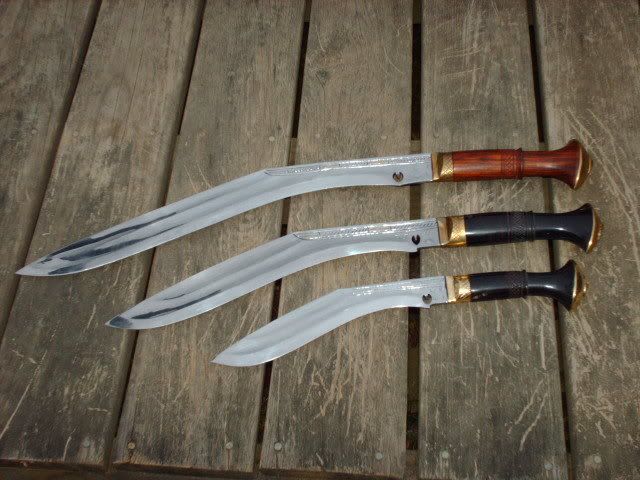
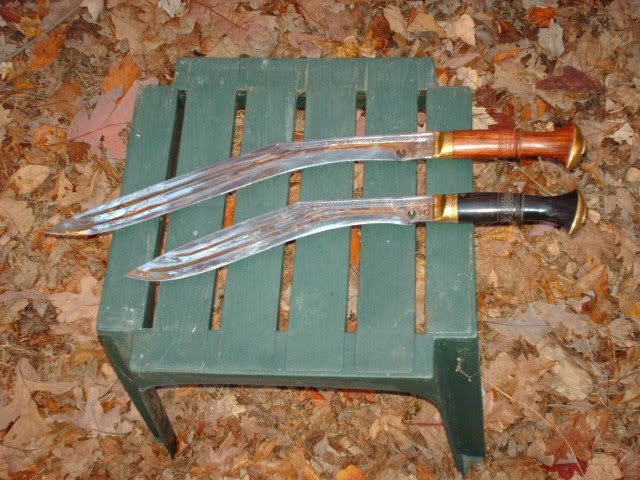
So, I thought it would be a good idea to do a comparison between two similar style blades. Both are slim and fast in a fight and would serve the martial artist well. I also find that they are very useful as camp blades. They may not chop as well as some of the "Big Choppers" but they will chop and baton well enough plus this style of blade allows one to skin an animal and do food prep a lot easier then one of the "Big Choppers" IMO as well. So first off here they are side by side along a ruler (scale is inches):
 They both have a similarly ornate "Sword of Shiva" on them complete with brass inlay work. The first obvious difference we see is the cho, the Sirupati (top) has the cho you can see on most of the khukuris HI sells while the Chitlangi's cho is enclosed, sort of a heart shape to it plus there is a sort of a protrusion under the cho which would serve to keep the blood from running down the blade should it be needed.
  Another thing to notice are the bolsters, the Sirupati again is plain and typical of most khuks while the Chitlangi has a cross hatch pattern on it making it a bit more ornate.
 Moving now to the handles of the pair, ignoring the different woods and looking only at the differences in style again. The Siru has a fairly basic handle typical of most hidden tang khukuris. It has the typical flare ring to place between your third and fourth finger and other than a few other carved rings, looks fairly plain (other than being a pretty nice piece of neem). The Chitlangi however has a bit more ornate handle. Notice the cross hatch pattern carved into ti, this is fairly typical of this style of blade. Also note the much larger bell flare, this makes holding the blade a lot nicer IMO. Next, look at all that wonderful brass on the pommel cap of the Chitlangi verses that of the Sirupati...


Both have a similar profile to the spine however. This should be expected as they are both fighters.

Another major difference is the presence of a fuller (or fullers on some styles) on the Chitlangi
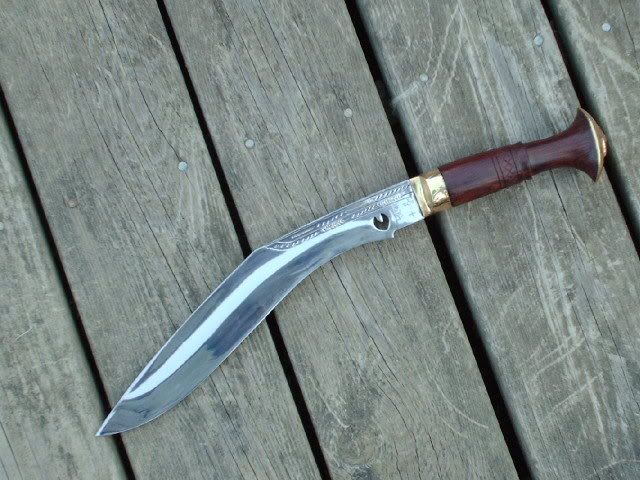
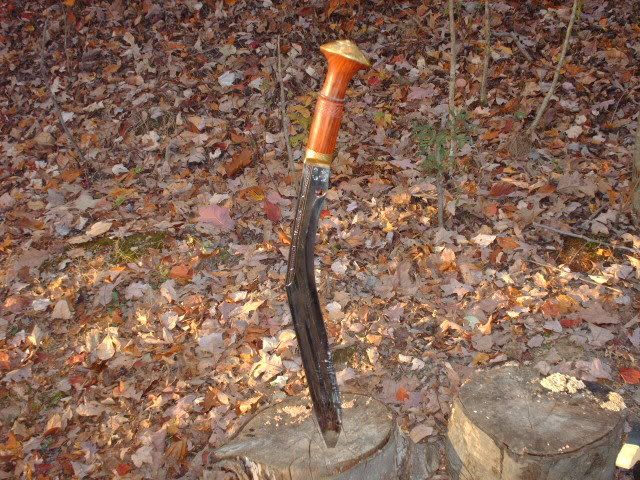
It is hard for one person to do an "In Hand" comparison but this should do...

Overall, I think this should serve to show the major differences between these two styles of khukuris. Why this is important to me is they both seem to have a similar function. Both of these styles of blade would serve you well as a self defense khukuri and IMO, both would serve well as camp blades. Why I prefer the Chitlangis is the big bell shape to the handle and the fullers on the blade. I always like the look and feel of a fullered blade and the big, brass covered pommel bell just has a great look, especially coupled with the geometric carvings on the wood and bolster that these always seem to sport. Buy both and see for yourself I guess is the only way to be sure though.
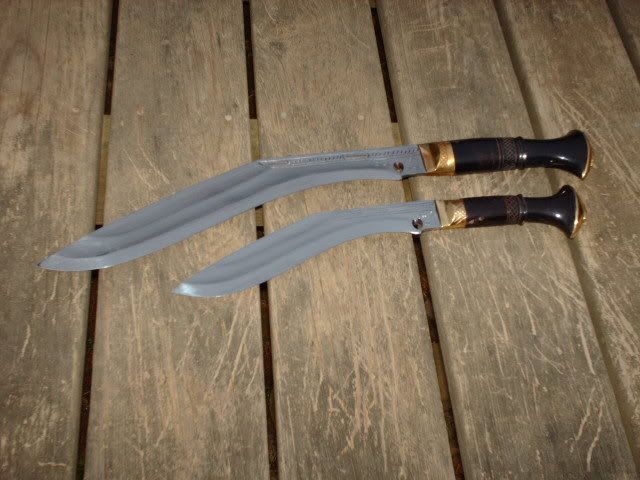
Panchthar Chitlangi on top, Sirupati on the bottom

Unfortunately I didn't have two of the same size to compare so try to ignore the obvious size difference for this comparison and lets look at some of the differences in each style instead. Another thing to notice are the bolsters, the Sirupati again is plain and typical of most khuks while the Chitlangi has a cross hatch pattern on it making it a bit more ornate.Both have a similar profile to the spine however. This should be expected as they are both fighters.
Another major difference is the presence of a fuller (or fullers on some styles) on the Chitlangi
It is hard for one person to do an "In Hand" comparison but this should do...
Overall, I think this should serve to show the major differences between these two styles of khukuris. Why this is important to me is they both seem to have a similar function. Both of these styles of blade would serve you well as a self defense khukuri and IMO, both would serve well as camp blades. Why I prefer the Chitlangis is the big bell shape to the handle and the fullers on the blade. I always like the look and feel of a fullered blade and the big, brass covered pommel bell just has a great look, especially coupled with the geometric carvings on the wood and bolster that these always seem to sport. Buy both and see for yourself I guess is the only way to be sure though.