

- Joined
- Aug 27, 2004
- Messages
- 2,701
I recently posted a picture of a slipjoint with coined liners and was asked if I could show my method for achieving this look.
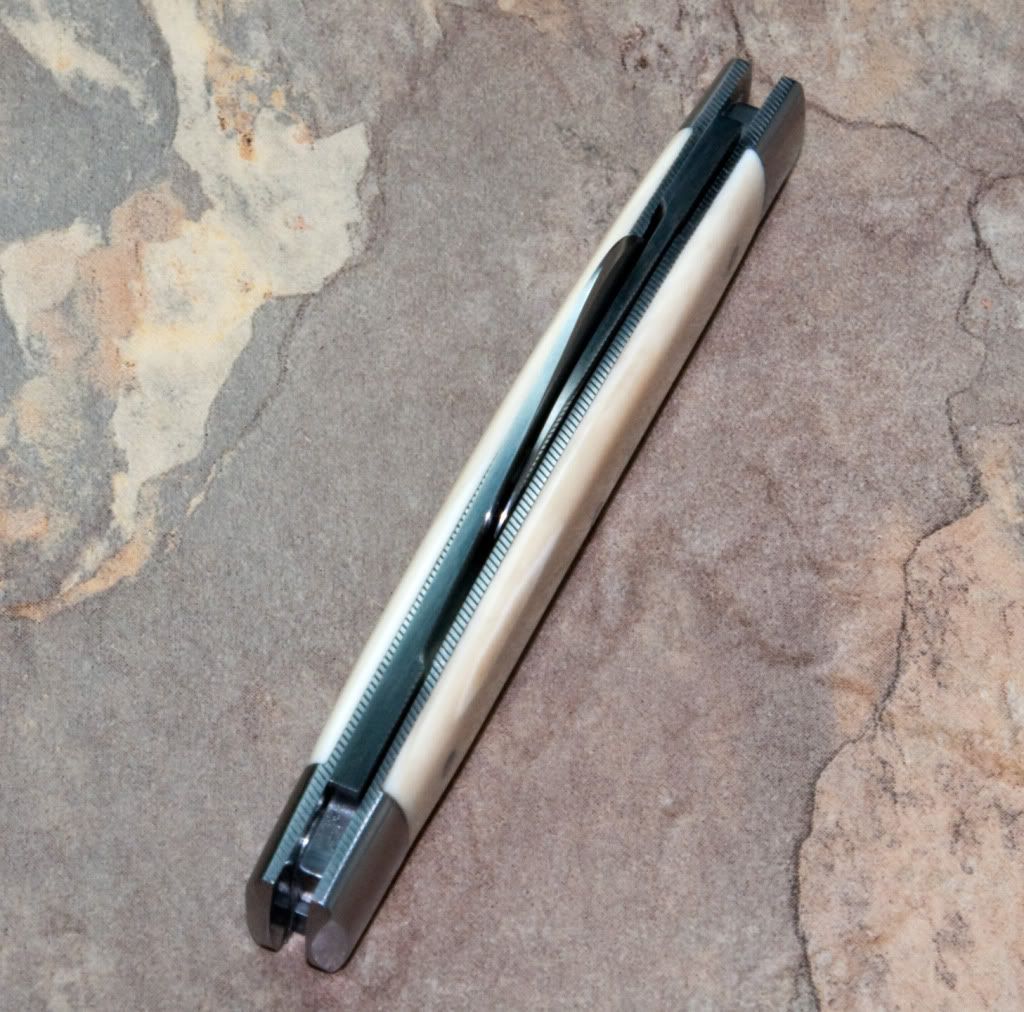
This operation is quite simple but does require that the knife is just about finished.
Tools needed;
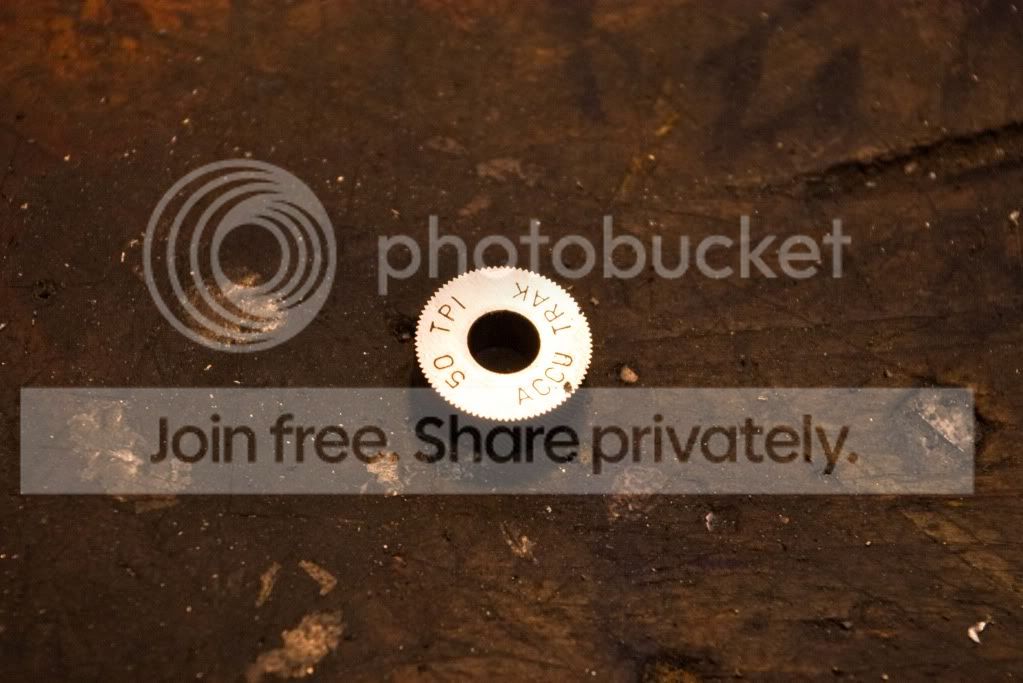
Knurling wheel, available from many tools suppliers. The one I use is 50 TPI with a .250 center hole. While mine has slanted lines, they are available with 90 degree lines also.
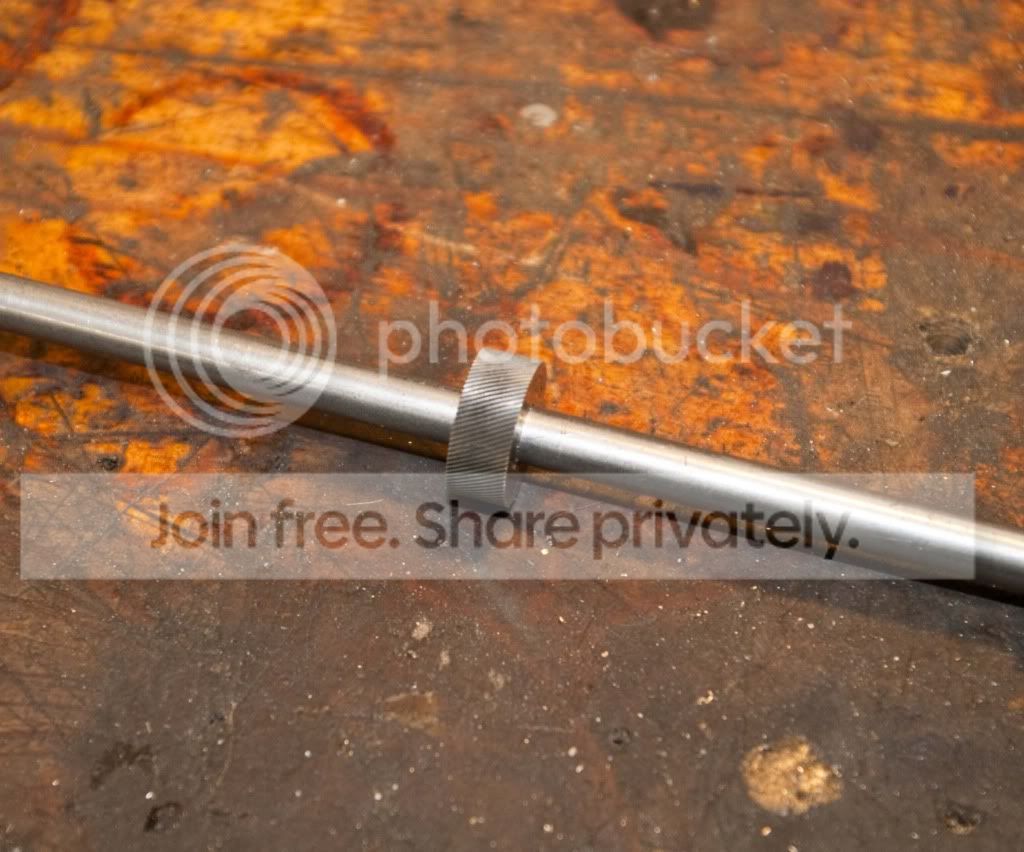
Some sort of mandrel or two sided handle for the knurling wheel to spin on. I just used a piece of .250 round stock, but I may make a holder with wooden handles. It would offer a bit more control.
Padded vice to hold the liner stable while coining.
The pictures are pretty much self explanatory.
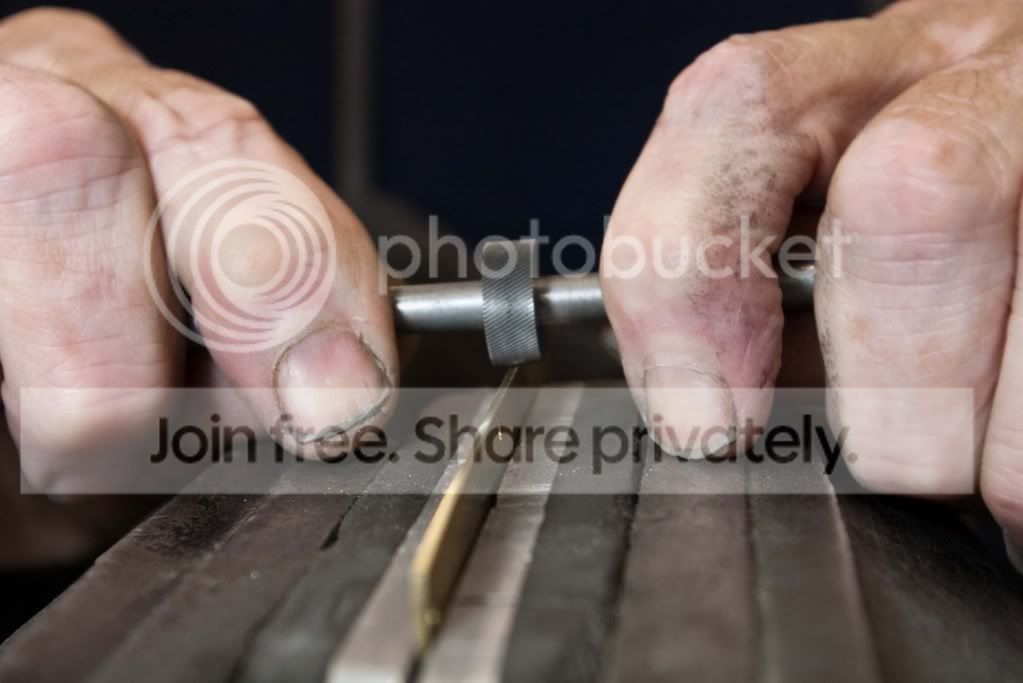
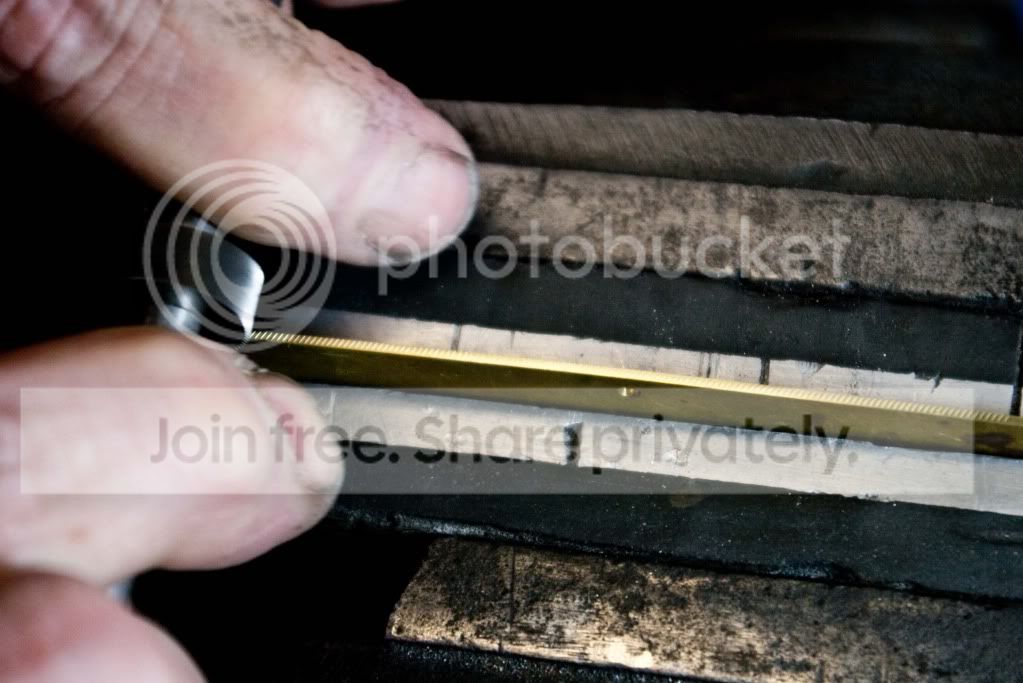
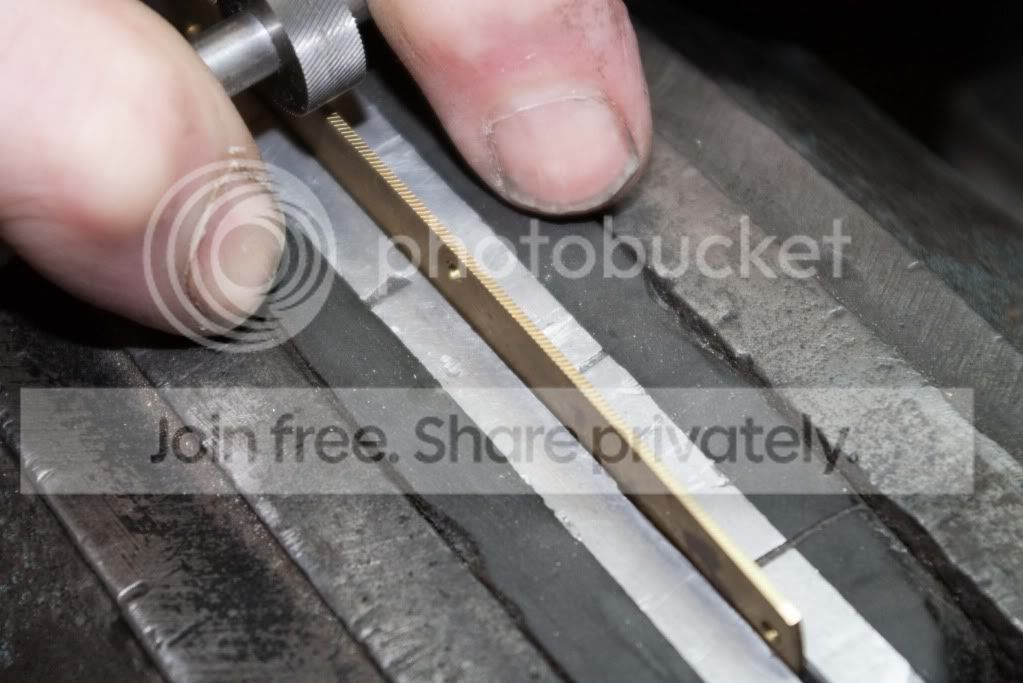
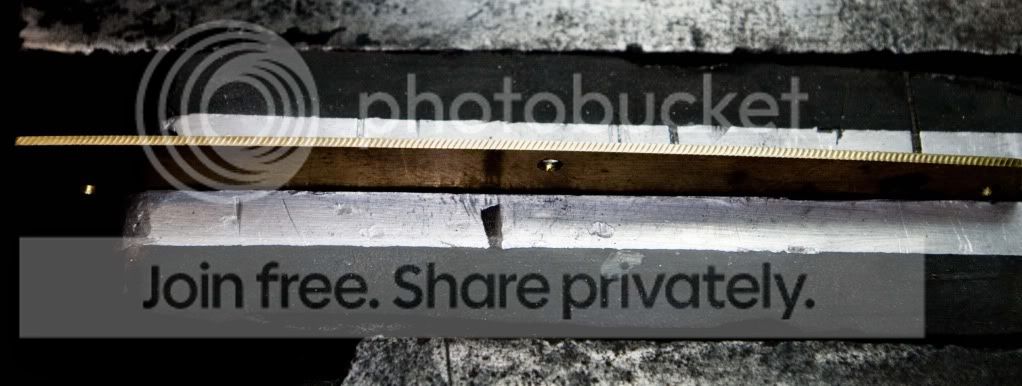
While coining a brass liner in the pictures I had sitting around I use this same method on 410 stainless steel liners with equal results. I take the liners to at at least a 400 grit or finer. After coining I finish up with a 800 to 1000 grit backed up with something hard as to not wash out the coining.
I am sure I may have missed something here, please feel free to ask any questions you may have!
This operation is quite simple but does require that the knife is just about finished.
Tools needed;
Knurling wheel, available from many tools suppliers. The one I use is 50 TPI with a .250 center hole. While mine has slanted lines, they are available with 90 degree lines also.
Some sort of mandrel or two sided handle for the knurling wheel to spin on. I just used a piece of .250 round stock, but I may make a holder with wooden handles. It would offer a bit more control.
Padded vice to hold the liner stable while coining.
The pictures are pretty much self explanatory.
While coining a brass liner in the pictures I had sitting around I use this same method on 410 stainless steel liners with equal results. I take the liners to at at least a 400 grit or finer. After coining I finish up with a 800 to 1000 grit backed up with something hard as to not wash out the coining.
I am sure I may have missed something here, please feel free to ask any questions you may have!
Last edited:


