Combination & Compilation of Crucible's Comparagraphs

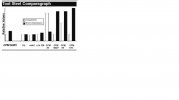
OK, but S110v isn't on the chart, so I know nothing about it. . . .

That's the point. The chart is only a starting point. Geeze, S90V looks pretty hot. I should ask about it and check into it a bit more. Dan's charts aren't suppose to provide answers. They are supposed to provide questions - starting points.

BTW, S110V looks like it is probably all that and a bag of chips. :) ... but that's just a starting point. I think you'd have fun exploring it.

Rob!
 
Here's some more numbers I just got while trying to figure out how to temper my s30v.

Questions, not answers. I need to ask more questions about s9v. That looks to be phenomenal. Got any of that in your stash?
 

Attachments

  • comparagraph.jpg
    comparagraph.jpg
    14.1 KB · Views: 29
OK, their site is offline. Tell me what you were trying to show me, please. Amazing numbers in both categories. I guess the question is, how expensive is it? That, and no one seems to have any.
 
OK, their site is offline. Tell me what you were trying to show me, please. Amazing numbers in both categories. I guess the question is, how expensive is it? That, and no one seems to have any.
It only has high toughness to go with its wear resistance because it is designed not be hardened past 56 Rc. When it is used at higher hardnesses for proper knife performance it is much more brittle. 10V is a better choice for high wear resistance and 3V is a better choice for high toughness.
 

So would "toughness" mean like how easily it breaks under stress (like a crowbar needs to be tough)

and "wear resistance" would mean more like abrasive resisting properties (like a kitchen knife should be more wear resistant)

Would wear resistance also mean that a steel with high wear resistance is harder to grind if it is hardened before grinding than a steel with lower wear resistance?


Am I understanding this fairly correctly?
 
illl jsut go ahead and say yes to the part about more wear resistance harder to grind after HT matter of fact i take 10v and s125v to 99% finish before heat treat cause its that bad to grind

so far as the links i googled them this morning and they work for me
So would "toughness" mean like how easily it breaks under stress (like a crowbar needs to be tough)

and "wear resistance" would mean more like abrasive resisting properties (like a kitchen knife should be more wear resistant)

Would wear resistance also mean that a steel with high wear resistance is harder to grind if it is hardened before grinding than a steel with lower wear resistance?


Am I understanding this fairly correctly?
 
Butch, may I call you Butch? Thanks for the clarification. Yes, their sites are online now.

So, what's the ultimate steel for a fillet knife? I want something that will stay super sharp after cutting through all the bones. S90v? Why wouldn't I want 56rc for a knife? I thought 56rc was in the 55-60 range that was preferred?
 
Butch, may I call you Butch? Thanks for the clarification. Yes, their sites are online now.

So, what's the ultimate steel for a fillet knife? I want something that will stay super sharp after cutting through all the bones. S90v? Why wouldn't I want 56rc for a knife? I thought 56rc was in the 55-60 range that was preferred?

Butch is fine (dont mister me :) )

i knwo of makers that havge made fillet knives in 440c cpm154 s30v and s90v
the hardness that you are lookijng for is dependent on the steel choice. flexabilty is based on how thin the blade is ground not hardness
Phil Wilson makes a killer blade in s90v and i think he runs then at 62 hardness
 
So would "toughness" mean like how easily it breaks under stress (like a crowbar needs to be tough)

and "wear resistance" would mean more like abrasive resisting properties (like a kitchen knife should be more wear resistant)

Would wear resistance also mean that a steel with high wear resistance is harder to grind if it is hardened before grinding than a steel with lower wear resistance?


Am I understanding this fairly correctly?

Toughness probably refers to shock absorption and how much it can dissipate energy instead of bend toughness is its based off of Charpy. More like smashing a knife into a rock instead of using it as a crowbar I would think.

Not sure why a kitchen knife would need a whole lot of wear resistance, especially compared to some of the tasks performed with other knives, like cutting several hundred feet of cardboard or rope, and in general more wear resistant steel is harder to grind and sharpen. Especially ones that gain their wear resistance with high vanadium content like Crucible steels since the Vanadium carbide is harder than most conventional abrasives.
 

Oh I like this part (below), explains a lot of issues with everyone's favorite trick, batoning knives through frozen wood.

"There are several variables that have a profound influence on the toughness of a material. These variables are:

Strain rate (rate of loading)
Temperature
Notch effect

A metal may possess satisfactory toughness under static loads but may fail under dynamic loads or impact. As a rule ductility and, therefore, toughness decrease as the rate of loading increases. Temperature is the second variable to have a major influence on its toughness. As temperature is lowered, the ductility and toughness also decrease. The third variable is termed notch effect, has to due with the distribution of stress. A material might display good toughness when the applied stress is uniaxial; but when a multiaxial stress state is produced due to the presence of a notch, the material might not withstand the simultaneous elastic and plastic deformation in the various directions."
 
Last edited:
Toughness here means resistance to impact, like when you accidentally hit a rock with your machete. Wear resistance and abrasion resistance are the same thing for knives, and high wear resistance means it will take a long time to grind that chip out of your machete edge.
 
Back
Top
