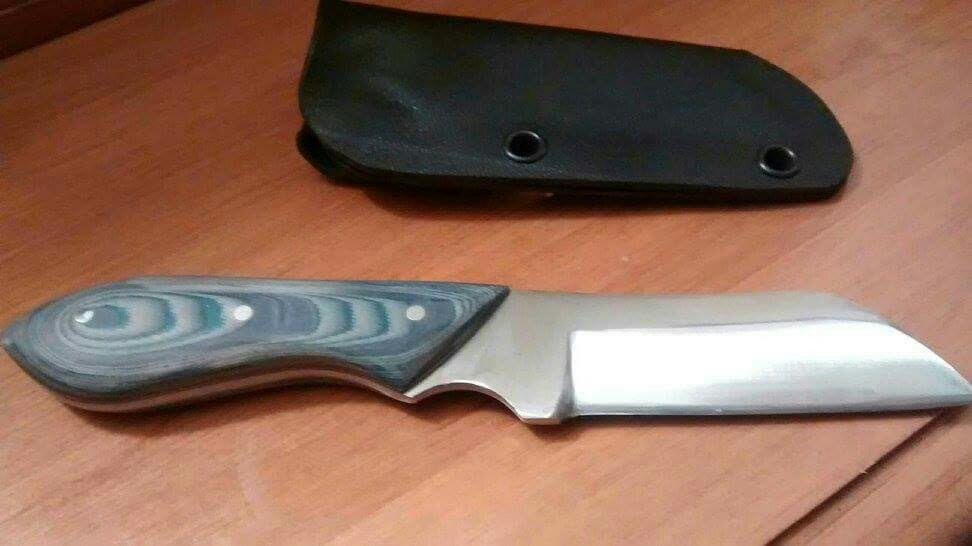
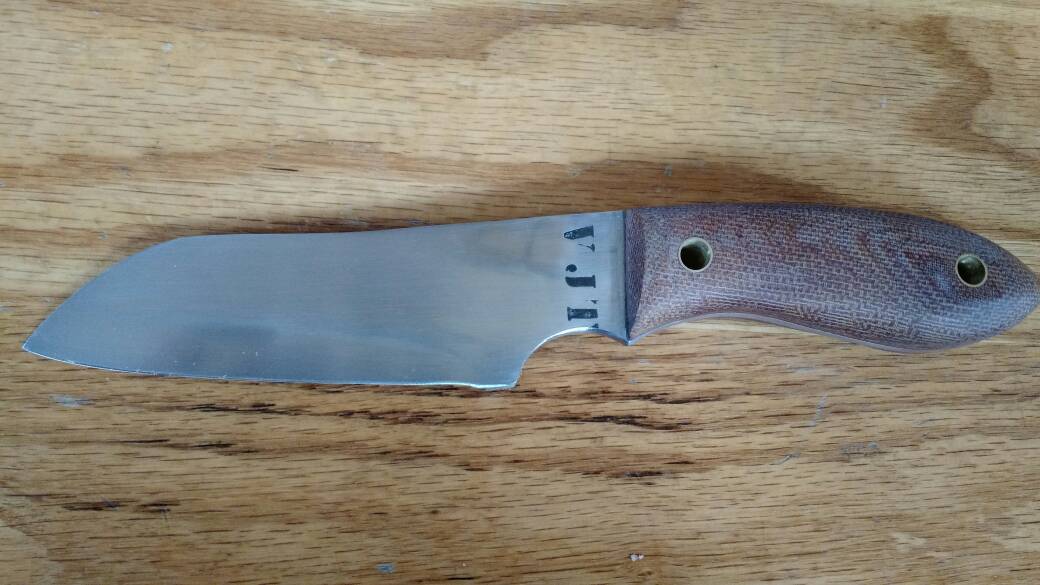
Could we discuss some chisel/assym grinds?

Joined
Sep 5, 2010
Messages
876
I know they aren't for everyone. I also have no allusions about them being supposedly sharper or any of the marketing nonsense. Feel like a lot of threads regarding them then sour quick. I would like to avoid this.

I personally love the grind. More for its oddness than anything. For those of you who do them (fairly, vigil, mason, tendick) I would appreciate you pros opinions but anyone's insight is very much apprexiated!!. Pros and cons to say doing main grind on strong side whatever hand you are, not presentation side as in say Emerson then doing the main bevel on the non dominant side at around 25-30 degrees total or would it cut better truly chisel with the grind and the bevel on the same side?

Appreciate yalls time 😈👊
 
Putting the grind on the presentation side due to it looking better in pictures is the single most retarded idea when it comes to chisel grinds.
 
Putting the grind on the presentation side due to it looking better in pictures is the single most retarded idea when it comes to chisel grinds.

Thank you.
That's one of my main problems with serrated knives; for slicing anything accurately anyway; I'm right handed; they put the bevel on the left side so the knife moves to the right as I cut. Assuming I AM cutting a thin slice and not cutting the middle of a rope.
 
A chisel grind is merely for function. I should have a purpose in the cutting. Making the back side as flat as possible, or even better urasaki, is of prime importance. The main bevel should be flat and crisp. If you don't have the equipment time, or patience to lap things flat, this is not the grind for you.

Adam is right about the placement of the bevel. It should be places for proper cutting. Since most knives are viewed held in the right hand, the bevel is on the back side for right handed people.
In some woodworking and some other knives, like kiridashi, it is on the show side. On kitchen knives and kwaiken, it should be on the back.

I like to put on a very tiny microbevel to strengthen the edge. I use 15° for this.
 
I have done several chisel ground smaller knives. I don't know why, but I really like the look of a Wharncliffe chisel grind. The function is excellent in my opinion as well.

25970978844d1734fa73148c3751f4ca.jpg


2b8844411bf799130f468a0cf53879e6.jpg


3e4f09f9d6d91415c173a3f503c78bdf.jpg


2b00311cc5f6949526fc3511fee56cc1.jpg


2f55c81850db3b1be211e29c406b26bc.jpg
 
From a lot of time spent around older Filipino stuff, I've come to the conclusion that the chisel grind came about because it's easier to forge weld a thin strip of hardenable steel to one side of a hunk of softer stuff than try to do a sanmai build-same goes for the Japanese stuff done that way. IMO it started as a conservation-of-materials technique (since in a bush knife/chopper it requires you to adjust the way you work to the knife)
That being said, if they're built to suit the handedness of the user I do enjoy a chisel grind now and again.
 
I grind mine dependent on the what your dominant hand is. Right or left handed.

I take them down to a very thin edge, sub .010" and then put a micro bevel on the backside (flat side). and buff/strop the bevel side.
This makes it very easy to touch up the edge without messing with the bevel finish.
Easy peasy, scary, scary sharp.
 
I do Urasuki / Urasaki ( I have seen it spelled both ways) grinds for the simple ease for quick sharpening.
 
The correct spelling is URASUKI. "Ura" means "back," and "suki" means "hollowed out" in this context.
 
Thanks guys. Appreciate all the posts. I haven't tried bevels on the backside yet but sounds awesome. Giving it a try in the morning.
 
a shoe makers knife is chisel ground with the bevel on the left side.
You use it cutting towards you. If you cut to far the grind will let the cut direct away from the shoe
 
I need a diagram...

The main thing is that a true chisel grind can plane into a surface and therefore cut more aggressively. Another big point is that there are less shoulders or angles to add resistance. This is debatable but I'd say true given the exact same edge geometry angle wise with only the amount of bevels changing.

That being said there are many ways to make a great knife and a chisel grind is just one of them. I feel that overall edge geometry plays a bigger role.

Emersons still work quite well (from my experience) with the unusual edge geometry they have, I was gifted one by a customer and it is very impressive, I was a bit surprised given that I grind mine with a bevel that is on the right side for a right handed person. The edge is thicker, grind is steeper and on a different side than I do but I'd say it is a great example of a well executed knife because it really cuts nicely!

I like "back bevels" on some of my chisel grinds, this adds versatility and great ease of sharpening with the tradeoff of less aggressive cutting.

Back bevels are also nice on complicated compound chisel grinds as you can sharpen from the back of the grind. I just finished one up with the tiniest back bevel done with a low angle quick pass at 120 then several passes at 800 for a much easier to sharpen knife that still has that aggressive feel.


I've done just about every variation of a chisel grind, double grind, compound, back bevels, Ura, zero bevel, zero convex, zero chisel, hollow, flat, convex and combos of all... any can really rock when done well!
 
Daniel thank you for chiming in! Ben or yourself when you guys do sharpen on the flat side which sounds great what angle would you recommend? Given that it's ground on the opposite side? Would 30 be too obtuse?
 
Back
Top