
Here is yet another affordable hatchet review. For this one I will be looking at the Craftsman 1.25lb Camp Axe. The axe head has a clear coating, which I removed before the testing.
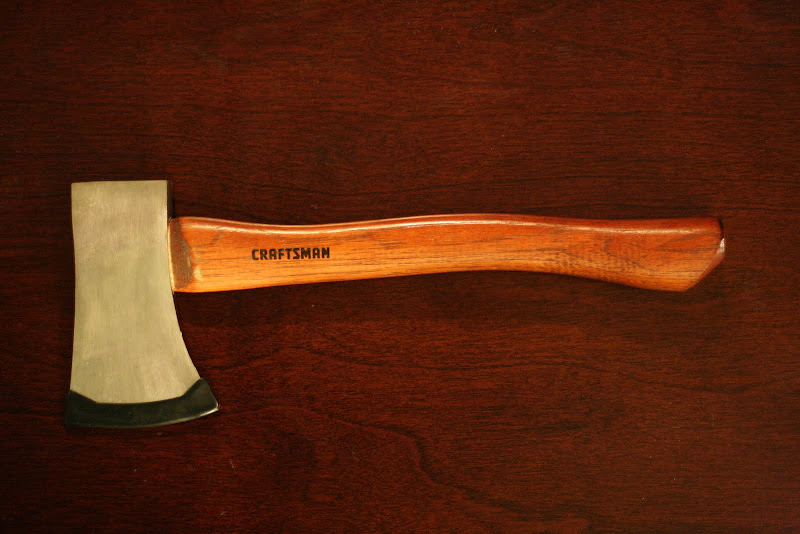
Specifications:
Manufacturer: Sears
Axe Head Weight: 1.25 lb
Axe Length: 14 inches
Axe Head Material: Unknown carbon steel
Handle Material: Hickory
Cost: $17.00
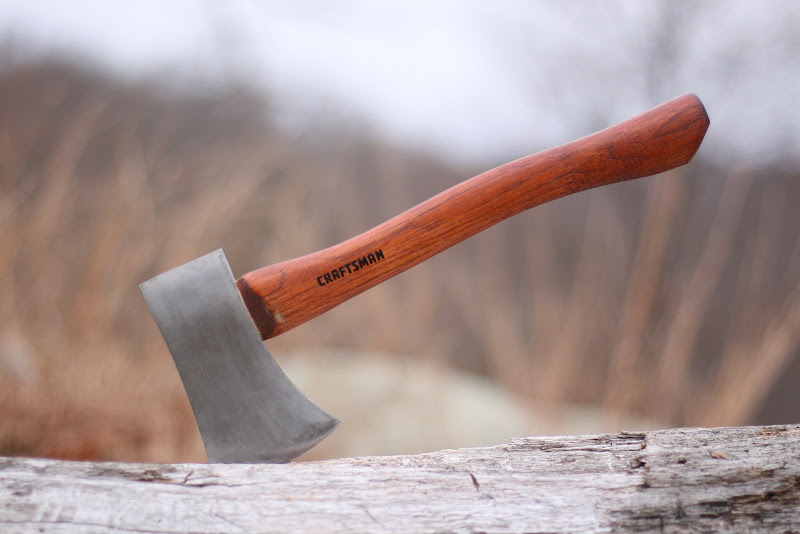
This is not the cheapest hatchet on the market, but it is still what I would consider a cheap hatchet. The reason why I wanted to test it is because it has a very good and solid look to it, and I wanted to see if the performance would keep up with the expectations.
For this review, just like with all other hatchet reviews I do, I will be comparing it to the Gransfors Bruks Wildlife Hatchet, a well reviewed and well respected hatchet in the bushcraft community.
Here you can see the Craftsman 1.25 Camp Axe next to the Gransfors Bruks Wildlife Hatchet.
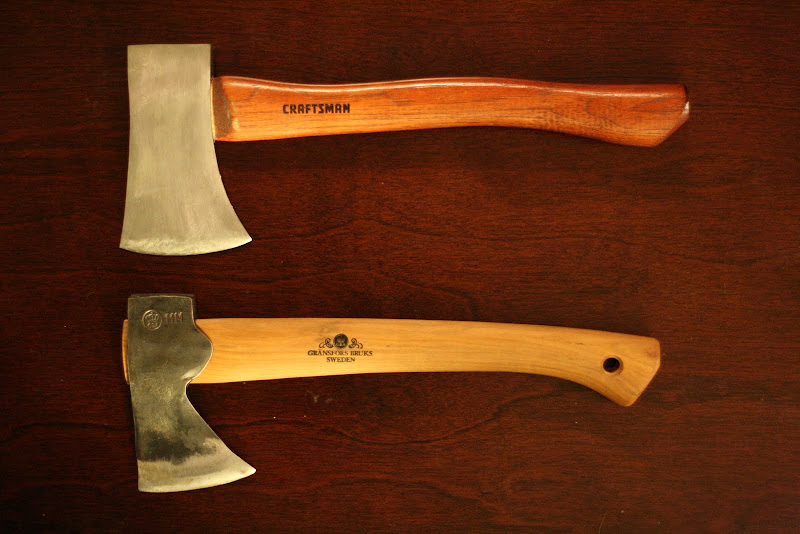

The handles of both hatchets are rated at 14 inches, but while the handle of the Craftsman Camp Axe is exactly 14 inches, that of the Wildlife Hatchet is closer to 13.5 inches, accounting for the difference in the picture. The handle of the Craftsman Camp Axe is comfortable and well finished. It has clearly been stained.
The grain of the handle (left) is very good. Even though it is hard to see from the picture because of the stain that has been used on the handle, the grain is almost perfect.
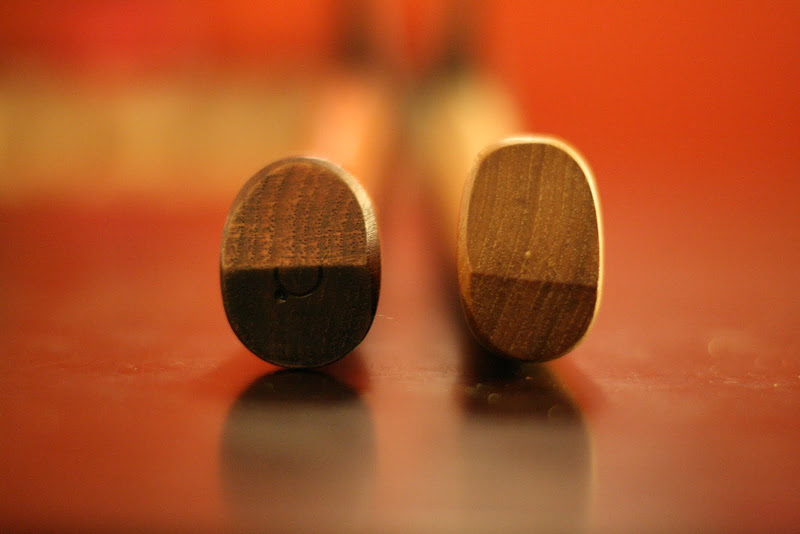
The head of the Craftsman 1.25lb Camp Axe is a quarter of a pound heavier than that of the Gransfors Bruks Wildlife Hatchet. It is attached to the handle using a wooden wedge and two metal wedges. The hardness of the metal is unknown, but did not seem to be particularly soft in any noticeable way.
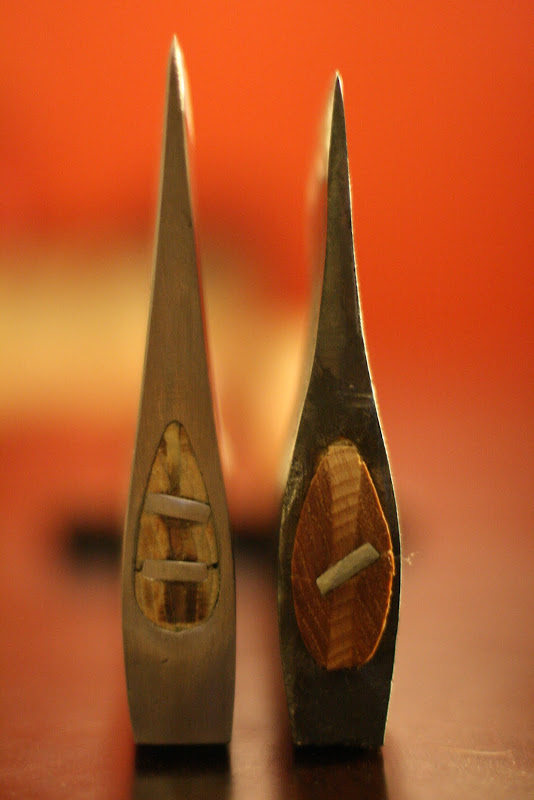
The head has a good overall grind. The cheeks are narrow and the eye is not too wide. The convex of the edge however is fairly wide and thick; much thicker than that of the Wildlife Hatchet. In fact, the cutting edge itself is formed by a small secondary bevel at the tip of the convex grind. The hatchet came completely dull and required work to bring it to a good sharpness. Just like with all cheap axes, I would recommend using a 200 or so grit metal file to start the sharpening process. It will save you a lot of time.
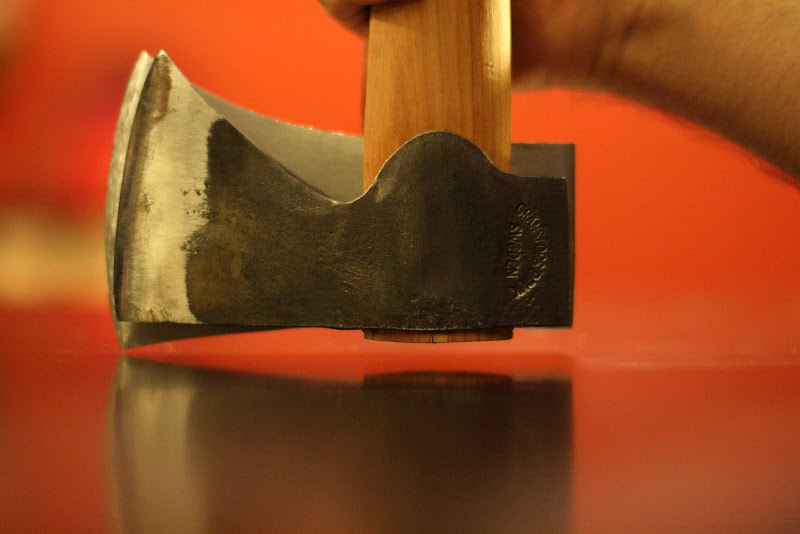
When it came to performance, there was no comparison between the Craftsman 1.25lb Camp Axe and the Gransfors Bruks Wildlife Hatchet. The Wildlife Hatchet significantly outperformed the Craftsman Axe. This was no surprise considering the thick convex grind of the Craftsman Axe.
I did however really like the shape of the craftsman head as well as the handle, so I didnt want to give up on it. I decided to see if I can thin out the edge of the hatchet to make it more closely resemble that of the Wildlife Hatchet. After all, I managed to do it fairly easily with the Northern Tool 24oz Camp Axe. So, I started thinning out the edge using a file. The edge turned out to be thicker than I expected. After two hours of filing, I was nowhere near to approximating the convex of the Wildlife Hatchet. At that point I got up and decided to do some more testing. The thinner edge performed much better, but still fell behind the Wildlife Hatchet.
That is when I noticed an even more significant problem with the Craftsman 1.25lb Camp Axe. As you can see from the picture, the head started to come loose from the handle.
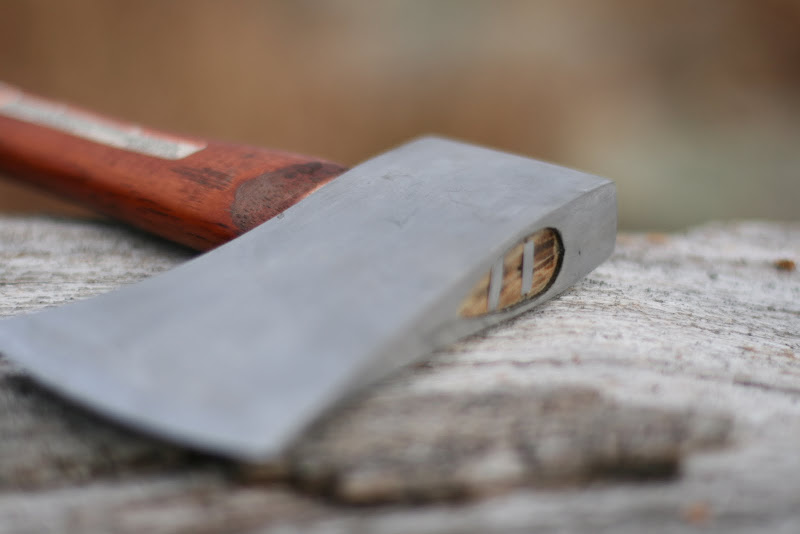
That is an unacceptable failure of the product, as it makes for a very dangerous tool. It also means that the axe has to be re-handled, a task not every one wants to undertake.
The hatchet does not have a full sheath, but does come with a rubber edge cover. It works well to protect the edge, but will most likely fall off in your pack; it did in mine.
I had very high hopes for this hatchet. It looked like a very solid tool. Unfortunately, the testing did not support the original observations. While the head has a good overall grind, the edge is too thick. In fact it was so thick that even with a considerable amount of work I was not able to get it as thin as I wanted. That being said, it is possible to do with additional work. The cheeks are thin enough to allow for a re-profiling of the convex of the edge.
The handle is good, but is not securely attached.
All things considered, even though the Craftsman 1.25lb Camp Axe comes in at just $17.00, I can not recommend it as a purchase. It will just require too much work to bring into working shape.
As far as I know, this is the only bushcraft appropriate axe produced by the manufacturer under this product name.
Ross
http://woodtrekker.blogspot.com/
Specifications:
Manufacturer: Sears
Axe Head Weight: 1.25 lb
Axe Length: 14 inches
Axe Head Material: Unknown carbon steel
Handle Material: Hickory
Cost: $17.00
This is not the cheapest hatchet on the market, but it is still what I would consider a cheap hatchet. The reason why I wanted to test it is because it has a very good and solid look to it, and I wanted to see if the performance would keep up with the expectations.
For this review, just like with all other hatchet reviews I do, I will be comparing it to the Gransfors Bruks Wildlife Hatchet, a well reviewed and well respected hatchet in the bushcraft community.
Here you can see the Craftsman 1.25 Camp Axe next to the Gransfors Bruks Wildlife Hatchet.
The handles of both hatchets are rated at 14 inches, but while the handle of the Craftsman Camp Axe is exactly 14 inches, that of the Wildlife Hatchet is closer to 13.5 inches, accounting for the difference in the picture. The handle of the Craftsman Camp Axe is comfortable and well finished. It has clearly been stained.
The grain of the handle (left) is very good. Even though it is hard to see from the picture because of the stain that has been used on the handle, the grain is almost perfect.
The head of the Craftsman 1.25lb Camp Axe is a quarter of a pound heavier than that of the Gransfors Bruks Wildlife Hatchet. It is attached to the handle using a wooden wedge and two metal wedges. The hardness of the metal is unknown, but did not seem to be particularly soft in any noticeable way.
The head has a good overall grind. The cheeks are narrow and the eye is not too wide. The convex of the edge however is fairly wide and thick; much thicker than that of the Wildlife Hatchet. In fact, the cutting edge itself is formed by a small secondary bevel at the tip of the convex grind. The hatchet came completely dull and required work to bring it to a good sharpness. Just like with all cheap axes, I would recommend using a 200 or so grit metal file to start the sharpening process. It will save you a lot of time.
When it came to performance, there was no comparison between the Craftsman 1.25lb Camp Axe and the Gransfors Bruks Wildlife Hatchet. The Wildlife Hatchet significantly outperformed the Craftsman Axe. This was no surprise considering the thick convex grind of the Craftsman Axe.
I did however really like the shape of the craftsman head as well as the handle, so I didnt want to give up on it. I decided to see if I can thin out the edge of the hatchet to make it more closely resemble that of the Wildlife Hatchet. After all, I managed to do it fairly easily with the Northern Tool 24oz Camp Axe. So, I started thinning out the edge using a file. The edge turned out to be thicker than I expected. After two hours of filing, I was nowhere near to approximating the convex of the Wildlife Hatchet. At that point I got up and decided to do some more testing. The thinner edge performed much better, but still fell behind the Wildlife Hatchet.
That is when I noticed an even more significant problem with the Craftsman 1.25lb Camp Axe. As you can see from the picture, the head started to come loose from the handle.
That is an unacceptable failure of the product, as it makes for a very dangerous tool. It also means that the axe has to be re-handled, a task not every one wants to undertake.
The hatchet does not have a full sheath, but does come with a rubber edge cover. It works well to protect the edge, but will most likely fall off in your pack; it did in mine.
I had very high hopes for this hatchet. It looked like a very solid tool. Unfortunately, the testing did not support the original observations. While the head has a good overall grind, the edge is too thick. In fact it was so thick that even with a considerable amount of work I was not able to get it as thin as I wanted. That being said, it is possible to do with additional work. The cheeks are thin enough to allow for a re-profiling of the convex of the edge.
The handle is good, but is not securely attached.
All things considered, even though the Craftsman 1.25lb Camp Axe comes in at just $17.00, I can not recommend it as a purchase. It will just require too much work to bring into working shape.
As far as I know, this is the only bushcraft appropriate axe produced by the manufacturer under this product name.
Ross
http://woodtrekker.blogspot.com/
