rodriguez7
Gila wilderness knife works
- Joined
- Feb 1, 2009
- Messages
- 1,428

The BladeForums.com 2024 Traditional Knife is available! Price is $250 ea (shipped within CONUS).
Order here: https://www.bladeforums.com/help/2024-traditional/

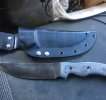
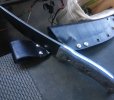
The scales were smaller, I’m gonna order full sheets of terotuf from now on, the flare tube was a slight mistake. I like the finger guard like that, just didn’t have enough scale material. The steel is A2, heat treated in my evenheat, aust.@ 1775 for 30 minutes, plate quenched, dry ice bath with a triple temper. The fit and finish is what I struggle most with! But I’m trying to take my time a little more!! Heat treat is where I really take my time. But this is what I’m looking for! I appreciate the reply.Nice. You don't mention the steel type or heat treat and the photo doesn't show the tip.
Unless you plan to sell it, then the most important thing is whether you are happy with it.
Cosmetically there are a few things you could think about next time for fit and finish:
1) the middle flare tube doesn't come through
2) the front of the handle material is flat and might look better rounded or some other shape
3) between the first finger groove and the choil, your handle material rounds off, but the steel doesn't
Most of my points are just opinion.
The design of this blade is a wilderness hunter! I usually pack in on horses, or on foot, miles into the backcountry! I designed this so I could just take one blade to do everything I need, mild chopping, batonning, skinning, and general camp chores. It has a choil for choking up while skinning or quartering big game, and a hawk bill on the handle for mild chopping! Just my interpretation of my ideal outdoor blade. I started making knives because I couldn’t find exactly what I wanted, there was always something missing. I have the same style knife done in 8670, differentially heat treated, in different thicknesses too. Some thinner, some thicker.why such a thick blade?


So you would work the plunge into the choil? And what do you mean by unfinished on the handle? As in not buffed, or? Still learning, that’s why I posted this here. Thanks guys. I fixed the guard yesterday. And I’ll probably drill out the tube, if I can avoid messing it up. And what would you do differently on the front scales? Taper them down?Some things that catch my eye:
The rivet tube isn't through on one or two of them
The scales front
The drop at the guard
The choil is in front of the plunge, and not bisected by the plunge.
Too many bumps and curves in the hande
The handle looks unfinished
Understandable! The material is terotuf, unbuffed. I’ll try that on the plunge line on my next knife! As far as the blade thickness, that’s just a preference. I like the extra mass for chopping! I did grind down the belly just a little. Thanks Stacy.I like the semicircular choil to be centered at the bottom of the plunge line. The choil should not be filed until the blade is done and ready for HT. I add it post-HT with a diamond cylinder burr.
In the photos the micarta looks frayed like it needs more samding at a finer grit.
The front of the scales would look and feel better if rounded and smooth. Here is g how to get perfect scales:
Drill the tang holes through the scales, leaving some extra length on the front end. Place the two scales together, stick rivet stock through the holes, and tape together snug. Sand and shape one end to make the front. Take to the finish grit and buff if doing that. Then take apart and assemble on the knife when the blade is completely done except sharpening.
THe handle has dips in the top and a big belly bump. Those won't make it feel better, and may make it "hot in the hand".
I agree with HSC that the blade looks very thick. A general use hunter/skinner doesn't need more than .125" at the spine. It also looks like there is no distal taper to the blade.