
- Joined
- Nov 23, 2013
- Messages
- 306
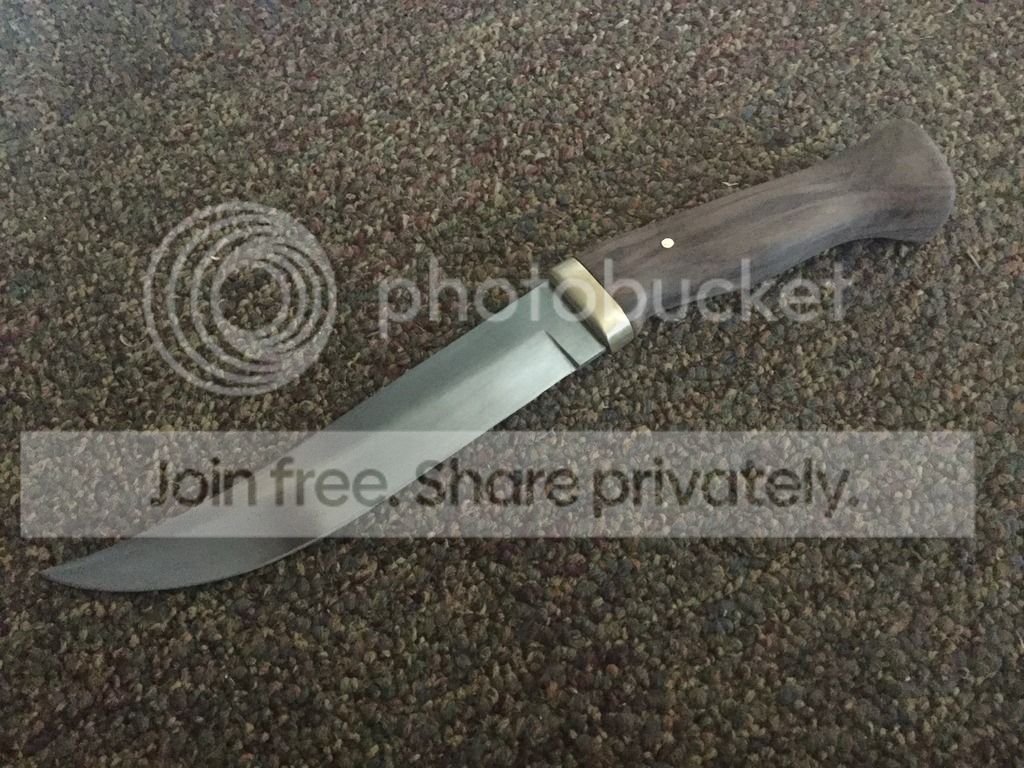
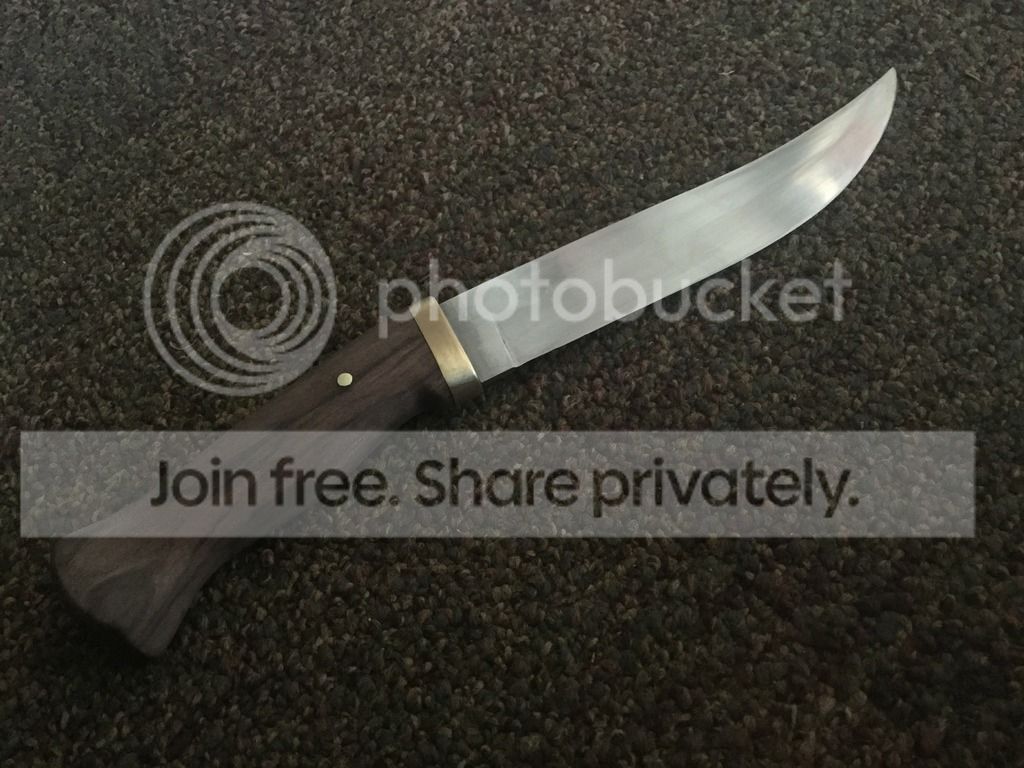
This is my latest knife, and the first one I have been proud enough to post pics of. Please critique and advise how I can improve my skills on my next knives.
1084 steel, brass bolster, stabilized black walnut handle. Overall length: 11.25", blade length: 6.5", handle length (including bolster): 4.6", blade height: 1.12".
I'm not so sure about the wood though. I sent a box to K&G for stabilizing, and when I got it back some was obviously stabilized (notably heavier, a "wet" appearance, and cured resin on the wood's surface) but some looked the same as when I sent it (pale dry appearance, still fairly light, and sanding dust on its surface). Out of curiosity I used a piece that one side appeared to be stabilized, and the other not. When I got into it I found that the grain and pores of the wood were still open. It doesn't seem right to me, but I don't want to be hasty in grumbling because this is my first time working with stabilized wood. Am I finishing it wrong (sanded to 400 grit), or just misunderstanding how the process works? I thought one of the selling points was that no other finish is needed?
Back to the knife. I hand sanded the blade to 400 grit, bedded the tang with Acraglass and used a single 1/8th brass pin that I proceeded to over-peen.
What I see:
Plunge lines just off center
Over peened the pin on one side, with some small cracks due to it
Bolster not quite square to the blade
Small gap around one side of the bolster-to-wood joint
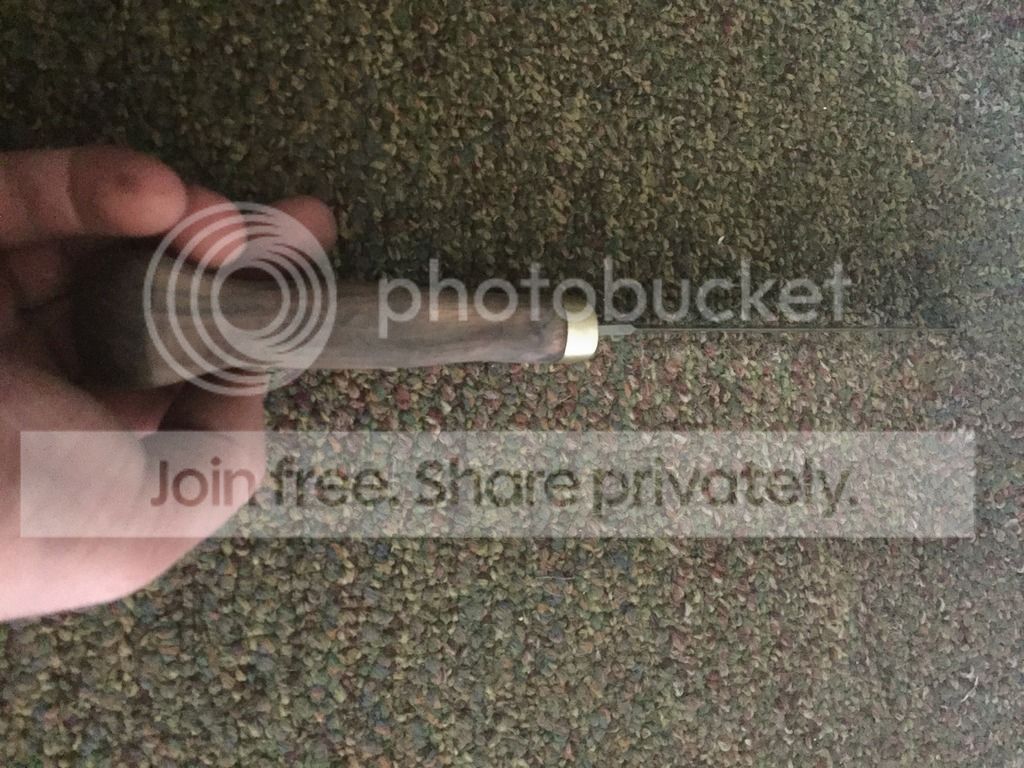
Sorry for the poor quality photos, I'm still trying to figure how to take pictures of knives.
1084 steel, brass bolster, stabilized black walnut handle. Overall length: 11.25", blade length: 6.5", handle length (including bolster): 4.6", blade height: 1.12".
I'm not so sure about the wood though. I sent a box to K&G for stabilizing, and when I got it back some was obviously stabilized (notably heavier, a "wet" appearance, and cured resin on the wood's surface) but some looked the same as when I sent it (pale dry appearance, still fairly light, and sanding dust on its surface). Out of curiosity I used a piece that one side appeared to be stabilized, and the other not. When I got into it I found that the grain and pores of the wood were still open. It doesn't seem right to me, but I don't want to be hasty in grumbling because this is my first time working with stabilized wood. Am I finishing it wrong (sanded to 400 grit), or just misunderstanding how the process works? I thought one of the selling points was that no other finish is needed?
Back to the knife. I hand sanded the blade to 400 grit, bedded the tang with Acraglass and used a single 1/8th brass pin that I proceeded to over-peen.
What I see:
Plunge lines just off center
Over peened the pin on one side, with some small cracks due to it
Bolster not quite square to the blade
Small gap around one side of the bolster-to-wood joint
Sorry for the poor quality photos, I'm still trying to figure how to take pictures of knives.


