

- Joined
- Dec 7, 2008
- Messages
- 7,187
Disclaimer: The purpose of this thread is not to offer palm for sale. I do not have any available right now. This is to show how I cut it in case you are curious or if you decide to cut some up yourself to get it stabilized for use as handle material.
I just had a package arrive with some red and black palm.
It can be cut different ways to give different looks.
I took some photos just in case anyone was curious.
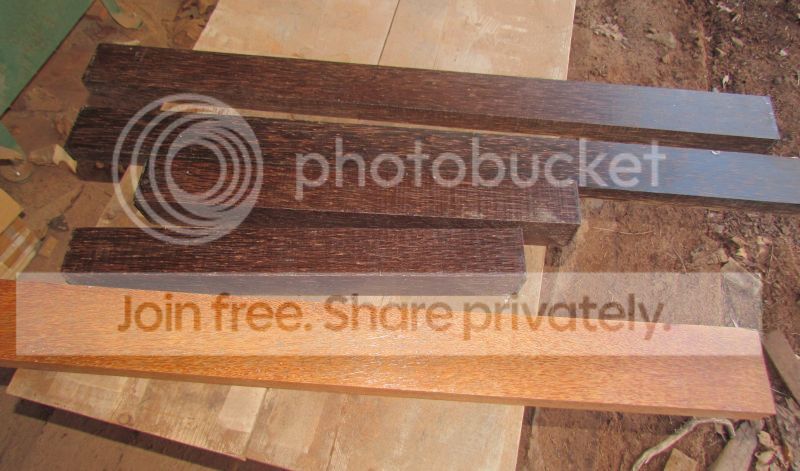
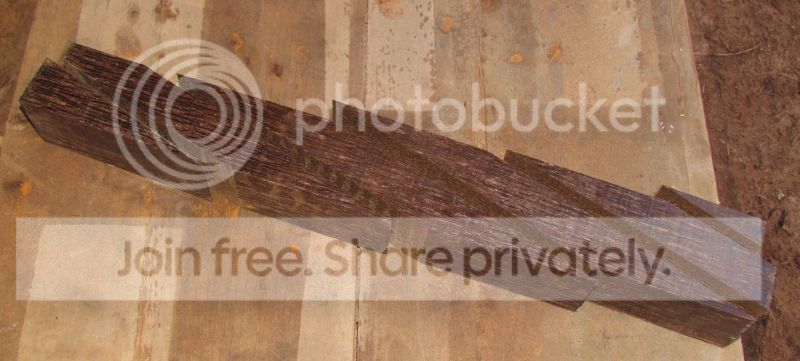
I marked a couple pieces to cut at an angle to show the eyes.
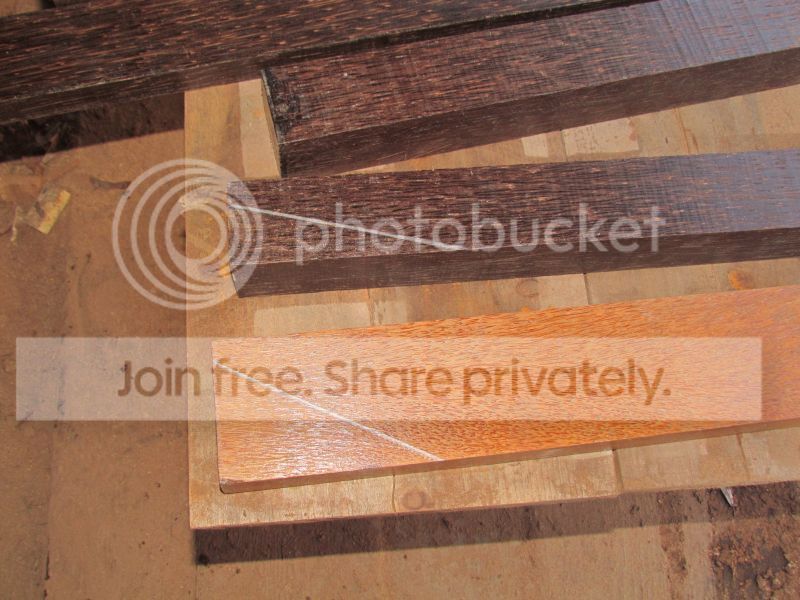
If you cut straight across at a right angle it weakens the blocks. I cut these at a sharp diagonal to maintain as much of the strength of the grain as I could and still show the eyes.
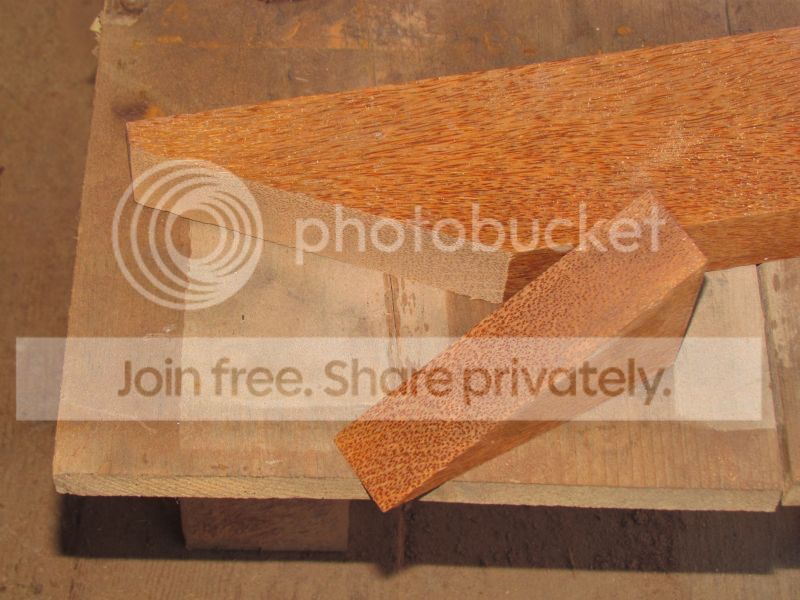
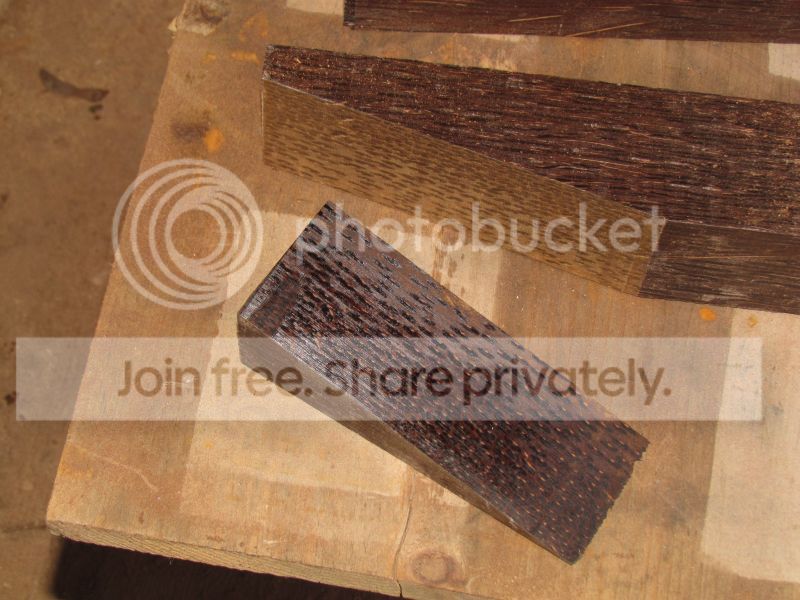
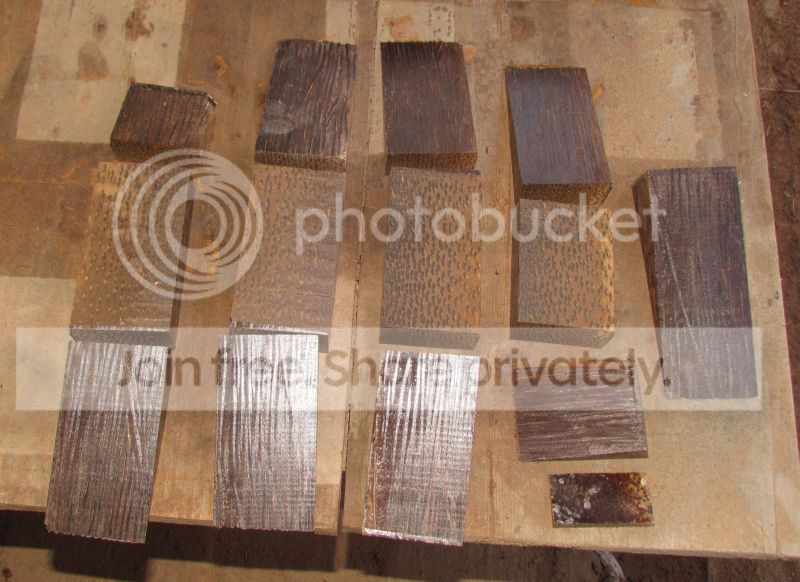
Here I have cut up one of the black palm pieces.
A lot of waste cutting this way.
But I think the look is worth the waste.
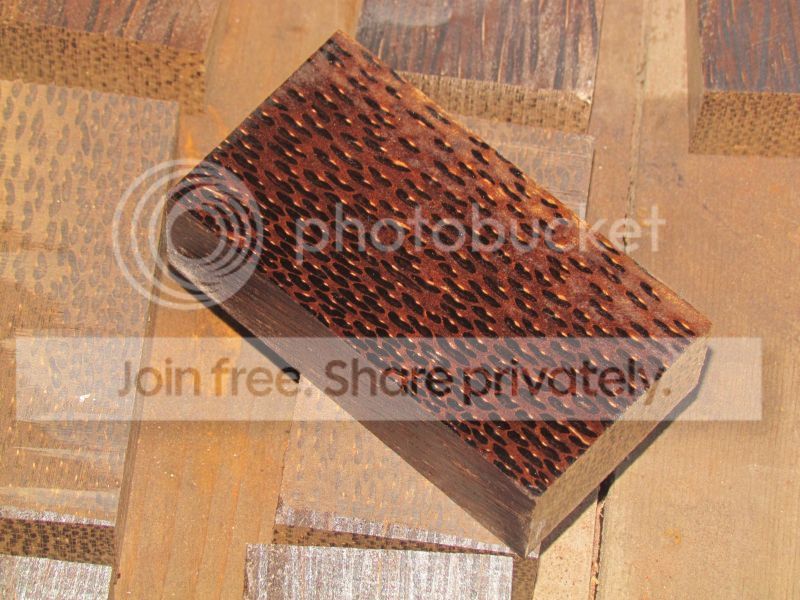
When I get this stabilized it gets a bit darker.
This is my favorite type of black palm. When the light hits the dots from an angle they light up like small golden eyes.
On the red palm I decided to make the angle a bit closer to the direction of the grain.
I did this for 2 reasons. 1 to add more strength, and 2 to make the faces look more like elongated dots instead of small ones.
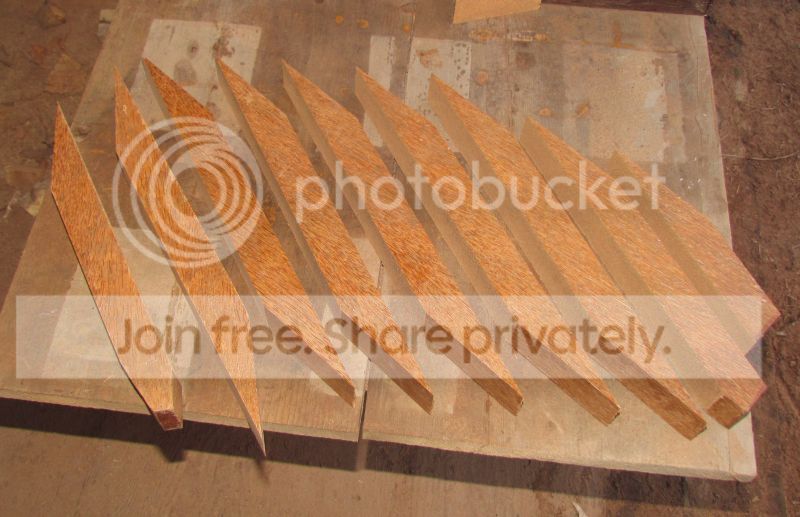
I am hoping the grain will show a bit more contrast after it gets stabilized.
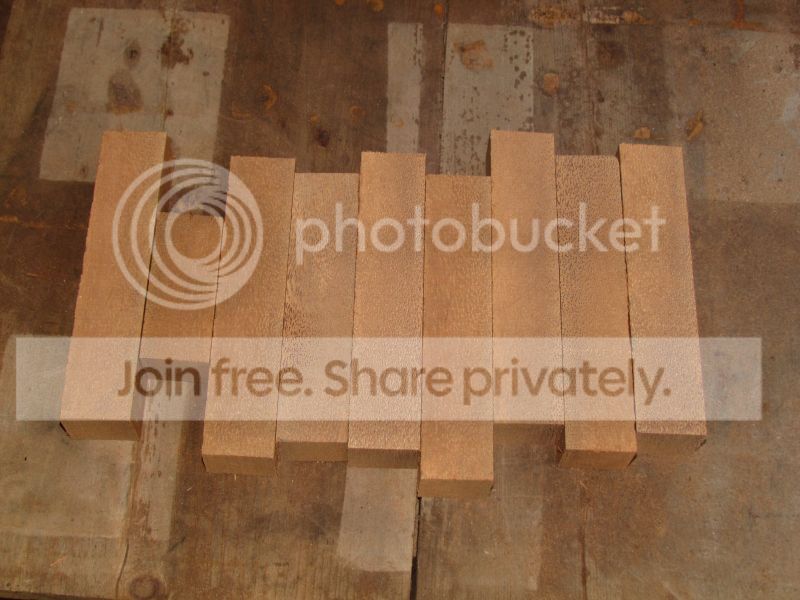
Now a piece of black palm I am cutting for wa handles.
This plank is lighter on one side.
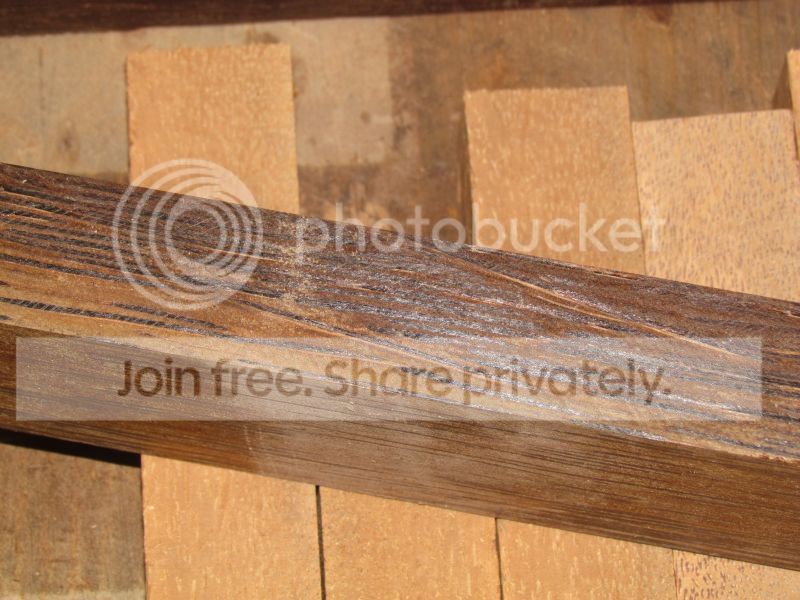
I marked a diagonal and am hoping for a 2 tone look with the blocks.
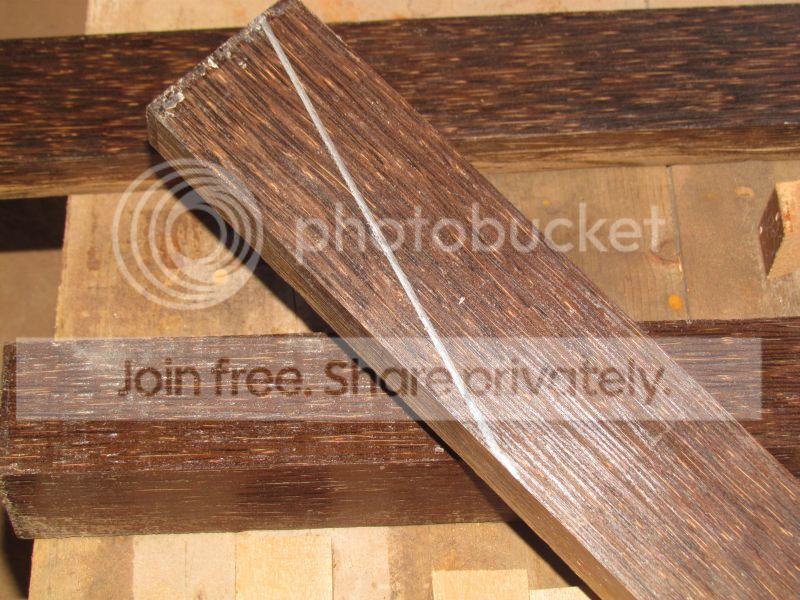
Worked out good.
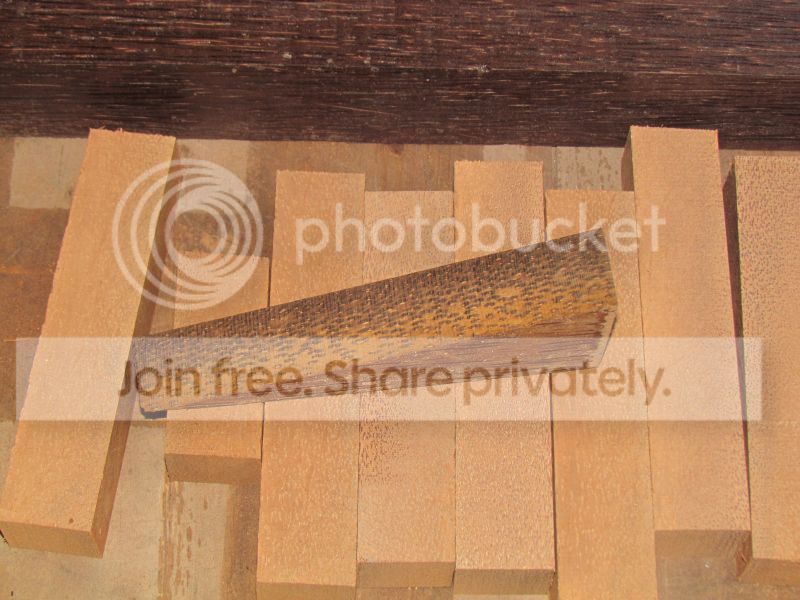
This look has been popular in the past using the dark area at the spine and the light area at the belly of the handle.
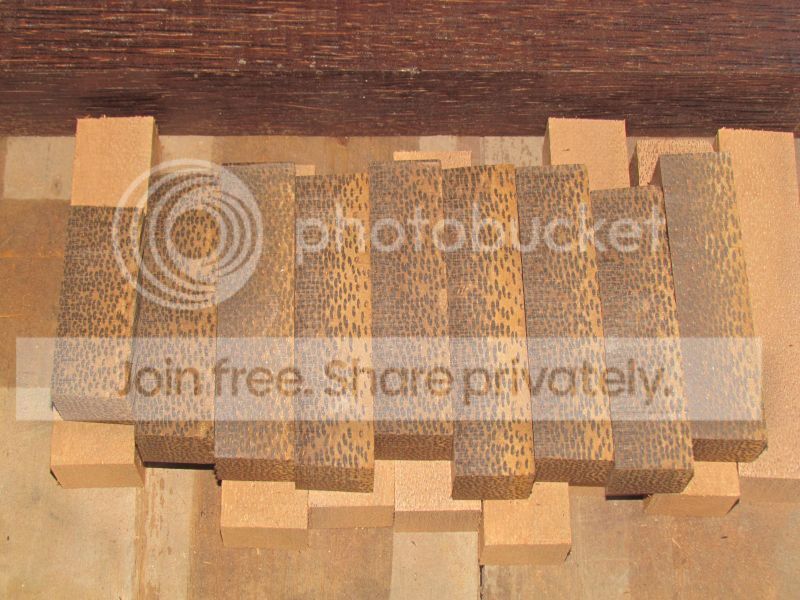
Now I will be sending these off to K&G to get stabilized.
For anyone who might be tempted to use unstabilized palm for handle material; DON"T DO IT! (Just my opinion)
Palm is not really a tree but is a grass.
The wood is like a bundle of straws. When you are cutting and sanding unstabilized palm it feels like you are working with fiberglass with the invisible splinters.
You might be able to finish it and have it hold up but the odds are against you.
But....Palm takes stabilizing very well and stabilized palm is very easy to work with and finish. (Without the invisible splinters.)
I just had a package arrive with some red and black palm.
It can be cut different ways to give different looks.
I took some photos just in case anyone was curious.
I marked a couple pieces to cut at an angle to show the eyes.
If you cut straight across at a right angle it weakens the blocks. I cut these at a sharp diagonal to maintain as much of the strength of the grain as I could and still show the eyes.
Here I have cut up one of the black palm pieces.
A lot of waste cutting this way.
But I think the look is worth the waste.
When I get this stabilized it gets a bit darker.
This is my favorite type of black palm. When the light hits the dots from an angle they light up like small golden eyes.
On the red palm I decided to make the angle a bit closer to the direction of the grain.
I did this for 2 reasons. 1 to add more strength, and 2 to make the faces look more like elongated dots instead of small ones.
I am hoping the grain will show a bit more contrast after it gets stabilized.
Now a piece of black palm I am cutting for wa handles.
This plank is lighter on one side.
I marked a diagonal and am hoping for a 2 tone look with the blocks.
Worked out good.
This look has been popular in the past using the dark area at the spine and the light area at the belly of the handle.
Now I will be sending these off to K&G to get stabilized.
For anyone who might be tempted to use unstabilized palm for handle material; DON"T DO IT! (Just my opinion)
Palm is not really a tree but is a grass.
The wood is like a bundle of straws. When you are cutting and sanding unstabilized palm it feels like you are working with fiberglass with the invisible splinters.
You might be able to finish it and have it hold up but the odds are against you.
But....Palm takes stabilizing very well and stabilized palm is very easy to work with and finish. (Without the invisible splinters.)


