Damascus combos with W2

Joined
Apr 14, 2006
Messages
252
hello,

Have soem of dons w2 and want to make some damsucus out of it will be getting some of aldo 1084 when it becomes ava. So in the mean time besides 15n20 wjhat other steels will work? im figure most any of the 10xx steels is there any others IS 1095 to fast to work with w2. have 2 of ed caffery damscus videos on the way also so soon ill be rolling along i hope. thanks
 
hello,

Have soem of dons w2 and want to make some damsucus out of it will be getting some of aldo 1084 when it becomes ava. So in the mean time besides 15n20 wjhat other steels will work? im figure most any of the 10xx steels is there any others IS 1095 to fast to work with w2. have 2 of ed caffery damscus videos on the way also so soon ill be rolling along i hope. thanks

I don't think you'd get any contrast mixing W2 and 1095. They're almost exactly alike, except for vanadium, which I don't think will affect the etch any. You'd get more contrast mixing 1084 and W2.
You might try 8670, Admirals "L6 alternative". Still not enough contrast for me.
What's wrong with 15n20?
 
1080/1084 with W2 will make black/gray damascus. If the 1080/1084 manganese amount is towards the upper end of the range (0.60% to 0.90%), the difference in shade between the two steels is distinct. I make W2/1080/15N20 damascus and the shades come out gray/black/white... my 1080 has 0.90% Mn.

W2 and 15N20 make a really good damascus combination because the steels HT nearly the same. 1075, 1080, 1084, 1090,1095, W1 instead of W2 and 15N20 would be good for the same reason. 15N20 etches white because of the nickel (1.75% to 2.50% range).

Manganese makes black in damascus if there is enough of it. More carbon makes a darker etch but Mn drives darkness of etch harder than carbon does.

Another steel used with W2 in damascus is 203E. It is a high nickel steel (used for pressure vessels) and it etches very white... Jerry Rados uses 203E with W2. The 203E is extremely low in carbon so 10% to 20 % is about all a person would want to use.

Mike
 
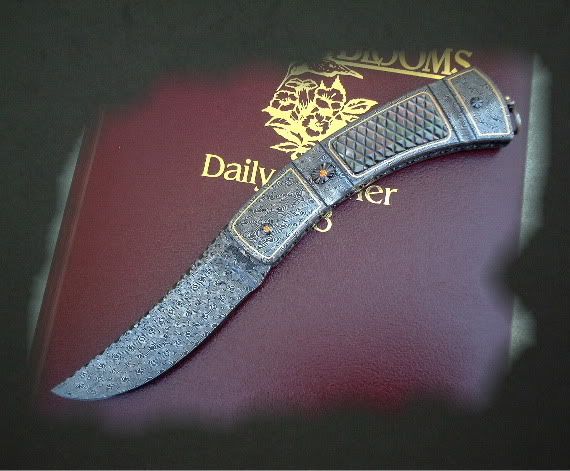
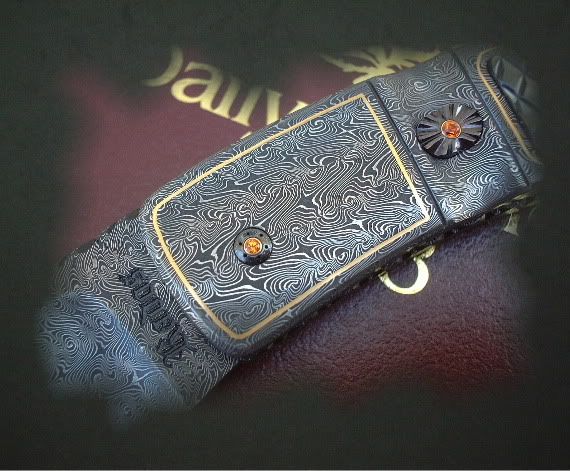
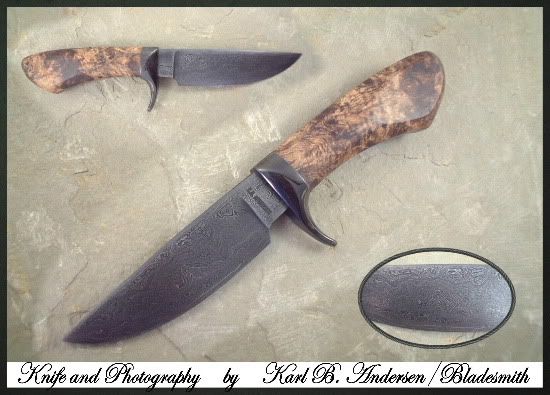
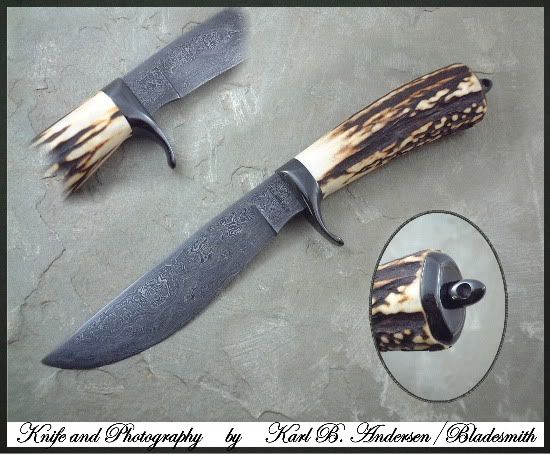
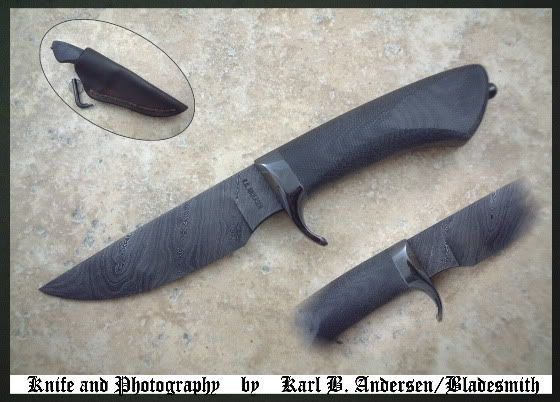
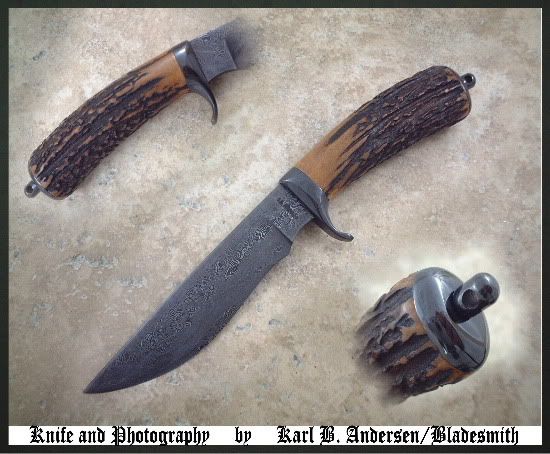
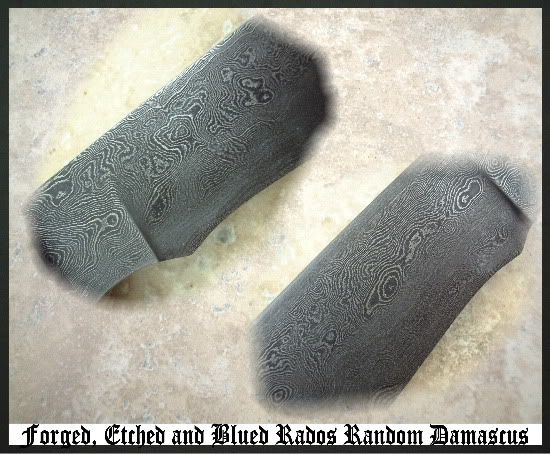
Here is W2 and 203E in Turkish Twist and Random:

JRD1-1.jpg


JRD3-1.jpg


kc8-1.jpg


SMD6-2.jpg


jr8.jpg


ja8-1.jpg


ja4-2-1.jpg
 
203E makes an excellent contrast stripe; but ,as said, has no carbon ( basically, 96% iron ,3% nickel, and 1% other stuff). It comes in 1/4" thickness only,usually. A stack of 3/8" W2 and 1/4" 203E would create stunning damascus like Karl showed.For show blades it is great.It welds up easily,too.

For working damascus blades ( sort of an oxymoron?) I would suggest W2 and 15N20 (or Champaloy, or similar L-6 type steel).

The other way to get a brightly striated pattern is to use a thin sheet of nickel between the steel layers. Using W2 and 1095 with .005" nickel between them will make a interesting blade.
Stacy
 
W2 and 15n20 is a good mix. I do a lot of 1084/15n20 and usually add a piece of W2 for more carbon and a different color.

W2/203E looks great but like said, the 203E should be kept at only 15-20%.

Here 3000 layers of W2 and wrought iron (85% W2, 15% iron).

attachment.php
 
Dakota,

This has probably dawned on you... Most W2 found is 1.00% carbon. If used in damascus with 203E or wrought iron (essentially 0% carbon), welded, layered, welded, layered,... basically the steel spends a lot of time at high heat, which is high decarb and high diffusion (and grain growth, too)... the theories say the carbon will equalize through out the mass. 85% x's W2's 1.00% C + 15% x's the others 0% C = 0.85% C... a good C level for knives. Two 1/4" layers of 203E in a billet would need 2 13/16" of 1.00% W2 to make 0.85% C. 15N20 (0.70% to 0.75% C range) mixed with 1.00% W2 changes the equation quite a bit.

Don's mentioning using a lot of 1084 and 15N20 for damascus is really the way to go. There is more damascus made with those two steels than any other mix by a long, long ways. It's the near-perfect compatibility of the two, the amount of blackness from the Mn in 1084 making the contrast high, plus keeping the carbon at or slightly below the eutectoid of carbon (0.83% C... about) for less complication in heat treating that makes it such a great combination.

Mike
 
Last edited:
It was the performance level that I saw demonstrated by the above W2 that got me away from stock removal stainless 5 years ago.
After seeing what I saw, I started forging!
I saw mentioned that 203E moslty comes in 1/4", but if you order from American Alloy Steel, which Jerry Rados does, you can get about any dimension you want. He uses 5/8" inch thick 203E in a 3 3/4" thick by 2 1/2" wide 12 inch long 30 pound billet. "Smashes" with a 500 pound Chambersburg.
I've got knives with Jerry's steel dressing out elk, deer, moose and wild hogs all over.
I've got no complaints with it.
 
Back
Top