- Joined
- Jul 6, 2012
- Messages
- 118
Hey guys I've been wondering, does a Damascus blade make the blade itself stronger or is it just for looks? And if you have any Damascus blades pictures would be highly appreciated

The BladeForums.com 2024 Traditional Knife is available! Price is $250 ea (shipped within CONUS).
Order here: https://www.bladeforums.com/help/2024-traditional/

protects against rust better just like DLC coating would I'd imagine.
No. Not at all true.

I didn't claim it to be fact chief.
Hey guys I've been wondering, does a Damascus blade make the blade itself stronger or is it just for looks? And if you have any Damascus blades pictures would be highly appreciated

I said I'd imagine..it is a coating on the blade is it not. ok.

 Here's a repost of what I've said on other discussions on this topic.
FortyTwoBlades said:There are two kinds of steel commonly referred to as "damascus" steel: wootz and pattern welded. Pattern welded steel is the most commonly seen but is not "true" damascus, and the patterning is the result of (usually contrasting) layers of steel being forge-welded. This method was used commonly in east Asia to compensate for the uneven distribution of carbon in the ingots resulting from their smelting process, and was a post-smelting method to homogenize the steel. Different grades of steel would then often be sandwiched to give specific regions of the blade varying degrees of hardness to balance toughness and edge retention. This method was used in Europe primarily before the (medieval) discovery of "modern" smelting techniques for ore extraction, and allowed small pieces of ore to be combined to form a larger mass. With the development of better smelting techniques virtually every edged tool was switched to monosteel as it was no longer necessary and could, in fact, potentially cause weaknesses in a blade as a result of imperfect welds. Today the technique is used only because of its cosmetic properties.
Wootz steel or "true damascus" is not folded, and gets its patterning from carbide banding. Wootz was originally made from ore found in some select Indian mines which contained trace carbide-forming elements. When smelted and worked in a particular way, carbides would form in distinctive patterns during heat treatment. Wootz steel exhibited superior toughness and edge retention for its day, but is now far outclassed by modern steels in terms of performance.
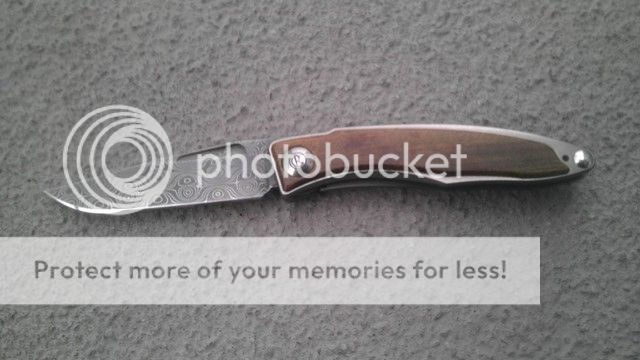

Damascus was invented to increase the strength of steels produced with very primitive technology. Our steel technology produces very good steels that are monolithic, no need for damascus other than style
Hey guys I've been wondering, does a Damascus blade make the blade itself stronger or is it just for looks? And if you have any Damascus blades pictures would be highly appreciated
Another reason for pattern welding steel was to get a piece big enough to make a sword or knife from. Steel was precious and difficult to make, and single pieces large enough for a sword or large knife were rare.

Now there are advantages to laminating different types of steel so that the cutting edge is one alloy and the sides of the blade are another alloy, but this strictly speaking is not the same as damascus.

