Damascus Traditionals

Joined
Jun 21, 2008
Messages
7,923
Ive had a number of knives from custom and commerical makers (non traditional folders and fixed blades) in the past with so called "Damascus" steel blades. I have also been a collector and appraiser of Nihonto in years past and for a number of years, folded and layered steel is nothing new to me. I agree that there is an aesthetic to some of the more exotic damascene blades out there, mixing non-traditional metals with steel to get an affect and some great patterns, however I have never been one to use any of the knives that had "Damascus" blades very much. To me its all show, and while serviceable there is no real evidence that they cut any better or hold an edge any better. So I tend the stray away from traditionasl with these types of materials. I would like to try Wootz though. I think there is something to learn from this type of steel.

Comments?
 
I have only ever had Damascus in Chefs knives. I couldn't see any particular difference between the performance of the carbon steel and the Damascus so I passed them on. They were pretty though.
 
I have only ever had Damascus in Chefs knives. I couldn't see any particular difference between the performance of the carbon steel and the Damascus so I passed them on. They were pretty though.

I have a Shun Premier and its just pretty looking damascus wrapped around a VG-10 core. So just pretty but VG-10 does a good job in the kitchen.
 
I have a Shun Premier and its just pretty looking damascus wrapped around a VG-10 core. So just pretty but VG-10 does a good job in the kitchen.
Absolutely, I've a VG-10 santoku which is my go to for 90% of my cooking prep. Can't beat it.
 
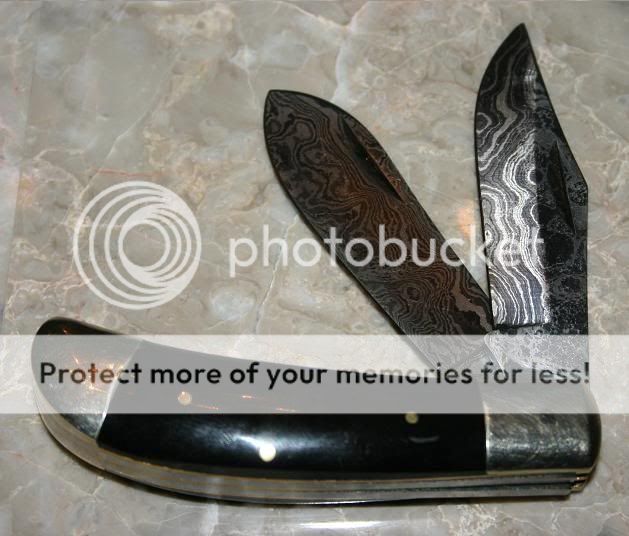
When I first took a liking to Damascus I bought this custom trapper, in buffalo horn.
The knife is a little heavy, and the steel is a little soft, but it's pretty to look at!

buffrandomdam.jpg~original
 
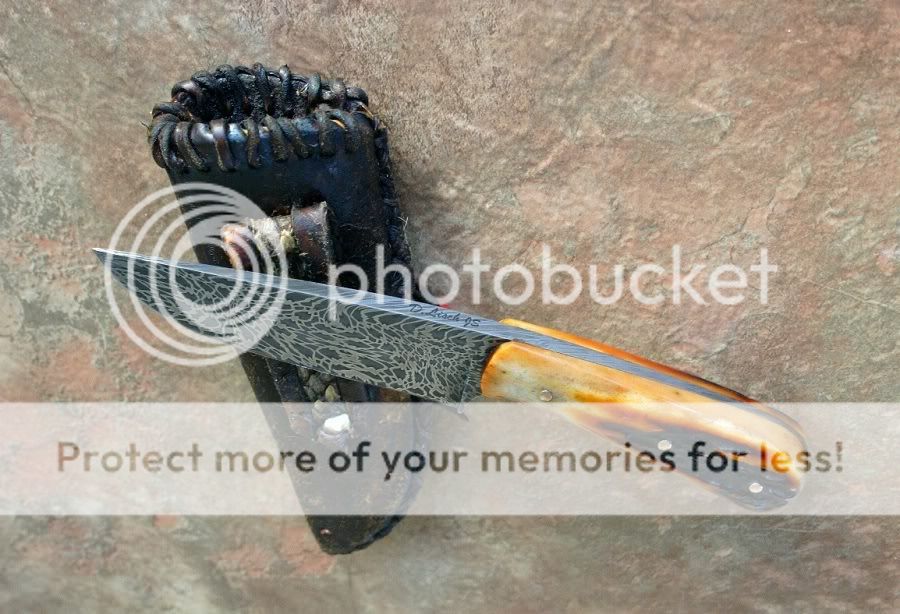
I also have a couple of very nice fixed blades in traditional drop point patterns.

Maker: Ken McFall
McFallDropPoint.jpg~original


McFallPile-1.jpg~original


Maker: Dave Lisch
lischcoheaensemble.jpg~original


lischcoheamark.jpg~original
 
9409382316_d1f4de4252_c.jpg


This is the only damascus blade I've ever had. It was gifted to me by fellow forumite Jamie, and it's a Devon Thomas damascus. In the three plus years I've had it, I've used the heck out of it on everything from pan fish to twine It's weird. That's my only way to describe this damascus blade. It feels different on the stone when it gets touched up, and it seems more aggressive in cutting fibrous stuff like jute and sisal twine, textiles like cutting rags, and such. What strikes me as weird about the stuff, even when it looses it's razor edge, it still slices through sisal rope and nylon cord very well. Like a tiny saw or serrated blade. Like I said, weird stuff.

Carl.
 

Wow Jeff, I've never seen a pattern like this one. I'm really getting curious how these are done...

9409382316_d1f4de4252_c.jpg


This is the only damascus blade I've ever had. It was gifted to me by fellow forumite Jamie, and it's a Devon Thomas damascus. In the three plus years I've had it, I've used the heck out of it on everything from pan fish to twine It's weird. That's my only way to describe this damascus blade. It feels different on the stone when it gets touched up, and it seems more aggressive in cutting fibrous stuff like jute and sisal twine, textiles like cutting rags, and such. What strikes me as weird about the stuff, even when it looses it's razor edge, it still slices through sisal rope and nylon cord very well. Like a tiny saw or serrated blade. Like I said, weird stuff.

Carl.

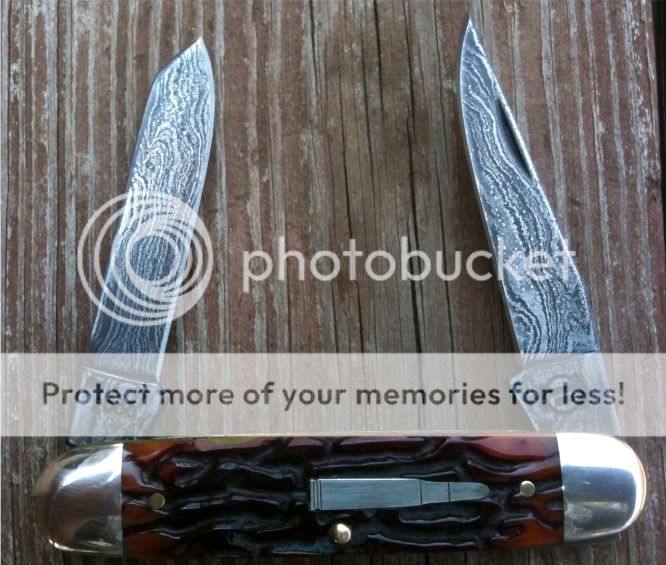
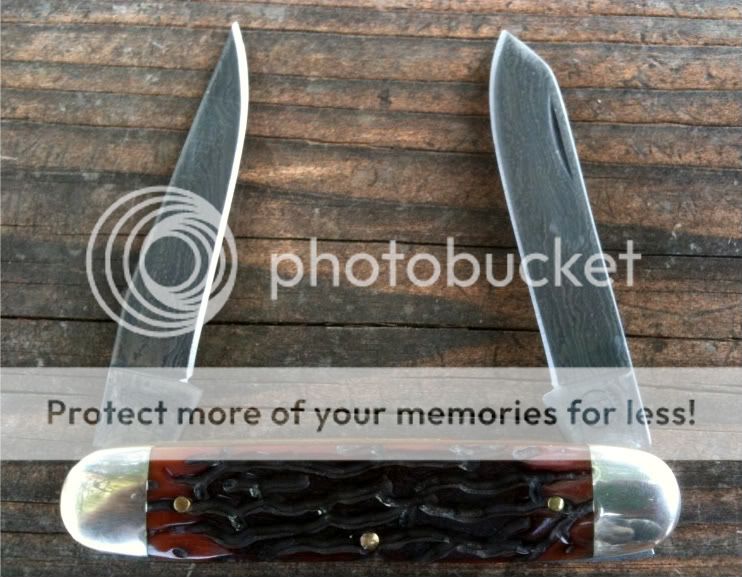
I noticed that too on my damascus case wharncliffe trapper. The wear isn't the same on the two different steels, so the blade gets ever so slightly serrated with use, making it great for cutting fibrous material. Depending on your view that might be an advantage of damascus, or it may not ;)
Just run along the edge with your fingernail and you can feel the serrations.

As for the kitchen knives where the core isn't damascus: It looks purty, and that's good enough for me :)
 
Dad has a case red stag canoe in damascus. Takes a nasty edge but the master spear blade started to flake. Case fixed it right up tho.
 
I would like to try Wootz though. I think there is something to learn from this type of steel.

Comments?

John D. Verhoeven was a professor of Metallurgy at Iowa State University for a number of years. Among other things, he did a lot of work with blade steels and Wootz. He tested blades made from actual wootz (ancient museum pieces). He found that while
Wootz far outperformed steel from medieval northern Europe, it does not outperform modern alloys. Which is to say that, if you want high performance, look to modern alloys, and I don't mean exotic PM steels. Modern melt alloys outperform wootz.
 
John D. Verhoeven was a professor of Metallurgy at Iowa State University for a number of years. Among other things, he did a lot of work with blade steels and Wootz. He tested blades made from actual wootz (ancient museum pieces). He found that while
Wootz far outperformed steel from medieval northern Europe, it does not outperform modern alloys. Which is to say that, if you want high performance, look to modern alloys, and I don't mean exotic PM steels. Modern melt alloys outperform wootz.

Oh I have no doubt that modern steels are superior to any of the steels used in the past that had to be folded or welded to distribute carbon. It was necessary to fold the steel and the pattern was a byproduct for the most part. Todays crucible steels with precisely controlled distribution of carbon and other alloying elements are undoubtedly superior.
 
Back
Top