- Joined
- Dec 21, 2006
- Messages
- 3,158
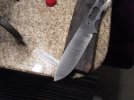
I've been messing around with Cru Forge V lately. I really like the stuff, even though hand sanding this stuff is incredibley tough. I had mentioned in a previous post about the decarb I was having with CFV blades in my kiln, and others had experienced the same. I originally thought I was doing something wrong, but there was about .010" of decarb to get through (on each side!) before reaching the hard steel. And it IS hard....good night a livin. Or just abrasive resistant...whichever. Vanadium carbides, I suppose! I thought I would take a picture of this knife to show off exactly what I mean. If you look closely, very close to the spine, you can see a wavy layer of softer steel. I have chased that transition zone from the edge all the way to where it is, about 1/4" below the spine, and I'll leave it there. This blade is ground super thin, and would be too thin if I were selling it to someone. But it is for me....and I baby my knives. I can even feel the difference in hardness as the paper wants to dig into the decarb layer and not the hardened steel. I call it my decarb hamon. Ever seen this before? (I'm not done sanding yet! Please excuse the poor looking polish. I wanted to see if I could get a photo of the decarb layer and show you guys really quick)