Dental Preparedness

Very cool thread! I am in my last year of dental school so I have been very interested in all of your responses. Here's a few tidbits.

Oil of Clove - This essentially is one of the ingredients in sedative or temporary fillings. Eugenol has a palliative effect on the pulp and will help reduce discomfort.

Elevators - It is surprising what a little flat-bladed-screwdriver-looking-thingy can do. Once the periodontal ligament is loosened it is possible to just elevate the tooth out of the socket sometimes. Forceps I'd say are faster however in my experience since you can get a good grip on the tooth.

Periodontal disease - Do yourself a huge favor and do everything you can to avoid getting periodontitis. Yes you will save money but it is also linked to many systemic health problems. People with periodontitis are 6.5 times more likely to have heart problems for one. :eek:

FLOSS! - Bacteria will congregate and cause a cavity just below the area where the teeth contact. Rub the floss us and down the sides of the teeth and down into the pocket around the teeth as was mentioned. I will go out on limb and say that cavities between the teeth would be the most likely in an extended wilderness trip followed closely by cavities in the pits and fissures of the chewing surfaces of the teeth. That is just a guess though.

I keep a roll of floss in my little kit to use as floss as well as fishing line, snares or whatever. I'm also putting together some anesthetic, syringe, and sutures. It would be hard to give anesthetize yourself and extract but when the alternative is horrible pain then I'd probably give it a shot. (hehe, get it?) It would sure be handy to suture a bad cut in the backcountry too.

Well now that I've put up my public service broadcast.......

I'm sure there are some more experienced practitioners on the board that can come along and share their wisdom (and correct me if they feel I have misspoken anywhere:foot: )
 
There is also a link between periodontal disease and diabetes. A lot of people have good immunity to the bacteria that cause periodontal disease and can get away with a less than stellar flossing regimen. On the other hand, decreased ability to fight infections often accompanies onset of Type II diabetes, and that's when periodontal disease can quickly rear its ugly head.

I don't know if it's clear that there is a causal relationship (or which way it goes), but there is an obvious correlation.
 
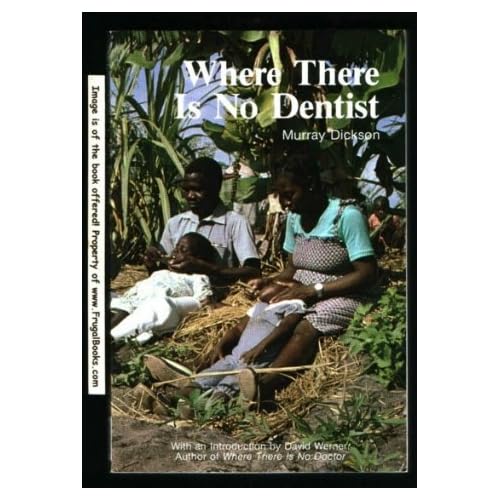
Hey if you haven't already, grab a copy of Where There Is No Dentist by Murray Dickson over at Amazon. Highly recommended and only $14.00.

I sure many of you guys know this, but the entire book is published in PDF on the web, here...

http://healthwrights.org/books/WTINDentistonline.htm

Reader Reviewer:
Too bad there aren't more writer's of the same mind, filling in the gap between costly expertise andlayman srticture. The book is a well-balanced workbetween hand drawn illustrationsand simple, succinct text, explaining procedures for teeth cleaning,pulling, simple filling, brokenteeth, etc., to the uneducated, 3rd -worldvillage healthcare worker, anddescribes how to construct the necessary instruments and materialsout of what bits can be found at hand, for all the procedures. At one end, we pay for the dentist's scent & muzak, at the other, with this book, they discardthe intervening fluff and tripeand get something done themslves. Actually, the book deals with poorer standards than readersanywhere else would like to seeaddressed.
0942364058.01-A3FLYJKEXGJP6T._SCLZZZZZZZ_V43354192_SS500_.jpg
 
...Elevators - It is surprising what a little flat-bladed-screwdriver-looking-thingy can do. Once the periodontal ligament is loosened it is possible to just elevate the tooth out of the socket sometimes. Forceps I'd say are faster however in my experience since you can get a good grip on the tooth...

Thanks DocSoon2B. ;)

Here's something else I've heard: If you have no choice and you gotta pull it, try not to damage the walls of the socket when pulling the tooth. The bone wall of the socket can be fragile in those who have suffered bone loss and as much wall as possible may be needed for professional restoration. $0.02
 
Thats alot of info on this thread. I feel what is said on here is as important as a thread about fire. No one thinks about it untill you get hurt or you have a toothache. It can put you down faster then lack of food or water. Great thread there Q. I always have some floss on me but im going to add some oil of clove. Does oil of clove help other kind of pain or is it only for toothache???

Sasha
 
Great addition DMD08. Only thing I can think to add is that I've actually seen first hand more forceps shatter teeth apart than successfully extract them. I worked with a lot of residents though since that was my main function besides other duties already covered in my previous posts.

My point is that most teeth are not in the best of shape by the time they need to come out so many times a forcep will simply break the crown apart leaving nothing to get a good grip on at all. If your tooth has a big ole cavity in it and significantly weakened enamel you may as well not try the forcep thing and stick with the elevator if you are so unfortunate an individual to actually have to extract your own tooth. I'd have to be in a very dark helpless position before I'd go that far personally. But I guess stranger things have happened.

I agree its a good thread with some good information though.

STR
 
STR just think of the movie SAW before you start pulling your own teeth out ^L*...

sasha
 
Q - Yes, preserving as much bone as possible would be a good thing especially if you wanted to restore the extraction site with a dental implant when you got back to civilization.

STR - I agree with you on the decayed teeth being fracture prone. In a clinical setting it's not a big deal to have a tooth fracture because of all different root picks and tools we have at our disposal. Sectioning the tooth is a good thing in some instances. But yes, if you were attempting a self extraction in the boonies, breaking the crown off of the offending tooth would not be a good thing. That would indeed be a terrible postion to be in.
 
Plain Old candle wax can be used as a temporary filling, just rub a small piece on the tooth and a build up wiill form in the cavity if it is above the gum line. I did this once at the instruction of my dentist when a filling came loose, and I couldnt get in for a day or two.

Oil of Clove I have been told does wonders.

Vodka is in My BOB ( a Plastic bottle of it) as an anesthetic, among other reasons. ( Since I dont drink i figure I can Trade It in a pinch)
 
For all of the fans of the "Where there is no Doctor/Dentist" series the Hesperian foundation has made both books available for free download along with many others of a similar vein:

http://www.hesperian.org/publications_download.php

Enjoy!

Edit to add

sorry folks, the Dentist title isn't listed, but there are some decent chapters available.
 
Q - Sorry, I wasn't very clear. My last sentence was agreeing with STR that is would really stink to have to extract your own tooth but I see now that I made it sound like breaking the crown off would be the terrible position to be in. Not that breaking your tooth is a good thing, of course.

Breaking the crown off wouldn't be good because you'd now have roots that would be harder to get out when you're doing the extraction yourself. If there was an infection in/around the tooth then breaking it may help some due to releasing the pressure in the tooth that has already been discussed. But you'd still have a fractured tooth, injured tissue and a welcome mat for bacteria.
 
Doc, what is a good antibiotic to have on hand for dental infection or infection prevention after surgery? My doc always prescribes amoxicillin but I always take the complete course and never have any left over. What is a good general purpose antibiotic to fight existing (or prevent) dental infection?
 
It is very important to take the complete course of any prescribed antibiotic to reduce the possibility of creating a resistant strain of bacteria. So in a way it's a good thing you don't have any left over. In our oral surgery clinic we prescribe Penicillin or Clindamycin in case of Penicillin allergy.

As far as taking a long term prophylactic antibiotic to prevent infection.... I can't think of any incidence off the top of my head (although that doesn't mean they don't exist) where that would be recommended except for maybe some extreme circumstances.

Of course I recommend that you consult with your personal physician or dentist to determine what is best for you and how to go about obtaining the proper medication.
 
Back
Top
