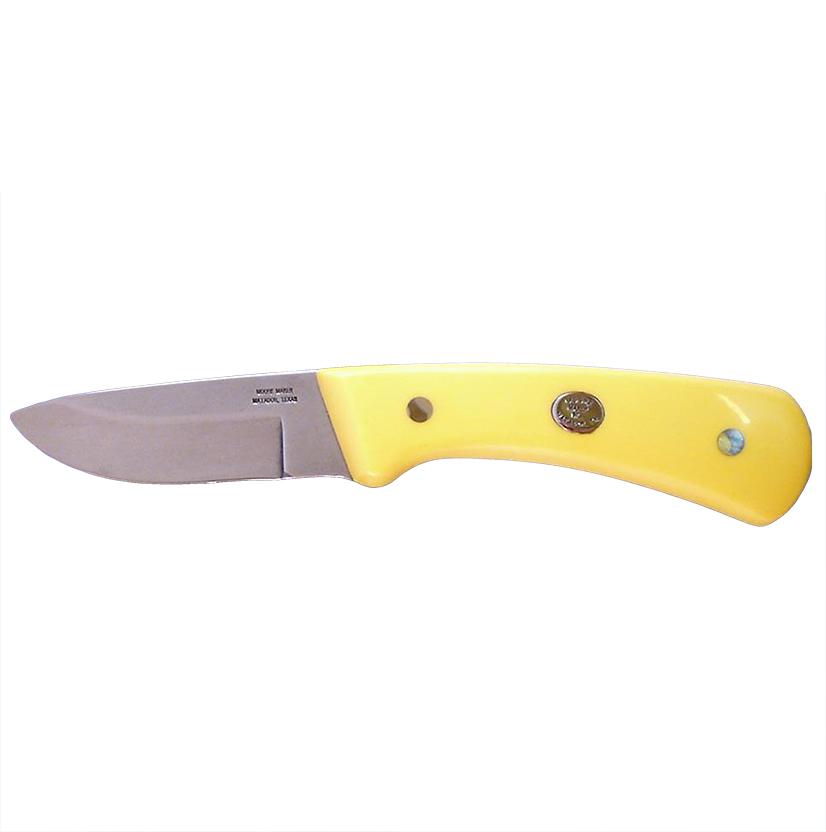
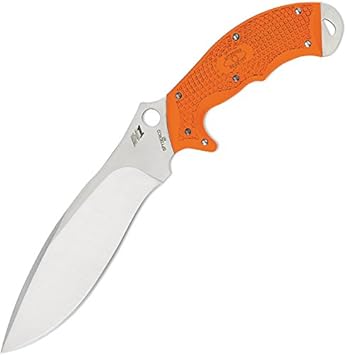
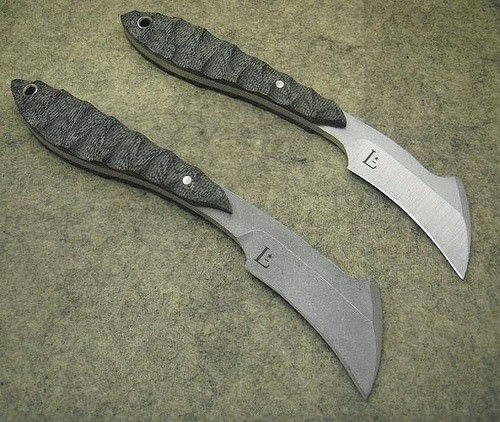
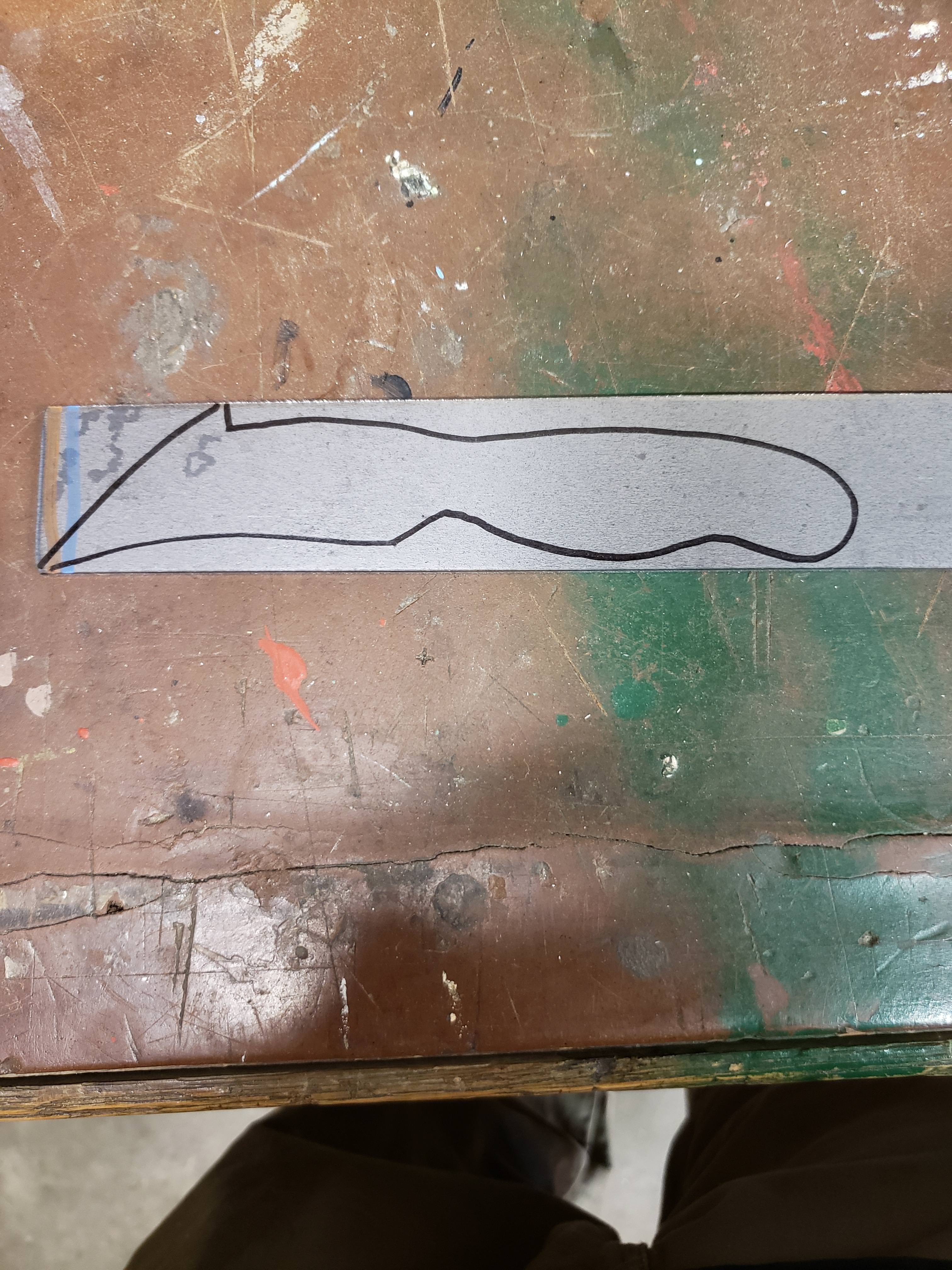
For what-ever it is worth, here are some, but far from all, of the general legalities involved. I am not a lawyer, and not taking sides either way. These are all part of what are known as Intellectual Property or IP rights
1. Copyrights are for published works, meaning printed, (stories, books, songs) or recorded media such as videos, photos, spoken word, and music. Not applicable to manufacturing knives.
2. Patents are for manufactured items, formulas, methods of doing or making something. Normally, this is where knives would land. However, you cannot patent such things as a sound, a color or a shape which is generally where knife patents fall flat on their face. Now if you were able to design a entirely new and improved cutting edge that can only be made using a process you created. Almost certainly patent-able. But if someone figures out how to make that edge with a different process, you are probably out of luck stopping them. If you come up with a new formula for steel. Patent it! Or Don't.
The problem with patents is you have to show what is in it when you file the patent. Is it a secret you don't want getting out? Don't patent it. Think Coke's flavor formula or Colonel Sanders recipe.
3. Trademarks are for business names, logos, etc. You might be able to get some protection here if you have a unique enough and original blade. In theory you could make that blade / shape your trademark.
Other sticking points - You cannot use any one else's trademark without permission. Using their name can get you into trouble too. If you try to sell a "Bob Loveless Knife" you made, you could get sued. If you call it a "Bob Loveless design", or better yet, "inspired by Bob Loveless", you are probably ok. If you are selling a "Johnny Depp" knife, you better get permission. The main sticking point is what impression is being made in the mind of the consumer. Does it lead the buyer to believe Bob Loveless made it or did Johnny Depp endorse or design it? If so, you could land in court.
Which brings the biggest and most important point to all of this. If you have a patent, copyright, or trademark, don't think for a minute that you can send the cops after some guy to arrest him for violating your IP rights. You have to find them, and go after them in civil, not criminal court. Which means high legal bills for you to enforce your rights. And MAYBE you collect damages and legal fees.
Under certain conditions, you can get the cops to go after people copying your products. But only when it becomes a criminal act like fraud. Someone is deliberately copying product, name, packaging, design, everything, solely for the purpose of defrauding the buyer.