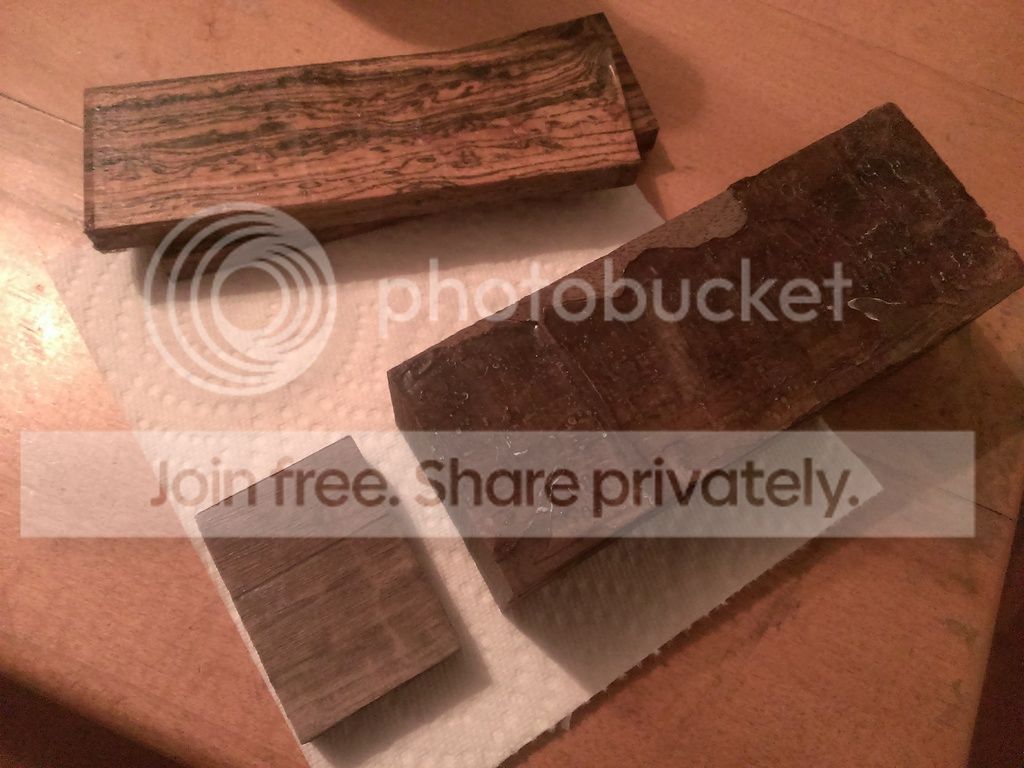
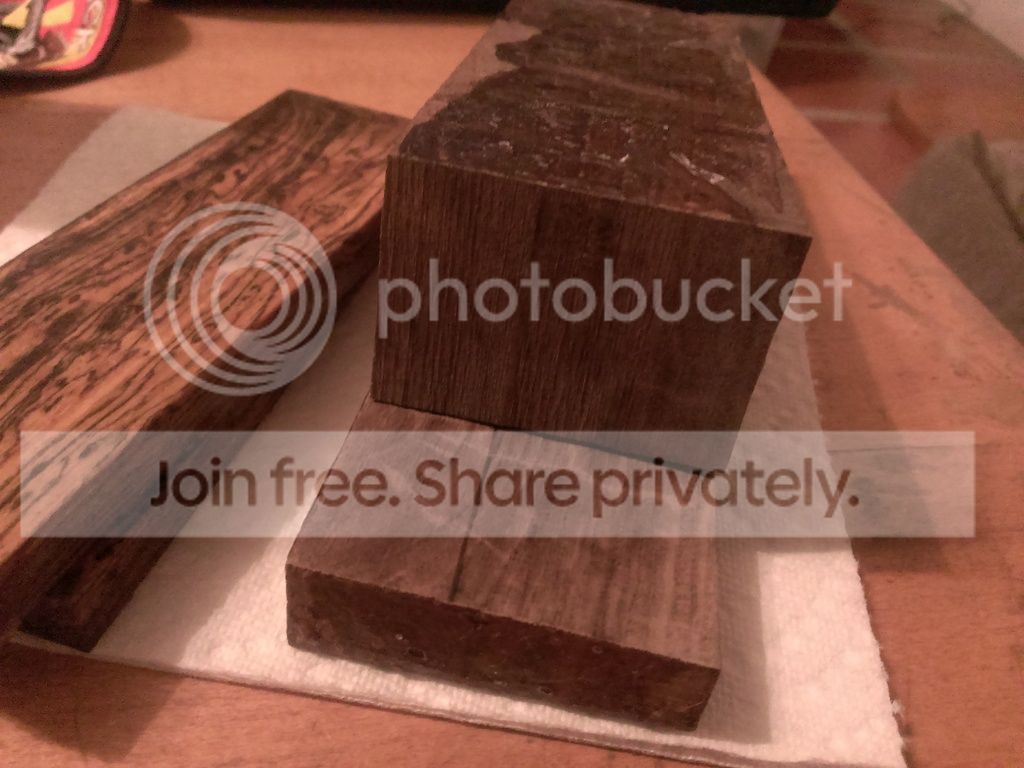
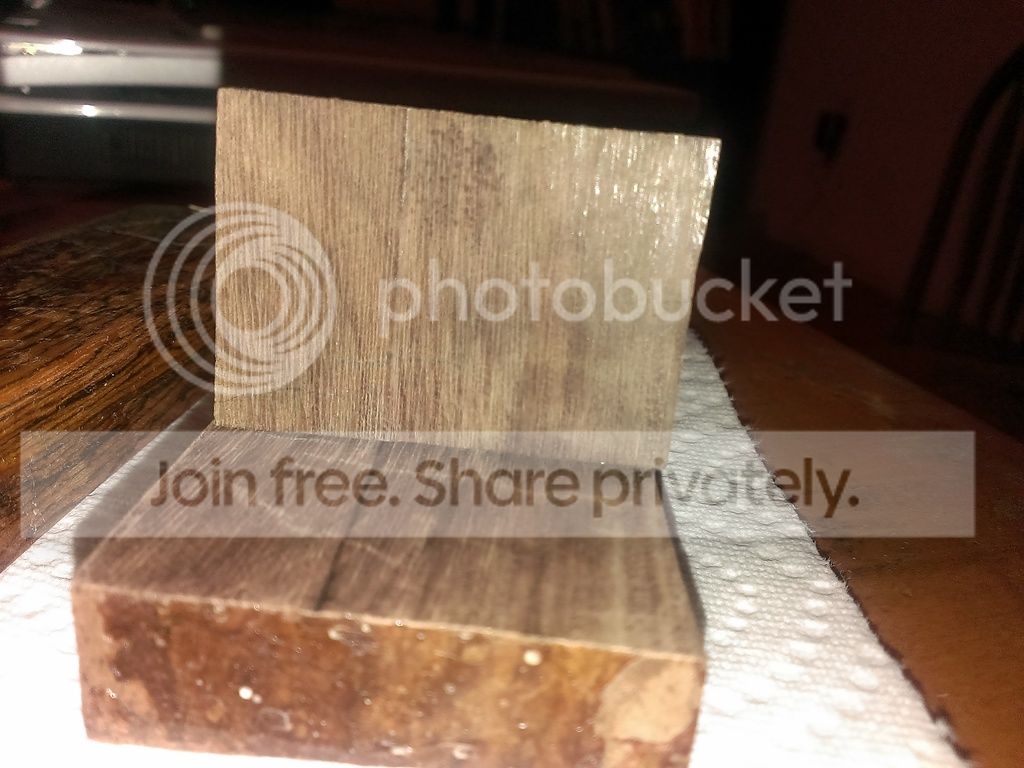
So I've done a bit of playing with this recently, and I think I might be able to put in a few cents here. I know there are plenty of other guys who have walked the same path.
The best way I've personally found to identify good stabilizing, is a combination of smell, physical appearance, and weight gain specifically. In my own experiements, if the blocks didn't sink like a stone in the resin, they weren't done. I have quite a lot of experience with buckeye, specifically K&G stabilized buckeye. I've gone through hundreds of blocks of it at this point.
In my own experiments, I was able to replicate K&G level weight gain in my finished pieces after tuning the process, and slightly upgrading past the standard garage setup. Buckeye was tripling or even 3.5x its original weight with added resin.
In fact, my results with Buckeye were so good, they are essentially indistinguishable from K&G, in smell, working properties, weight gain, water absorption, and finished appearance. I am a SERIOUS wood snob, and if there was even the tiniest bit of doubt in my mind that these pieces weren't top notch, I'd trashcan them in a heartbeat.
That said, the process times and resin consumption were wildly longer than advertised. I found that the buckeye was soaking up $2-3 per block just in resin, and K&G is only like $5-7 a block if I recall.
Particularly of interest to you, and the point I was working towards above: I found that anything other than "easy" woods such as buckeye and maple, took extremely long processing times, well past what is advertised/generally accepted/used for the over the counter resins, to get full saturation. One of the woods I tested was Walnut, and it came out looking very similar to what you got. I had one set of bone dry blocks that spent several days under hard vac, and even then still retained some buoyancy. I am dubious that even K&G themselves could process walnut in a single day. It took me 4 days for mediocre results, with a slightly improved amateur system, and enough measuring equipment to know what I was getting.
Well stabilized wood should feel heavy in hand, like a big block of soap. If it still feels light like wood, then it probably isn't fully saturated. Also, if the weight of the block doesn't at least double, I'd be concerned. That is just a rule of thumb, and doesn't apply in all cases.
Additionally, stabilized wood should be able to be soaked in water, wiped off, and should dry fairly quickly with little to no grain pop. The good news, is that even if the saturation is only partial, it most likely is homogenous unless they really screwed up. Even on the so-so pieces I got in my experimenting, the grain was still stabilized, it just wasn't fully saturated. I didn't end up using them for my knives though as my quality standards are extreme.
That said, I will be using my home stabilized buckeye, because the quality is so superb, it would be a silly waste not to.
I don't disagree with the sentiments above, just stick with K&G. Unless you have worked with a LOT of stabilized wood, then you probably won't be able to tell if what you're getting is good or not. I've used enough now that I can pretty much tell the difference between the major suppliers just by smell and appearance, in most cases. I would challenge anyone to tell the difference between my buckeye and an identical block of K&G... they are so close, it is spooky. Unfortunately, there's no way to really tell where you stand without dumping tremendous hours into testing. I happened to have a bit of time to do so while I was out with a bad back, but I would not have wasted the time going somewhere other than K&G otherwise.