Difference in Stainless Bottles?

CWL

Joined
Sep 15, 2002
Messages
10,317
Folks,

I see stainless bottles differing in price from $2.10 to >$30. Aside from perhaps thicker gauges and better caps, is there really any difference?

I can see paying more for a fuel bottle to have a better sealing cap, but for regular water-carry and boiling uses, is it worthwhile to pay several times more to have a "brand" bottle?
 
Honestly? They'll do the same thing, in most cases. However, I just like my klean kateen, so I paid for it.
 
CWL poses an interesting question. I have seen and had my hands on some of the cheap-cheap stainless steel bottles, but I didn't pull the trigger on them because:

A. They were usually less than 20 oz capacity
B. They felt less substantial when in the hand compared to bottles I have
C. The ones I looked at had a very pronounced seam on the inside where the bottle was welded together. Not so noticeable on the outside, as the seam was ground down before the bottle was painted. The large weld and not so polished appearance makes me a little leery.


But, I could just be paranoid. Perhaps the cheapie bottles are perfectly fine, and my lead poisoning worries are unfounded. If I ever come across a a 1 liter/32 oz. cheapie bottle, maybe I'll pick it up and give it a go. Maybe...


CWL's question also made me pause and consider the differences between the name-brand bottles I have. My SIGG and Klean Kanteens (KK) are 18/8 food-grade stainless steel, where my Guyot Designs bottle is 18/10 surgical-grade steel. So, yeah... If an emergency occurs in the field, I can rest assured that I can perform surgery with my Guyot bottle, whereas the SIGG and KKs are only good for use as tableware. :)
 
Some technical info that might interest you, or put you to sleep...

Stainless steels are generally those which contain more than 10% chromium. in 18/10 or 18/8, the 18 refers to the % of chromium and the 10 or 8 to the % of nickel.

The extra bit of nickel in the 18/10 might give it a little higher temperature resistance ductility and durability compared to 18/8, all other things being equal, but probably not enough to care about. Other things are more important.

There's an interesting page discussing stainless steel use here, with some extra links from it for bonus homework :D

(Can you tell I used to be a science teacher?)
 
My concern would be boiling in the cheapies. Exposing them to high enough temperatures could cause them to split, if the stresses from welding were not relieved. Even Guyot does not recommend boiling in their bottles.
 
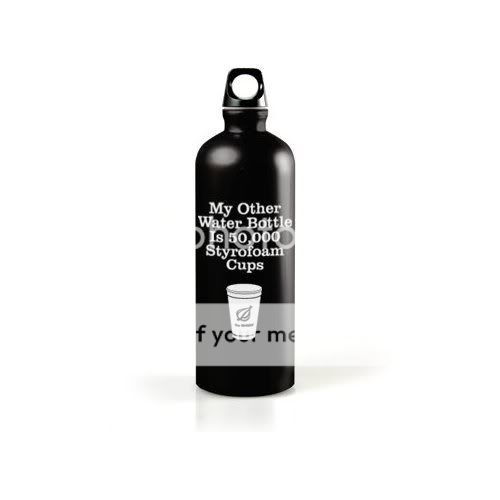
Slightly off topic, I just ran across this no-name SS bottle. I thought the message was funny. If it was larger than a 600 ml, I'd consider it.

onionbottle.jpg
 
You guys sure like big bottles. :p For my normal bushbumming, my 18oz KK does just fine, and keeps the weight down.
 
Interesting post. I do notice that the water in my KK tastes better than some of my low budget bottles (same water source).
 
I saw a $4 or $5 ss bottle in Walgreens but it was two piece with a seam. I did not buy it. I guess I prefer a better name bottle to wondering what might happen to it when I need it.
 
I saw a $4 or $5 ss bottle in Walgreens but it was two piece with a seam.

These were the ones that started my wondering, they were going for $3.99 each and came with a mini 'biner. Looking online, I found ss bottles for even cheaper at $2.10 shipped.
 
The technology exists to make much thinner stainless steel items. My 30+ year old Thermos bottles are about twice as thick as newer Nissan ones.Easy to dent the newer ones ! Welding techniques also are improved with high quality electron beam or laser welds so there's no problem with welded rather than one piece items .
As far a alloys ? While there are standard stainless alloys in the 300 series they also may use 200 series and if purchased in China or India they may use alloys not previously known !!!
 
With the well deserved reputation China has for inadequate monitoring of the materials and finishes on the products made in that country, I think I would probably go with a company that I felt had a good handle on making a product that would not poison or kill me.

In this case, I would go with companies that I know have created products that have passed peer testing.

Right now, that seems like Nalgene/Guyot and Klean Kanteen.

Marion
 
With the well deserved reputation China has for inadequate monitoring of the materials and finishes on the products made in that country, I think I would probably go with a company that I felt had a good handle on making a product that would not poison or kill me.

Both Kleen Kanteen and Guyot bottles are manufactured in China by contract manufacturers. This means that Guyot & KK only provide specs and do not control or monitor the manufacturing process.
 
Both Kleen Kanteen and Guyot bottles are manufactured in China by contract manufacturers. This means that Guyot & KK only provide specs and do not control or monitor the manufacturing process.

True, but the hope is that their agreement with the company they do business with, includes specifications about the materials and finishes.

Marion
 
I did a bit of testing on the cheap "Subzero" brand bottles from Walgreens. I filled my other stainless bottle and the cheap one about half full with saltwater. After 2 weeks, the $3 Subzero had begun to rust through the seam at the bottom, and 3 months later now, my regular $10 bottle is fine. You get what you pay for usually. Guyot and Klean Kanteen are great, but I think anything in the $10+ range will be acceptable.
 
I had a cheapo stainless bottle that came with a lunch bag/mini cooler. It gave the beverages a strong iron taste. I don't use it anymore.
 
Back
Top