Differential heat treat for steel clips?

Joined
Nov 29, 2014
Messages
47
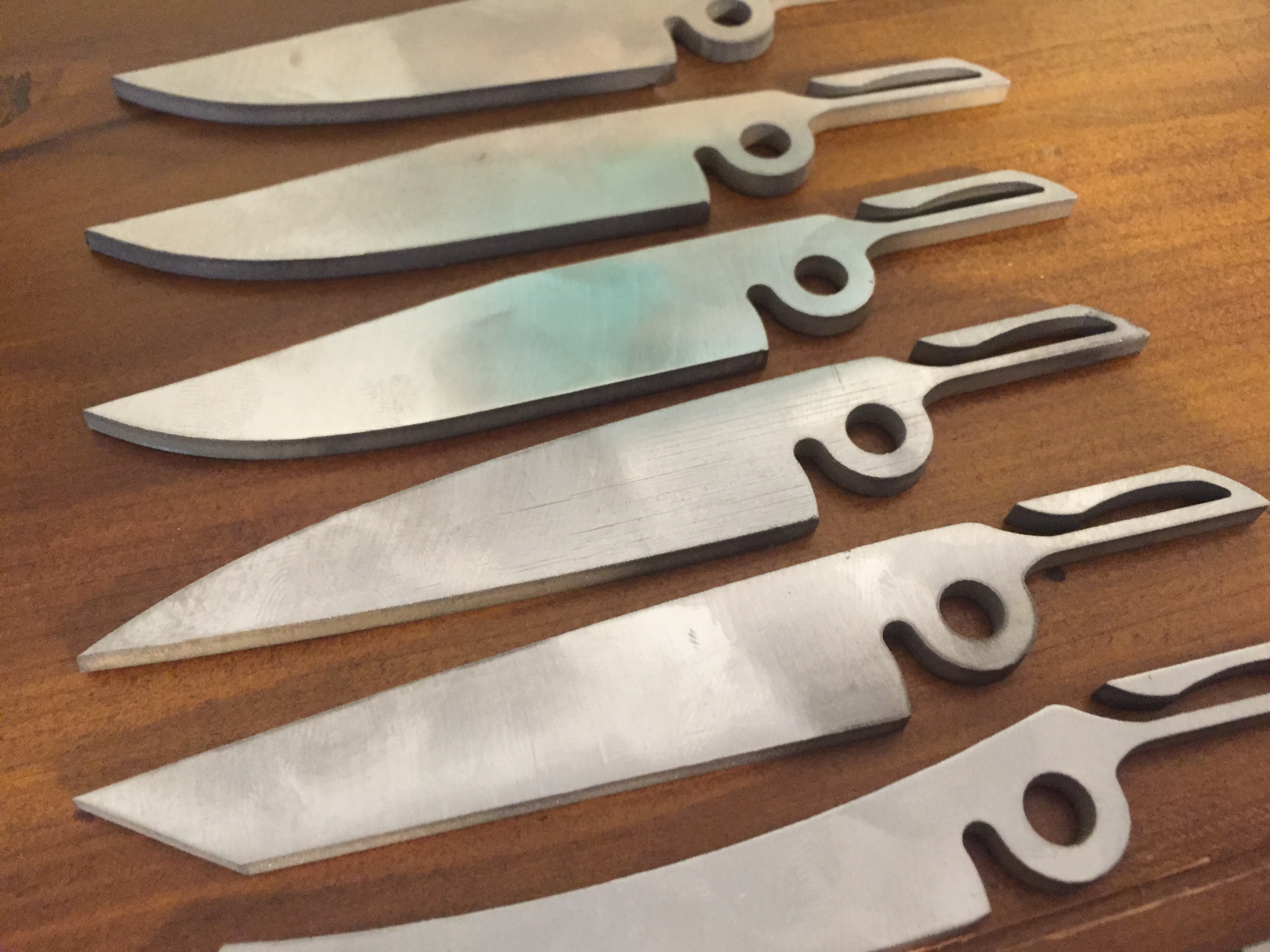
I have been working on my first set of folding knives, and with this project decided to test out a new idea I had: using the friction folder tang as a pocket clip. This has been a test, and I understand that it creates its own challenges, advantages, and disadvantages. This thread isn't about that as much. I have never seen someone use a tang as a clip, so I figured I would be the one to test it out. Worst case scenario is that the clips don't work and the knife is still as functional as before.

One of the challenges I imagine in creating the pocket clip from the blade steel is the hardness and tempering. Some of the best clips are very springy, and can tolerate some abuse. I designed these clips to work without much springiness, but I would prefer them to be somewhat softer to prevent them from breaking.

From my very limited knowledge, this means doing differential hardness. I have been following the instructions from someone here on bladeforums to do my aldo's 1084 heat treat (Stacy I think gave the instructions?). I don't see any good instructions in searching for accomplishing this sort of differential temper. I figure that this would be pretty similar to how many people do narrow tangs, but some advice would be appreciated. One problem I foresee is that these are small (3'' blade) folding knives. How do you get the tang softer without over-tempering the blade edge?

Again, any advice on this is appreciated. I am pretty new and have only made a few fixed blades with 1084 and Stacy's heat-treat instructions.

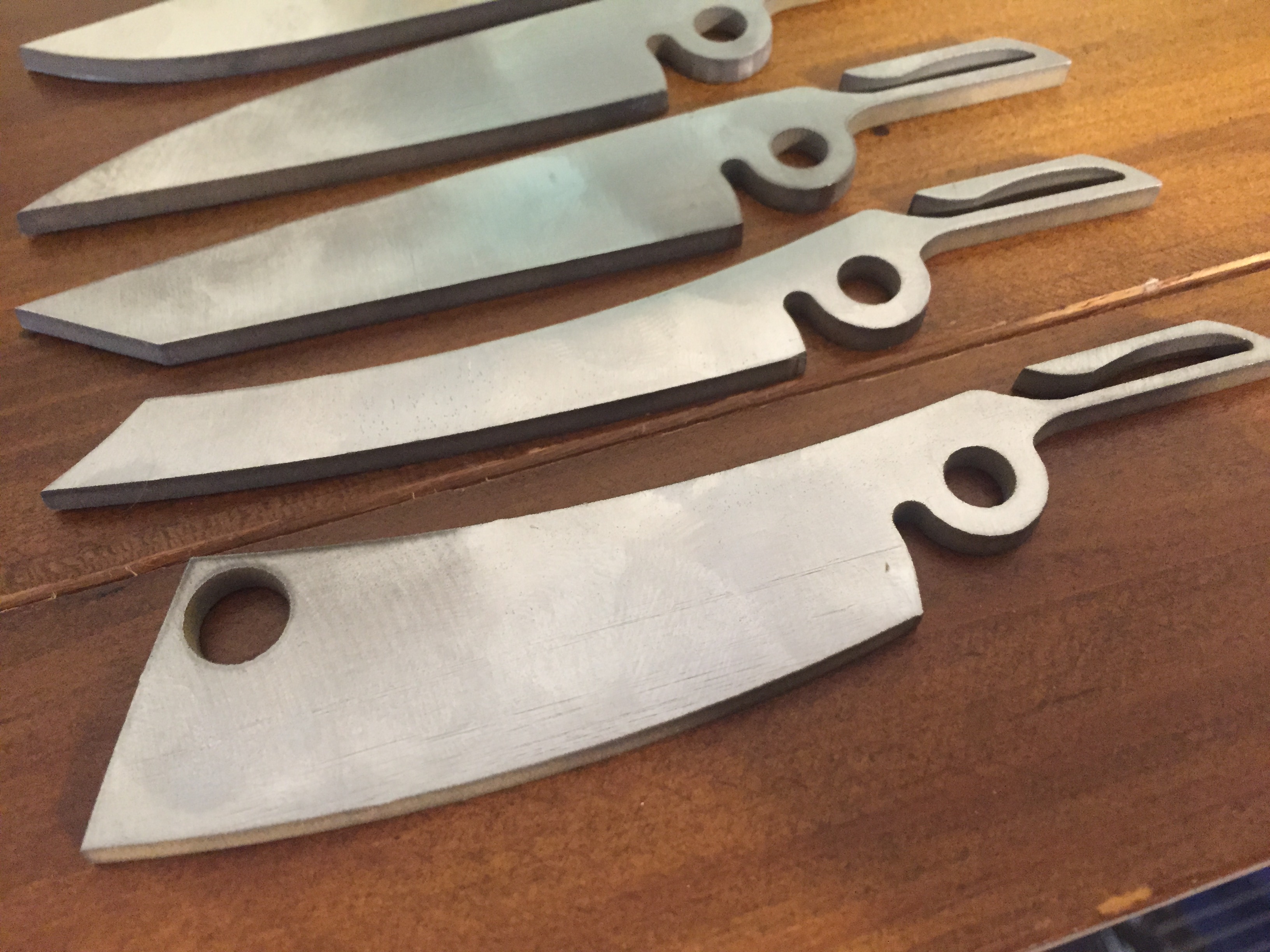
Here are the designs in case you are curious. I designed them and had them waterjet cut since I had the opportunity to have some easy access to a waterjet.
8OfasTp.jpg


othk1ik.jpg


oQKgAN3.jpg


m50z3KF.jpg


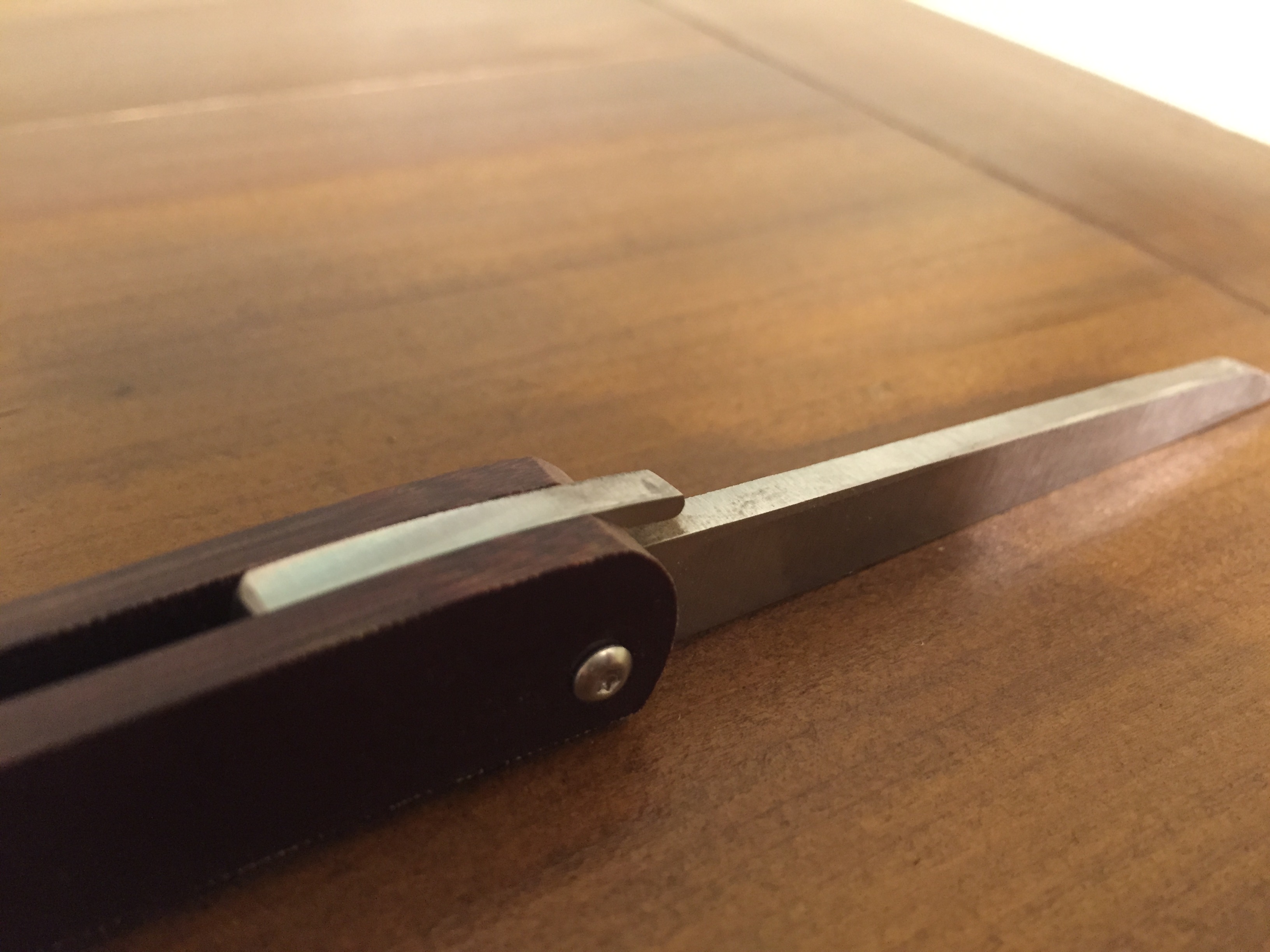
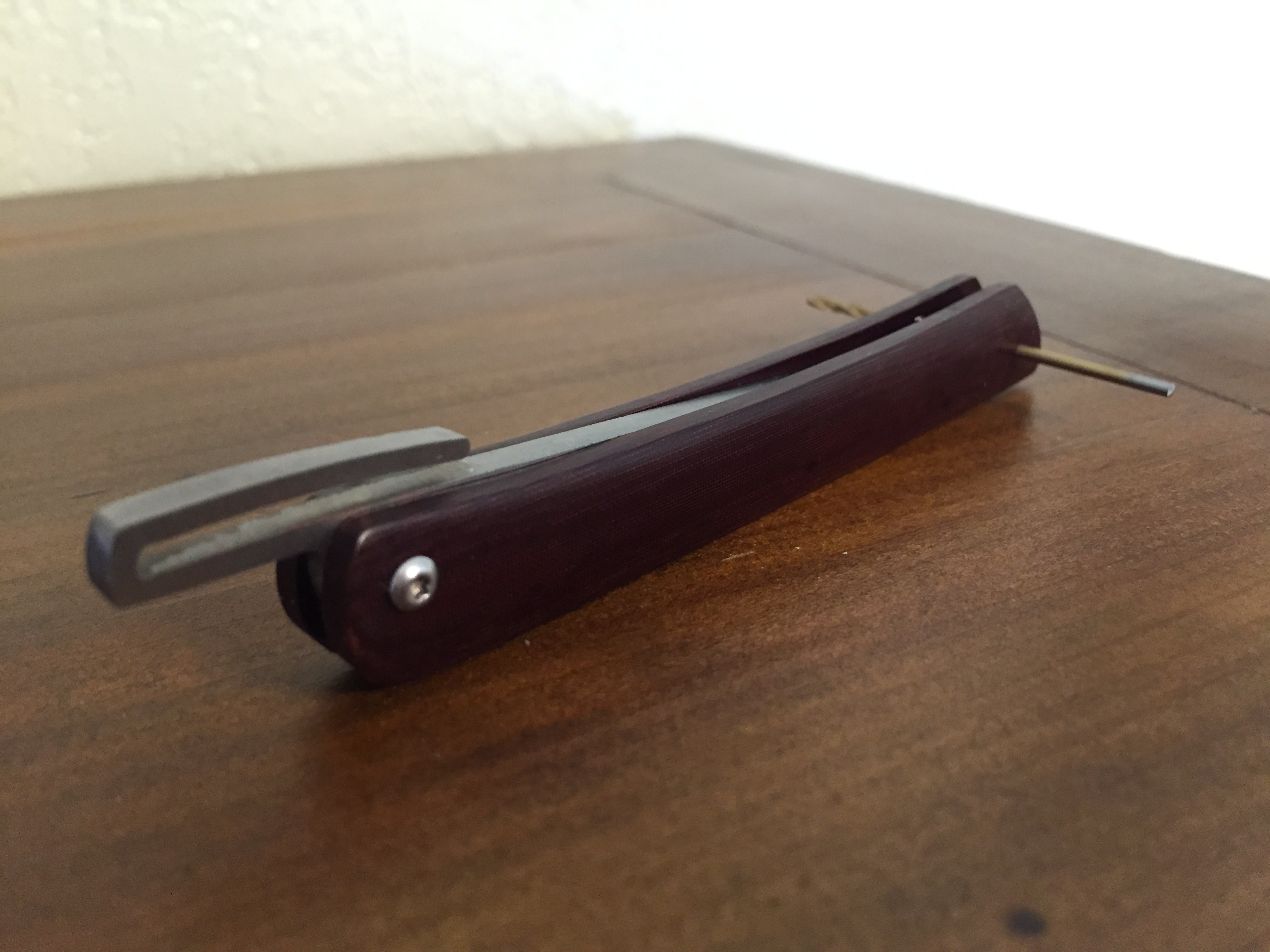
Here is one worked up with scales. The clip is exposed when closed, but due to the off-center pivot, goes flush with the scales when open.
JE5eO6k.jpg

4nxQqwB.jpg


Thanks again.
 
You could dip the blade in water, then use a torch to draw back the temper on the clip. Keep the blade submerged in the water and watch the colors on your clip carefully. Go to a nice blue color and then dip the clip too.
This might work, but it's kinda low tech and unreliable. You might not(probably won't) get the same results from one to the next.
 
Oh and to get a good "spring action" your clip is going to need to be thinner and more tapered.
 
You could dip the blade in water, then use a torch to draw back the temper on the clip. Keep the blade submerged in the water and watch the colors on your clip carefully. Go to a nice blue color and then submerged the clip too.
This might work, but it's kinda low tech and unreliable. You might not(probably won't) get the same results from one to the next.

This is the type of advice I was looking for. To be clear, you mean to hold the cutting part of the blade in water (to help disperse the heat and keep from ruining the hardness) but leave the part I want softer out of the water, heat it to blue (~600 F), then once that is achieved the clip will be softer, and submerging it will cool it to keep from going too far?

I would like to go for some consistency, but absolute consistency is not super important to me yet. I am working with a limited shop and am making these only for myself and a couple for gifts. Right now I am mostly working on getting better grinds and learning the process start to finish.

Unless anyone else has any contradicting advice, I think you solved it for me. Thank you very much.

Edit: just saw your second post. I understand that as thick as the steel is, it wont be springy. For this first blade I mostly want to ensure reliability. I designed the clips to be too thick, since I can always grind off, but cant add material. I haven't had enough time working with steel to really know the limits yet, so I am a little hesitant to go too thin. I will plan to try it out on some scrap. As my first folder, I am a little emotionally attached to this one :P
 
Yep! That's what I meant. Now keep in mind I am an amateur, and pretty much anything I say is subject to criticism! Good luck!
 
Understood. Will give it a try.

I had the idea of using water, but I really was pretty lost on temperature. If anyone else has input on proper temperature or time needed at that temperature, feel free to chip in.
 
Another possibility - conduction instead of convection.
Have some scrap that you heat to a high temperature. Place the clip on the scrap. The heat will conduct only to the clip, and slowly conduct it's way along the path of the clip.

By the time you reach a blue color on the clip, the pivot hole will probably only start to get hot.

<joke>You could do this by putting the clip onto a toaster's coils.</joke>
But seriously, you could place the clip portion on a hot griddle, woodstove, whatever you have handy.

As to the time/temp... lots of variables. An oxy-acetylene torch pointed at it will be a matter of seconds. A zippo lighter will take much longer.
 
Last edited:
Another possibility - conduction instead of convection.
Have some scrap that you heat to a high temperature. Place the clip on the scrap. The heat will conduct only to the clip, and slowly conduct it's way along the path of the clip.

By the time you reach a blue color on the clip, the pivot hole will probably only start to get hot.

<joke>You could do this by putting the clip onto a toaster's coils.</joke>
But seriously, you could place the clip portion on a hot griddle, woodstove, whatever you have handy.

As to the time/temp... lots of variables. An oxy-acetylene torch pointed at it will be a matter of seconds. A zippo lighter will take much longer.

Good thought but this seems harder with my setup.

I will likely use a propane torch to heat the clip. What I meant is, do I need to hold the temp at 600ish for any amount of time? Tempering instructions usually call for hours at the prescribed temp.
 
Remember, tempering is time AND temp. Bring it to blue three times, going as slow as practical. A plumbers propane torch might be the ticket.
 
Take it to just past blue, and let it air cool.
I temper switchblade springs this way all the time.
 
Sounds like more or less a consensus. Thanks again everyone. I am really enjoying learning the processes that go into this. Aside from lots of bladeforums browsing and searching online I just finished reading the $50 knife shop and David Boye's Step by step knifemaking book. Made my first couple knives with a Gough Jig, and just got my first grinder so practicing on that.
 
Back
Top